22nd September
Avon Diary 2026

Dawn at Ellingham.
(All photographs on this site will enlarge if left clicked)
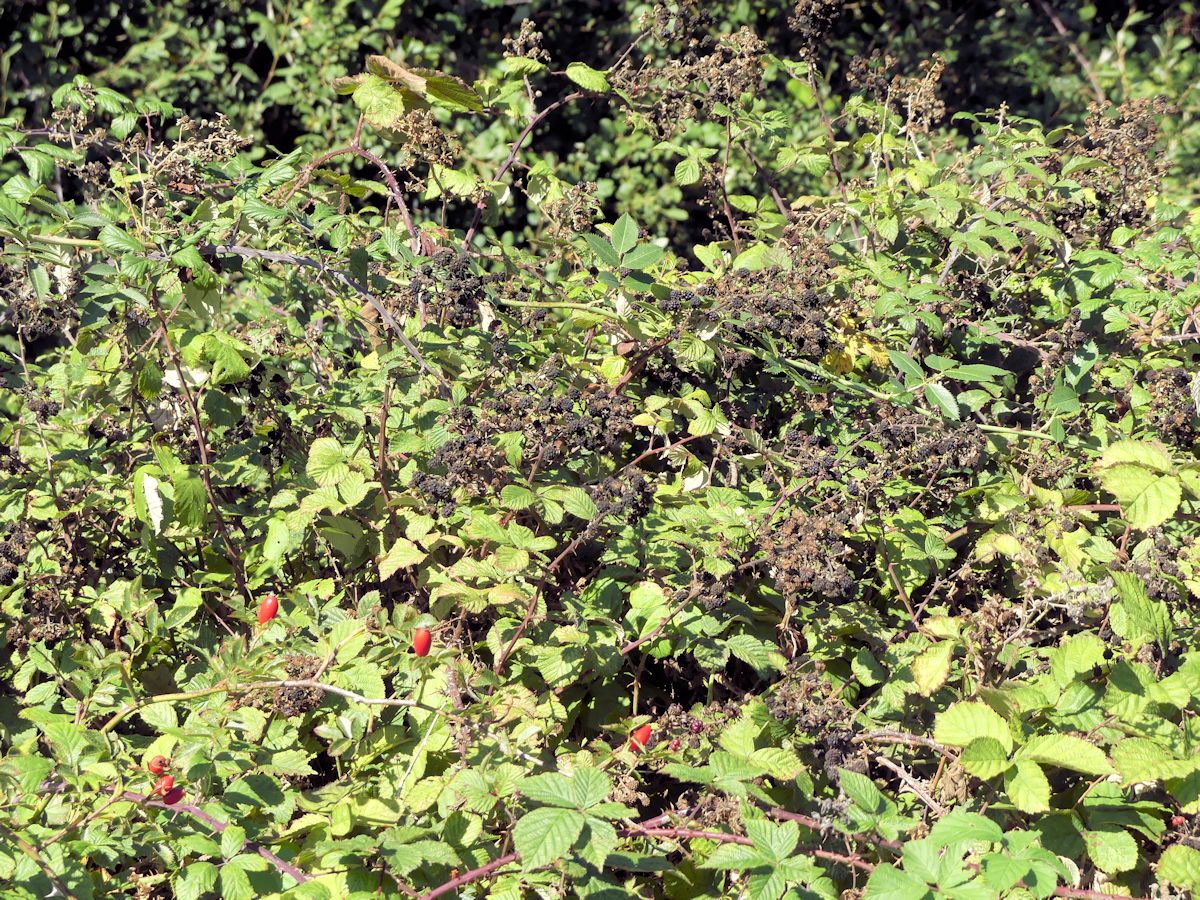
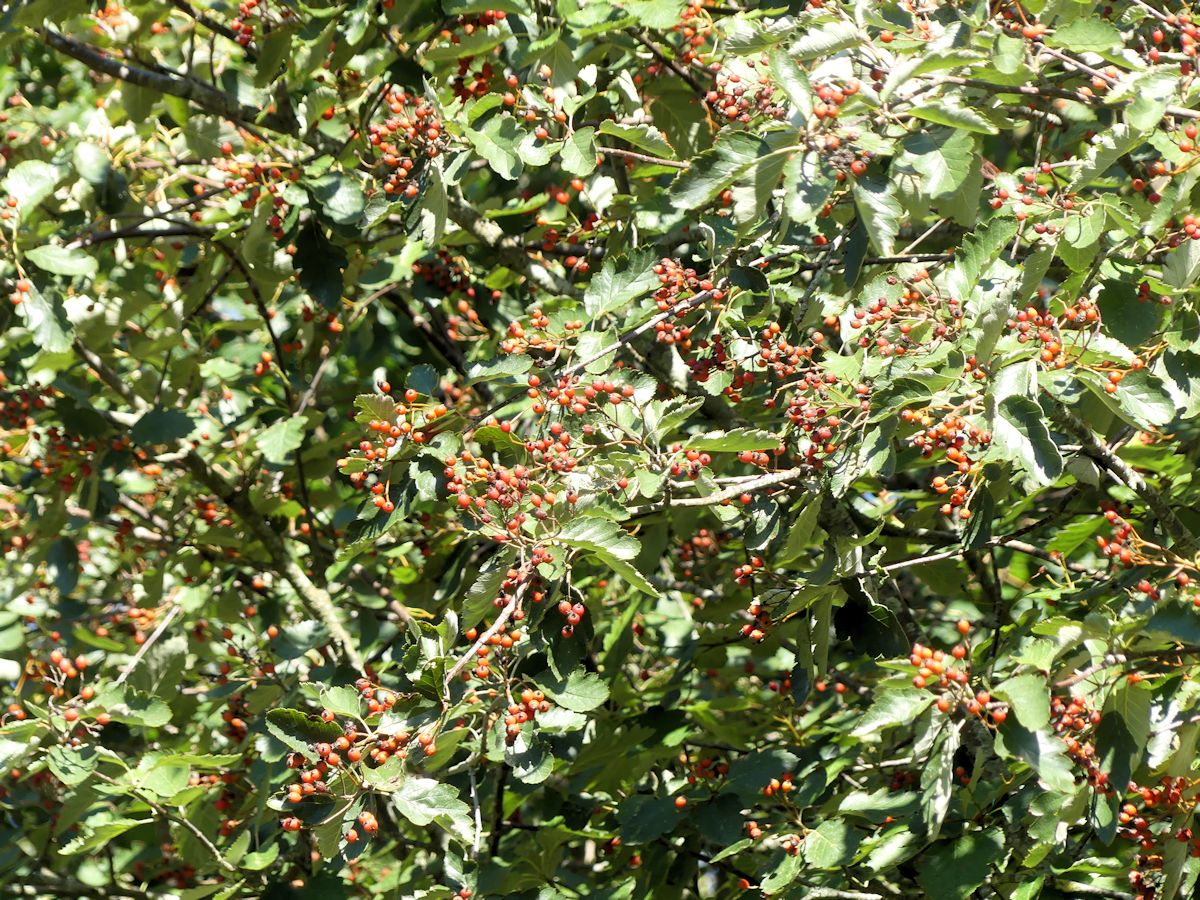
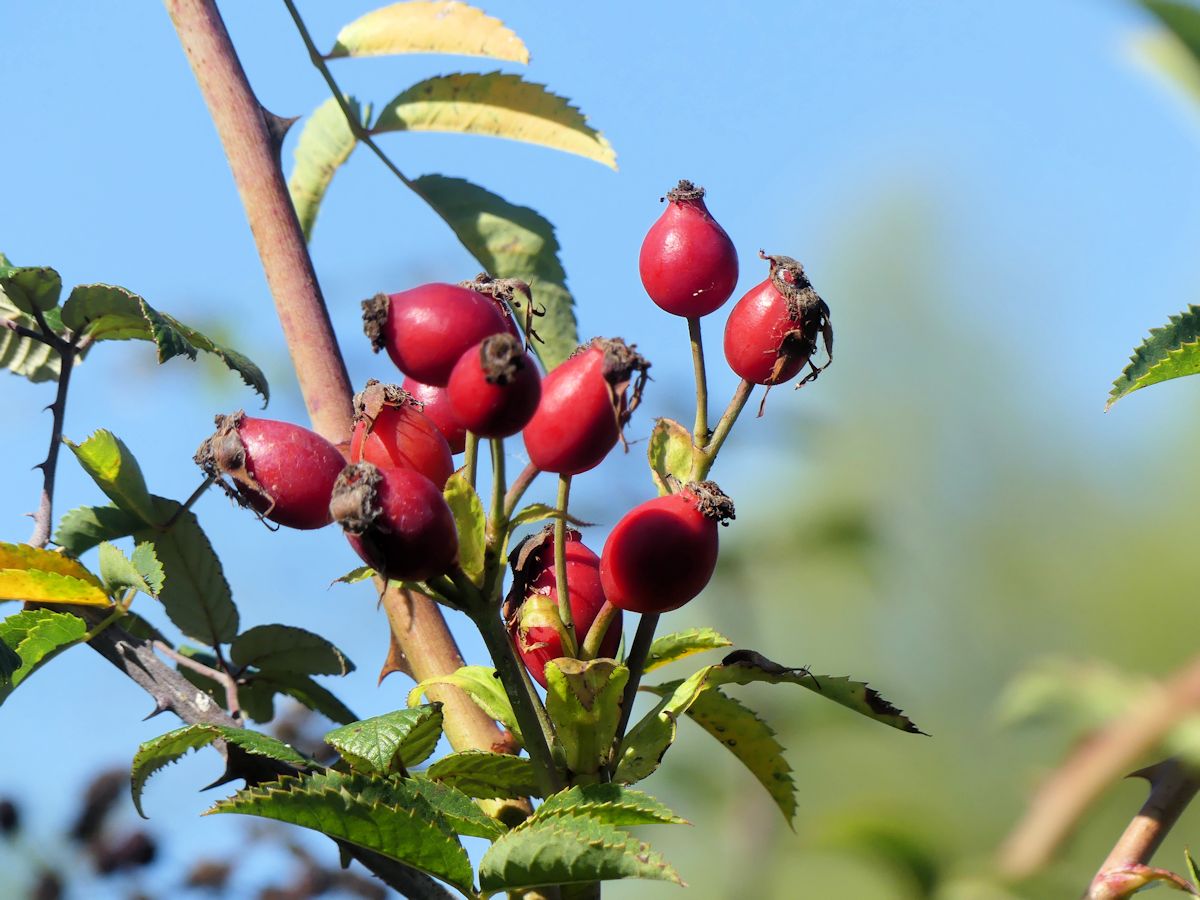
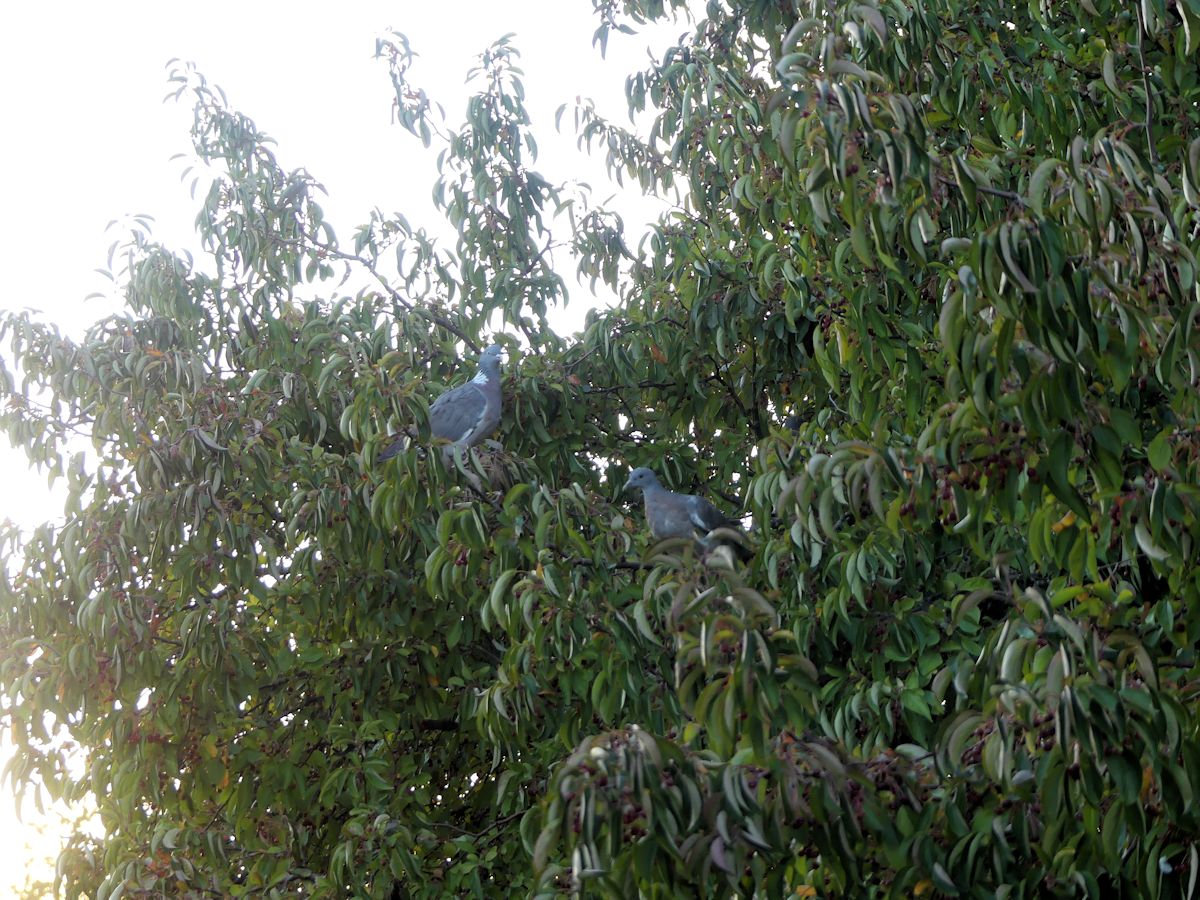
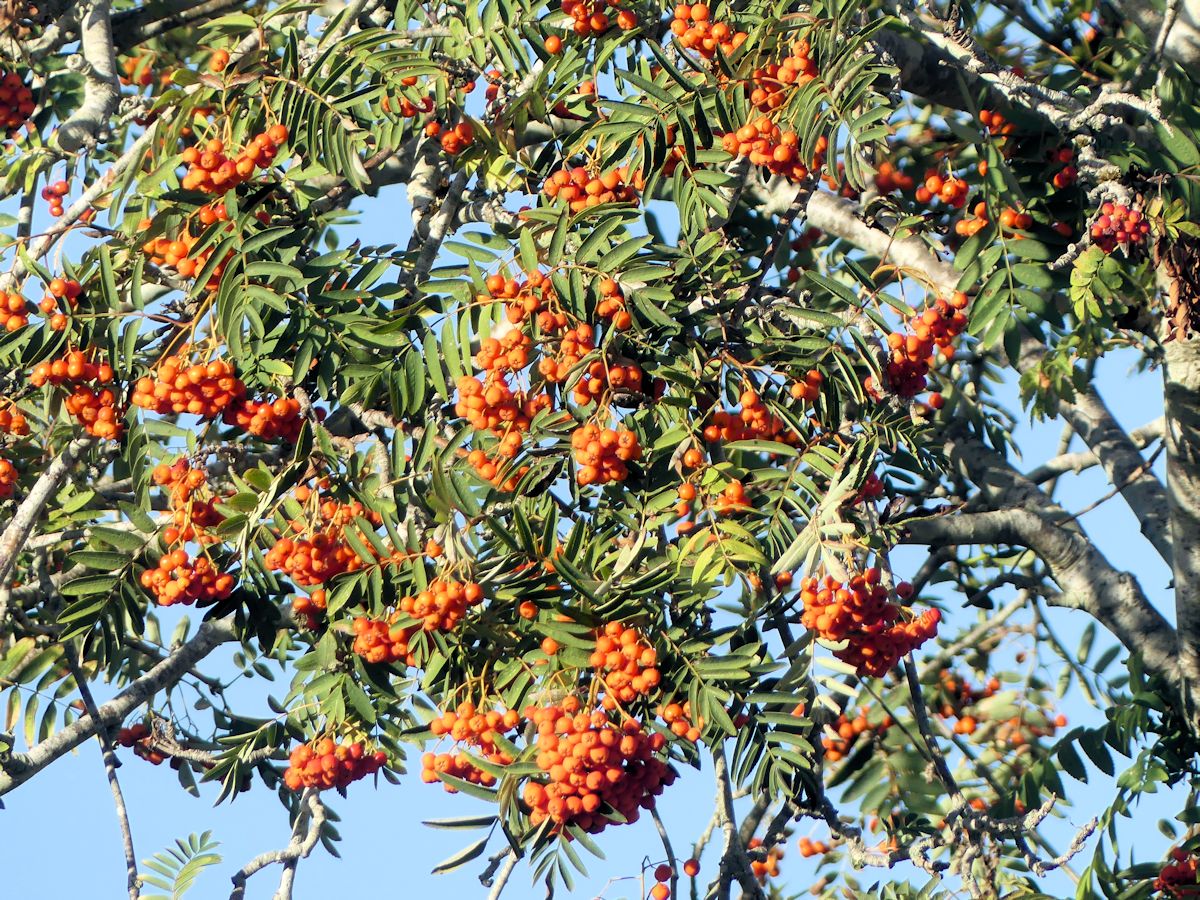
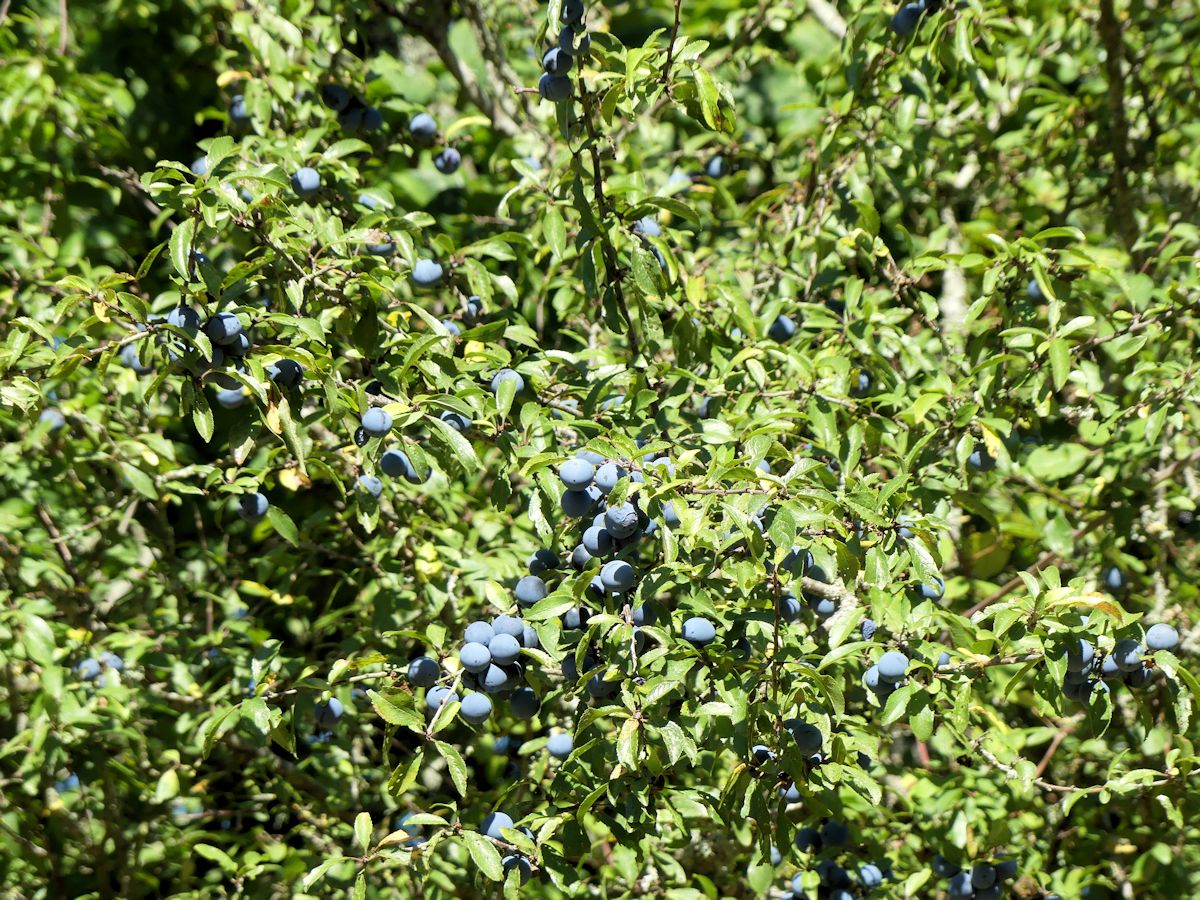
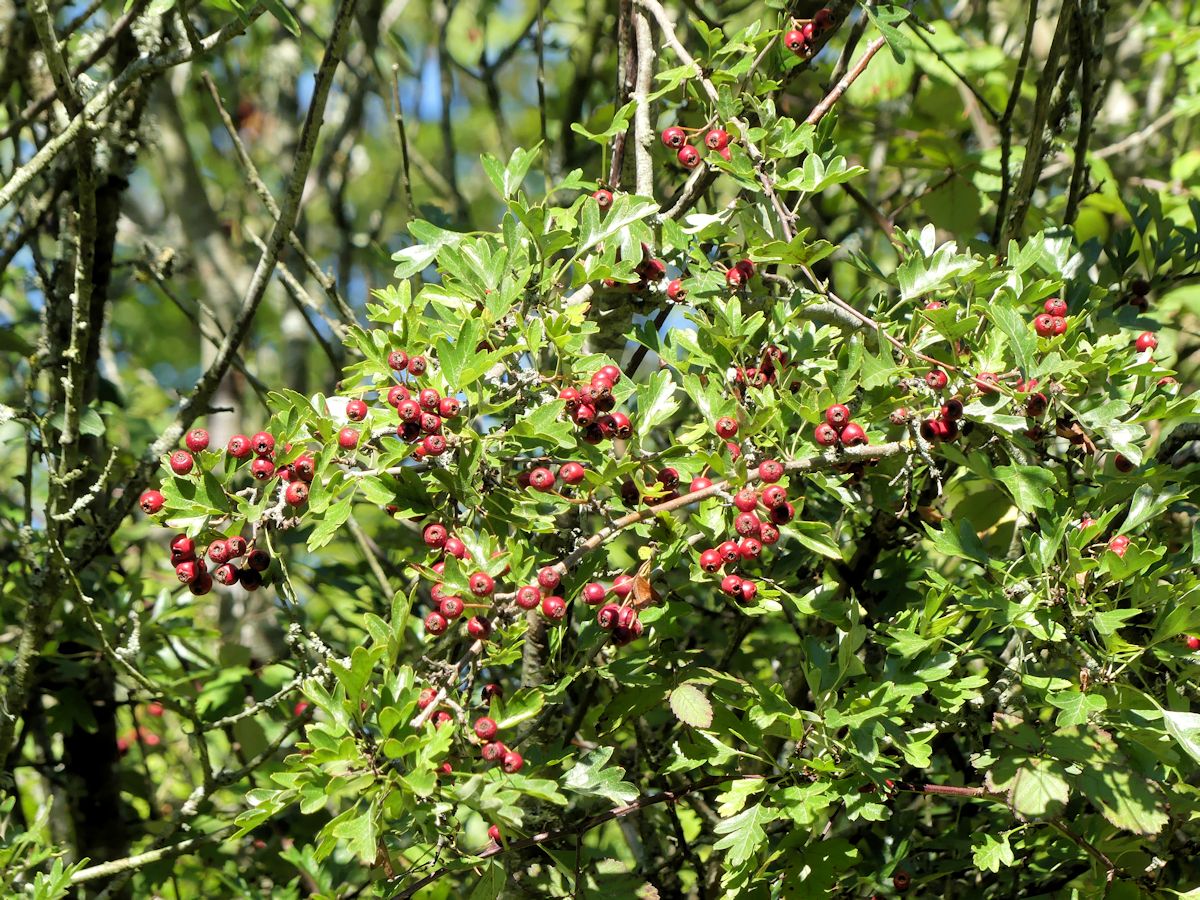
Autumn is here with one or two anomalies worth noting. Whilst some of the Autumn berries are looking as they should, the blackberries that should be heavy on the briars certai8nly are not. Unfortunately the usual huge crop we expect around the lakes providing rich, sugary food for the late butterflies such as the Comma, Red Admiral and Speckled Woods, are dried and withered on the vine. Also worthy of note is the introduced Himalayan Apple providing its massive crop of tiny apples that the Starlings, Blackbirds and Wood Pigeon gorge themselves on. I can't recommend planting this tree strongly enough.
Grooming beavers.
Grooming.
Two of our beavers happily grooming each other. Is this a adult breeding pair affirming their commitment to each other, or an adult and one of last years kits? We need a Eurasion beaver expert to shed some light on the the matter.
17th September
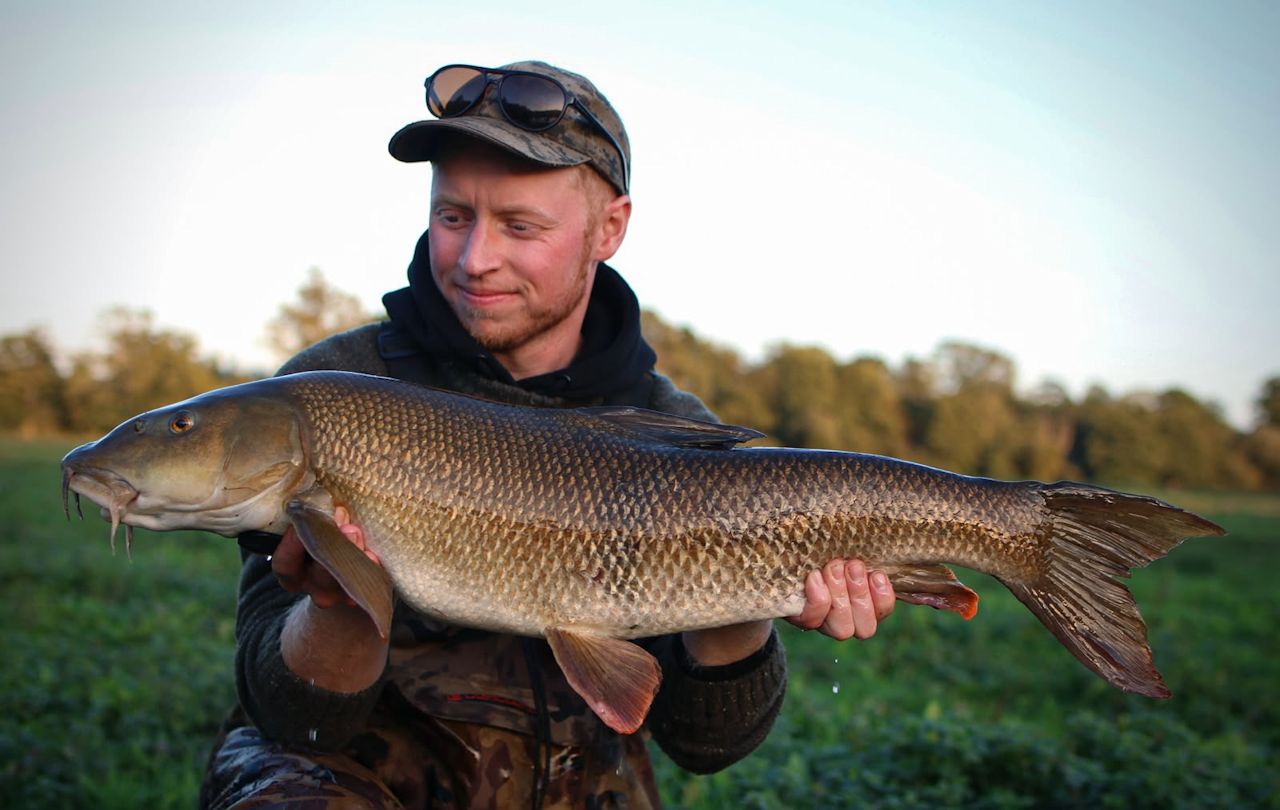
Jonny's enthusiasm has been a very welcome breath of fresh air about the fishery. I have been involved with the river for over thirty five years in a professional capacity and it is all too easy to become distracted by the politics and maintenance of the fishery and forget to enjoy benefits of this amazing valley. Jonny's new perspective has reminded me of just what a fabulous valley we are priviliged to live and work in. To take for granted, through over familiarity, the amazing specimens that inhabit this fishery needed the new pair of eyes to remind me of just what treasure we have responsibility for.
Some of our large barbel.
Jonny has been out fish spotting and sent through the clip above of some of our bigger barbel. I have no idea just how many large barbel there are on the fishery. I would estimate that there are shoals similar to those in the clip above approximately every three or four hundred meters throughout the fishery. That adds up to an awful lot of big barbel and just think, the big chub dwarf those numbers.
The future.
Perhaps more importantly a further clip Jonny sent through, similar to the underwater clips I put up previously, show some of the thousands of juvenile barbel currently about the fishery that will hopefully grow to safeguard the future. The clip has fish up to a couple of pounds that are hopefully past the most vulnerable phase of the lives.
14th September
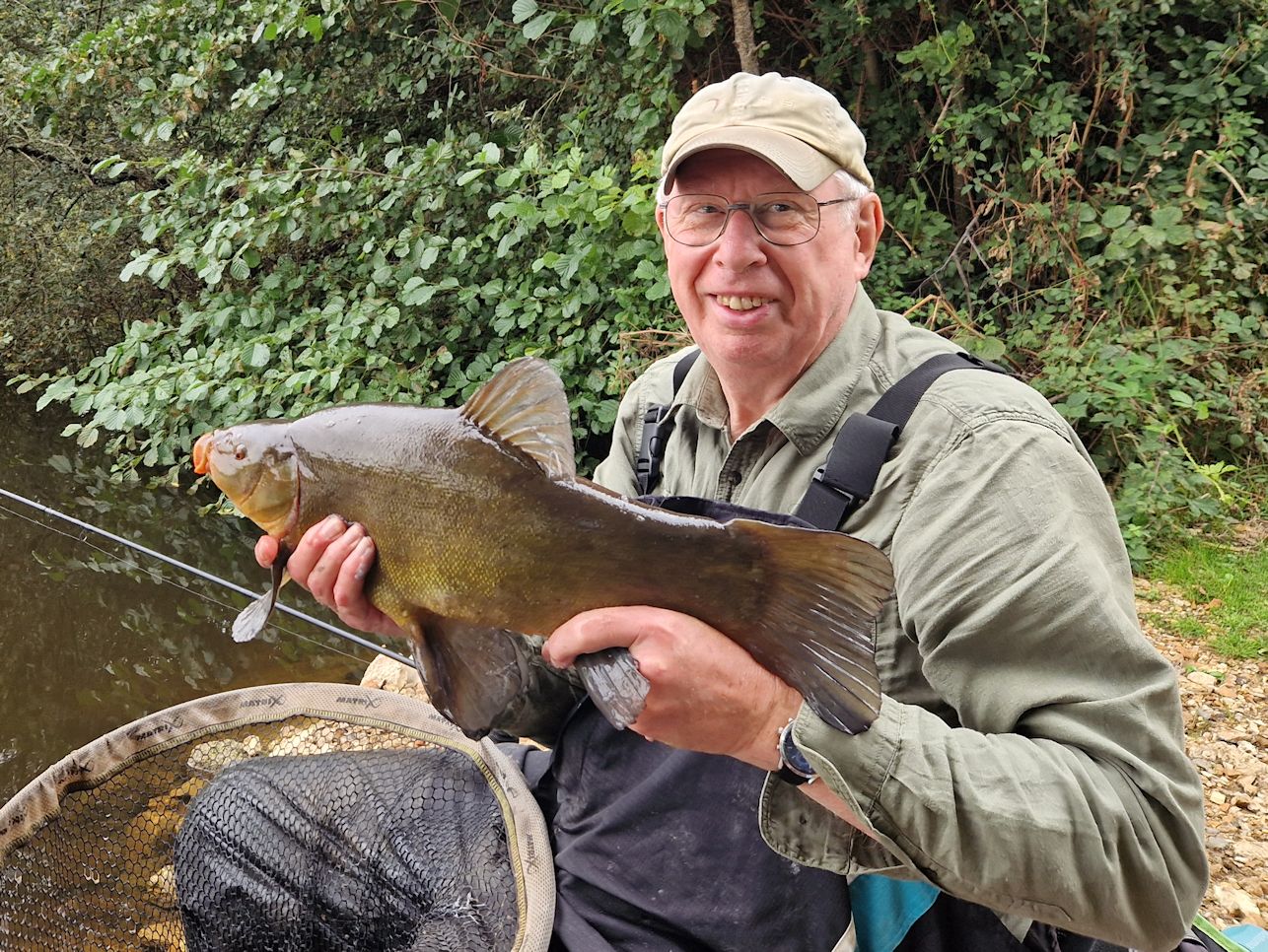
Good to see John back on the bank again after the self imposed lay-off the heat of the last three months gave rise to. It was even more a return to more normal times as John was playing a lovely male tench when I arrived.
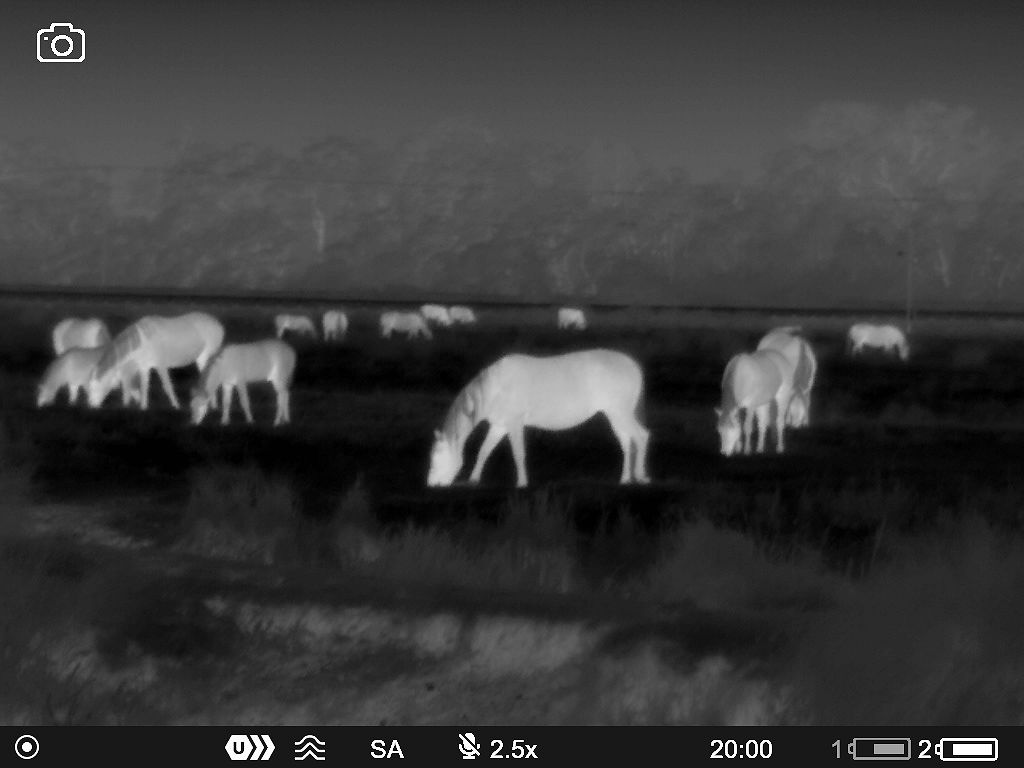
Its that time of year when we become busier with our thermal kit as the evenings draw in and nights with the associated cover they provide to miscreants become longer. Thermal imaging equipment is spooky stuff and brings a totally different perspective on our normal accepted view of nighttime darkness. Even the photo above shows that the ponies are completely unaware of my presence as they all continue to graze, not one raising its head to look in my direction.
10th September


We're just sooo lucky, thankfully Jonny was on hand to capture the moment we recovered our prise! Some of the treasure we find in the river illustrates just how sick our society is. The thieving scumbags who go around the area stealing electrical cable, to get out the copper, dumped the last lot of sheathing in the river. These people are educationally lacking, that's the polite version, which further illustrates the side of human nature that will never consider the environment before their personal gain. Unfortunately that perspective is not restricted to the thieves that dumped this lot. You have to remember Trump had a majority in the States and we managed to elect Boris!
On a slightly different tack, the third photo shows a 20 litre drum that has been modified to serve a specific purpose. It also came out of the river so may be associated with aquaculture, or some other devious thinking that we are not familiar with. Anyone out there able to enlighten me as to the reason for the modification please get in touch.

On a different subject, I have been doing a little carving of late and have met with one or two snags I wasn't expecting. Firstly regular readers may remember I was attempting to carve a salmon from a chunk of the elm that stood beside the Fishing Lodge that had succumbed to Dutch Elm disease. Well, it still exists and even after four years drying out it still behaves more like a piece of seaweed than timber, every time the weather changes it shrinks, expands and splits. Sho0uld any readers feel like doing a little carving I would suggest avoiding elm if you desire a fine finish. The piece of timber in the photo is a charcuterie board carved on robinia or Black Locust. Second piece of advice, don't use robinia, its as hard as nails and horribly grainy.
8th September
At long last, steady rain for several hours, if only we see more in this pattern. The river has risen a fraction and added a tinge of colour making the everything greener and happier. Jonny did discover a further shoal of roach yesterday, with several fish around the pound mark. I tried to put the camera down besiode them but they were having none of it and departed with a dismissive swish of their tails. I still have no answer why the past three or four years have been so good for recruitment on the Avon. I may be ignorant of the cause but as long as it continues lets all be happy to be along for the ride.
Comings and goings beside the stream.
Manny has been looking for the beavers and has come across some old acquaintances. The otter family I believe to be the same family I put up when the cubs where considerable smaller on the 3rd May. The fat rat is one of many we see when we set the trail cameras beside the river. We never see any sign of them during the day but they are active most nights. Probably the reason we have such a healthy Tawny Owl population in the valley.
6th September
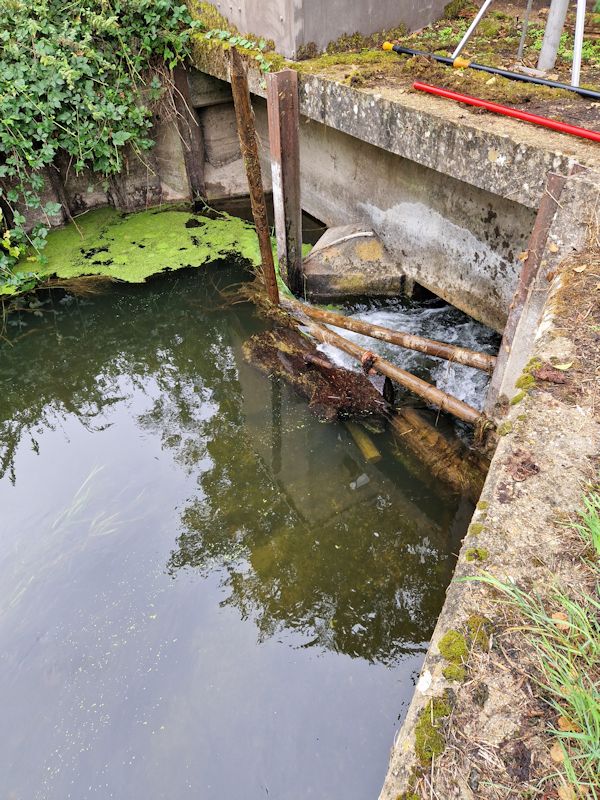
The most gratefully received recent drop of rain is hopefully the beginning of a gentle run in to Autumn. The weed is dying back, breaking up and bringing a touch of colour to the water. Its not only the weed that is breaking up and drifting downstream, the photo above shows a dozen eight foot stakes that arrived in the hatch recently. It took a great deal of pulling, pushing, heaving, shoving and cursing to get them out. Whoever let that lot go it is not appreciated when it gets down here.
Roach.
Probably the last video of the season as the water is taking on its Autumn colour. This is a shoal of roach I found in the main channel, which accounts for the juddering clip.
5th September

Jonathan popped over the other evening and we spent a couple of hours nattering and waiting for a carp to join in as we chilled beside the lake.


You can't keep a good man down. Jonny has been getting to grips with our barbel in recent days. He seems to have found several great looking Avon specimens. I imagine the extended period of clear water has seen the barbel clad themselves in a beautiful livery to keep them from being spotted. The two above are just a couple that Jonny has managed to find, the fish on the right is 14 plus and show just how special Avon barbel are.
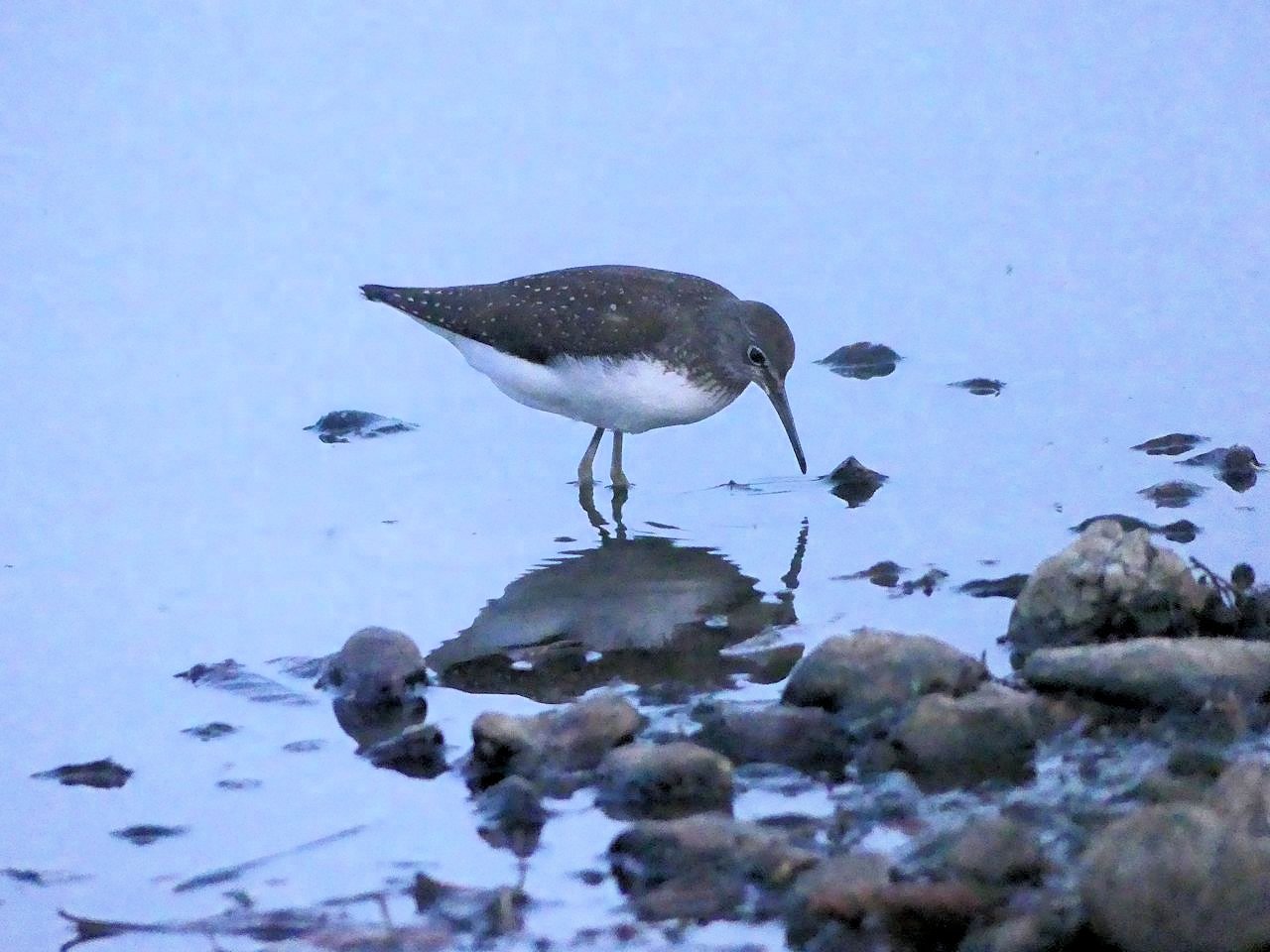
..........because I don't get many photos of them. A GSP enjoying the low water levels over at the lakes.
1st September
Well its now officially over on the Avon, the salmon season that is. What there was of it anyway and I have to admit, despite my personal success, I am glad to see the back of it.
Good numbers of fish entering the system in February, twenty plus according to the counter, which is a good number for the Avon. The next two months when conditions looked favourable hardly any fish arrived, which was sadly reflected in the returns.
May saw the fish arrive yet the catch returns remained static. June the good run of fish continued despite the hot weather. The hot weather during June saw the water temperature rise dramatically on the Knappmill temperature record. Those high temperatures reaching 18 degrees C brought about the end of salmon fishing for us at Somerley. Our water temperatures are actually a degree cooler at 17 degrees as we are higher in the catchment yet the original recommendation from the EA was 18 degrees so we adhere to that recommendation. Unfortunately we also agreed for uniformity we would be guided by the Knappmill recordings at 09:00 in the morning.
From mid June we never got back on the bank as the temperature never fell below 18 degrees. Strangely the record run of fish counted throughout May, June and July soon arrived with us with many taking up station in the pools. Four or five fish in a pool was not an uncommon sight. As the water levels in the river dropped and the visibility improved these fish took up position in the faster runs where they could be seen quite clearly. It really was a concerning sight to see so many fish in low warm water. Pleasingly, to date they all seemed to have survived. Lets hope they all make it to the redds and the maturation of the eggs and milt hasn't been disrupted.
What this means for the future I have no idea. It would be a brave man that started making predictions based on one good years run. Definitely a case of keeping everything crossed for an untroubled spawning and as with the current cyprinid population, a good survival of the resulting, fry, parr and smolt.
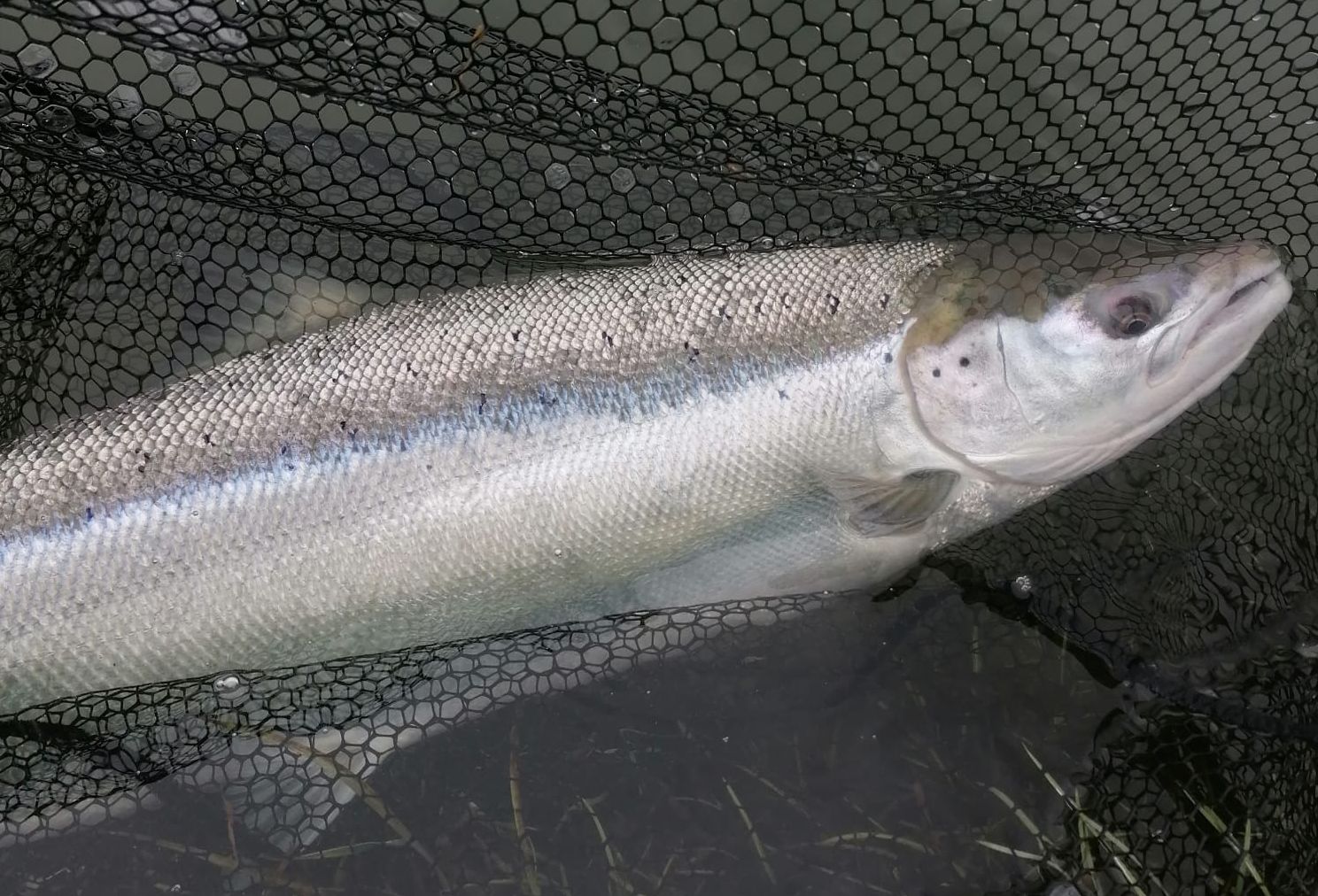
Not from this years returns but a nice bright fish landed by David Lambert a year or two back that clearly illustrates the beauty of Avon Springers.
28th August
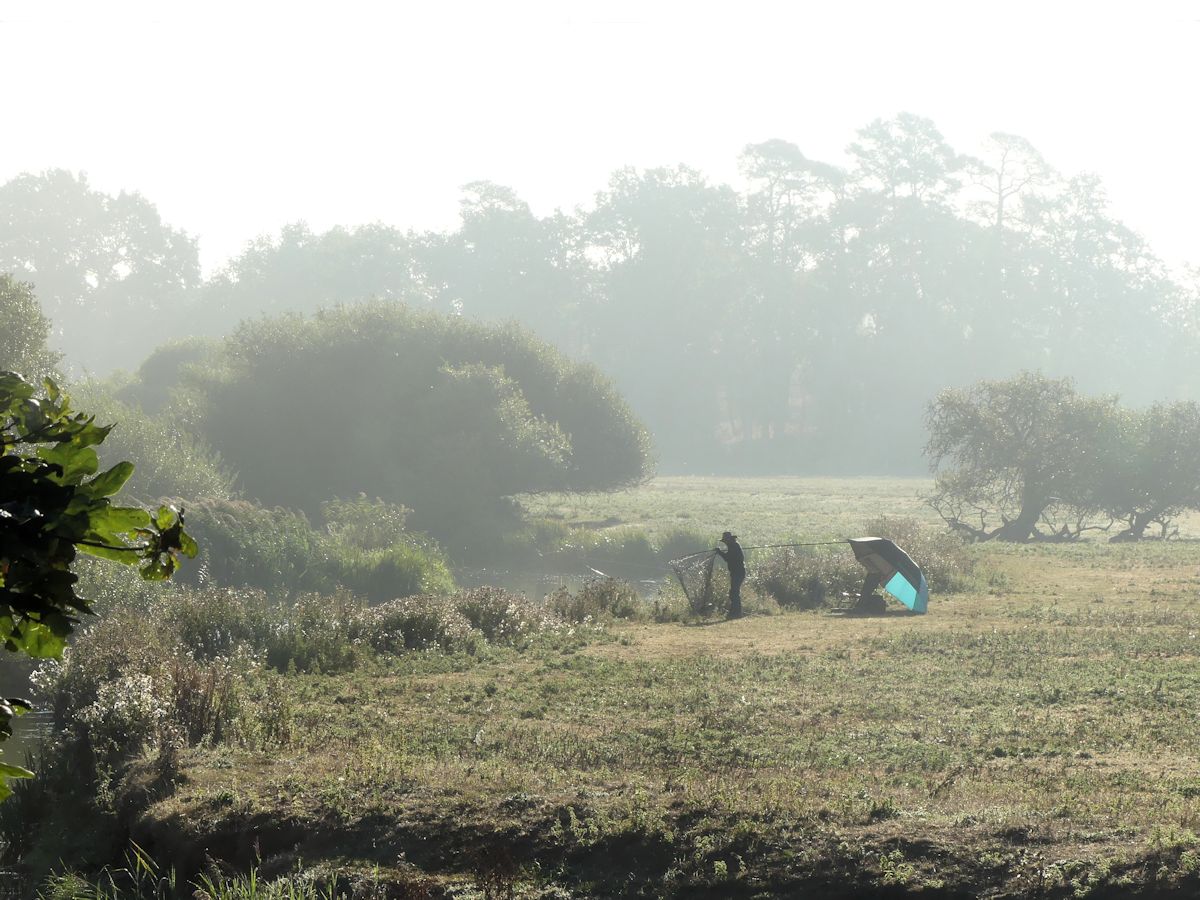
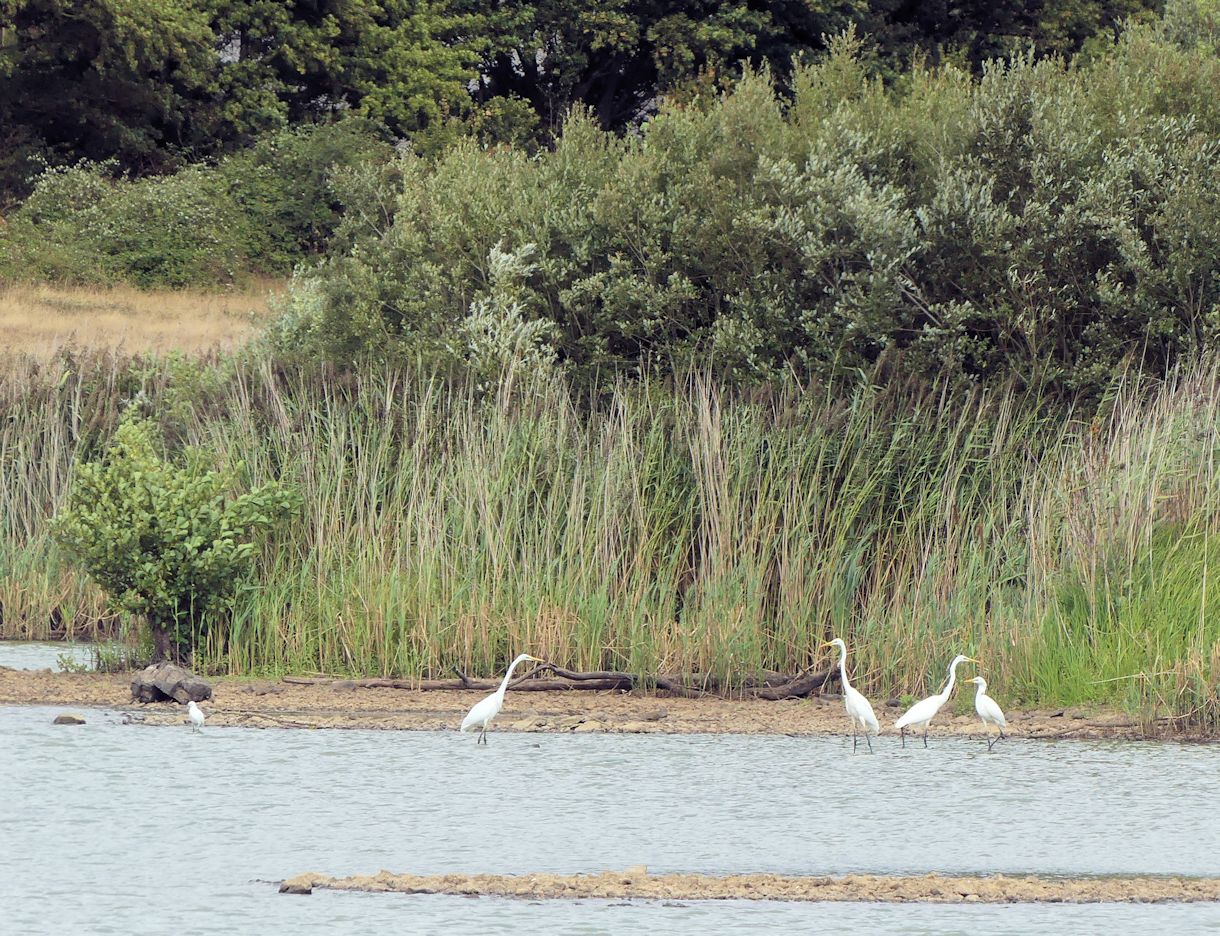
One safely in the net before the early morning mist has burnt off. The second photo shows that the Great Egrets seem to be making the most of the low water levels over in the lakes.
25th August
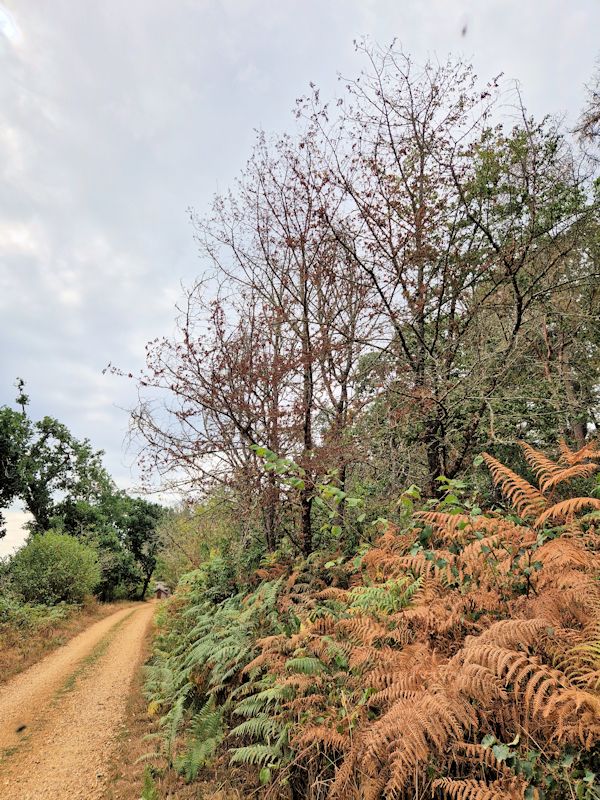
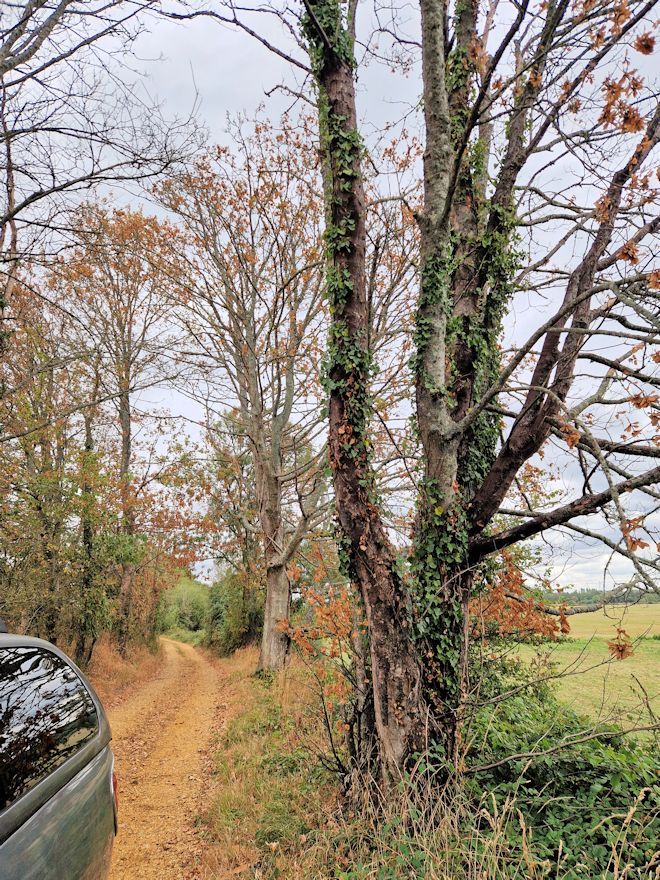
Things are changing and we don't have a great deal of say in which direction they will go. We've lost our massive elms, ash are dying the length and breadth of the land, our horse chestnuts, larch and alder are all struggling and now our sycamore have a disease that is killing them on mass. If we are to experience these extremes of weather just what will exist in a decade or two I dread to think.
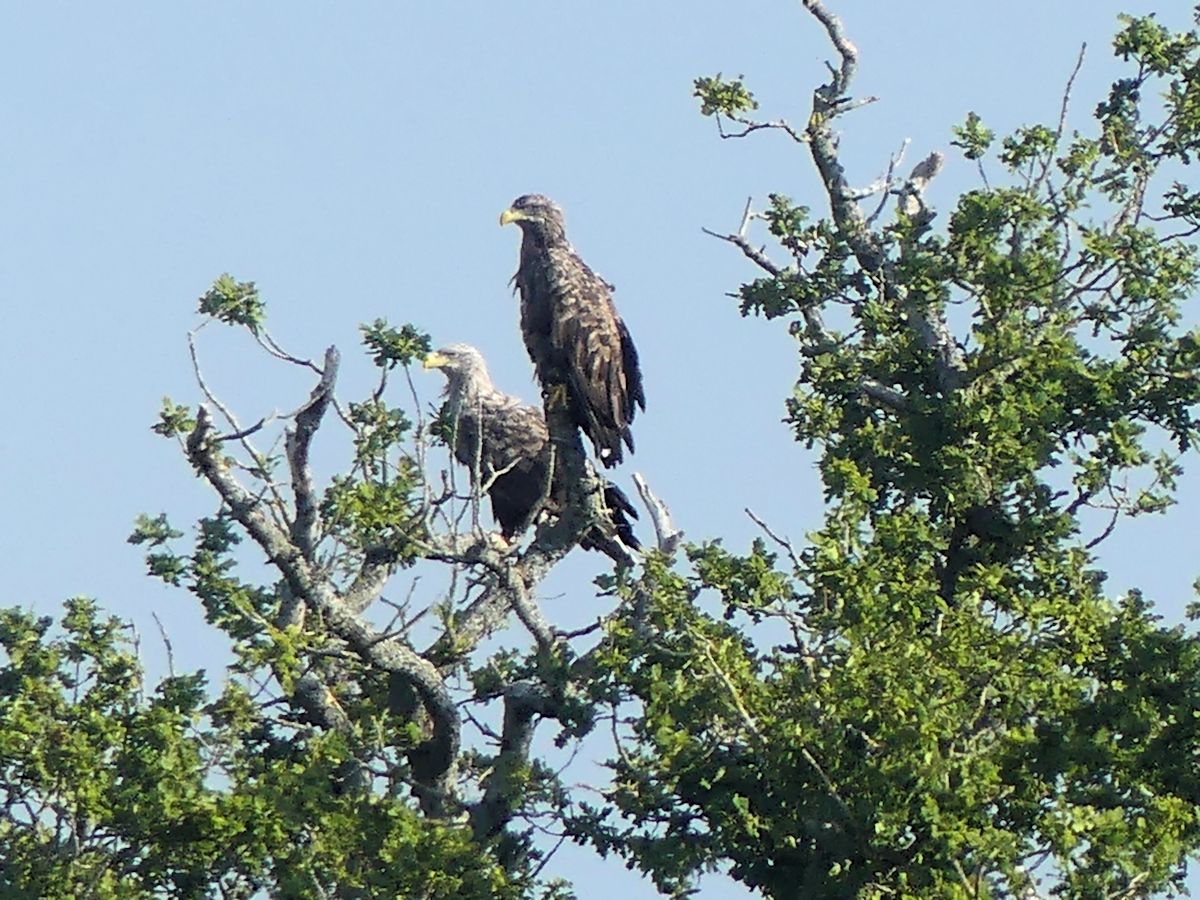
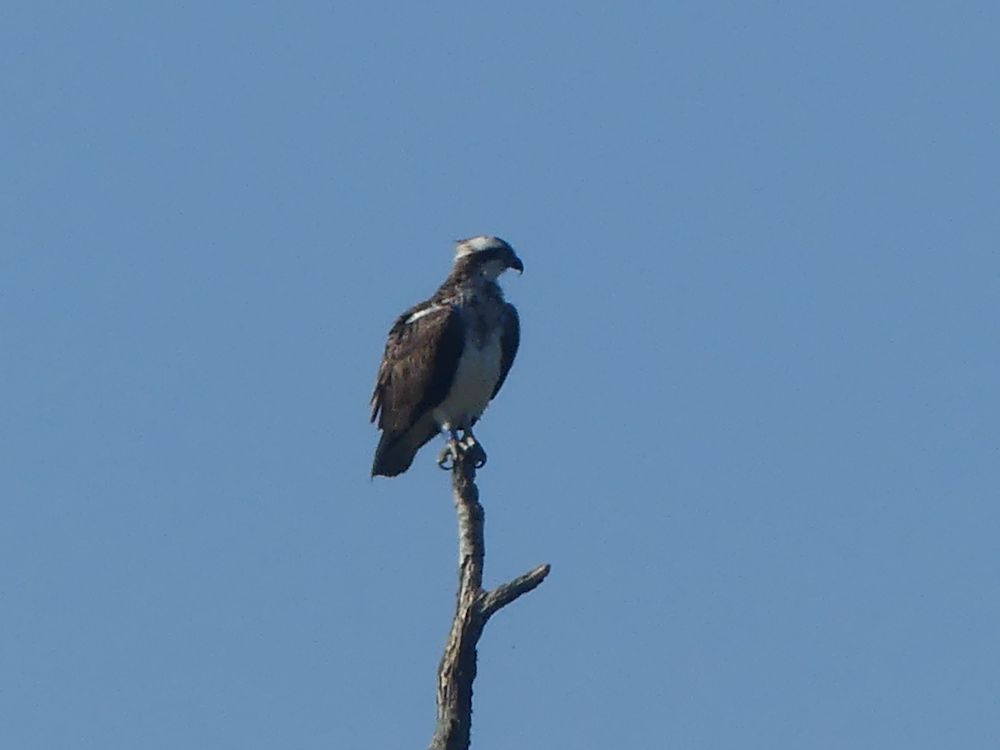
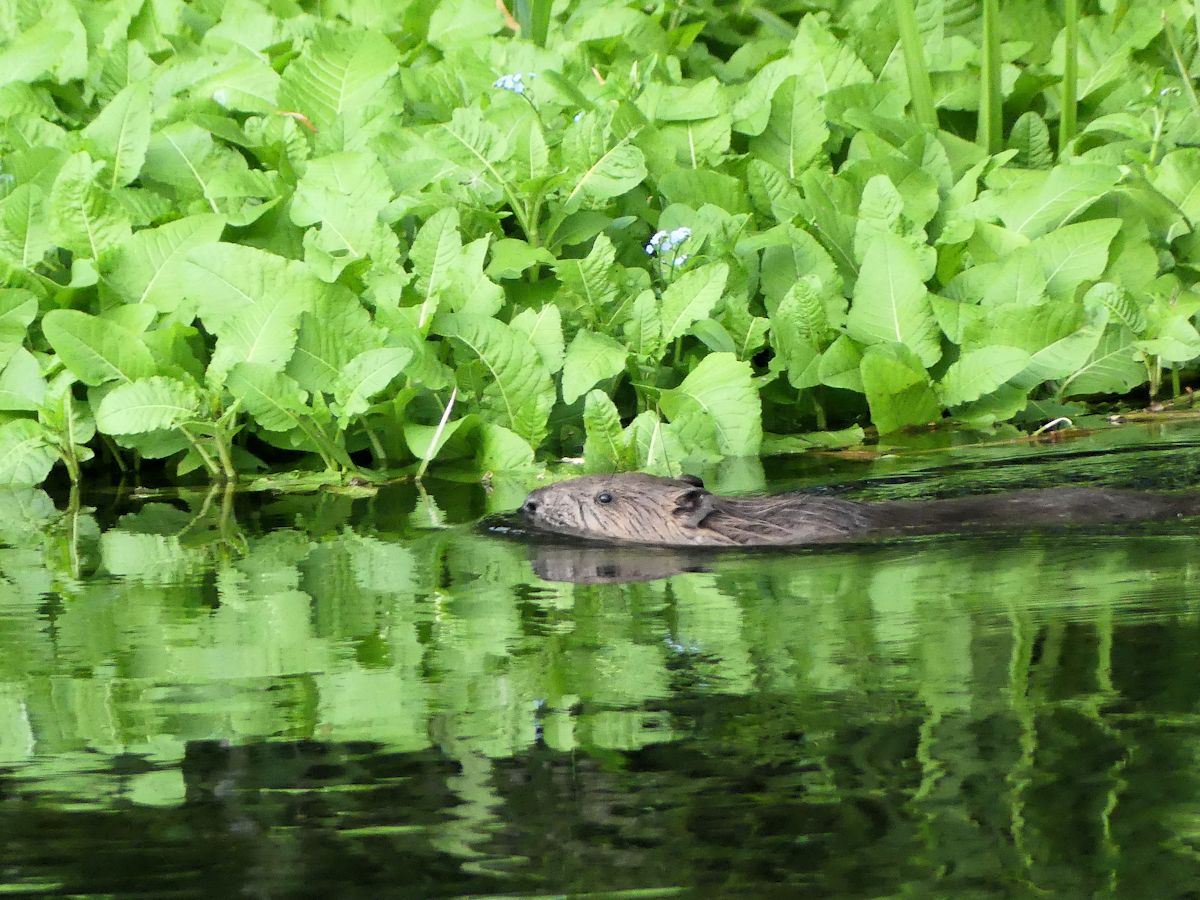
Our wildlife is also changing at an astonishing rate, hopefully for the better. The three above where not with us a decade ago, there is a changing attitude towards these new arrivals, with most welcoming their appearance. With our thousands of feral geese changing the grazing regime in the valley, like our woodland, "a change is gonna come"
20th August
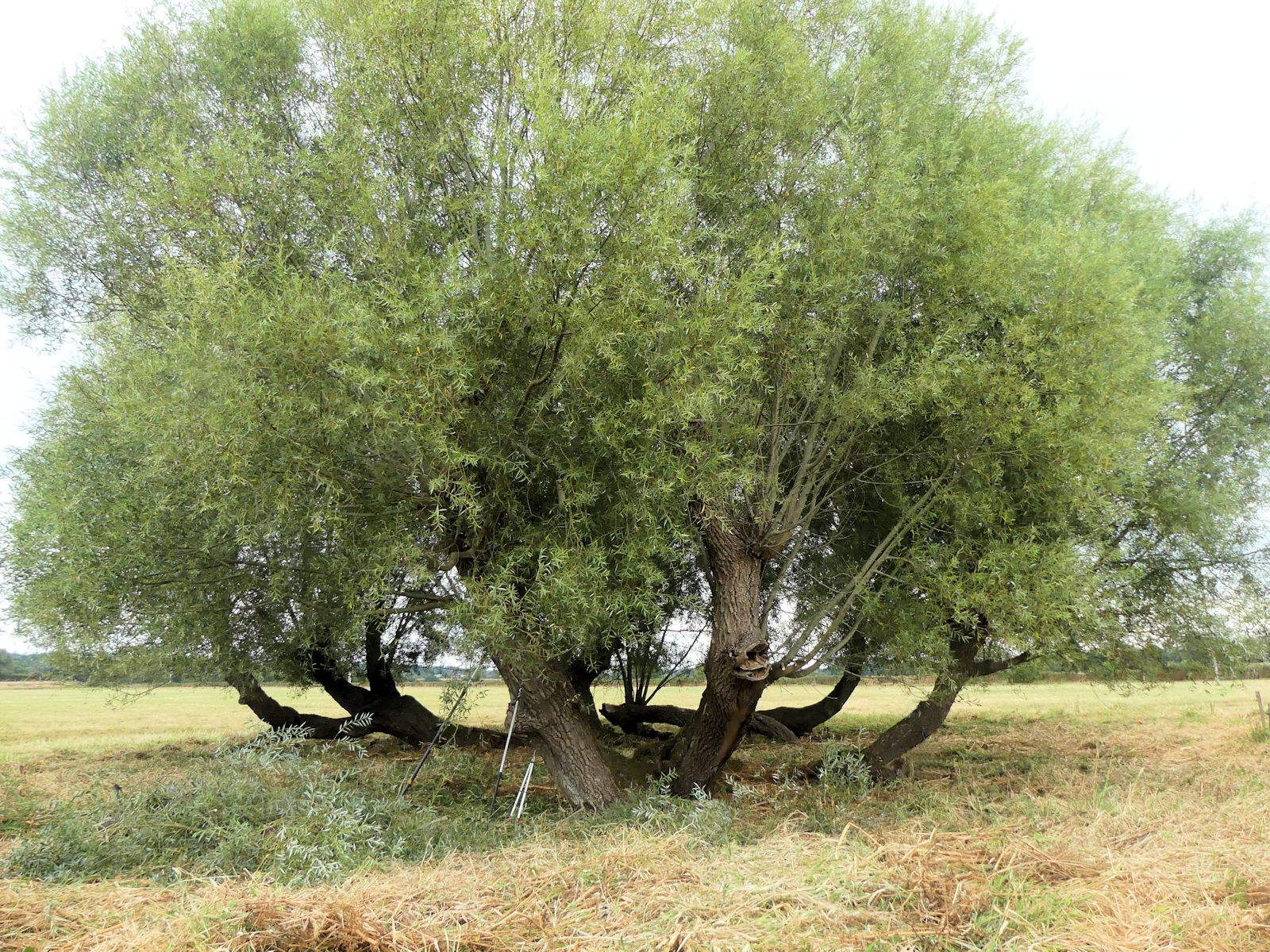
So the circle continues as we begin to clean up under the pollards. The tree work itself will not start for a further couple of months, we are now clearing the brash underneath so we can see clearly to the river. Where the never ending stream of bandits and idiots seem to think they have a right to roam, or have taken some form of stupidity pill.
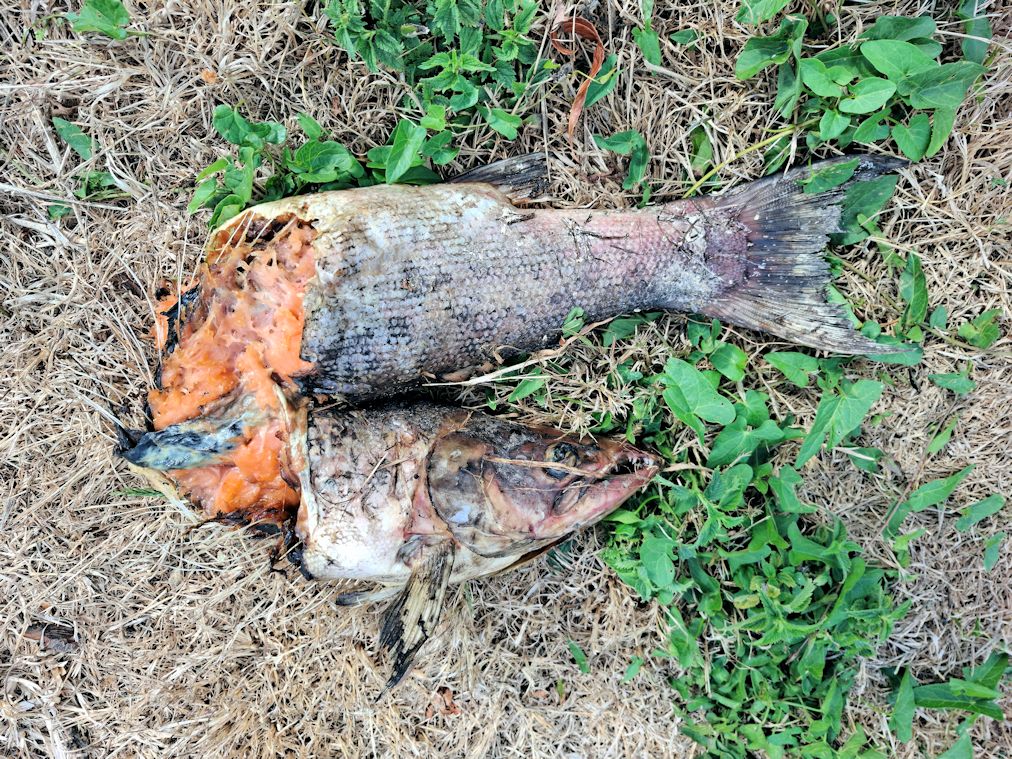
Not the prettiest photo but it is a reminder that I am still on the look out for dead salmon for Essex Uni's research project. Thanks to Paul Allen for letting me know about this one. Cause of death unknown, hopefully not warm water stress, the damage may have been inflicted post mortum. Most we see in the pools seem to be looking okay if very jumpy. With just eleven days to the end of the season it looks as if the temperaure may drop below the cut off for just the last few days. Bearing in mind the fish in the river have just endured the longest warm period on record, along with desperately low water levels, perhaps the best idea is to let them see out the season in peace, whatever the temperature might read.
16th August
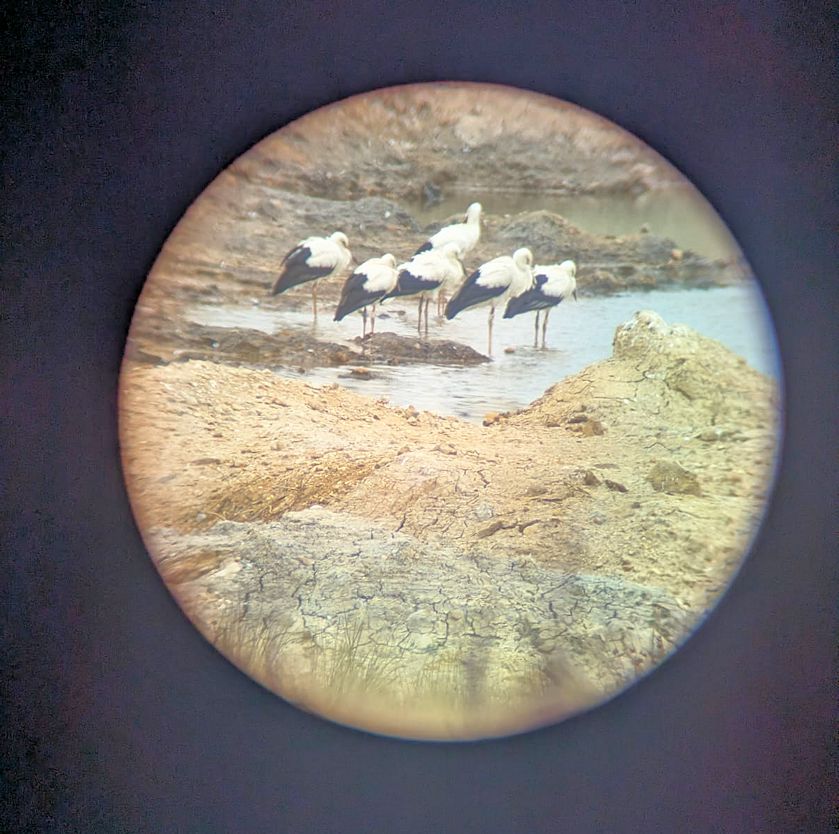
Kevin has been doing some digiscoping to capture nine of the Knepp birds that spent the night with us. Good spot and a nice photo. Well done kevin and thanks for sending it through.
14th August
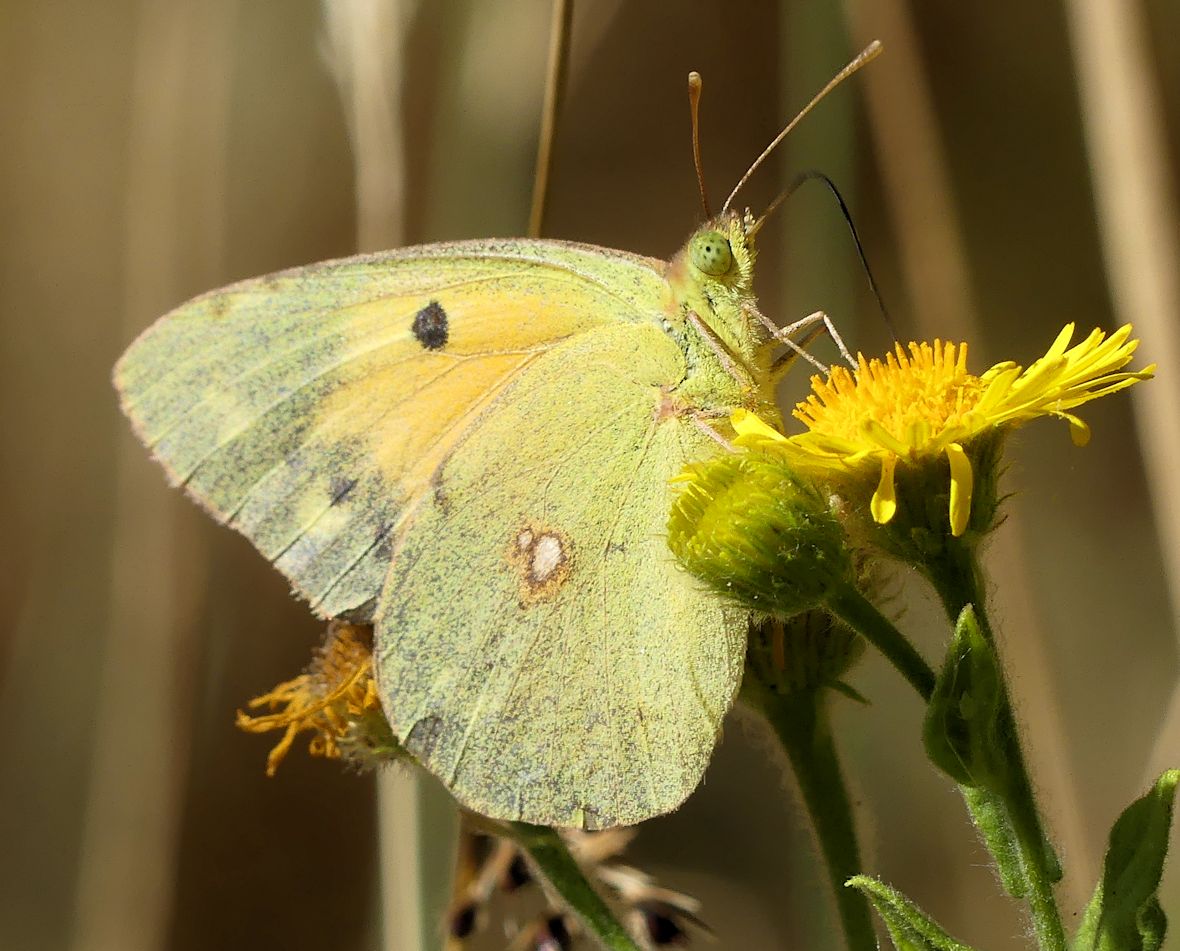
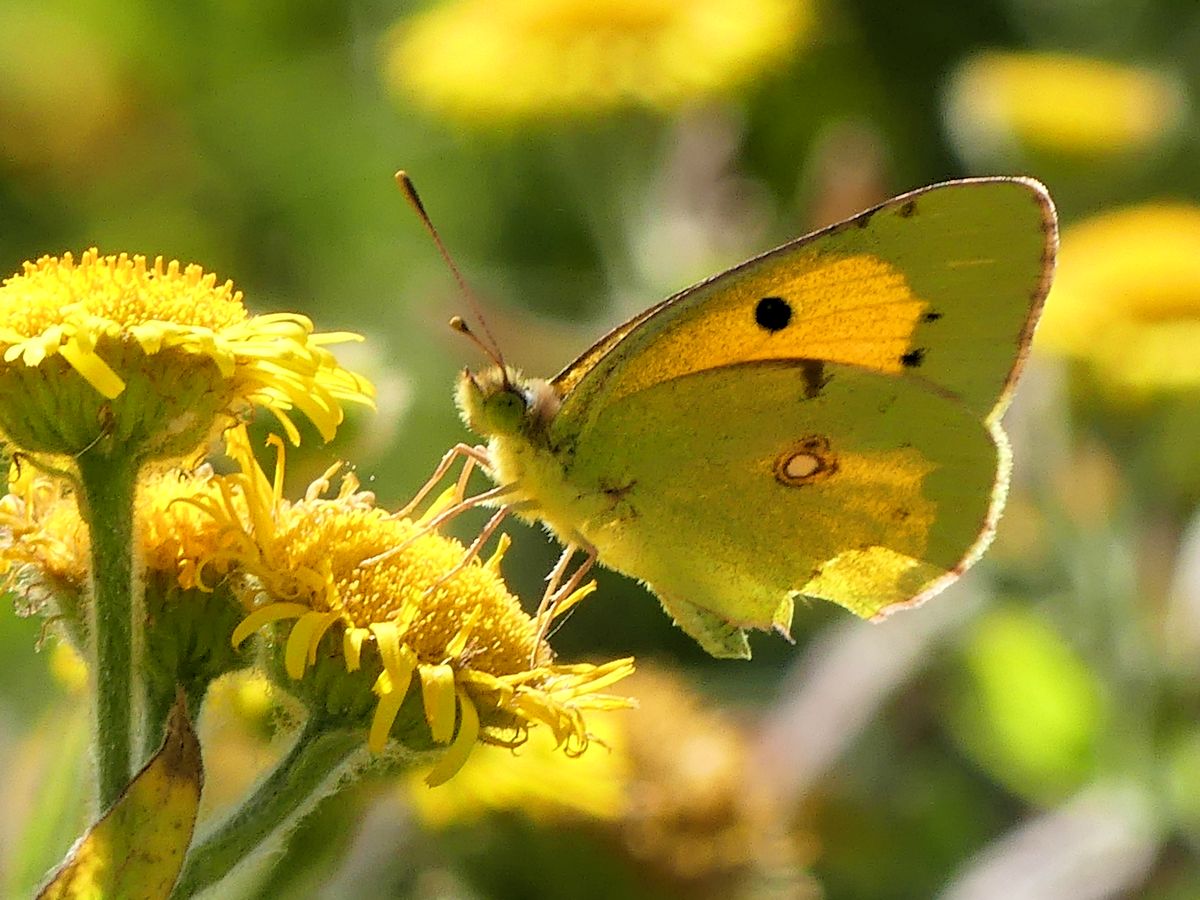
A jewel in the desert in the shape of a Clouded Yellow. If you want to depress yourself do a butterfly transect in this blistering heat. The meadows remain completely burnt off, what butterflies there are to be found are concentrated on the flowers in the moist margins of the lakes. The Clouded Yellow is a continental migrant like the Painted Ladies and the Silver Y, day flying moth. This time of year the ones we see are from home grown generations of eggs laid by the migrants that reached us in the Spring and thank goodness they did.
Knappmill counter figures for July.
Some light reading for the weekend.
13th August
I must start this entry by thanking all of the syndicate members and diary readers, who have got back to me regarding the warm water stress concerns. Please forgive me if I do not reply to you directly, I will do my best but if I miss you please forgive me and be assured I very much appreciate your input. I am also delighted to say one hundred percent of the replies to date have the welfare of our fish as their overriding priority and support measure to ensure we work out a plan to avoid undue stress during these freak weather conditions. Lets hope freak weather conditions remains a valid description and we return to a more temperate climate between such extreme climate swings. However it turns out we will have a plan in place to kick in when conditions dictate.
The favoured cut-off point todate would seem to be 22 degrees C, recorded on the Knappmill site, where we do our temperature check for the salmon cut-off temperature. As with the salmon cut-off point, 09:00am, we would have to have an agreed time for the reading. We would also have to decide the restart conditions, so watch this space.
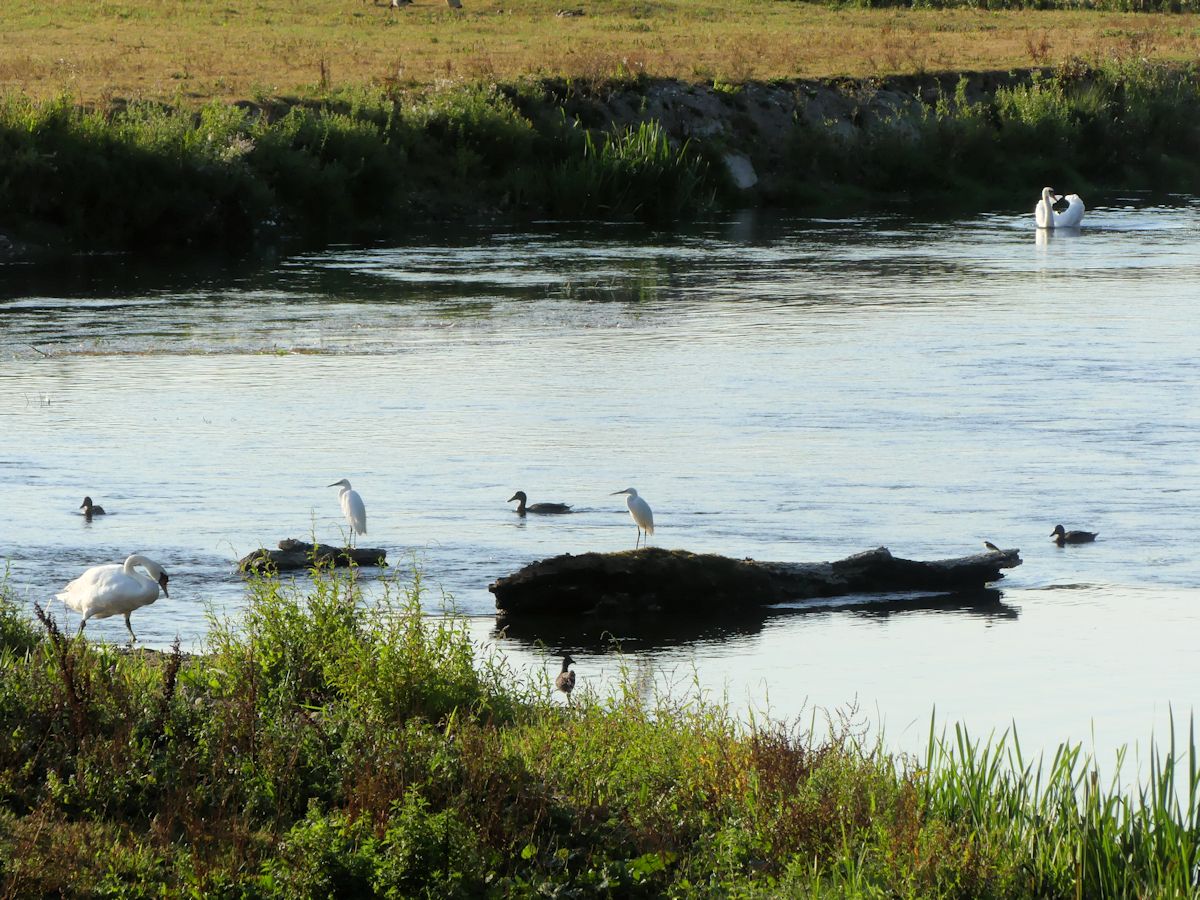
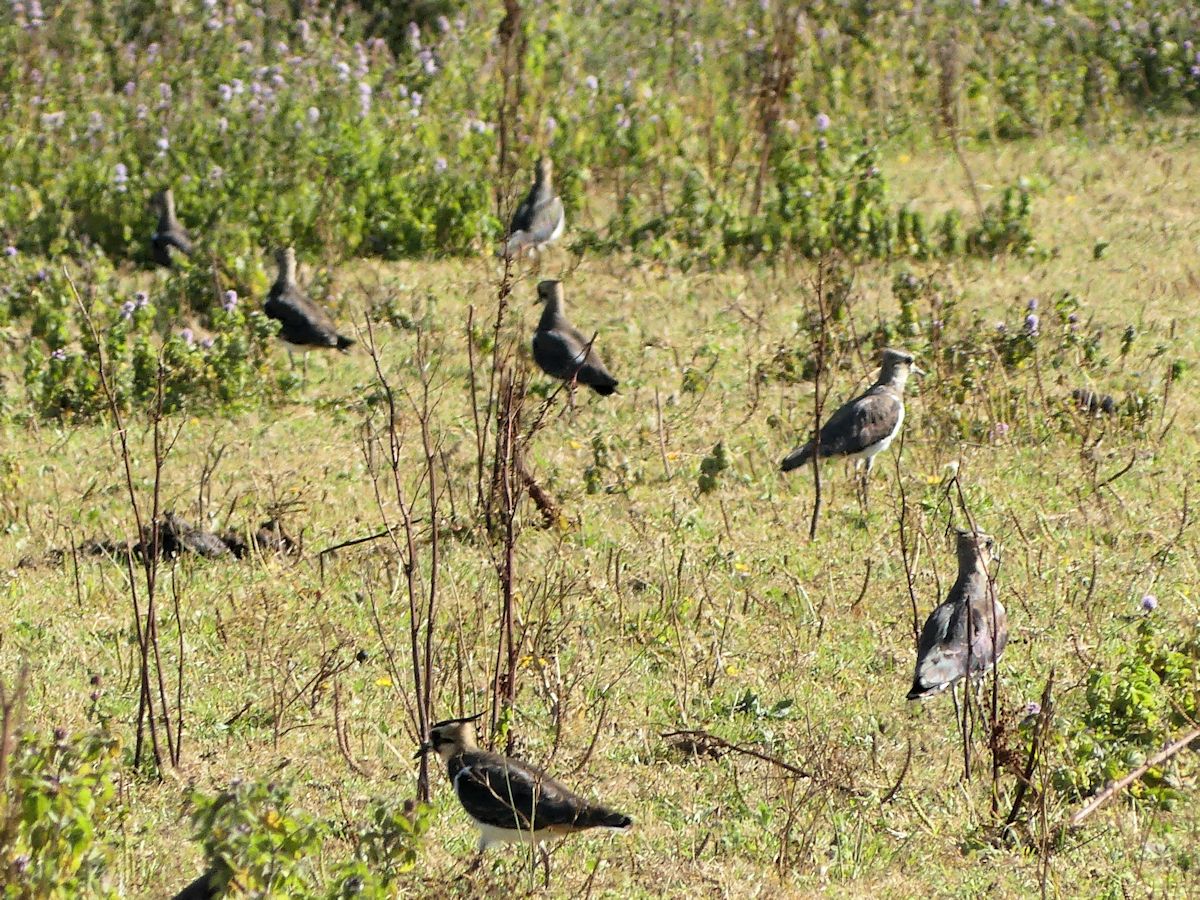
The low river levels have provided several new perches for our egrets to spear their dinner. Strangely despite many of the riverside meadows being parched dust bowls, there are numbers of waders about the valley. Along with the Lapwing, yesterday I spotted three Common Sandpiper a Green Sandpiper and two Snipe. I imagine the low water levels that have exposed several extensive areas of gravel bars are the attraction.
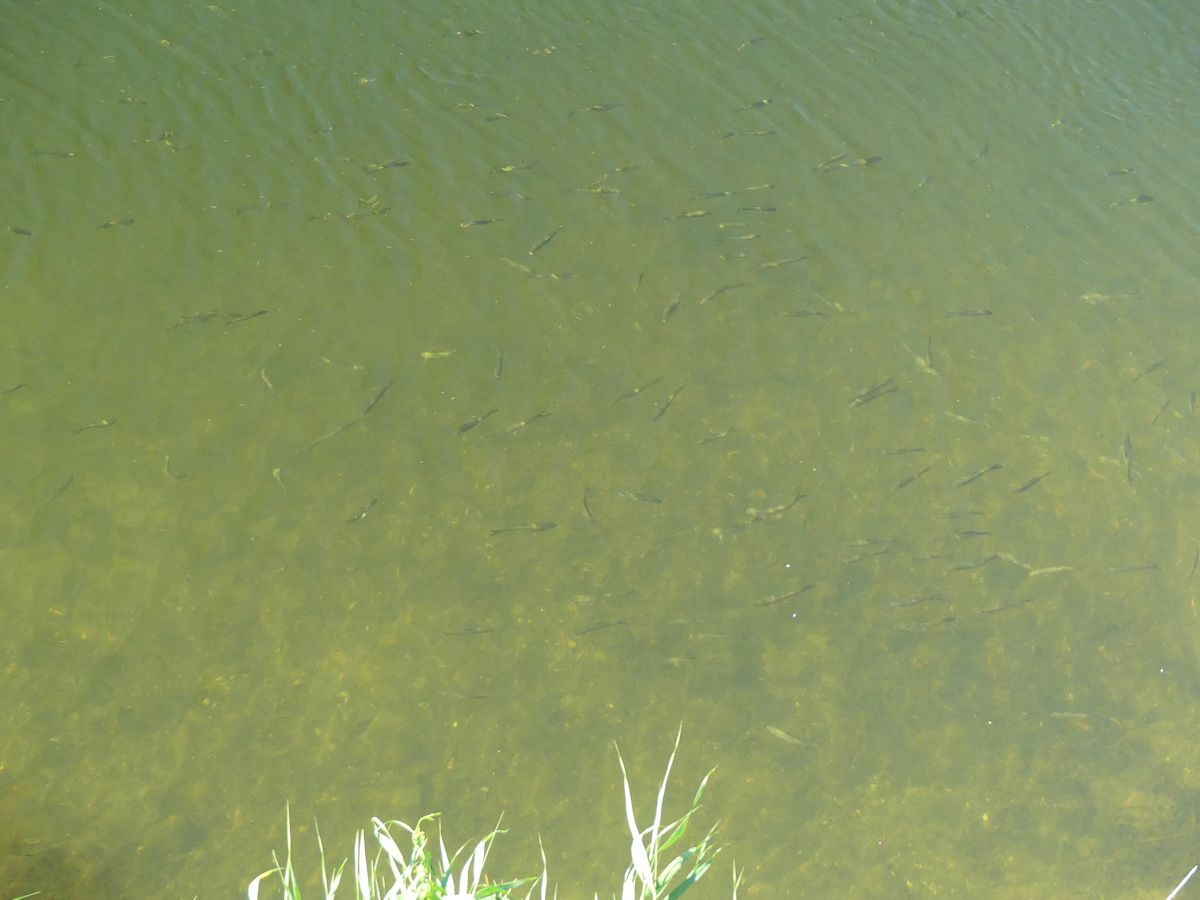
The photo above is just a very small part of a vast shoal of dace below Ellingham Bridge. Perhaps thirty metres long and five wide it must have contained hundreds of fish up to about 150mm, with odd herrings laying deeper below the shoal. Add a few roach and perch of the same year classes it was a sight to warm the dear old heart. Great, more good news for the future but it begs the question just where have they come from and what has caused this explosion of fish in the Avon. That shoal of dace is not alone, I could probably find twenty such spectacles about the place. Add the thousands of chub and barbel up to the same age, C4 or there about, what has been so special in the last four years? Is it that we have experienced early spawning and hot Summers, giving them a good start in life, over the last four or five years? We have certainly experienced some dramatically high winter flows that all these juveniles have managed to survive. If I had more time I would enjoy laying the river flows and water temperature charts over one another that may well support or dispel such beliefs.
There is a further, perhaps conspiracy, theory that might also be worth investigating. Is it that the water companies or some other dastardly discharger have cleaned up their act, fearing the recent spotlight on STW discharges might come and bite them on the arse. A further thought that has been expressed is that the last four years have seen the aquaculture industry on the Avon virtually cease. It has certainly reduced the Cormorant counts that use to get as high as four hundred a day arriving in the valley, down to a small handful of birds. Once those vast flocks of birds were disturbed in the morning, on the arrival of the staff, they used to transfer their attention to the river. Or possibly the long expounded theory that during the larval drift stage of many cyprinid coarse fish they were swept into the trout stews and never made it out of the downstream screens. Lots of theory, little hard fact, its a pity we can't turn to the regulators, charged with maintaining, improving and developing our fisheries, for the answers!
Associated with high water temperatures is of course lower dissolved oxygen levels in the water. It is probably the DO that has more direct bearing on the welfare of fish than the water temperature alone. DO levels plunge at night as aquatic weed begins to give off CO2 as darkness falls, oxygen producing photosynthesis is dependent on light. In recognition of that simple fact I would ask a voluntary moratorium on night fishing comes into immediate effect.
I would just like to think that some young, enthusiastic Hampshire Avon advocate, would take the time to sit down and look for the common factors that would have appeared to have restocked our river. Don't miss the opportunity as these increased stocks may not last forever.
11th August
As we enter our fifth consecutive heat wave, extending our fifty days without rain into very scary territory indeed. With the water temperature reaching over 25 degrees centigrade we are at levels never previously been recorded with us. You have to remember we are about a degree cooler than the bottom end of the river, down at the Royalty where the official salmon fishing cut-off temperature is recorded. When its reading 18 degrees down the bottom of the river, at the point we stop salmon fishing at Somerley, its actually about 17 degrees with us. That's in the order of two degrees lower than where the other fisheries on the Avon stop fishing. We have always put the welfare of our fish as our top priority. We are told these hot summers and wet winters are to become the norm. If that is the case we must ensure we are ready to safeguard and effectively manage the fishery through these extreme conditions.
With that in mind the duration of this prolonged heat wave is giving rise to concern for some of our coarse fish. Whilst water temperatures have fluctuated through the period of the heatwave as we have enjoyed the odd cooler evening, overall the water temperatures have been at levels and duration that stress our fish. Dissolved oxygen levels are also a concern with these high temperatures, particularly in the event of the heat triggering thunderstorms. We have lost one or two of our older residents, whether it was simply a matter of their time being up, or the temperature was the final straw we may never know. The other stress factor we control is of course our angling pressure. To this end we are considering a predetermined cut-off temperature along the same lines as we have for our salmon. This season it is a little late to introduce such a cut-off point but we would ask syndicate members to practice the utmost restraint whilst we are enduring this heat.
The levels at which we set the cut off will be decided once we have discussed the implications and studied the existing data. After the introduction, we will have to then decide on what conditions will allow us to return to the bank. Plenty to think about, if you have any views about where the limits should be set please let us know. It will not be at the same level as that we set for salmon fishing. I'm currently looking at temperatures above 22 or 23 degrees for a period of three or four days. Of course this will also have bearing on the levels we resume at. Lots to think about before we arrive at a figure.
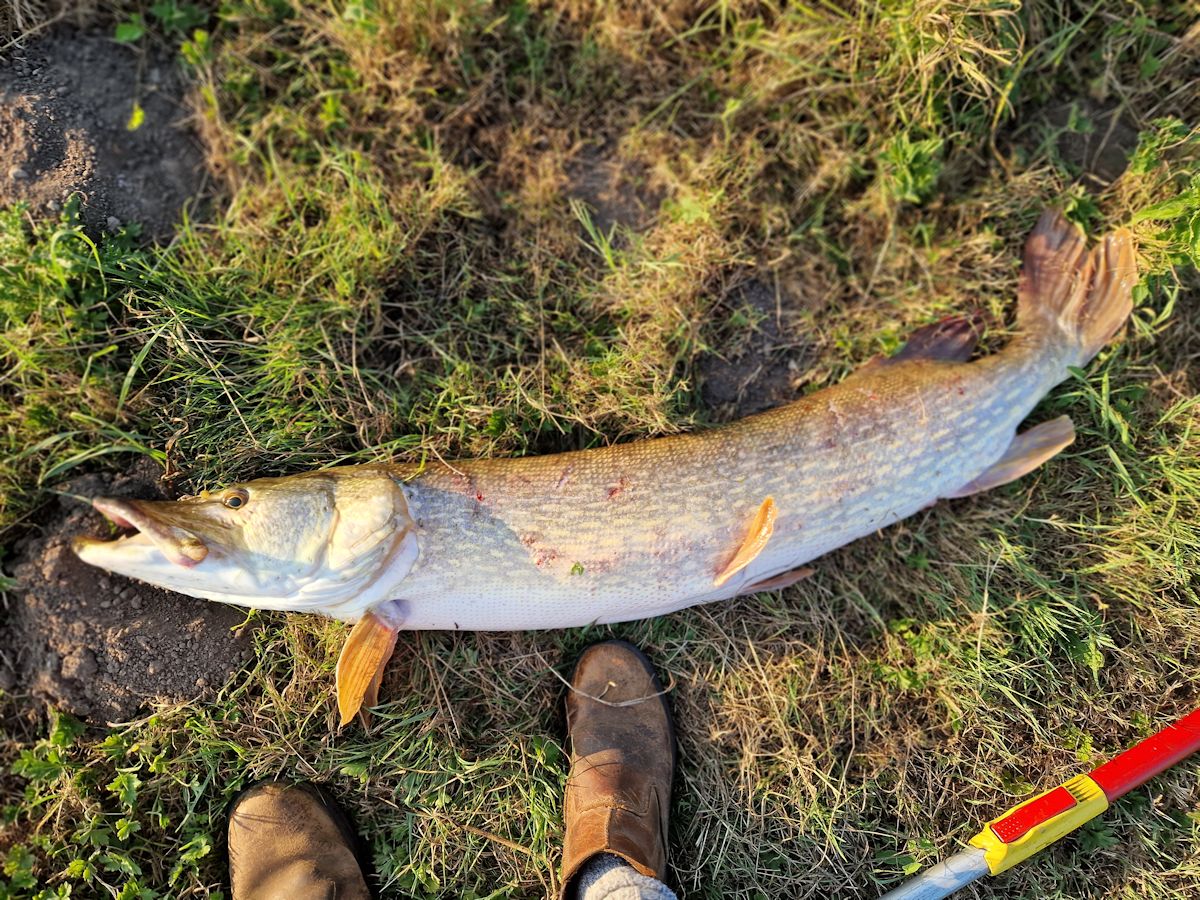
One of our most senior citizens came floating down belly up a week or two ago. She showed no signs of having been caught, I think it was just her time. I have to say I did not expect to have seen her last season so it came as no surprise when she died. Its sad but the natural way of things and there are always fish to take her place in the hierarchy. There are probably several of our old specimens that are finding these conditions extremely difficult, I think we owe it to them to give them a break.
10th August
Plenty of gudgeon and juvenile barbel.
I'll try and limit my enthusiasm for my new underwater video set up but one more for the time being is surely allowed? The clip above was taken in the Woodside Carrier thats the little carrier that runs down beside the lakes, which you cross when you go out the river at Blashford. Mostly weeded over at this time of year but where there are holes there are plenty of fish to be seen. Today it was good to see so many gudgeon along with the, chub, dace and barbel. Gudgeon are strange fish they seem to have the ability to disappear for months on end, only to show up again in large numbers as if they had always been there.
Please excuse the shaky video. Its not my usual shakes, it's trying to hold the camera in the fast flow whilst juggling the mobile in the other hand.
9th August
More juvenile barbel.
Just because I enjoyed the other ones!
8th August

Ellingham Show in full swing over on the Park. What was I doing? Attempting to get an underwater video system that worked without me drowning myself.

Another spot the birdie. In fact its not that special, its just one of the juvenile Red Kite from the workshop nest scanning his world. I put the photo up to illustrate the lengths we have to go to if we are to allow the general public in for events such as the show. The massive oak that gave rise to this monolith decided it was time to drop several massive limbs due to Summer drop. Unfortunately the tree is almost completely rotten. It remains sound and balanced enough for us to leave the monolith and Kern and his team from "Tree Menders" came down to make safe this oak and and several other unbalanced trees about the Park. The pleasing thing with this oak is that as well as the Kite family now making regular use of it, a barn owl has taken up residence in one of the shattered limbs.
........and how did I get on with my different underwater video set-ups? The first couple of attempts were complete failures, one had good clear screen that I couldn't record. The second I could record but getting it into position scared the living daylights out of the subject and the picture was rubbish when I go it there! The results of my third attempt can be seen below, which I am quite pleased with. It didn't involve me getting in the water and I didn't have to feed the cast to get them to show up. I just stuck it in the water next to the subject I hoped to record.
C+ juvenile barbel.
This was a first attempt at recording first year barbel in the main channel. As can be seen they are swimming with the minnows along with first year dace and chub. The flow made recording difficult but I'm sure I will get better with practice.
C2 Juvenile barbel.
An easier shoal of second year barbel to film. They are still part of the mixed shoal of dace and chub.
Oxbow roach.
A cloudy shot of the oxbow roach along with some dace, perch and right at the end a barbel
6th August


I really do enjoy seeing the cattle cooling down in the river, on a hot, humid day there can be fewer more natural sights. I'm not so sure the farmer feels the same joy in seeing his cattle getting around his efforts to fence them out, hey-ho, cows will be cows!
The second shot shows a boulder weir at the confluence of a side channel and a larger stream. Its a super little side channel stuffed with fish that pass up and down the boulder weir with ease. Many years ago, in fact fifteen years ago, I asked if a weir on the larger stream could be modified to allow cyprinid passage. In that time there have been multiple plans and countless "expert" consultants and still it remains unaltered. The greatest obstacle for the cyprinids is not in fact the weir, its the bloody regulators, in the shape of the EA and Natural England. Whatever happened to management that made decisions based on experience. In the event of f"*^ing it up, then the regulators should become involved, as most managers were prepared to carry the can. These days the cyprinids that should be the number one priority are left to rot whilst the boxes are ticked and the consultants get fat on the layers of bull*"*t. The Kings and Ashley Streams are another classic example, the demands of the regulators ensure the channels remain choked and of no value to the riverine SSSI, whilst they justify their existence. Those are the two streams on the southern end of the Estate that should be providing over ten thousand square meters of prime riverine habit, yet have remain without flow for over ten years waiting until someone can find the time to meet the regulators bull*"*t bureaucracy. Its not us that stand to benefit from sorting out the flow on those streams, its the beats downstream of Ringwood where those thousands of juveniles will drift downstream to populate. That's just the tip of the iceberg but I'll stop now after venting that drop of venom. You guessed it, it hasn't been a good day for the Avon fish.
Juvenile barbel.
To lighten the mood, Jonny's been at it again, this time spotting some of our baby barbel. Along with the recently discovered roach in the oxbow, that I did by the way jump through the bloody hoops the regulators demanded to clean out, I guess I was a more patient, younger man. Anyway back to the baby barbel. Pleasingly any suitable and judging by the oxbow previously thought unsuitable, habitat seems to be alive with juvenile barbel. The clip below was of a shoal probably numbering over a hundred C2 barbel, a sight repeated throughout the Estate. If that density is throughout the entire Avon there must be many tens of thousands of barbel to hopefully secure the future of the species. Nice clip Jonny, keep up the good work. It certainly cheered me up.
4th August


Almost a month ago, in my entry on the 9th of July, I mentioned the pleasing numbers of fish of all year classes that could be seen in the main river. Vast shoals of dace and chublets that bode well for the future. In that entry I also mentioned we could not find the roach and perch. Well, as it happens, Jonny came across them a day or two ago in a most unexpected place. The photos above show one of the oxbows we cleaned out several years ago. It is now little more than a couple of foot deep and probably in need of cleaning out again in the next year or two. If you look closely at the lefthand side of the middle shot you can see a shoal of good roach and a chub just by the prominent reed stem. Some of the roach were well over a pound and the shoal certainly numbered in excess of fifty, probably nearer one hundred. In an effort to get a better idea of numbers I took the underwater fishing cameras along this evening to see what I could discover. To say I had a shock is an understatement. Even in that shallow water you could only see a fraction of the fish present. Despite being somewhat murky as soon as I put the cameras in the numbers of fish were amazing. Not only roach and the ever present chub and dace, there were good numbers of perch to over a pound, skimmer bream and perhaps most surprising in the completely still water, numbers of juvenile barbel. They were c2 and c3 fish, of a similar age to those we have been seeing on the shallows and weir sills. It was an eye opener for me aqnd just goes to prove we still have a great deal to learn about the preferences of our fish. What was particularly odd was that the camera could be seen laying on the bed of the two foot deep channel and on the screen many fish were present, yet despite only being two or three meters out those fish were invisible to us on the bank.
Oxbow roach.
A clip of the missing roach. Whether they will still be there when we are looking for them in the winter remains to be seen.
1st August
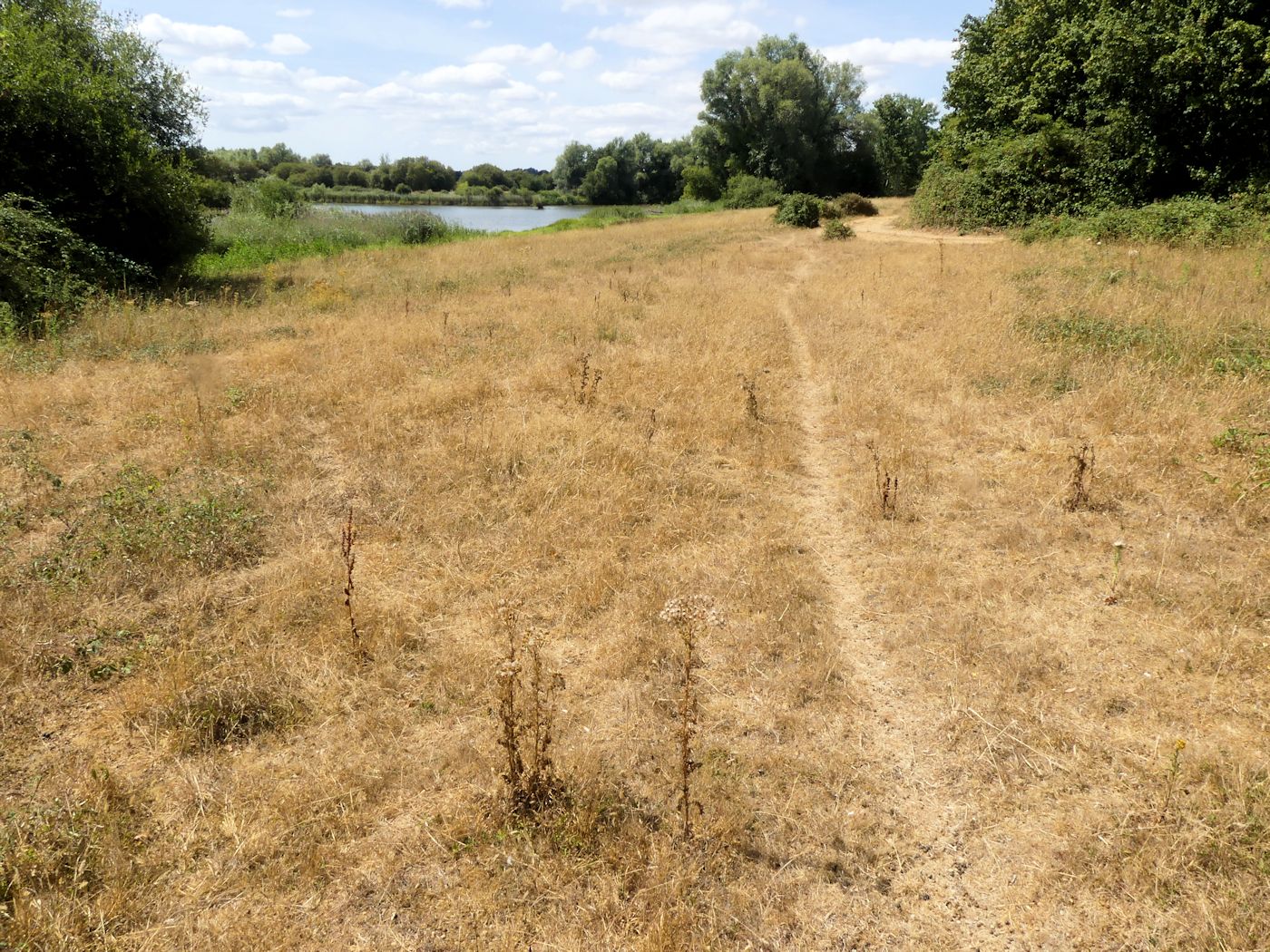
Last week I mentioned the baked meadows around the lakes, where I do my butterfly transect. I'm sure it will come as no surprise that the situations hasn't improved and the meadows remain dried to a crisp. For reasons best known to themselves the Common Blues seem to be thriving in this desperate desert as their numbers are as high as I have ever recorded. The path in the photo is a deer track where they seek some greenery to eat on their nighttime rambling.
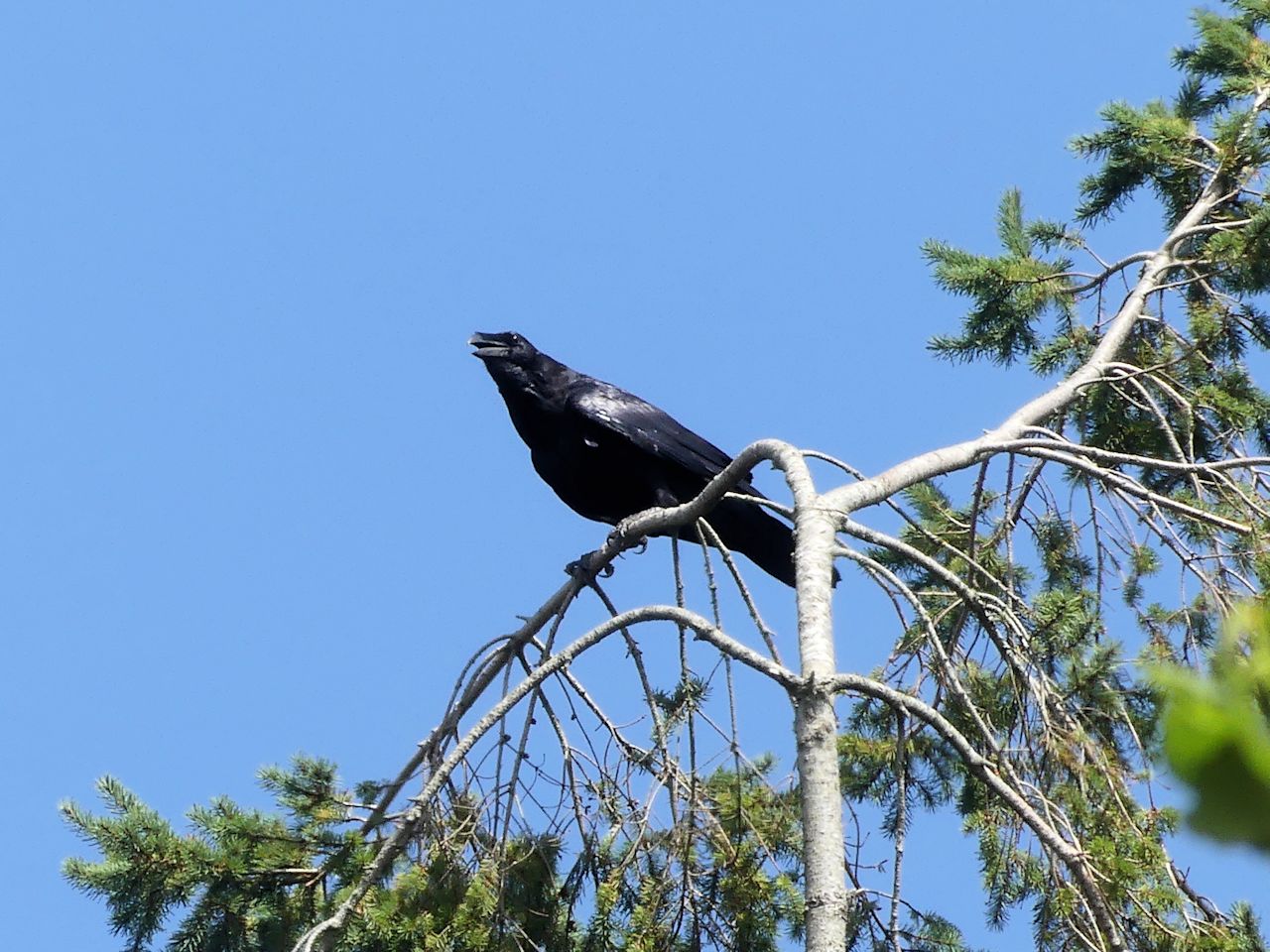
As if mocking my sorry efforts to walk the meadows, one of our our Raven families sat in the nearby pines and croaked their opinion. They are a lot braver these days as the Gos that reared her family in those same pines has now left the scene with her noisy brood. This has also allowed the Green woodpeckers and Buzzards that share the site to breath a huge sigh of release.
"The difference a mile makes"
Just a mile away, across the valley, the water meadows look as if we are entering a different world. The lakes sit on the first of the gravel terraces that bound the valley, drying out at the slightest hint of high summer. As opposed to the water meadows that sit in the flood plain of the Avon, with the water table in easy reach of the roots of the valley flowers. If you look at the central photo below you will see a shot of the waist high, water mint, fleabane and hemp agrimony that fill in the region of one hundred acres of the valley at the point of my visit. The vast area of flowers attract large numbers of butterflies and I mean large numbers, certainly many hundred, possibly thousands drifting across the meadows. Mostly the whites but there are good numbers of many second brood migrants all enjoying the very localised bounty.
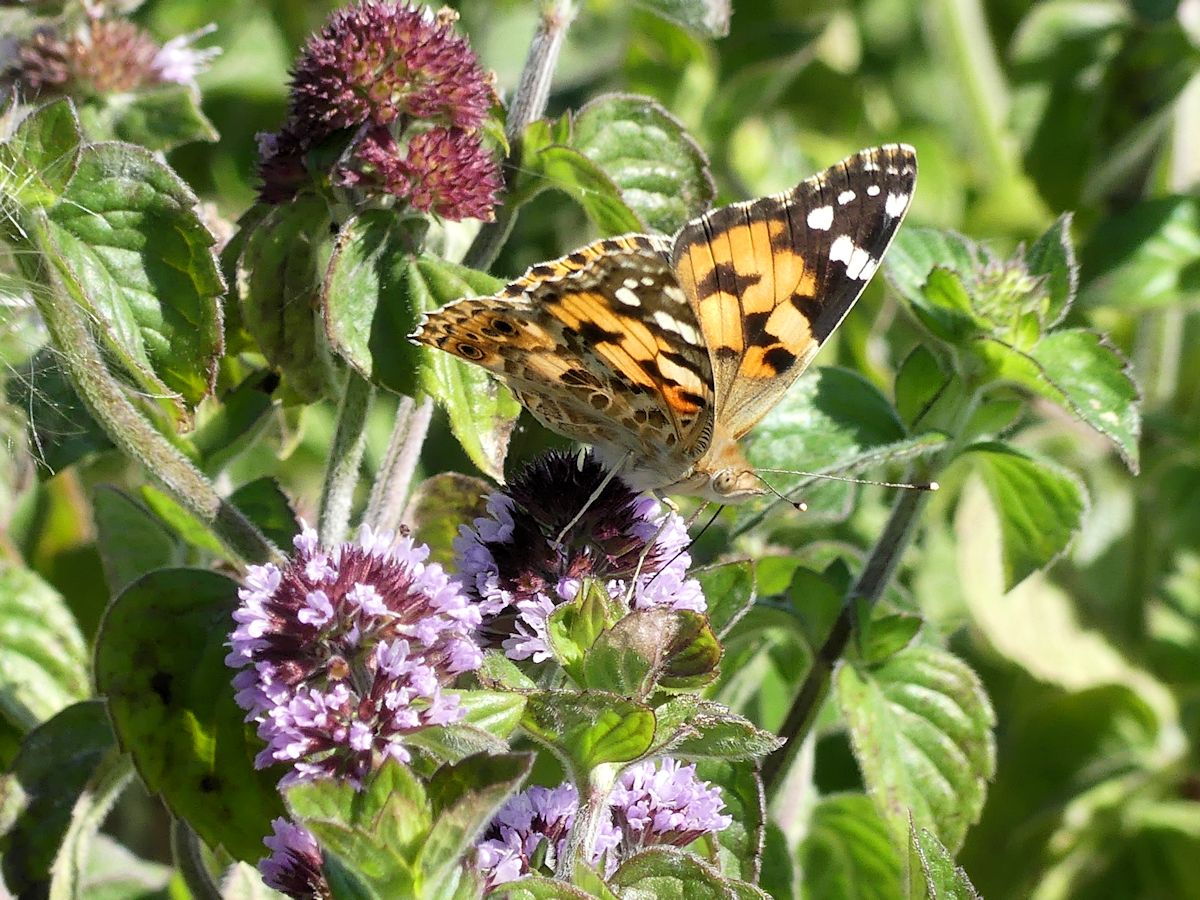
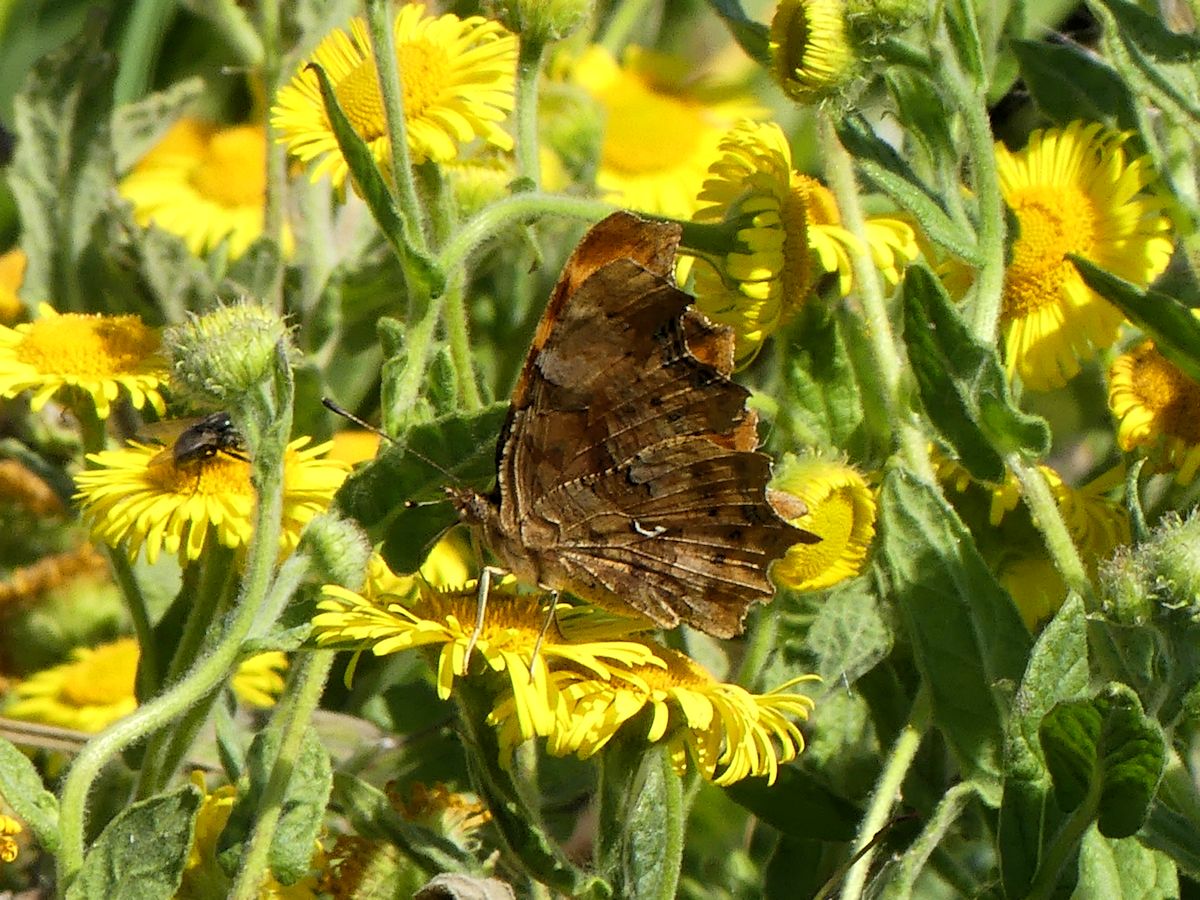
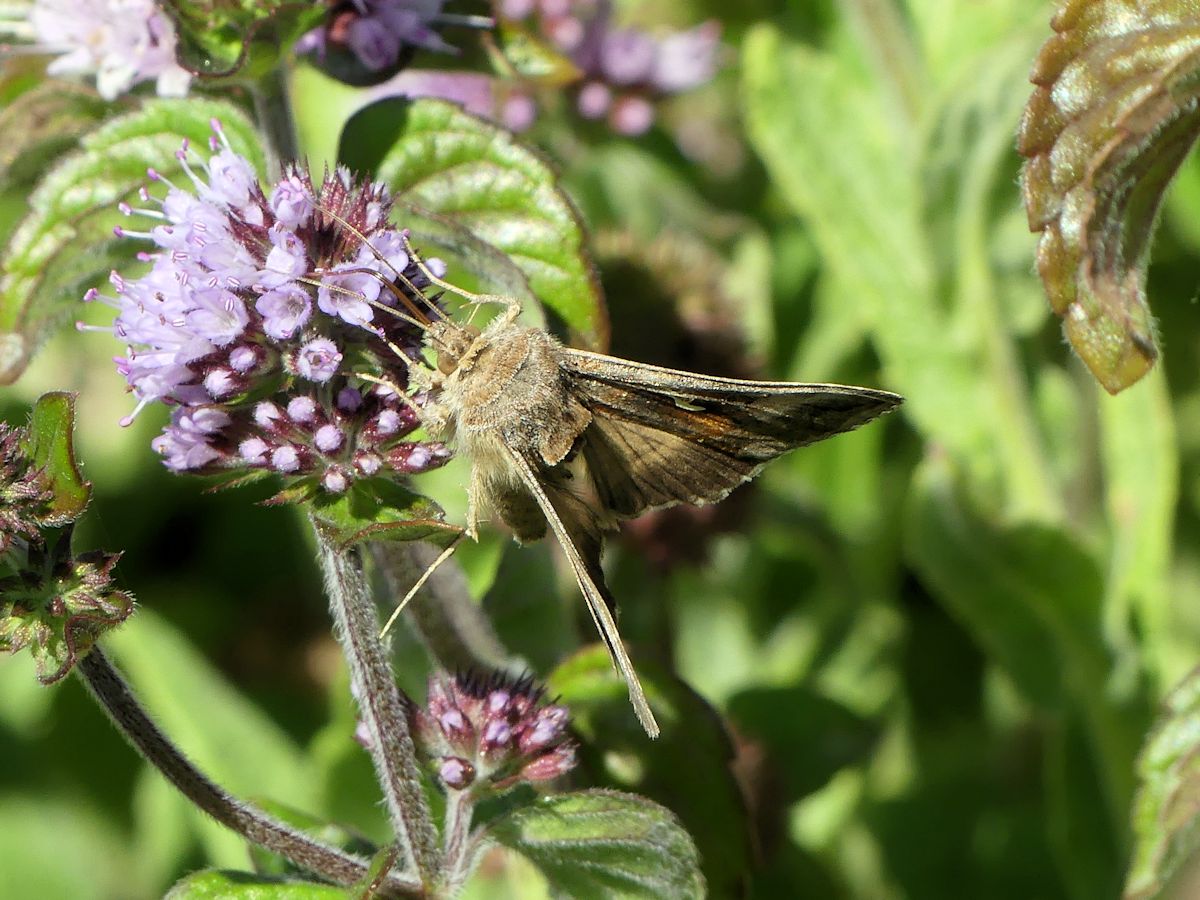
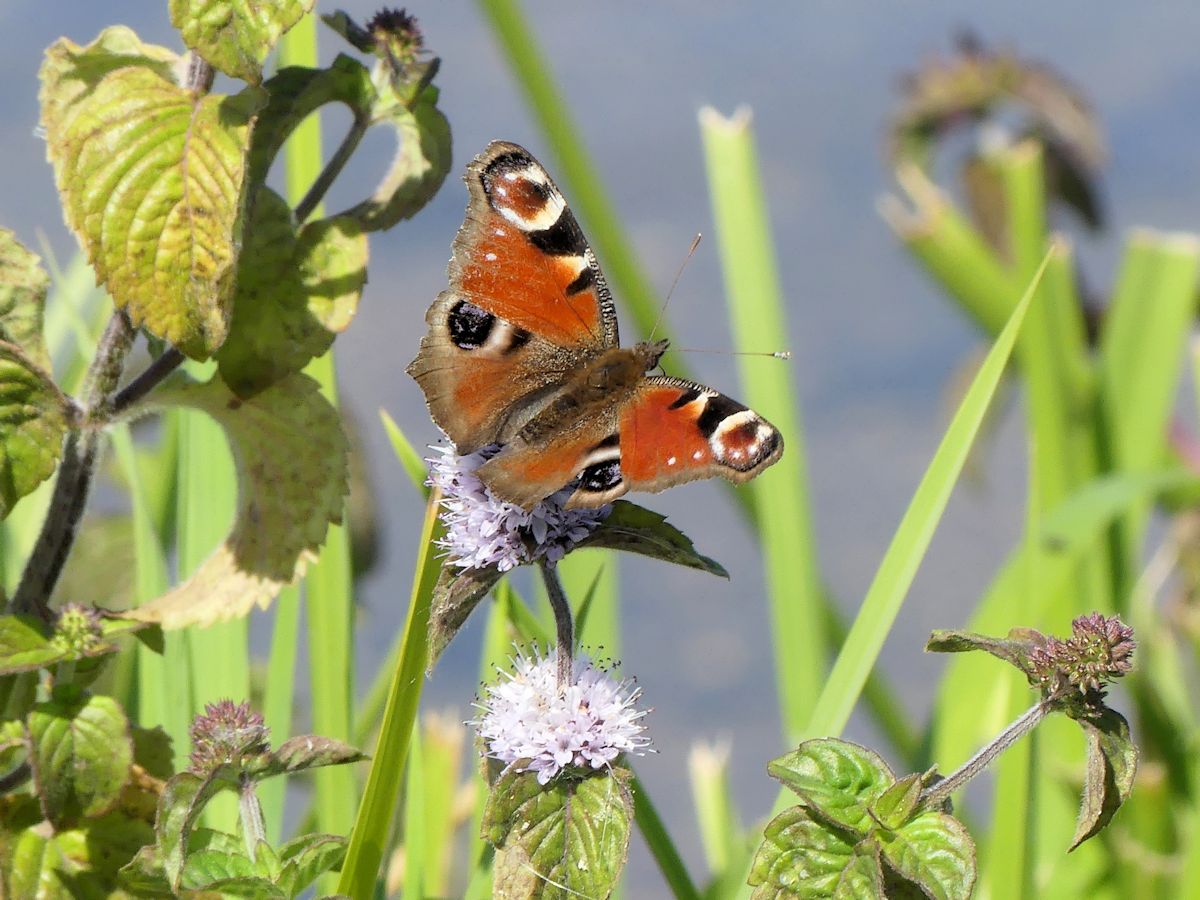
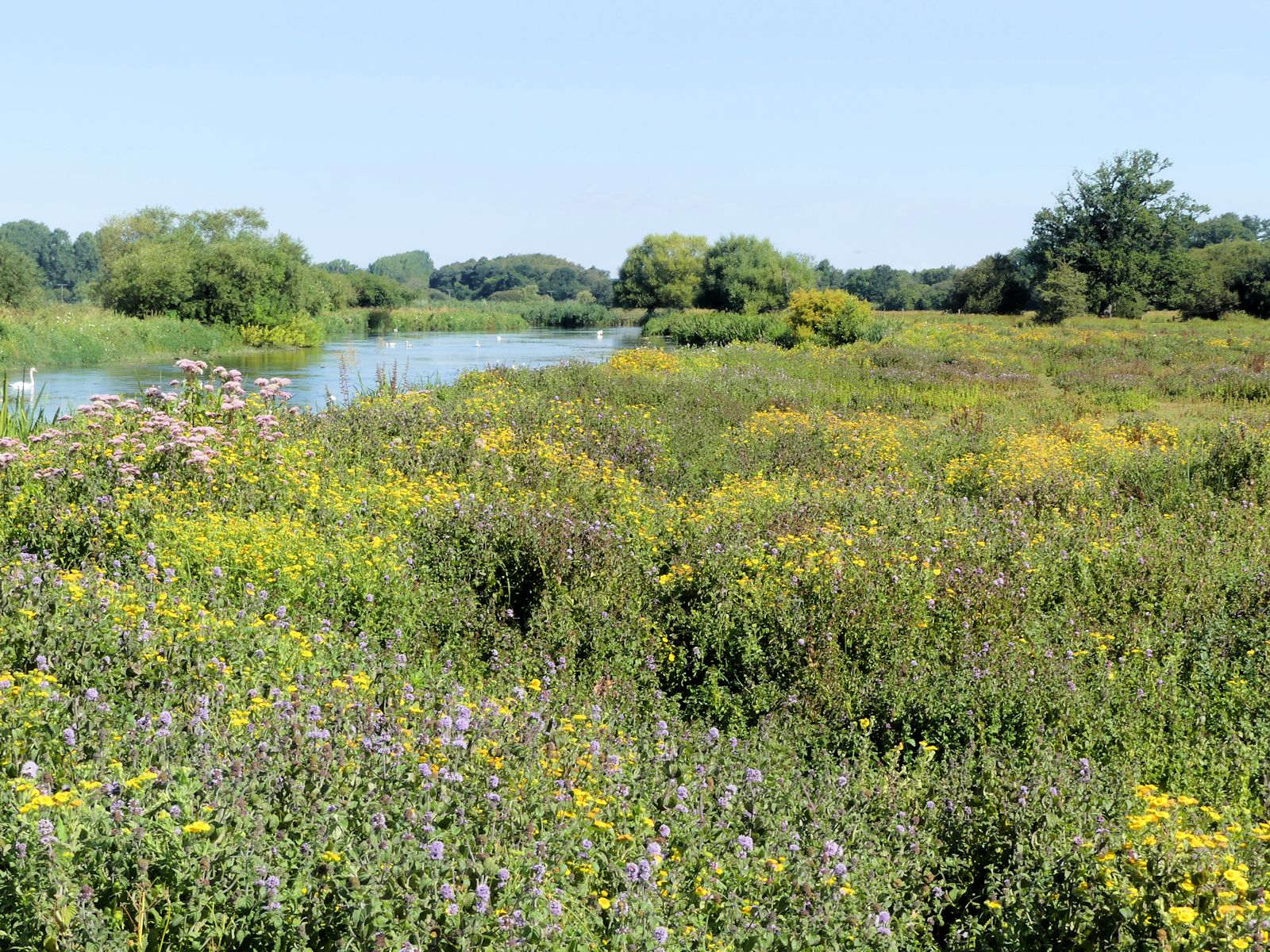
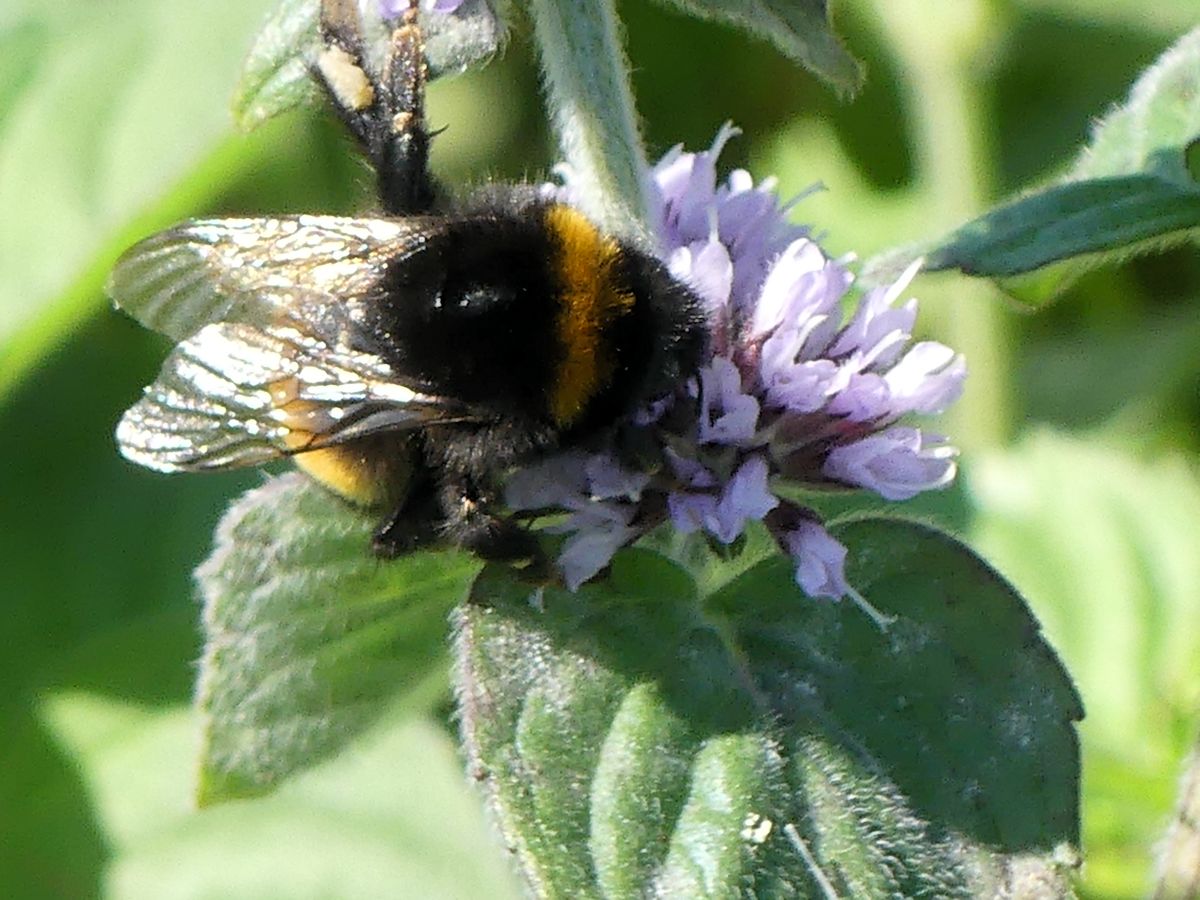
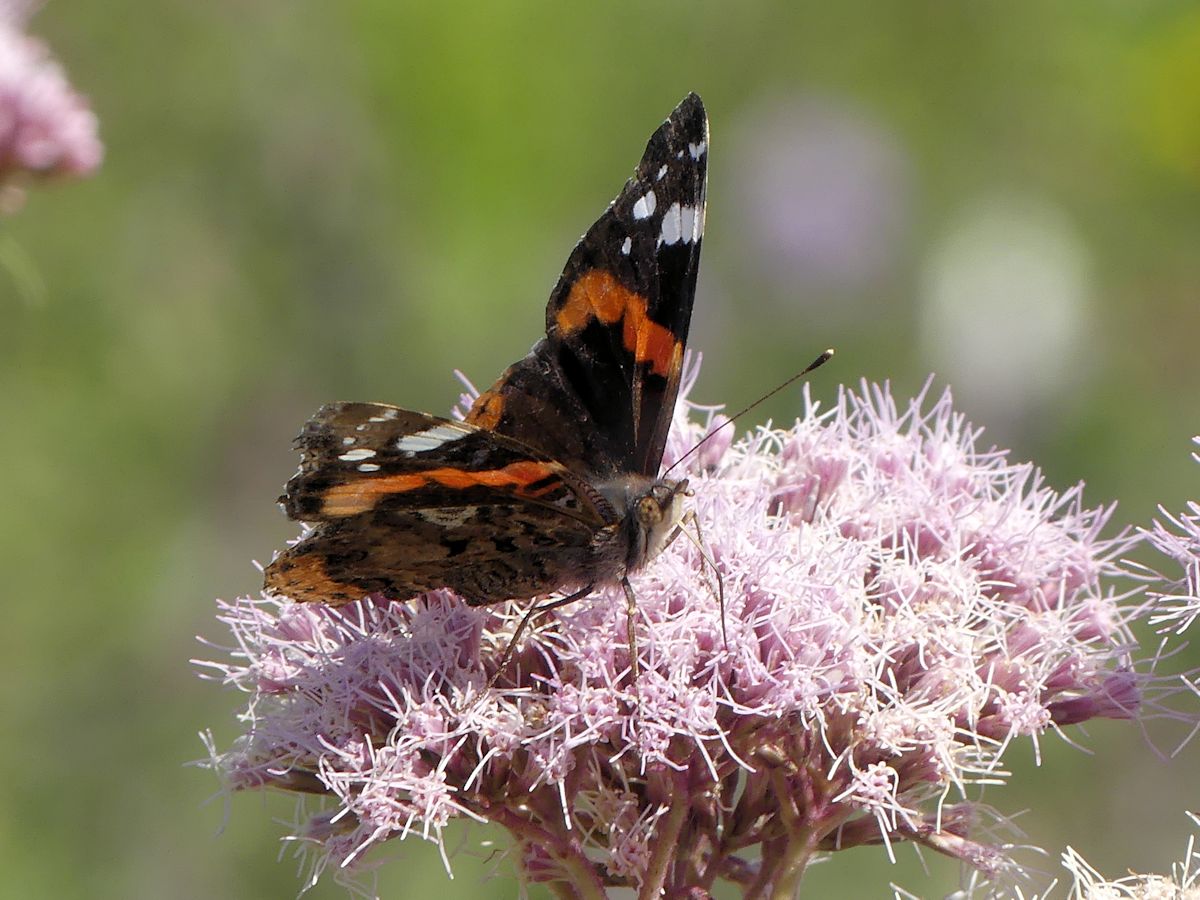
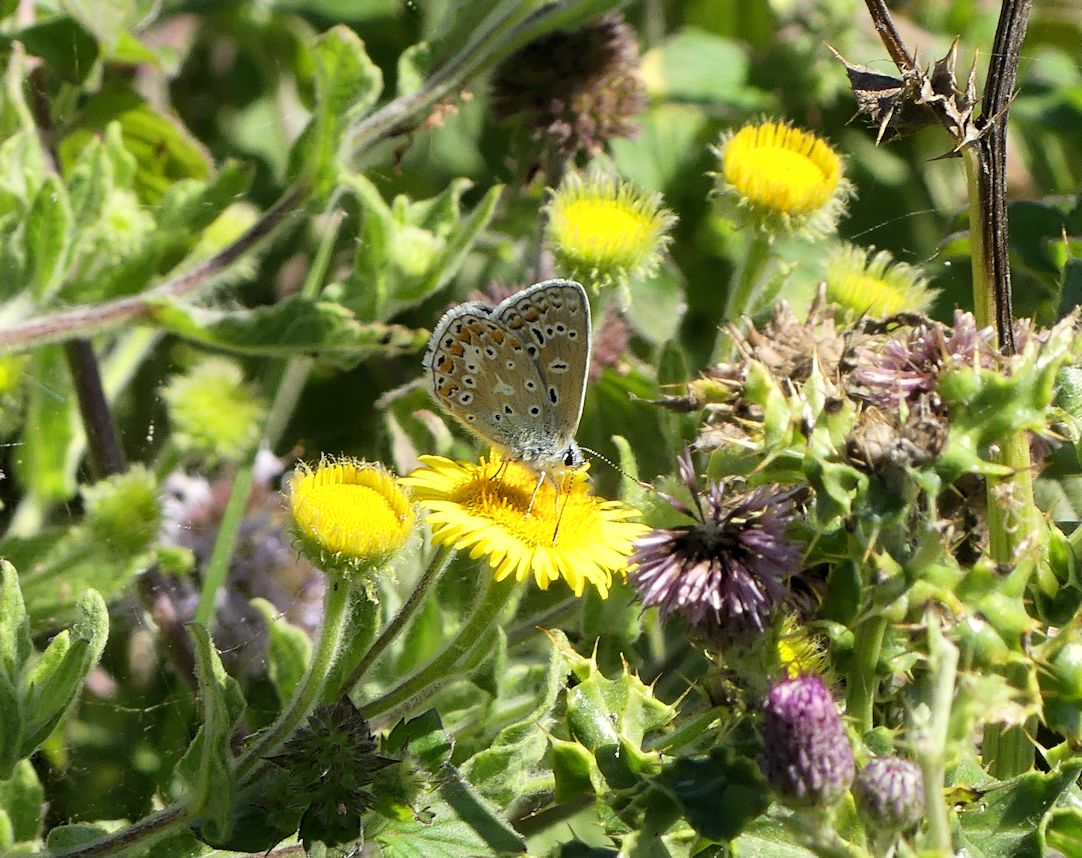
As with the mocking Raven over at the lakes I had an audience as I made my way upstream beside the river. I think it was probably more confusion than mockery as they tried to understand if the bod out in the meadows bobbing about posed a threat they needed to avoid.
The water meadows in bloom.
A glimpse of a different world.
31st July
My favourite tree on the Estate is the, Robinia pseudo-acacia or Black Locust, that grows close to the drive on the Lower Park. The Robinia is general considered an invasive, unpopular, ugly tree, with a fencing timber value, based around its quick growth but little else in its favour. Its unfavourable reputation is partly based on the fact there are very few ancient specimens, left to grow in a semi-natural environment, to be seen in the UK. Our tree must be one of the earliest specimens introduced into the country, possibly two hundred and fifty plus years ago, from I believe the eastern states of the USA. Our specimen, having been planted on the open parkland, has at various times in its life been surrounded by grazing animals. Below is a brief description of the habit of collapse layering, as seen on the African savana, I have taken from the internet, that our Robinia can be seen to have adopted. It is the fact this tree has grown on the open parkland where it has had the room to adopt this natural habit. It now occupies over a quarter of an acre and continues its regular strategy of collapse. The often seen and condemned suckering habit is prevented by the grazing of our livestock, as it would have been through the evolution of this tree over the millenniums it has been surrounded by the vast wild herds of the plains of the States and Africa.
"Natural layering through collapse is a rare and fascinating form of vegetative reproduction where an African acacia propagates itself when a heavy branch breaks or the main trunk partially collapses to the ground. Instead of dying, the fallen wood remains connected to the parent tree's main root system, absorbs moisture, and triggers adventitious root growth where the bark touches the soil"
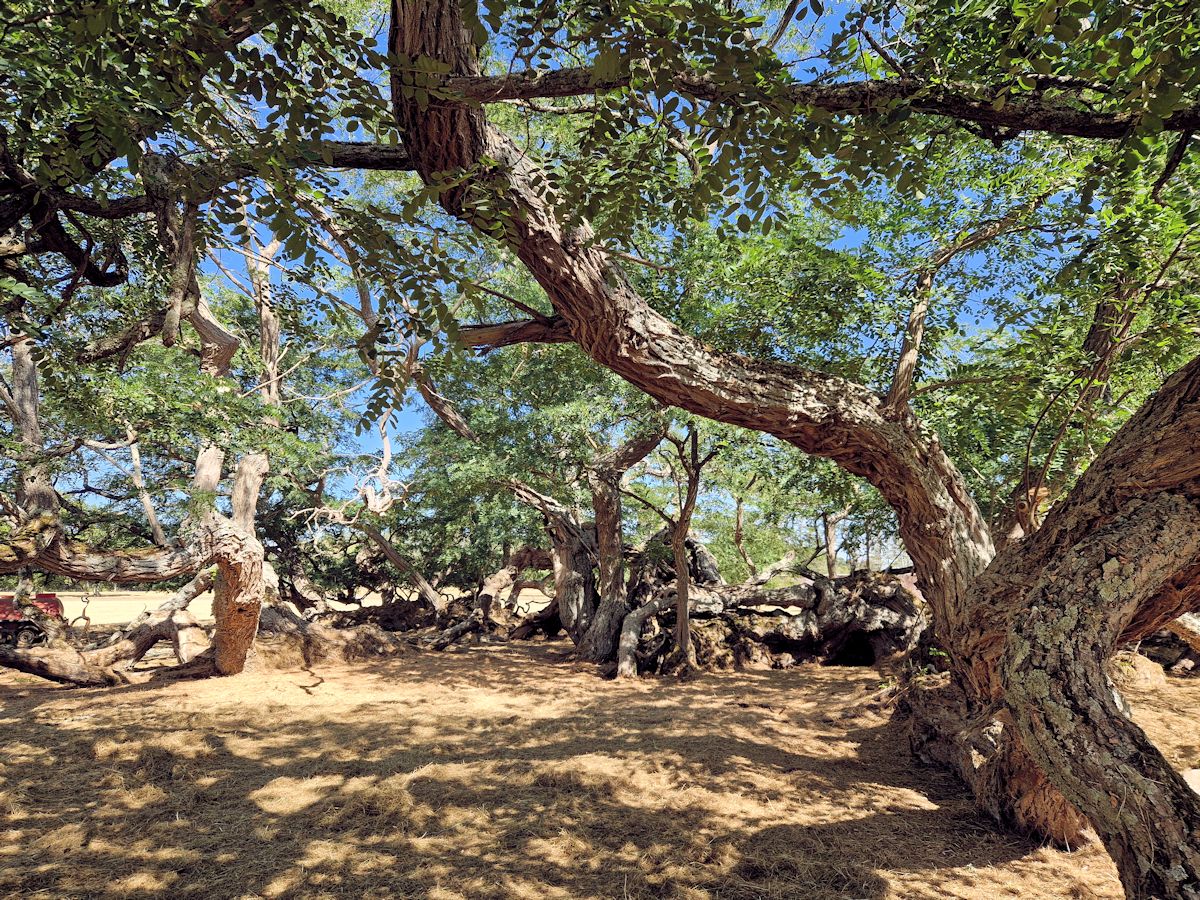
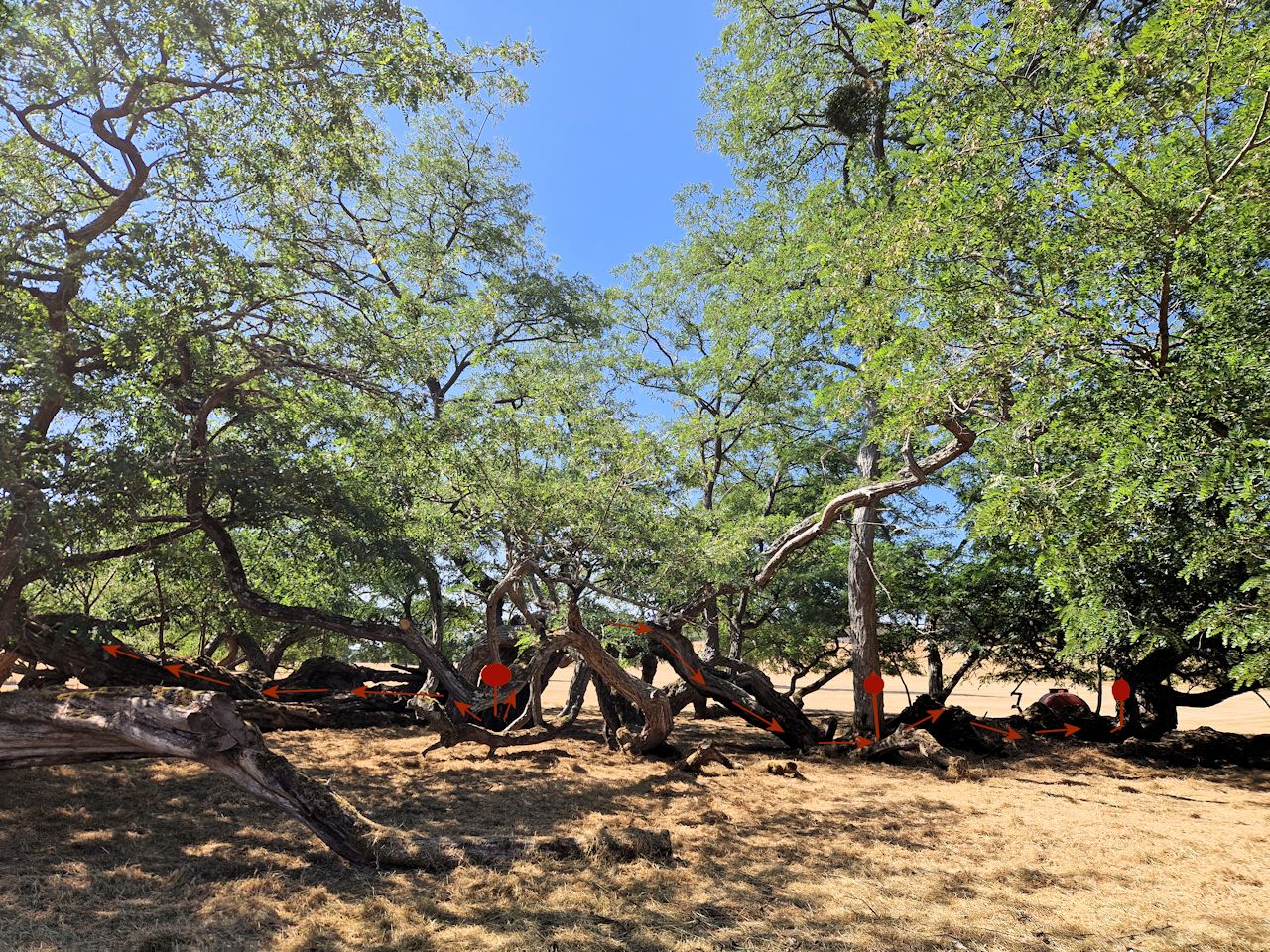
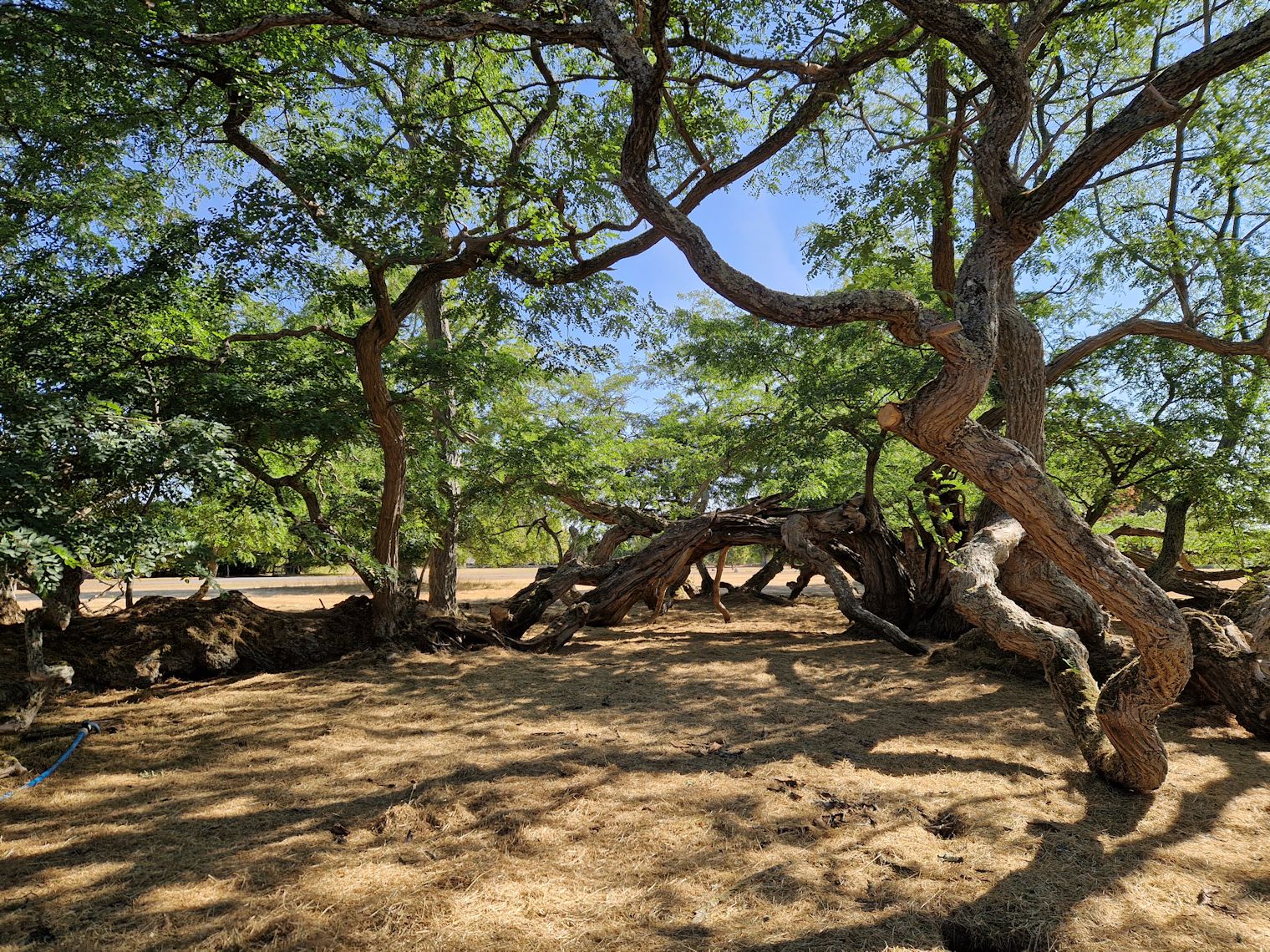
With the Ellingham Show preparation in full swing I get my annual opportunity to care for my favourite tree. It mostly involves clearing any brash and deadwood, to ensure our grazing stock can reach any suckers and produce a graze line. Perhaps most importantly, ensuring collapsed limbs are able to contact the ground to continue the process of natural layering. The second photo I have annotated with the series of collapsed limbs that have occurred over the previous centuries.
25th July
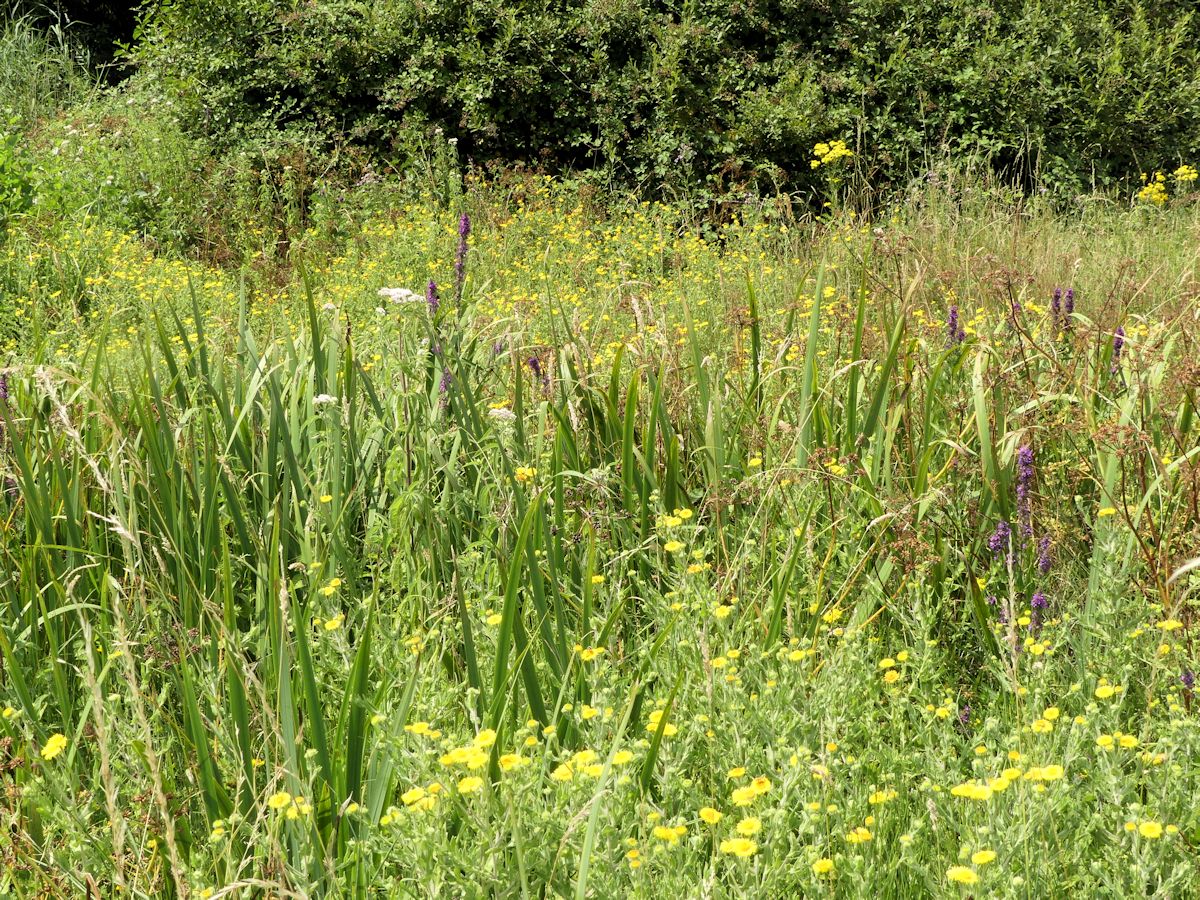
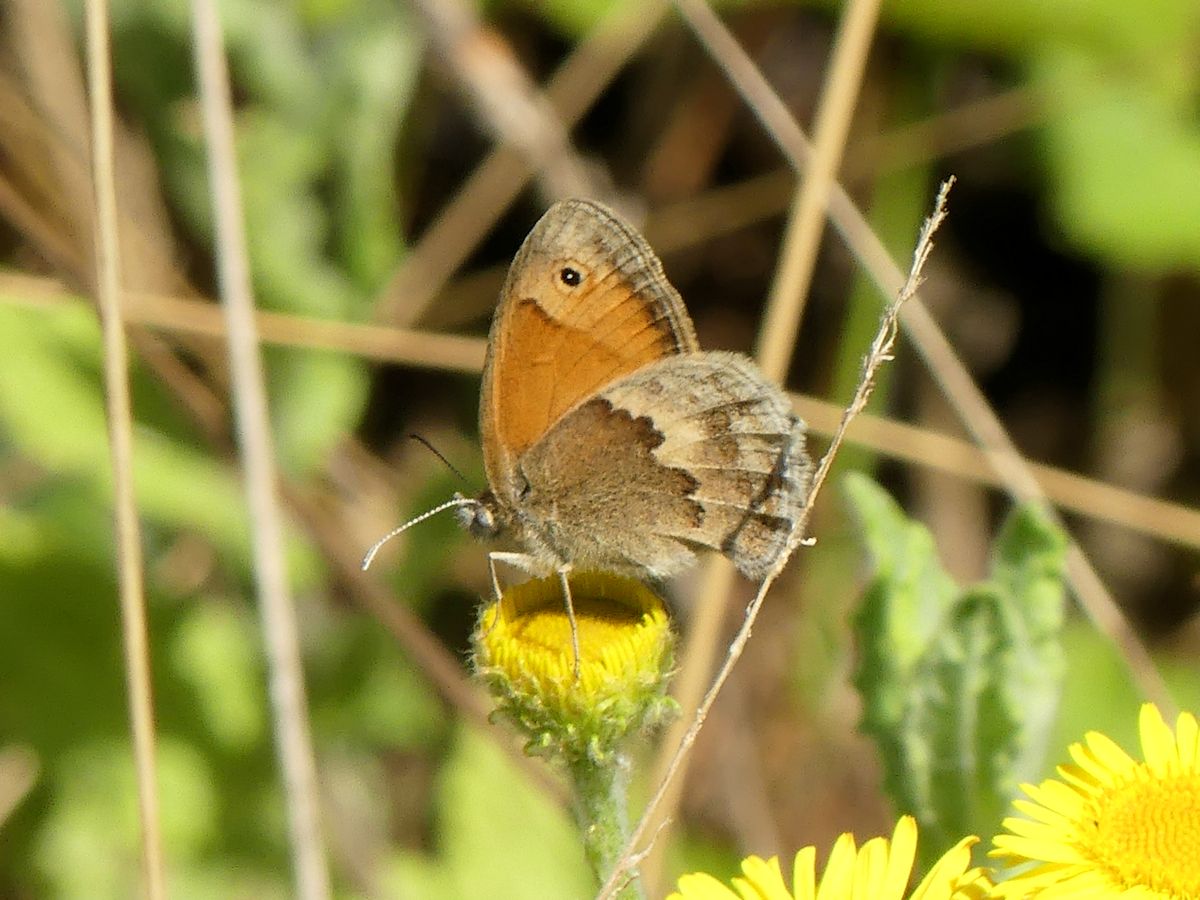
Still we bake in this awful drought, with the river running down to it's bones. The fields and woodland are like tinder and we are working with bated breath in fear of creating a spark that starts a wildfire in the five thousand acres of Ringwood Forest that lies on the western side of the Estate. The butterfly transect has deteriorated into baked meadows and small isolated pockets of damp marginal plants. These small damp pockets are the saving grace of the butterfly population at the moment.
24th July
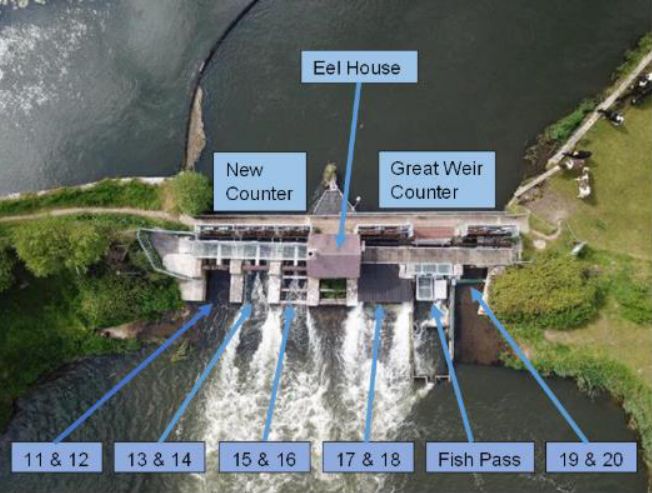
A shot of the Great Weir barrier taken from the Report below. (Copyright. Environment Agency)
Knappmill Counter.
The Knappmill counter figures for June confirming the high numbers of salmon in the pools on the Estate.
22nd July
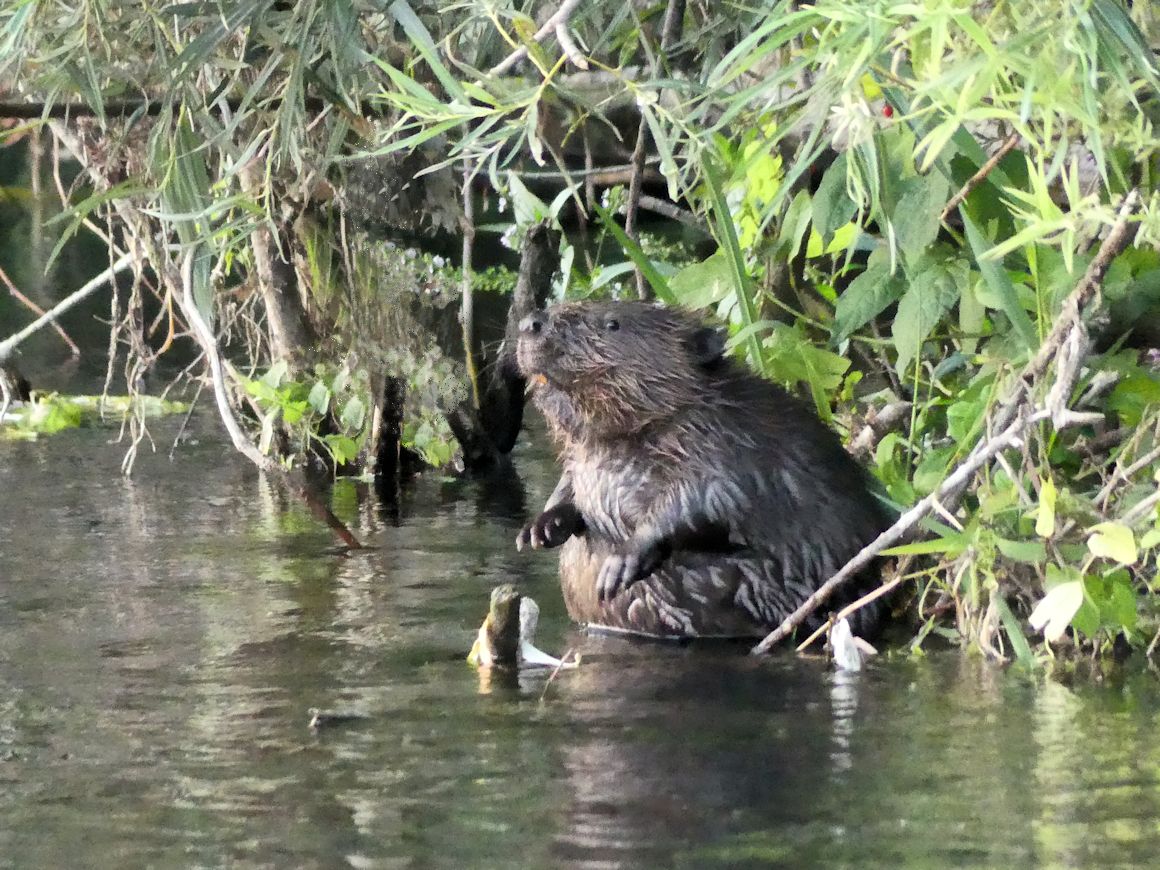
One of this years beaver kits, looking remarkably well fed! This one is the braver of the two born this year to our original pair. He ventures further from the adults on his, or her own. Hopefully they are past the point where any of our large pike may fancy a beaver snack. I have to thank sundicate member Glenn Cummins, for letting me know where they had taken up Summer residence. They have built a Summer lodge out on one of the islands, just downstream of where I found them this evening.
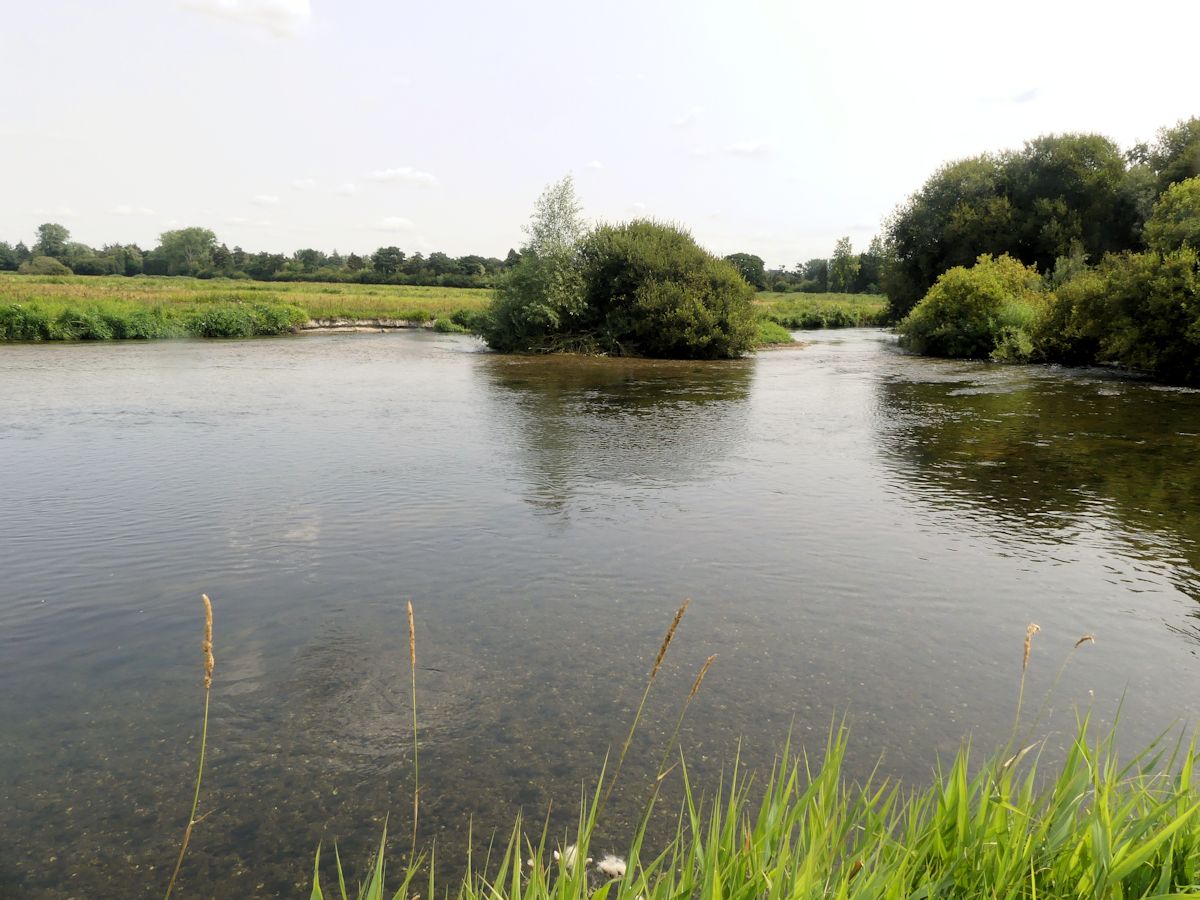
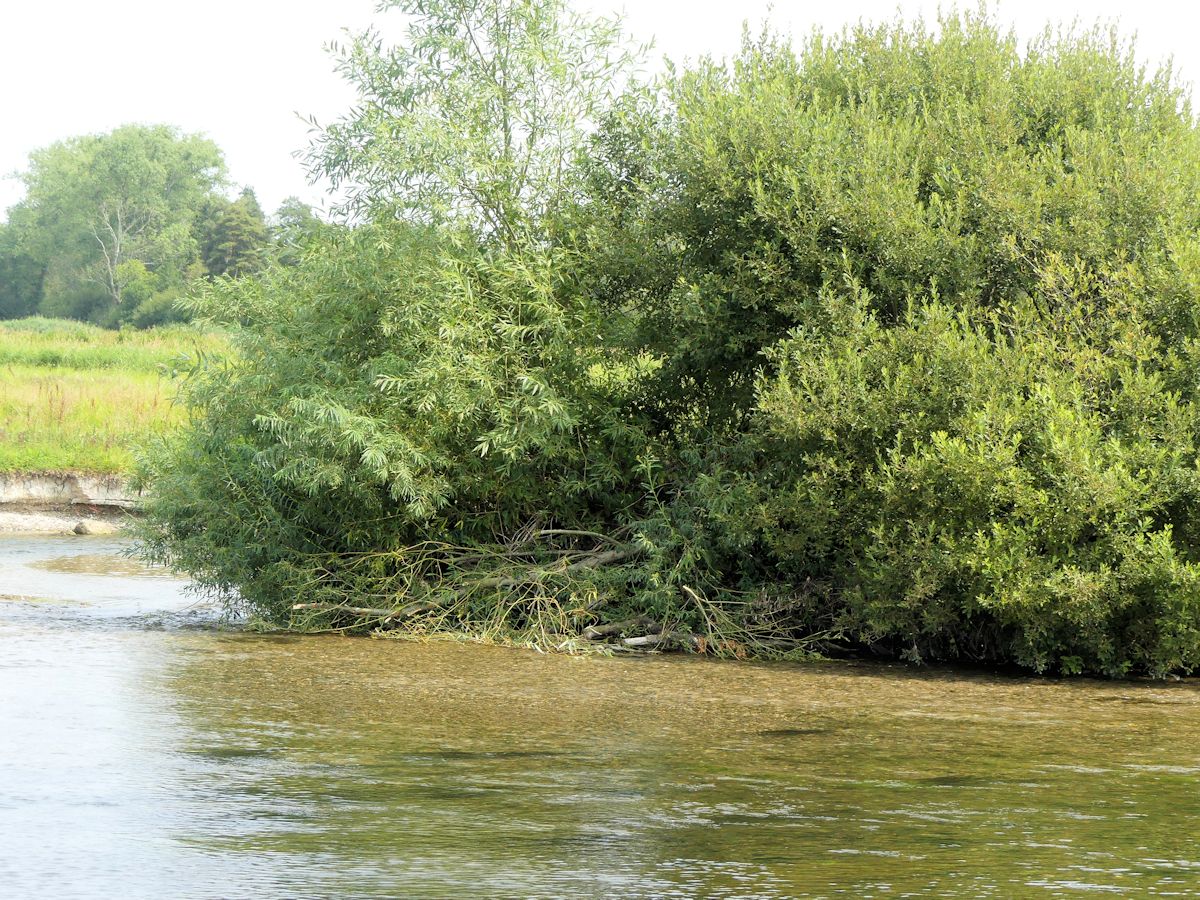
The summer residence, out on one of the islands.
15th July
National Emergency Briefing.
Some bedtime listening I can recommend. You may not agree with the odd point but the vast majority make sense.
9th July
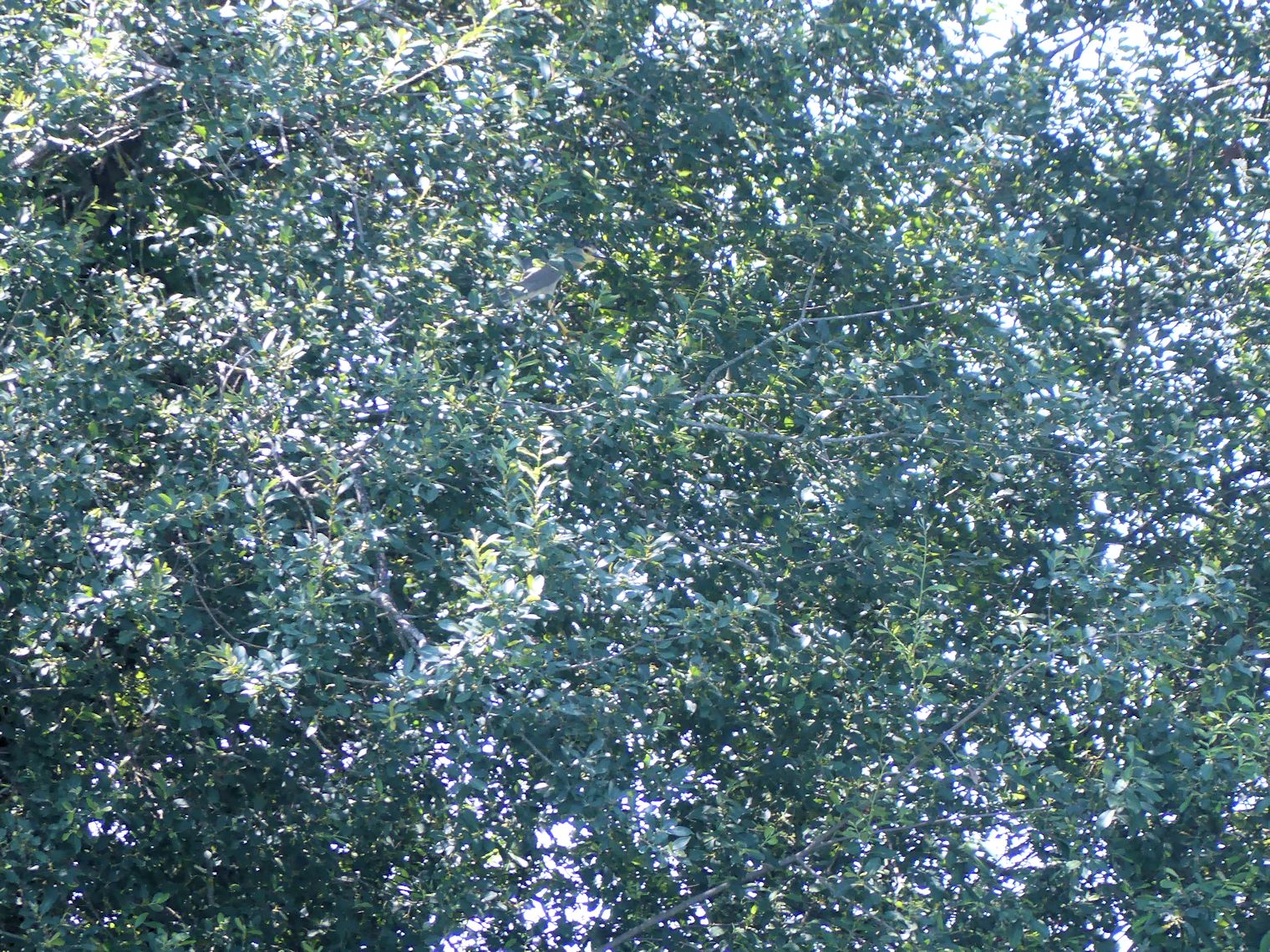
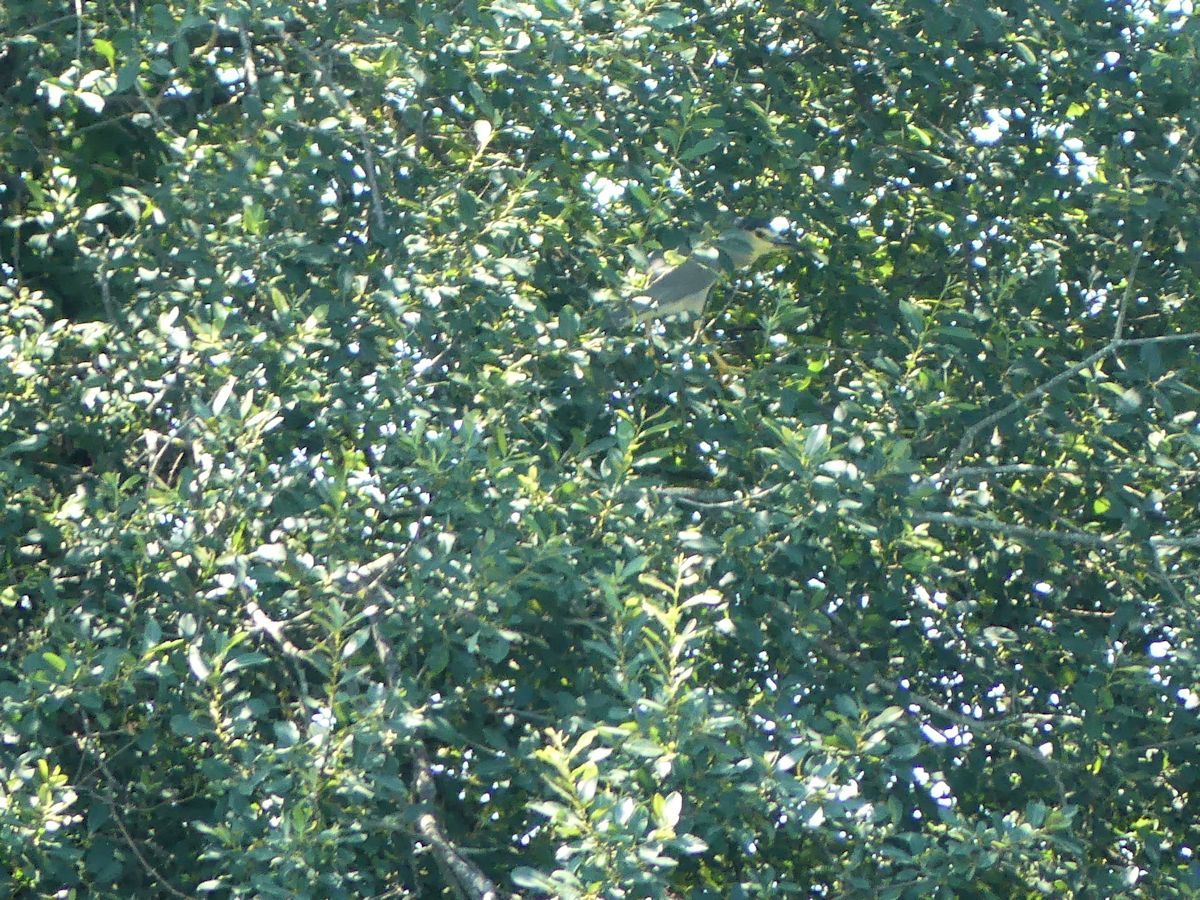
Spot the birdie! One for the birders amongst you. It may not win wildlife photographer of the year but it will do as a record shot.
I also spotted more beaver activity on a part of the Estate I had not witnessed it before. Just how many we have about the place is down to guesswork but I would imagine there are at least four pairs between Ringwood and Fordingbridge. They are all keeping a low profile and causing absolutely no concerns, so I guess its a case of the more the merrier!
Salmon and Barbel.
Three salmon and the barbel on the far side. Jonny took these clips and he tells me there were three, possibly four more salmon in that run. It would be nice to think those numbers are repeated in every salmon pool the length of the Avon and they will all survive the hot weather and make it to the December redds. I fear that is, unfortunately, probably not the case.
Bream and a barbel.
A somewhat confused barbel that thinks its a bream. As well as these big fish it is good to see large numbers of juveniles, particularly chub, barbel and dace in most of the suitable pools. I hope the perch and roach juveniles are hiding in pools we can't see into.
8th July
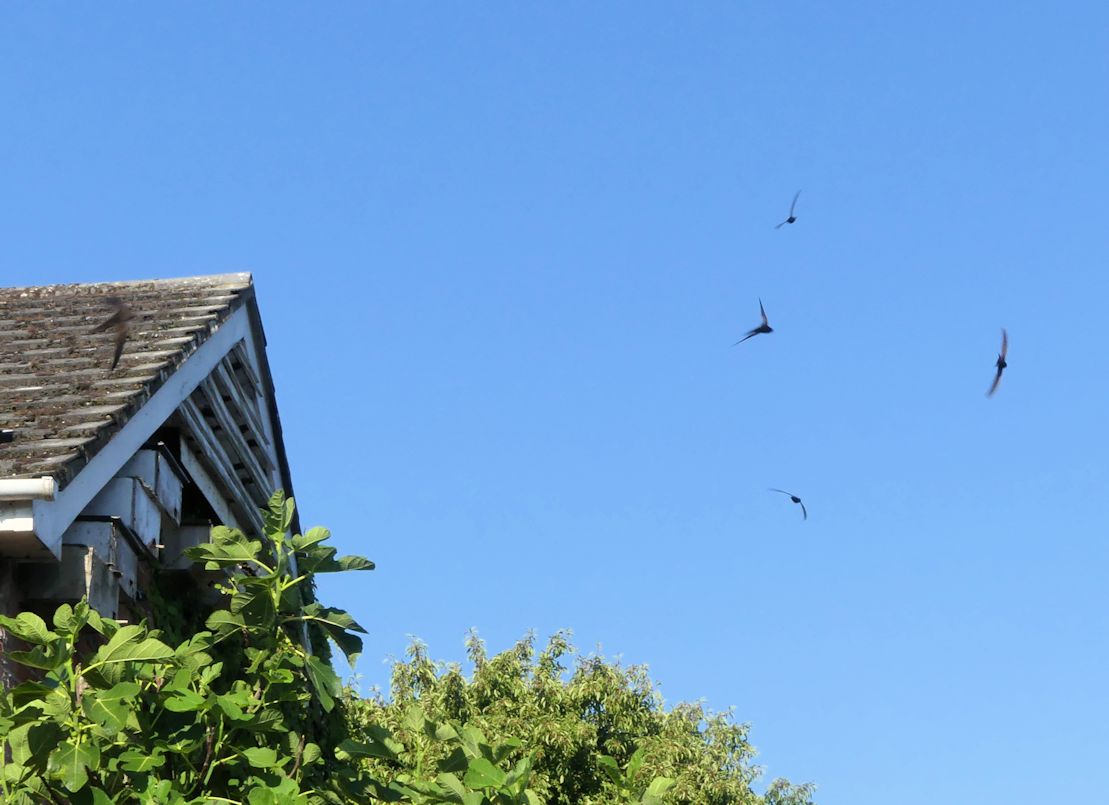
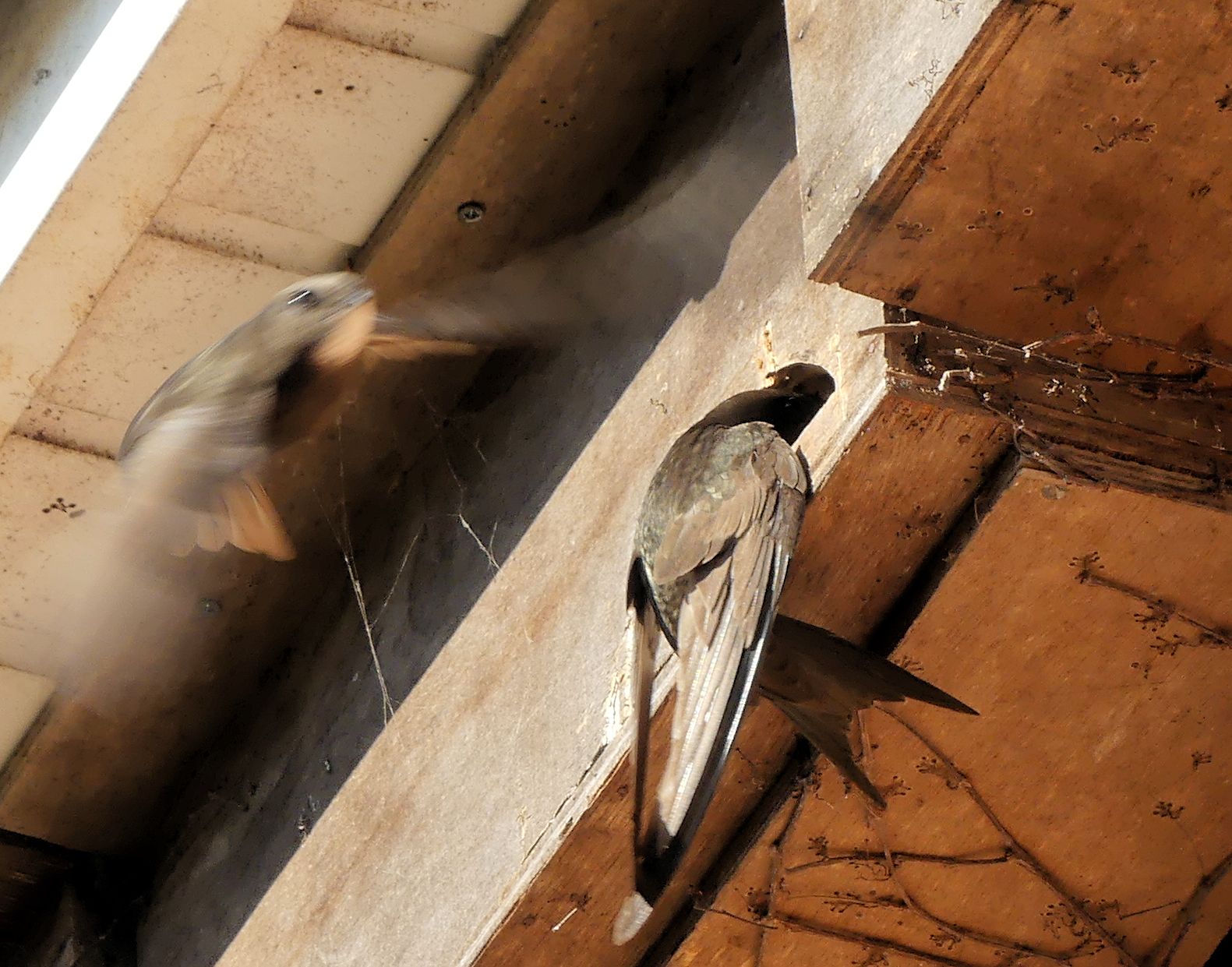
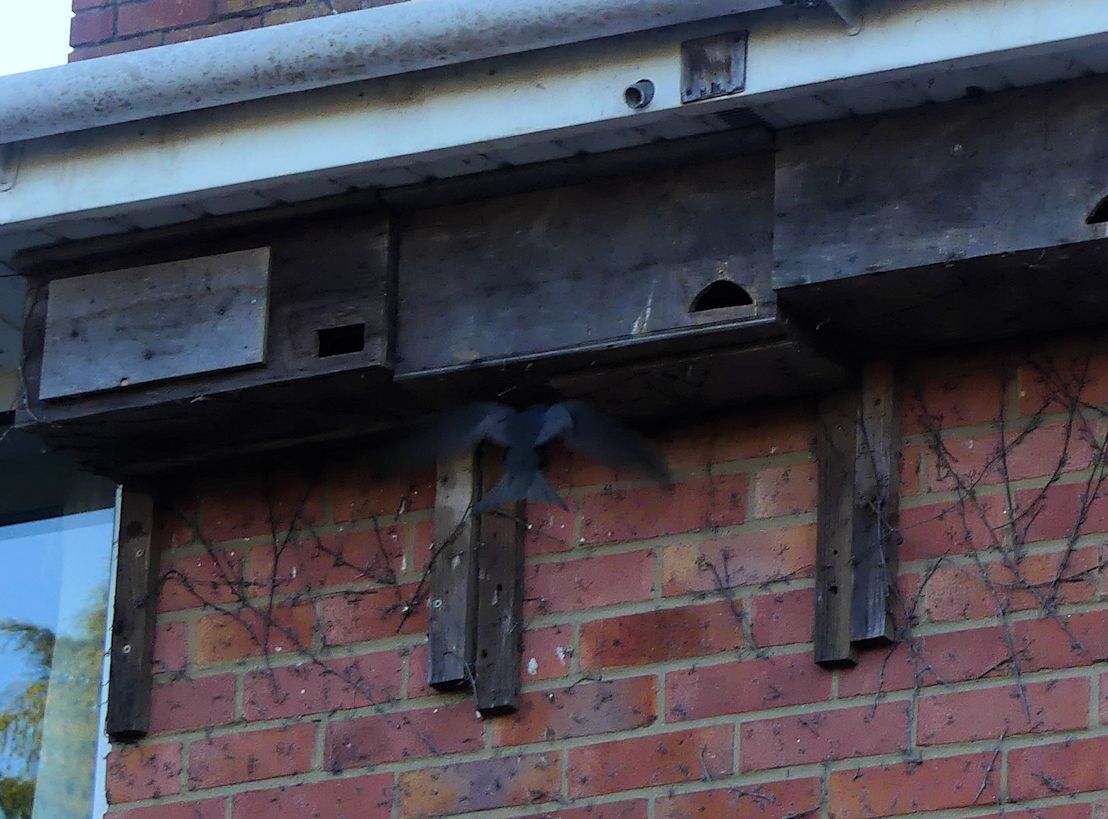
Some of the "bangers" I prefer "knockers" on the occupied nestboxes on the back and side of the house. With the juveniles peeping out from the entrances of the boxes they can see what that soon to arrive leap of faith they are about to be forced to take has in store for them.
High fliers.
A clip of the couple of dozen Swifts that seem to spend the best part of the day screaming around our house. Their flying skills are beyond compare, just how they avoid head on collisions as they circle the house in opposite directions is nothing short of astonishing. I'm not sure what the background rattle on the clip is. I wasn't aware of it when I was filming.
7th July
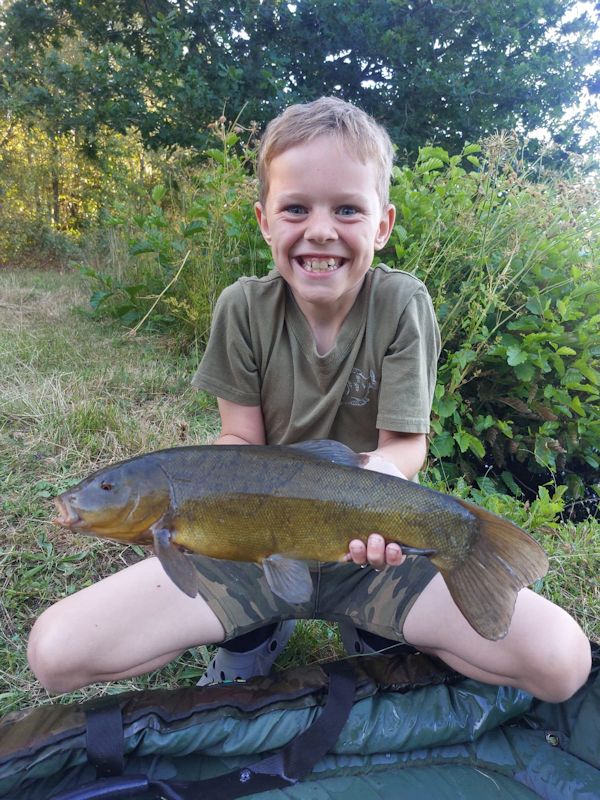
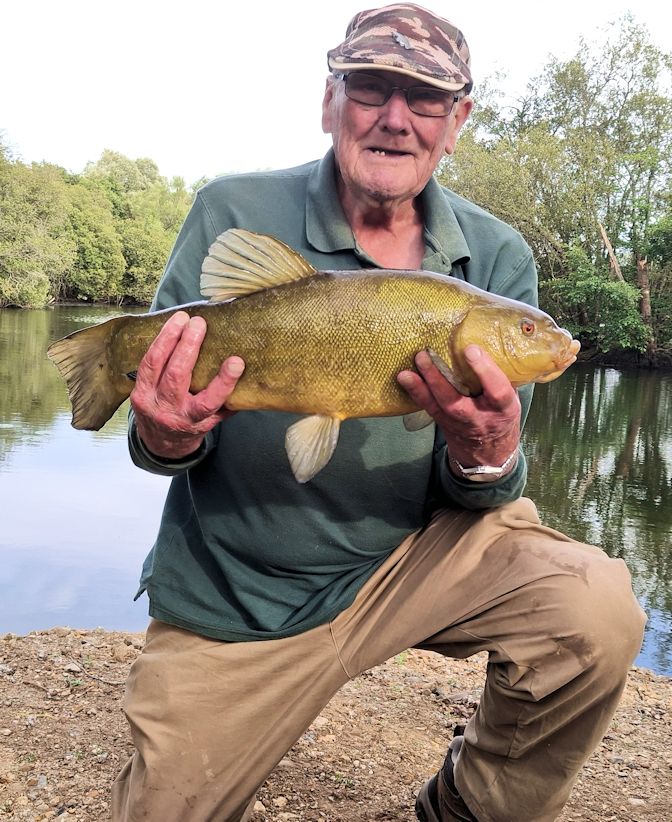
Fabulous shot of Henry with his first tench, kindly sent by dad Ben. Henry had particularly wanted to land his first tench this year and he has done it in style. Well done Henry, lovely fish. The second shot is Brian, one of our elder statesmen with another fine tench, one of a brace taken in classic style on the float in a short evening session. What is particularloy interesting is the age difference between Henry and Brian, six decades or more. Will Henry still be enjoying his fishing in fifty or sixty years? Will such quality tench fishing still be available to him in the distant future? I feel the future for tench fishing is fairly secure as the vastly increased number of gravel pits that have sprung up around the country have provided a huge increase in suitable habitat, certainly from when Brian and I started sixty or so years ago. All we need to ensure is that Henry continues to have access and enjoy his time seeking them, as he is the future of our sport.
6th July
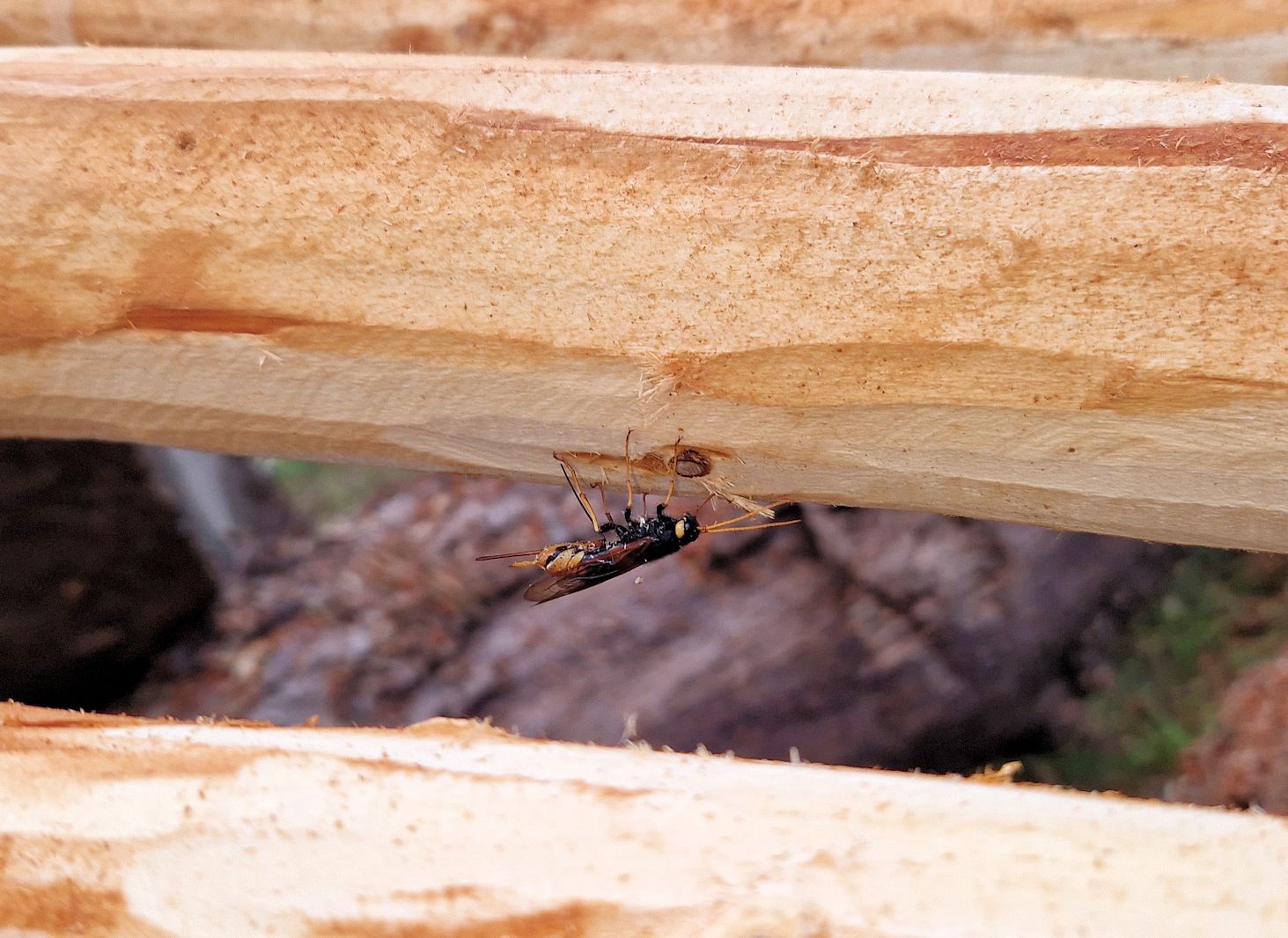
Before anyone starts shrieking Asian Hornet, its not one. It is high on my list of favourite bugs being a Giant Horntail or Giant Wood Wasp. Whilst they may look intimidating they are completely harmless to humans and do not sting. The spike on the backend is an ovipositor, purely for laying her eggs in the trunks of conifer trees. She was not alone this evening as at one point I had four circling around me as I debarked a new set of larch tipi poles ,for Richard and Jade's tipi. Its unusual to see more than one at a time, I guess my efforts had produced an irresistible scent trail they homed in on.
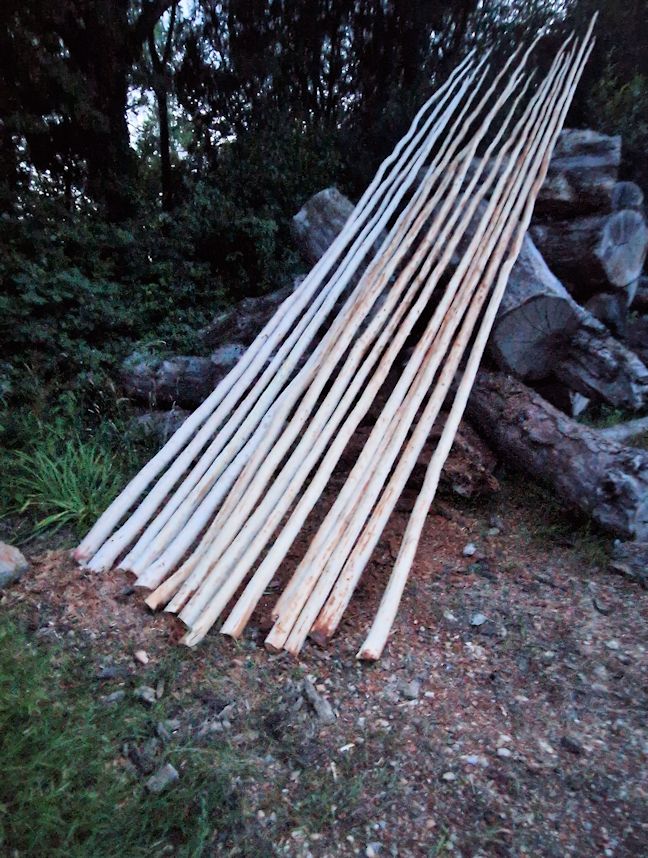
The peeled poles that had attracted the horntails.
2nd July
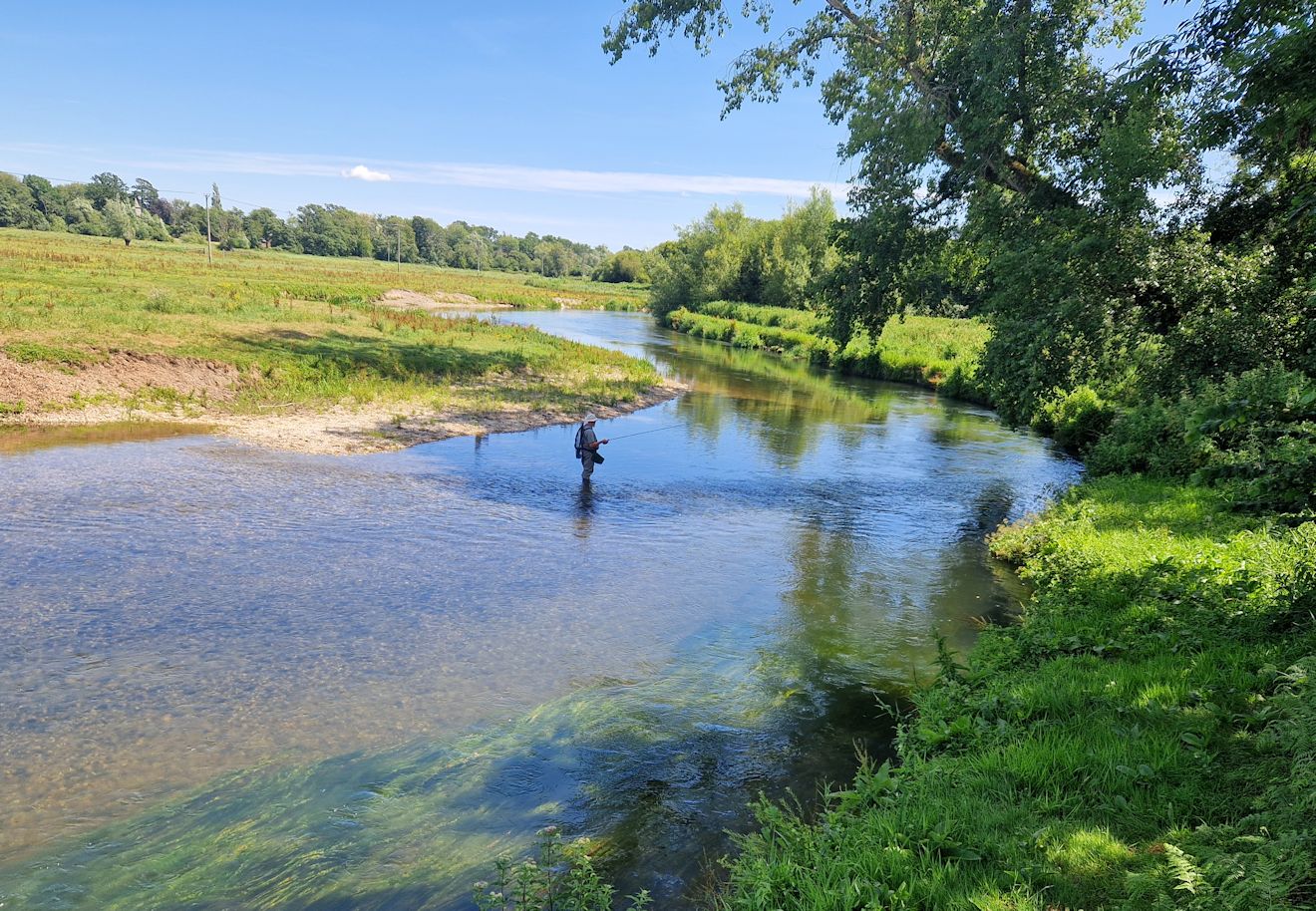
Is that not just the perfect swim for a spot of trotting on a sunny day? A Hampshire Avon classic, well done Clive thanks for the photo opportunity.
Destroyed bumblebees nest.
One of the problems if you have a healthy badger population is that your bumblebees and hedgehogs take a pasteing.
30th June
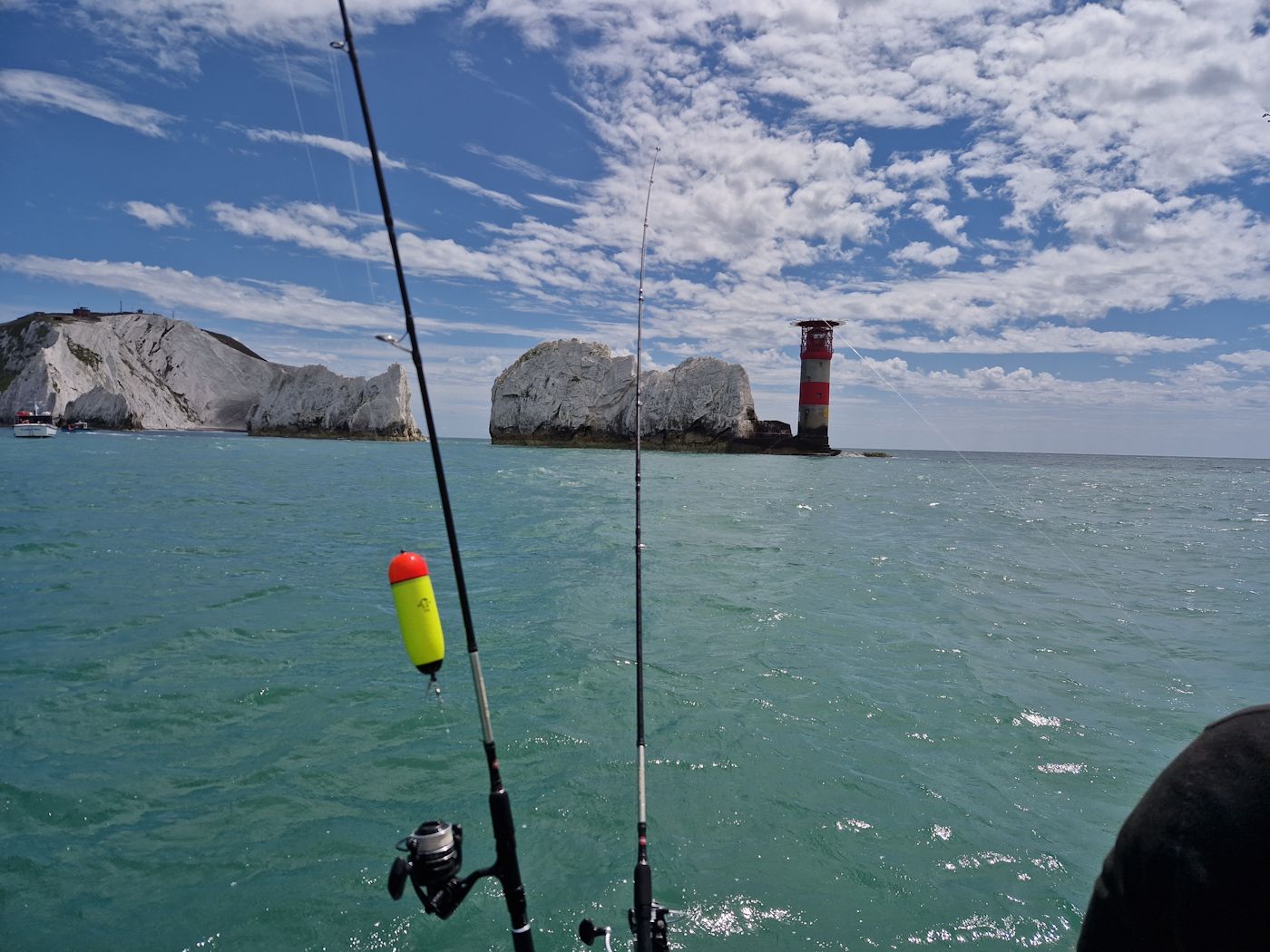
Interesting day chasing bass and mackerel about off the Needles.
28th June
I have been very kindly asked to put the links up for Richard and Sid's charities. In the event any readers may be so kind as to support their amazing efforts, hopefully the links below will take you to the relevant "Gofunding" page.
Richard's link.
Sid's link.
27th June
Anne and I have been away for a couple of days on a very special trip to greet Richard and his pal Sid, aka Simon Newman, on completion of their epic JOGLE ride. The last ten days have been somewhat of an emotional roller coaster for Jade, the girls and us, as we have followed their journey through the wind and rain of Scotland to the record June temperatures, as they reached the south west.
Without back up teams and carrying everything they should need ,I am lost for words to express my admiration of their efforts. Simply incredible effort guys, my heart felt congratulations.

Well, they did it, under what must be considered the most testing conditions imaginable. Both were riding for charities they support with Richard riding for the "Charlie Waller Trust" and Sid for the "Salisbury Hospice" two charities highly deserving of their heroic efforts.
Crossing the line.
Emotions were running high when this pair hove into view!
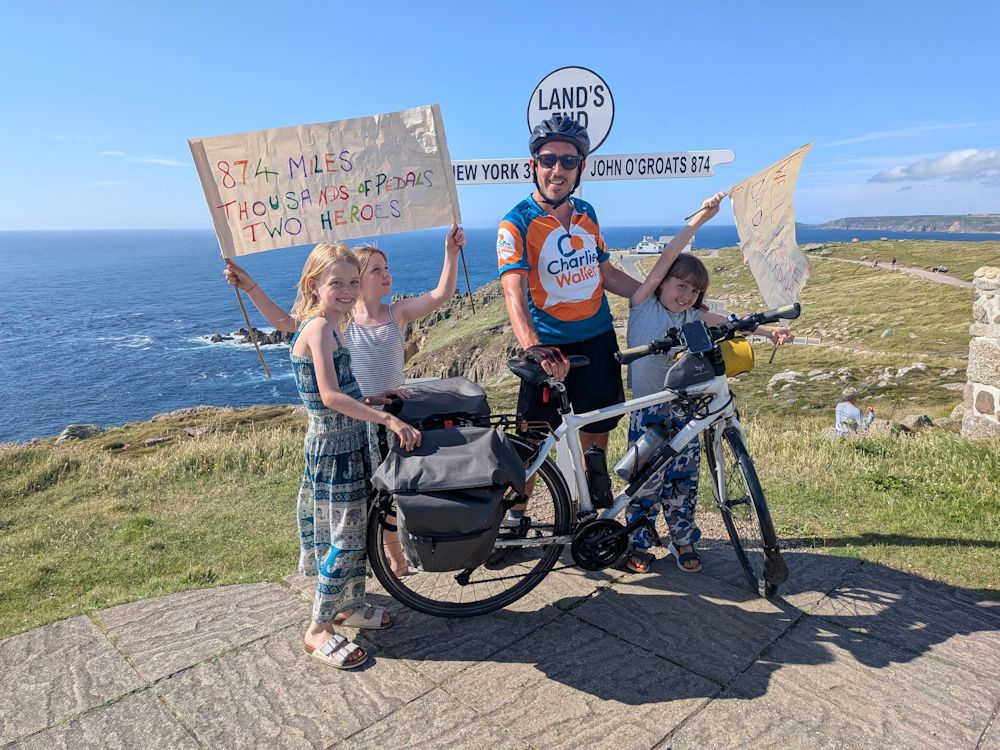
I'm not sure who was the happiest, the girls to have their dad back or Richard to see his girls!
22nd June
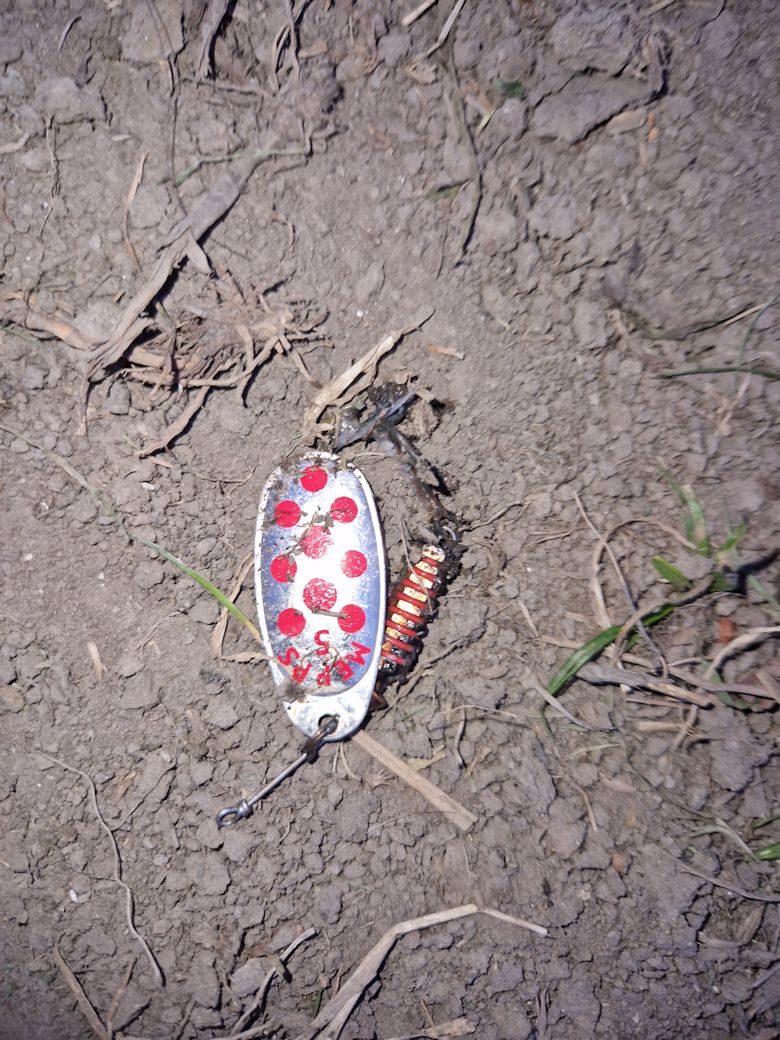
If this Mepp no 5 is one you lost, I can reunite you if you get in touch.
Salmon on the shallows.
Jonny sent me through this clip when he found five salmon in one pool at lunchtime today. A complete mix of coloured 3SW fish and bright 2SW Summer fish. Lets hope the current high water temperature doesn't harm the fish waiting in the river.
21st June
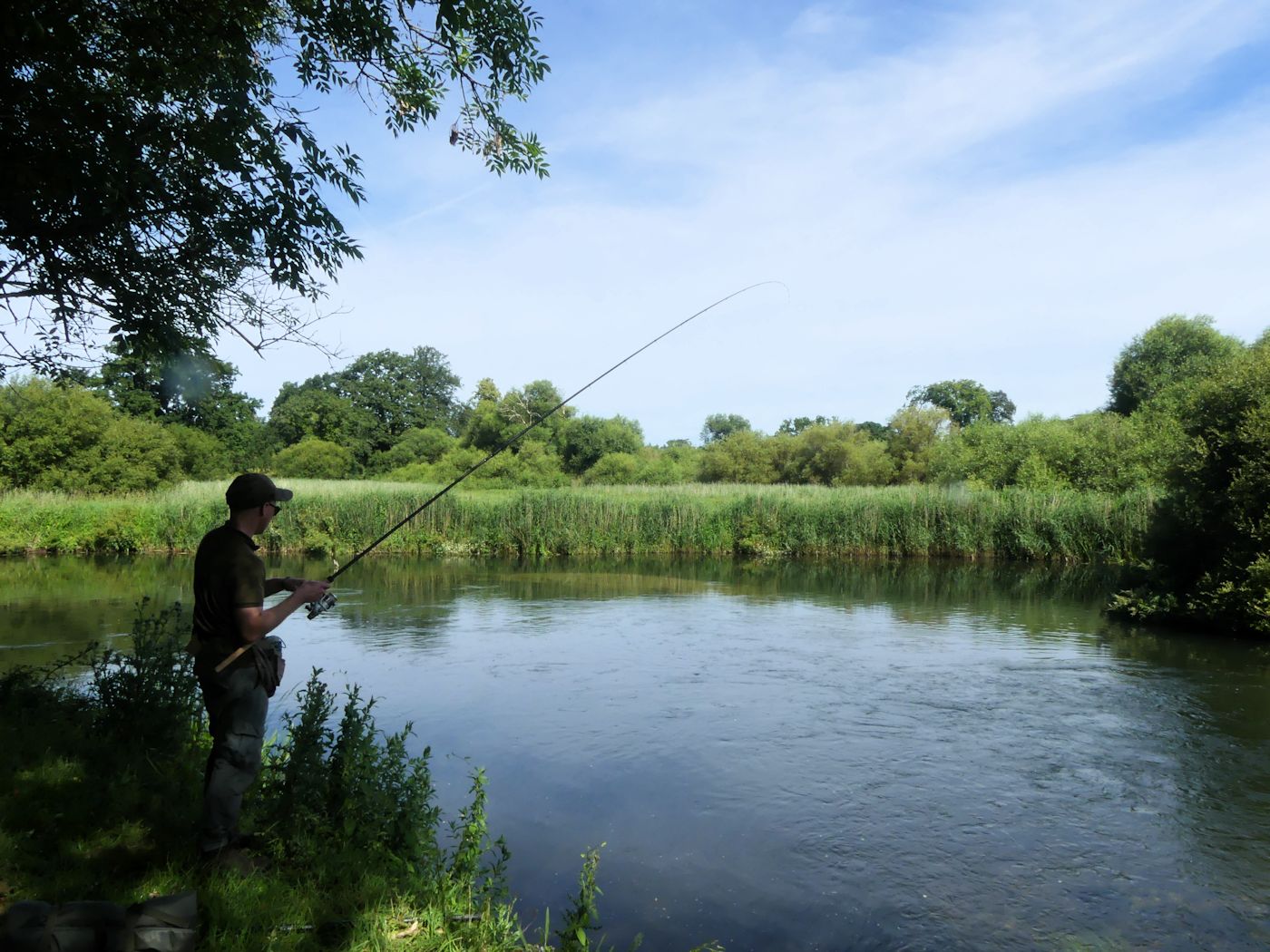
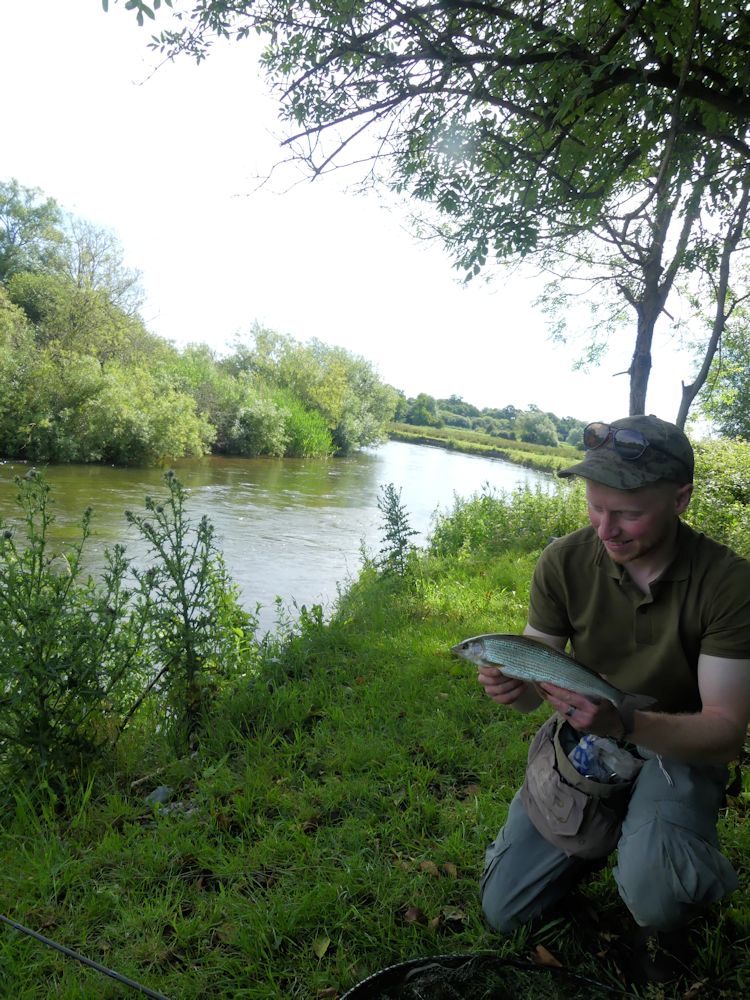
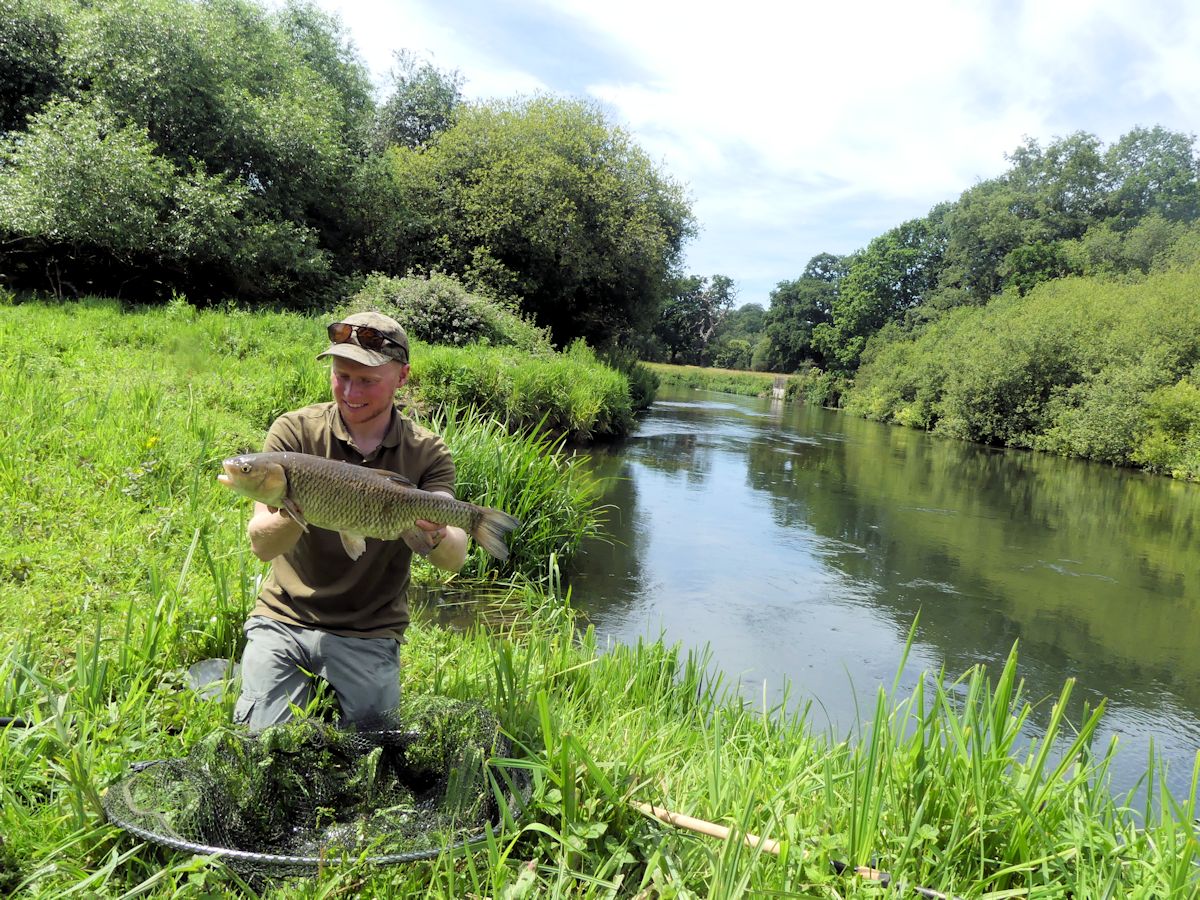
The traditional method on the Avon always used to be trotting. Modern light rods and reels have made the method even easier and more enjoyable. Despite this trotting on the Avon has become a rare sight as the majority of anglers sit motionless behind static rods. The winter does see a slight increase in anglers, trotting for the chub, yet few enjoy the mixed fishing available throughout the Summer. Today, despite the bright sunshine, Jonny took his trotting rod and a few pints of maggots to try his luck with the float. I was on hand to take a few photos and watch as dace, trout, chub and grayling graced his net.
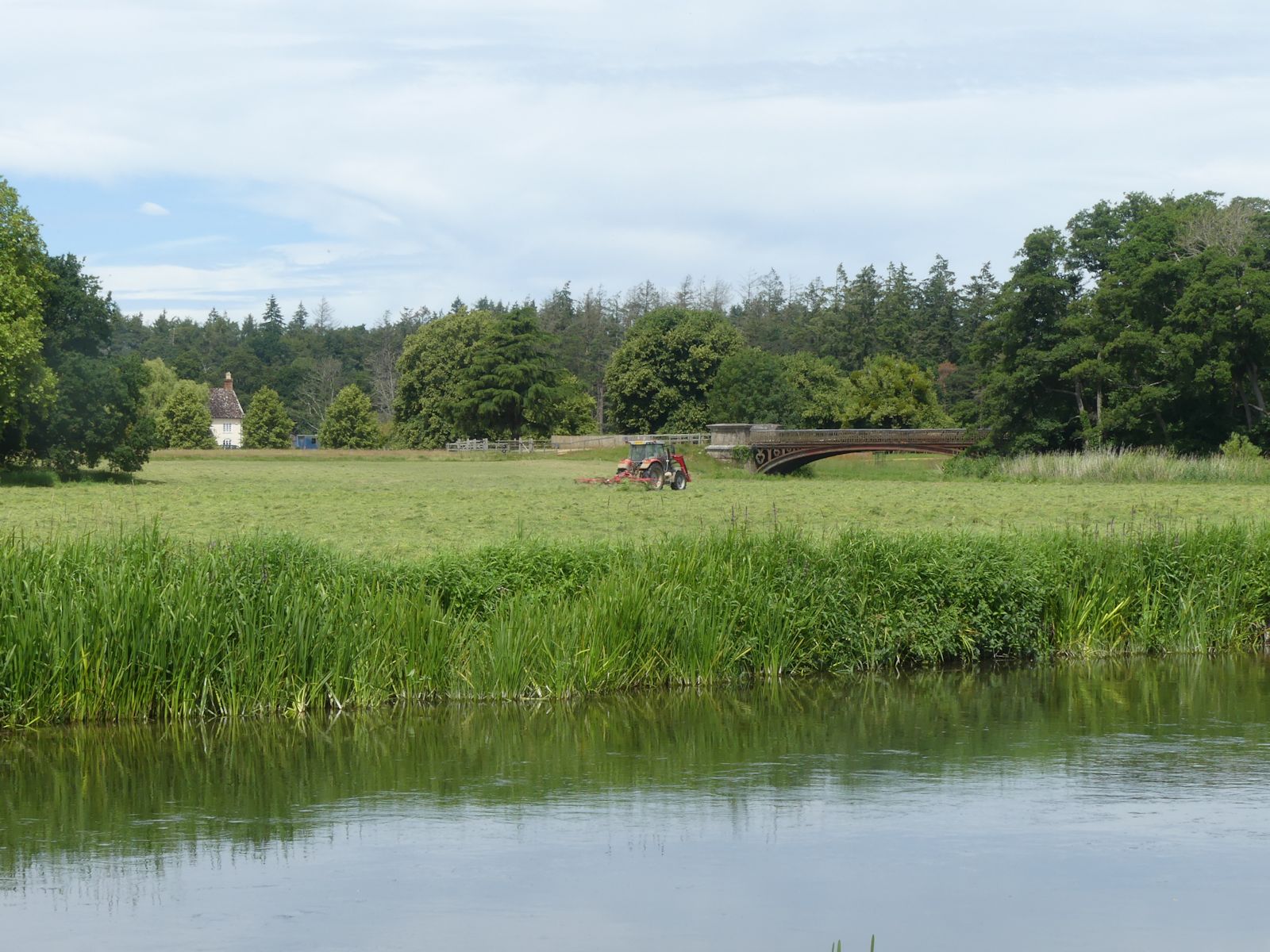
The next few days look as if the weather will be on our side to get the hay baled and in the barn.
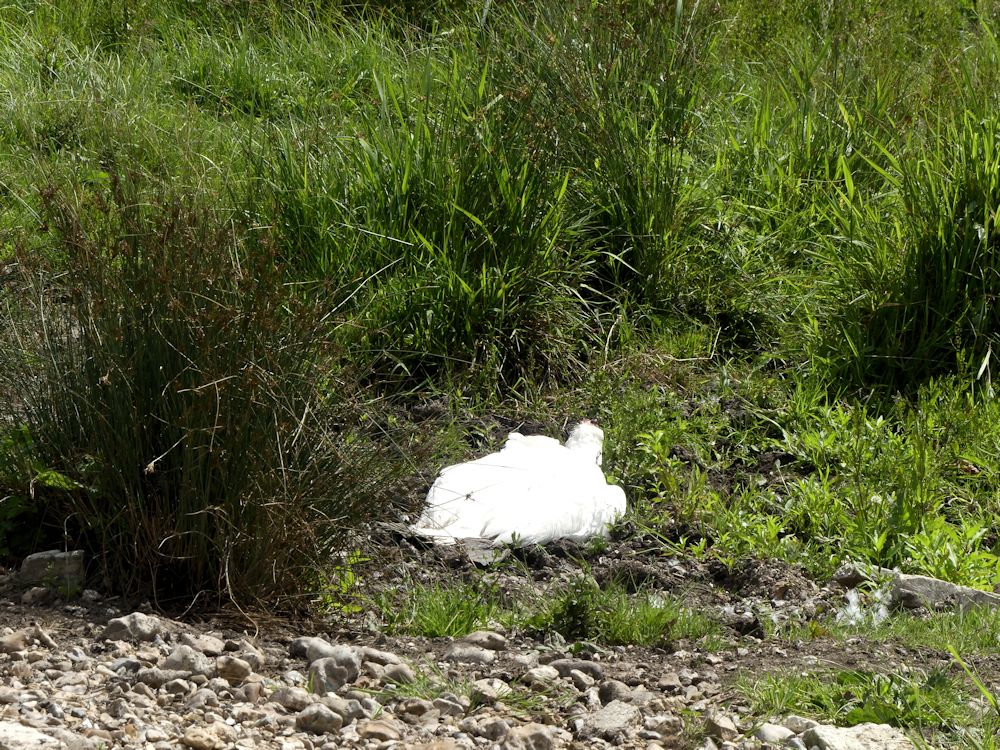
Hopefully the one or two dead swans we have about the place are not as a result of avian flu.
20th June

John has opened his new season account on Meadow in fine style with a fine brace of commons taken on the fly. Great start John and thanks for the report and the super photo.
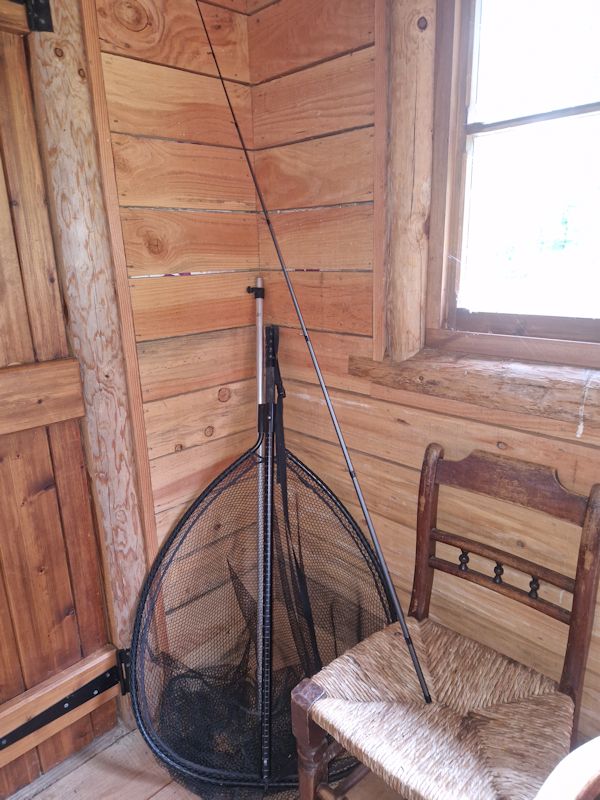
Has a syndicate member lost a top section?
18th June
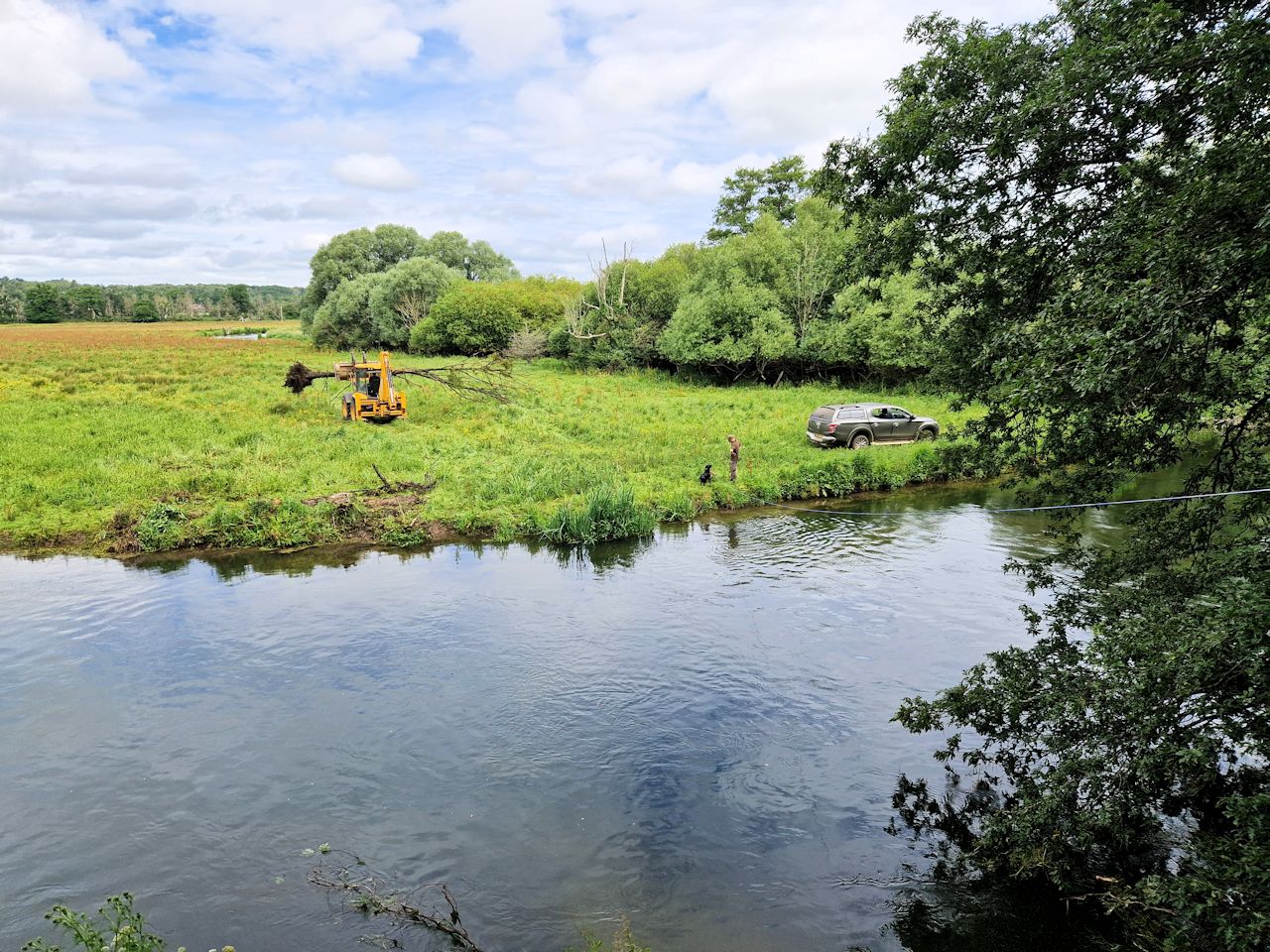
If the salmon rods ever get back on the bank they will see we have removed the trees that came down with the landside in Woodside Pool.
17th June
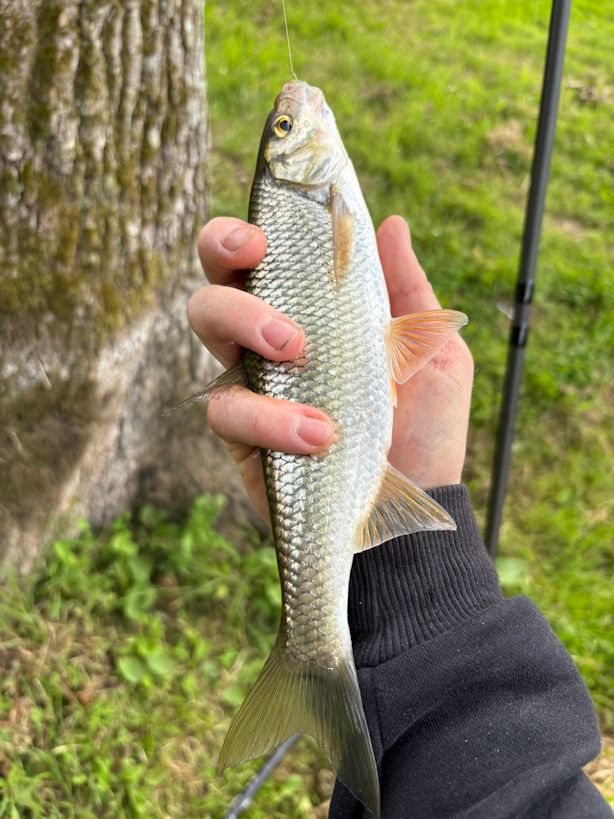
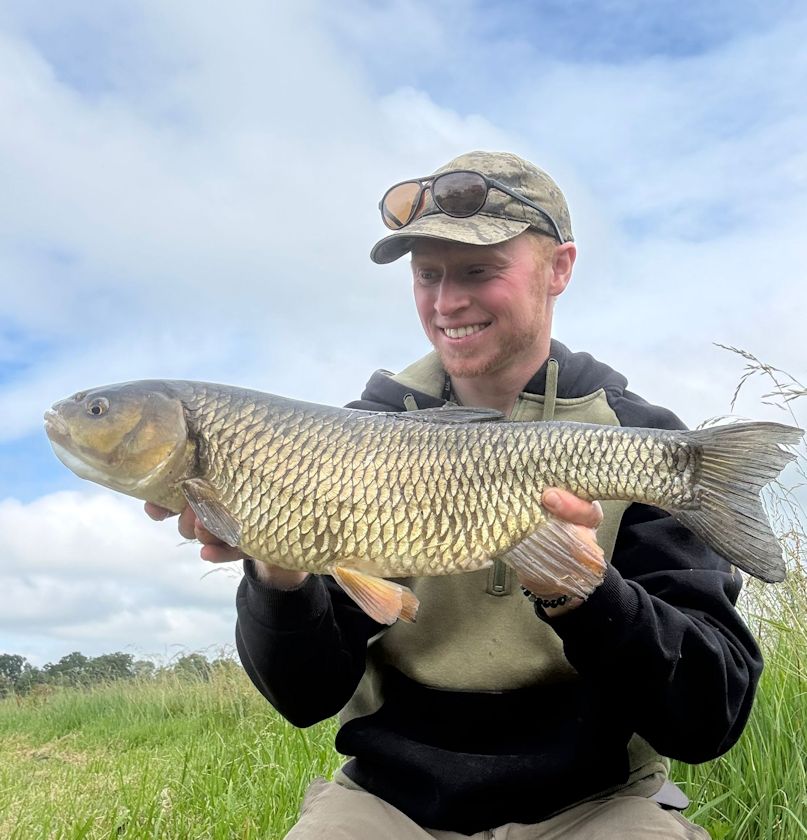
The coarse season is underway on the river and the lakes, thankfully beginning in fine style. There have been plenty of chub and large bream from the river and some lovely carp from the lakes. Perhaps the most pleasing aspect is that they all appear to have got spawning out of their systems. Jonny had been out for a couple of ours this evening with the trotting rod, reporting chublets and dace in almost every swimm he tried. I always worry after the prolonged floods of winter that our future generations will have been swept downstream. its a relief to find they have managed to find sufficient shelter to see out the floods. The dace are early spawners and are now back in perfect trim. The chub Jonny is holding shows the hollow appearance of a recently spawned fish.
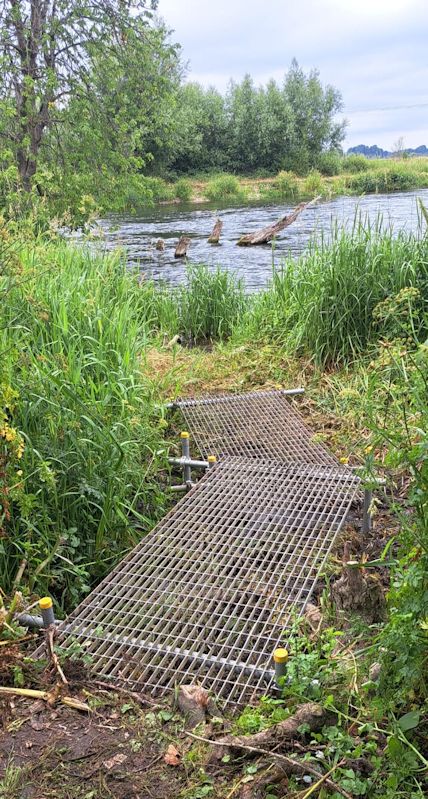
The bridge provides safe passage over the ditch to the island in the weirpool. Its certainly better than the rotten, slippery pile of wood that preceded it!
15th June
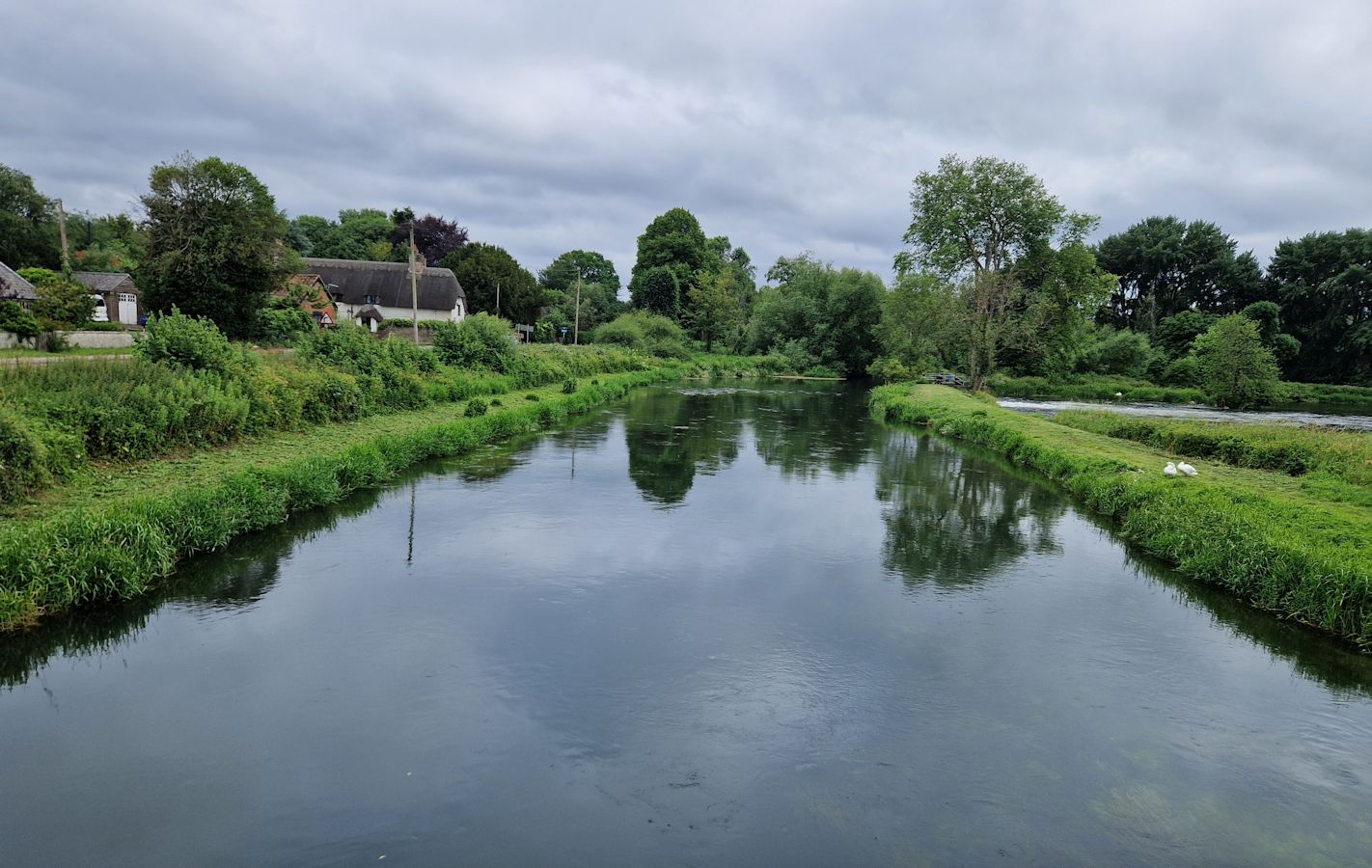
Jonny and I just about got there with the banks of the rivers and the swims on Meadow Lake all strimmed up and ready for the off, at midnight tonight. We still have a great deal of tree work to do and all the banks and swims will require cutting again in a few weeks. We also have the materials ready for the steps into one or two of the swims and a bridge onto the island in the Ibsley Weir Pool. The list seems endless, not too worry as our office takes some beating.
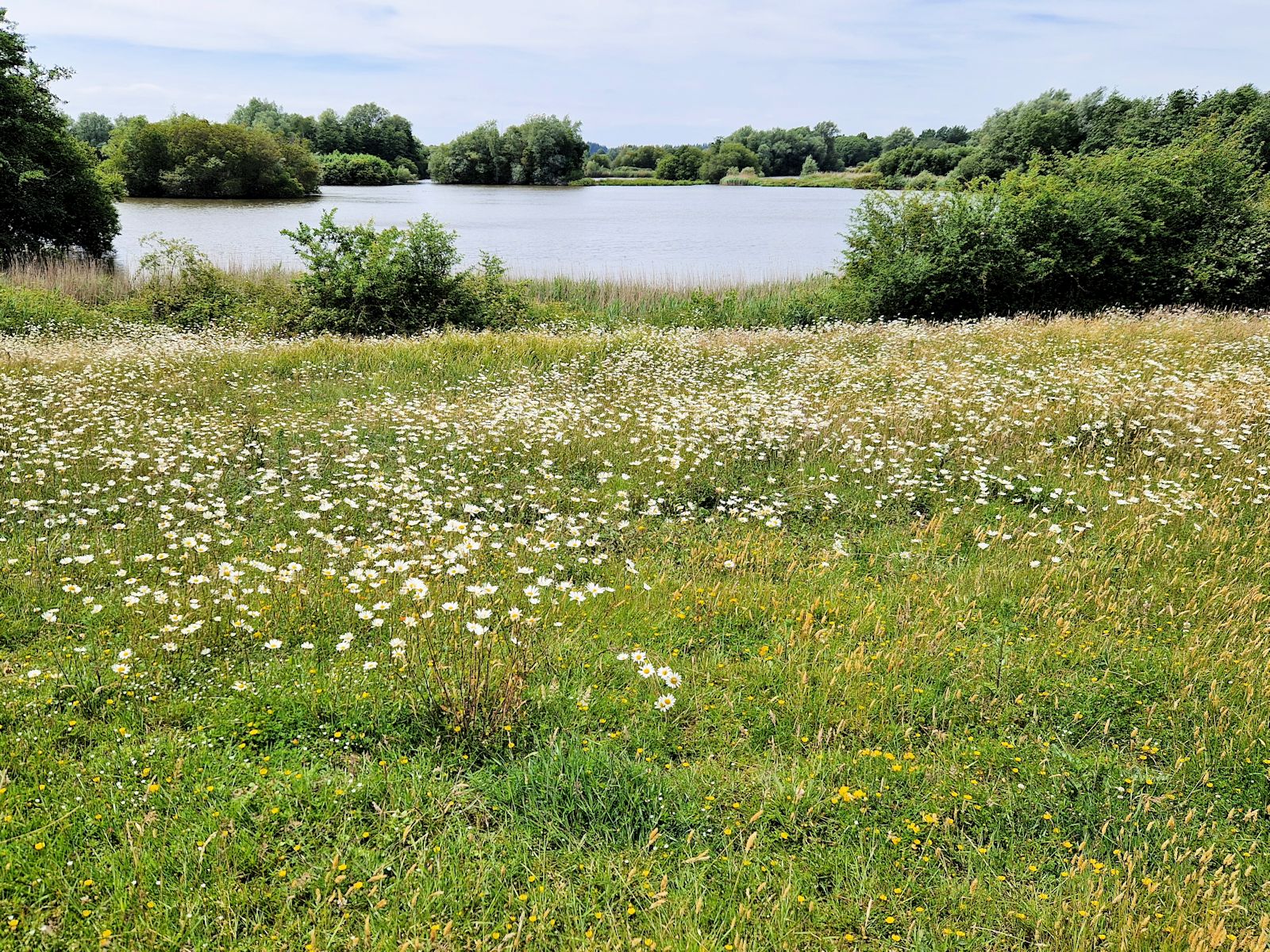
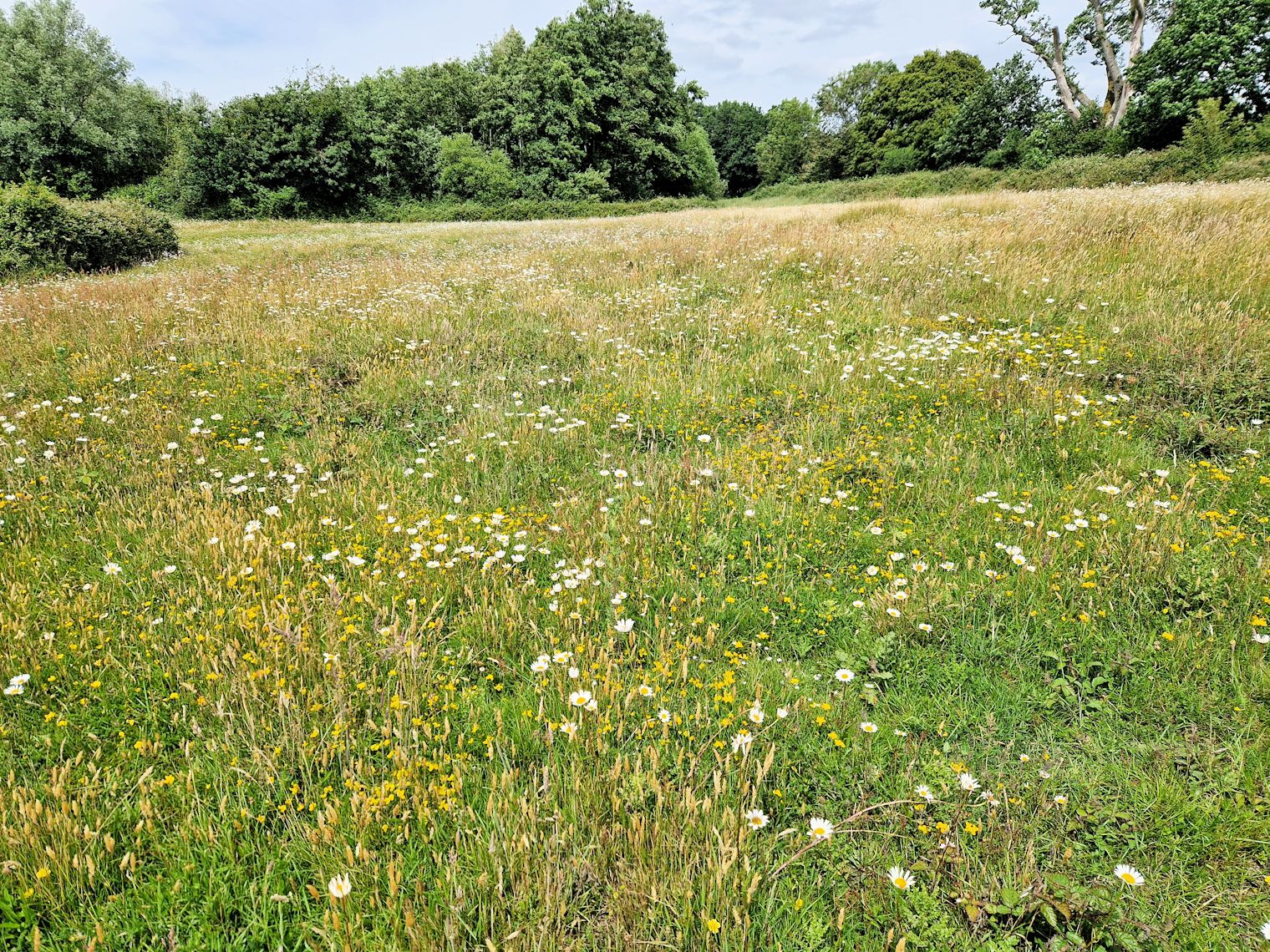
The recent rain may have saved the flower meadows and sent a freshet of water downstream that was the signal for the salmon to run in reasonable numbers. Two landed on Sunday, one of which was Darren Lloyd's second of the season. Certainly well deserved as Darren travels from Kent to be with us. Great result, congratulations Darren. In a cruel twist of fate, just as the fish arrive, the water temperature reached the 18 degrees cut-off point today.
12th June
Knappmill counter figures for May.
May figures looking far more encouraging.
Knappmill counter figures for April.
I didn't put these up last month as they were so discouraging. Interestingly no sign of Dan's fish which he landed at the end of March.
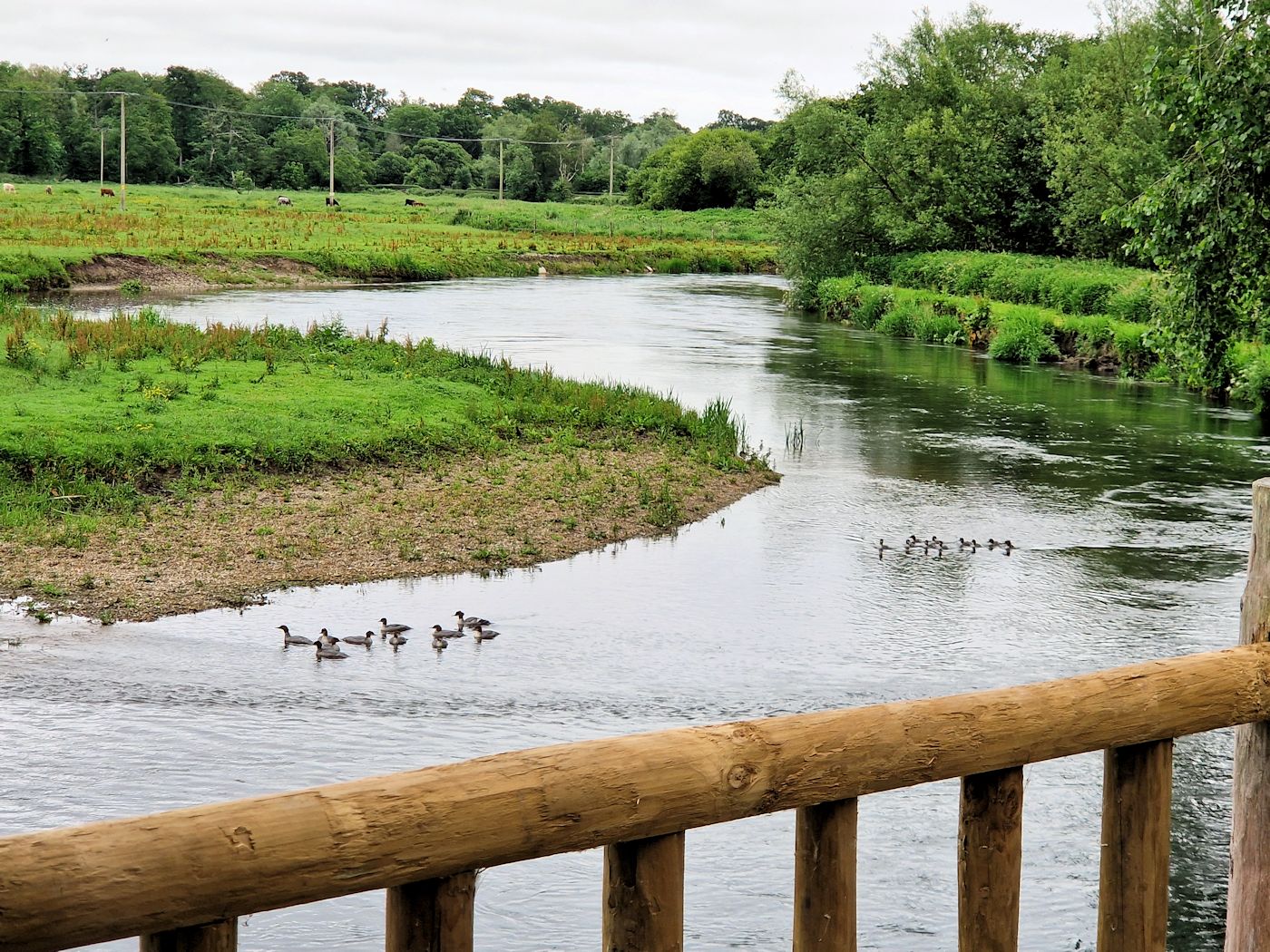
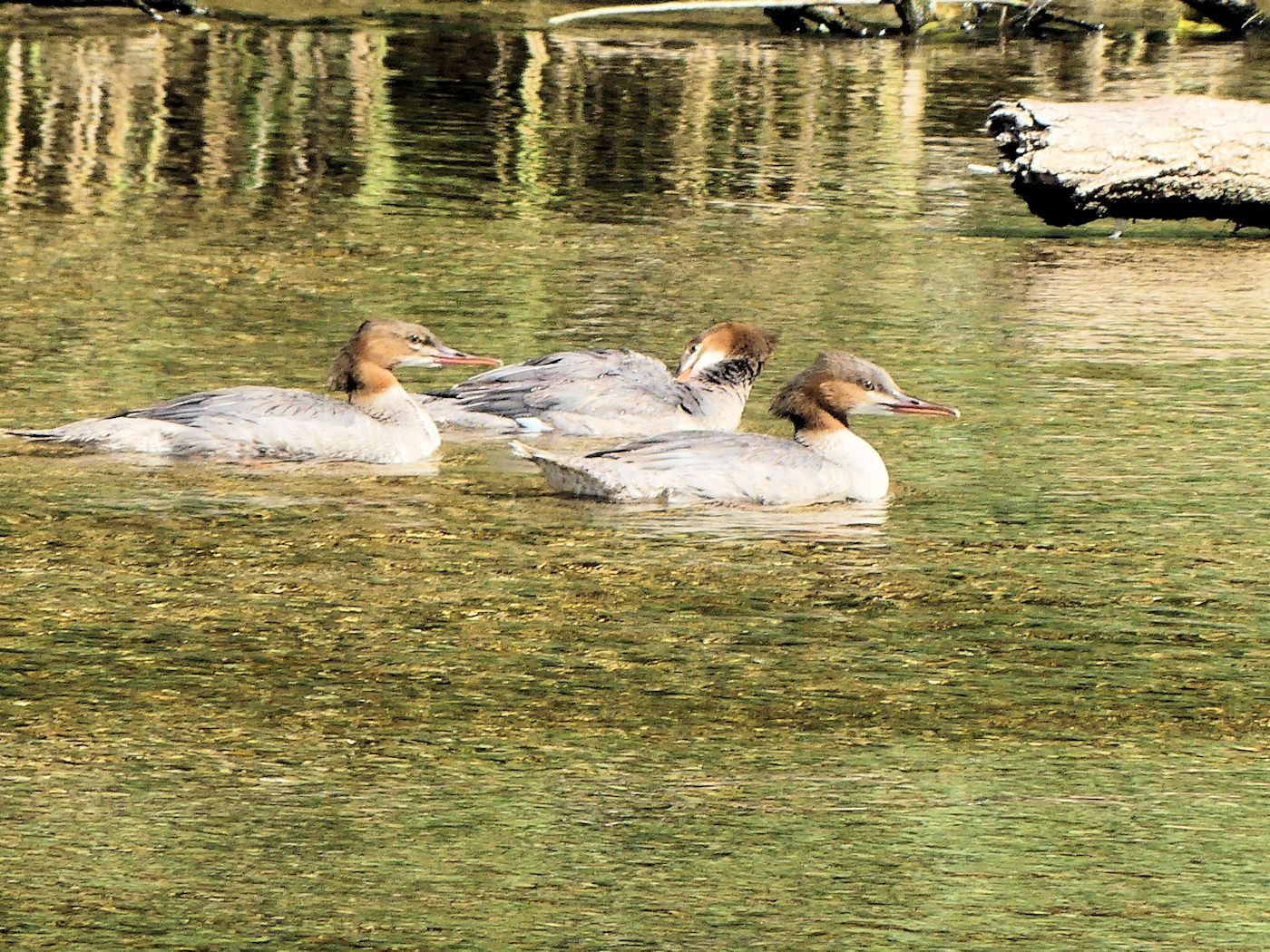
Two Goosander broods swimming upstream beside the Lodge where four of us watched as they swam by. Its a case of be careful what you wish for. Whilst we welcome the Goosander in limited numbers these birds have no predators to control their population. They are not a quarry bird and have come to see humans as posing little threat. They spend the day on the shallows, gorging on the designated species such as; Atlantic salmon parr, Bullhead and Brook Lamprey. This again raises the thorny issue of, no conservation without full consideration and compensation. The list is endless I will go through the issue in more detail shortly.
10th June
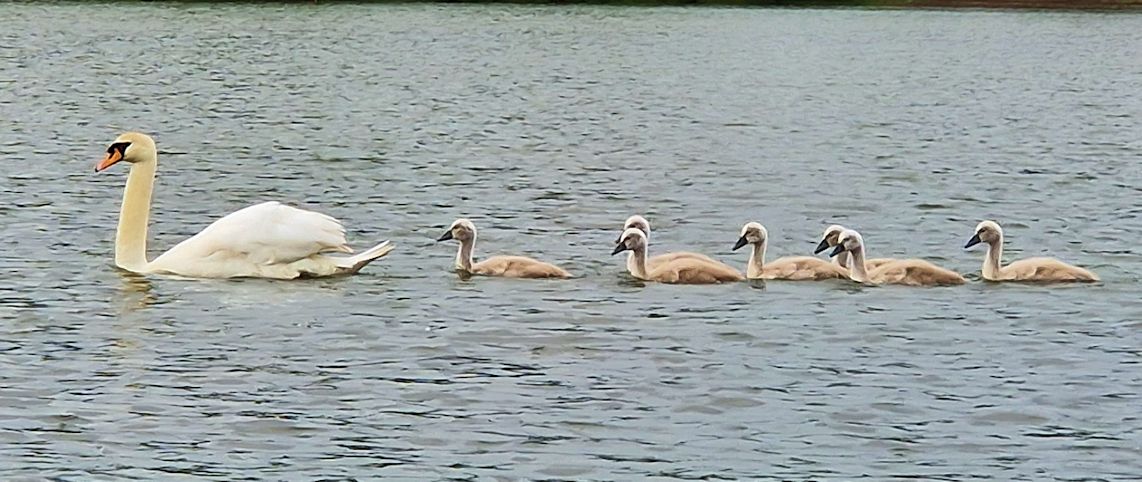
One of the remaining pairs, after the numbers lost to the avian flu, doing their best to make up for the losses.
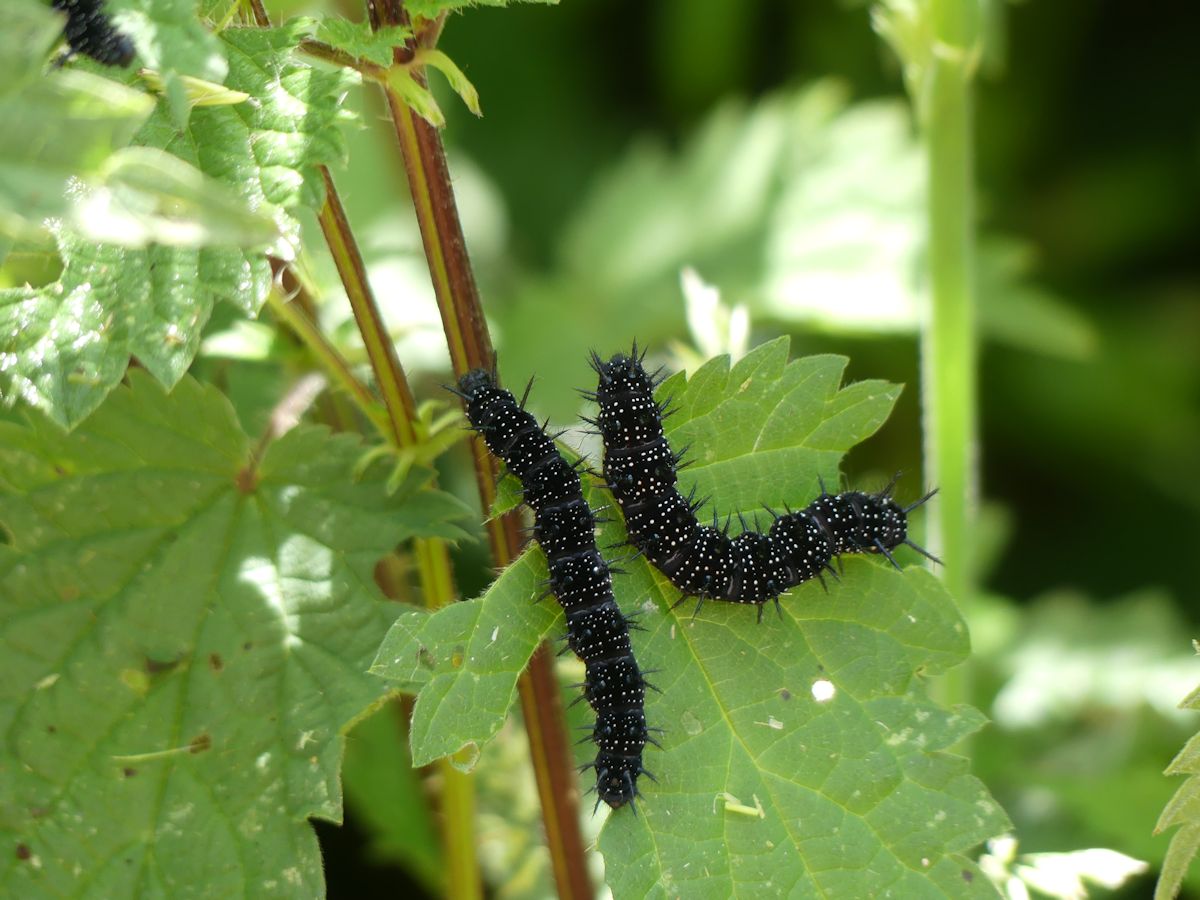
Jonny and I have been frantically swim-building and strimming in an effort to be ready for the 16th start of the coarse season on the river and Meadow Lake. The swim is "Duck Two" that has had over twenty tons of material added to stabilise the bank. Should you see odd patches of nettles, willow herb and various other bits and bobs, apparently missed when we were strimming, its intentional as they are the food plants for many of our butterflies. The caterpillars in the photo are Peacock butterflies on nettles.
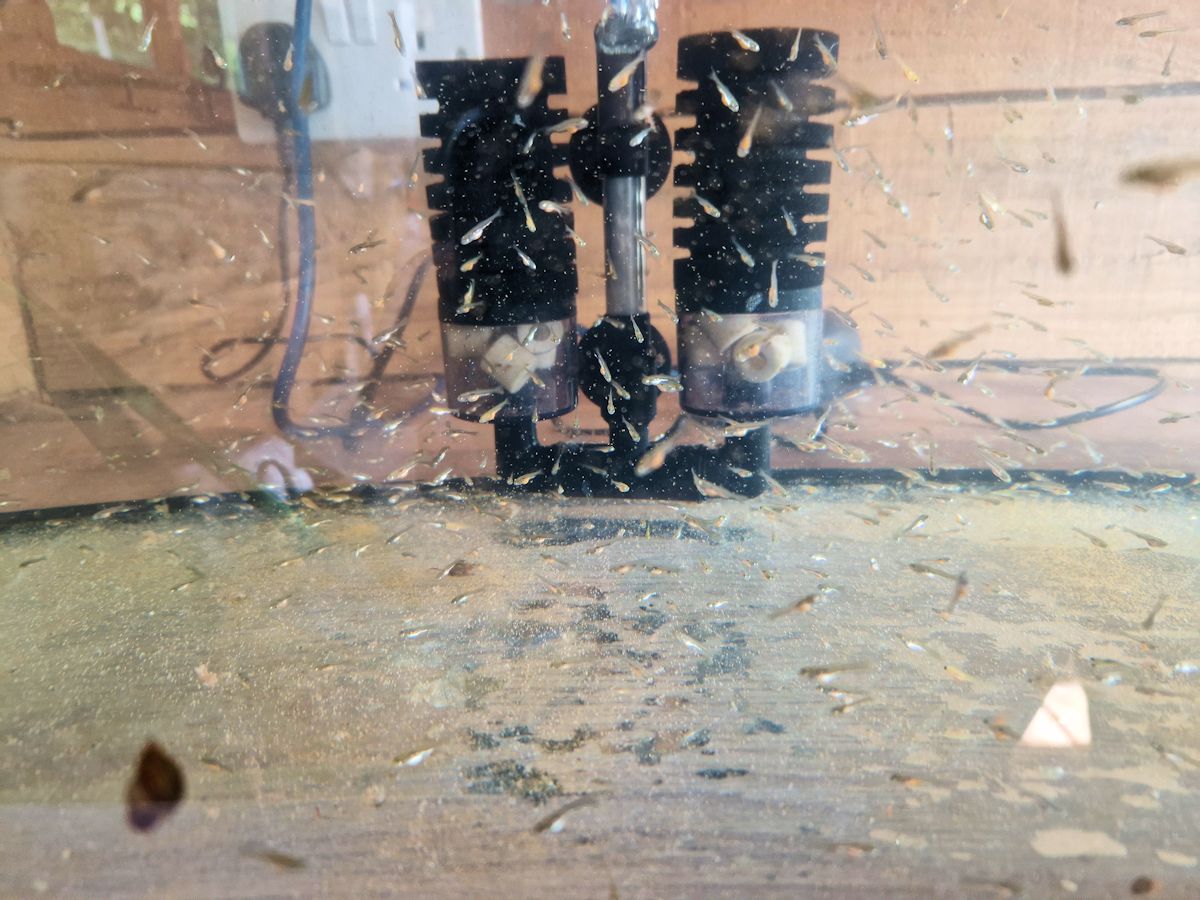
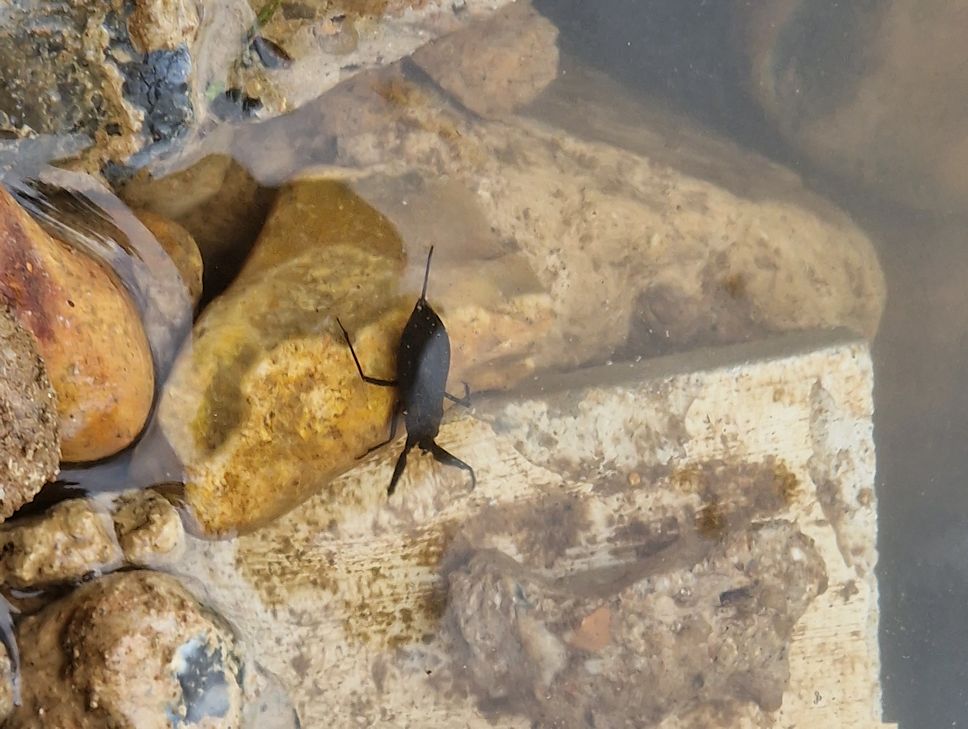
Food for thought from Jonny's water experiment. It would seem the river water is fine for carp fry, as of course is the lake water. Interestingly the lake fry suffered huge losses from predation by Common backswimmers (Notonecta glauca)that came as quite a surprise. I had always thought that the majority of the large carp that spawn in our lakes produced eggs that were sterile and never fertilised. If we assume a typical number of large carp in our lakes is in the region of twenty hens between ten and twenty pounds producing 100,000 eggs per pound. That gives a total of many millions of eggs, yet we see almost no recruitment in the lakes. It would seem predation may well account for the almost total losses if the events in teh tanks are duplicated in the lake. When we collected the eggs they were attached to weed that also contained the invertebrates that inhabited the lake. Whilst almost one hundred percent of the eggs hatched they were immediately subject to the continous attention of the hundreds of backswimmers that came with the water and weed from the lake. It was a matter of days before the fry had been decimated. on changing the water and removing the remaining fry numbers immediately stabilised. In the lake the invertebrates along with the shoals of rudd, roach, eels and perch add to the losses explaining to lack of recruitment. The question is just what level of predation do our salmon fry experience when the emerge from the gravel in the Spring.
2nd June
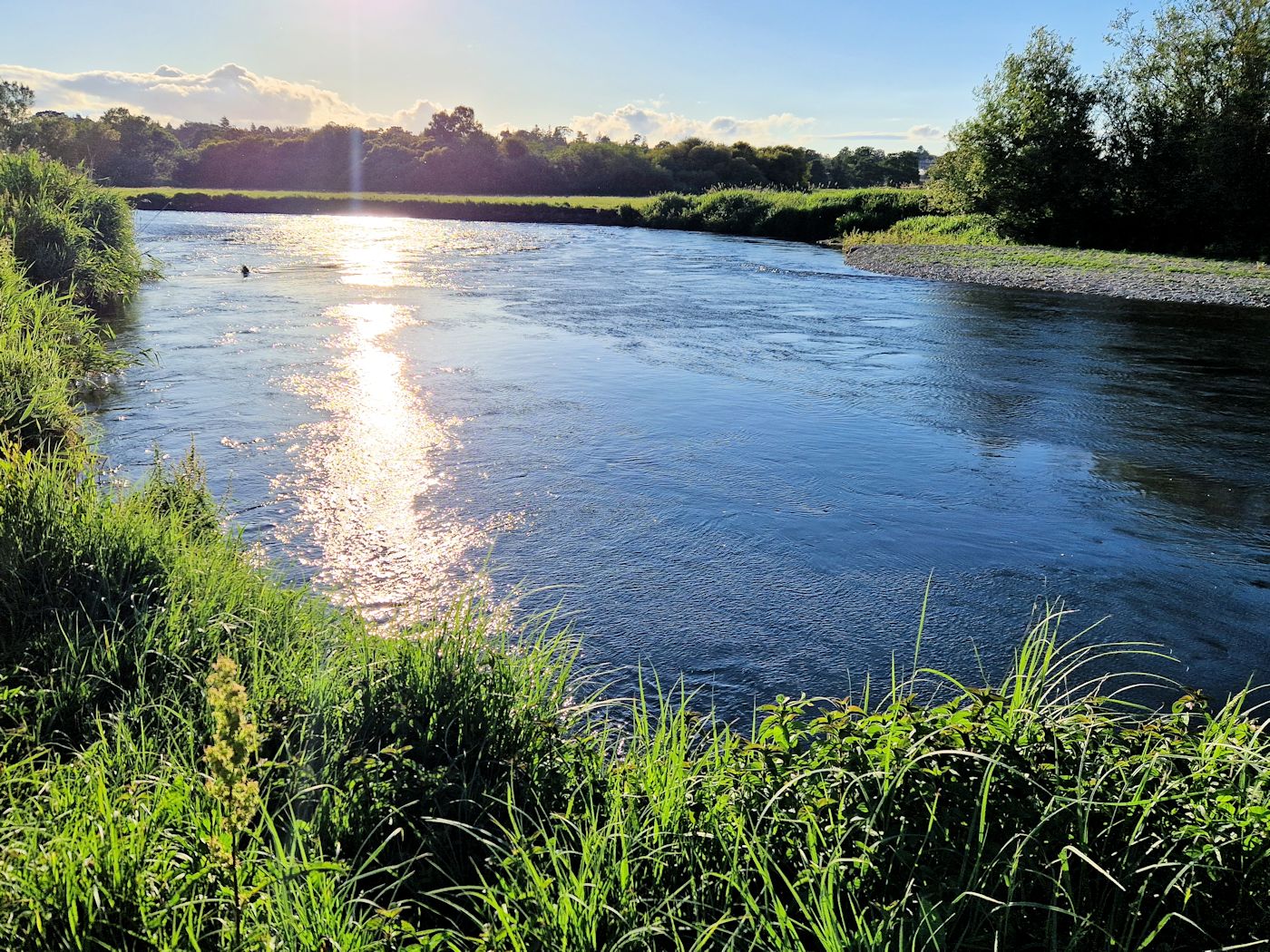
A disappointing day on the salmon front. During the enforced lay-off we had seen more salmon about the Estate than we have seen in years. Today, with the temperature dropping below 18 degrees, a recent flush of water, overcast conditions and the first day of spinning I was hoping for great things. Unfortunately despite several fish being seen and one or two follows nothing graced the net. Why that is I have no idea, if I were a betting man I would have put money on fish today. Perhaps the thunderstorms that rolled through at regular intervals throughout the day may have put them down, I guess we'll never know. I only hope they decide to join in over the next day or two.
I did go out myself this evening and threw a Willie Gunn about for an hour, unfortunately with the same result as the spinning guys. The lack of a fish was compensated with a fine wildie, of over a pound and the eternal hope of all fishermen that the next cast is going to be the one!
31st May
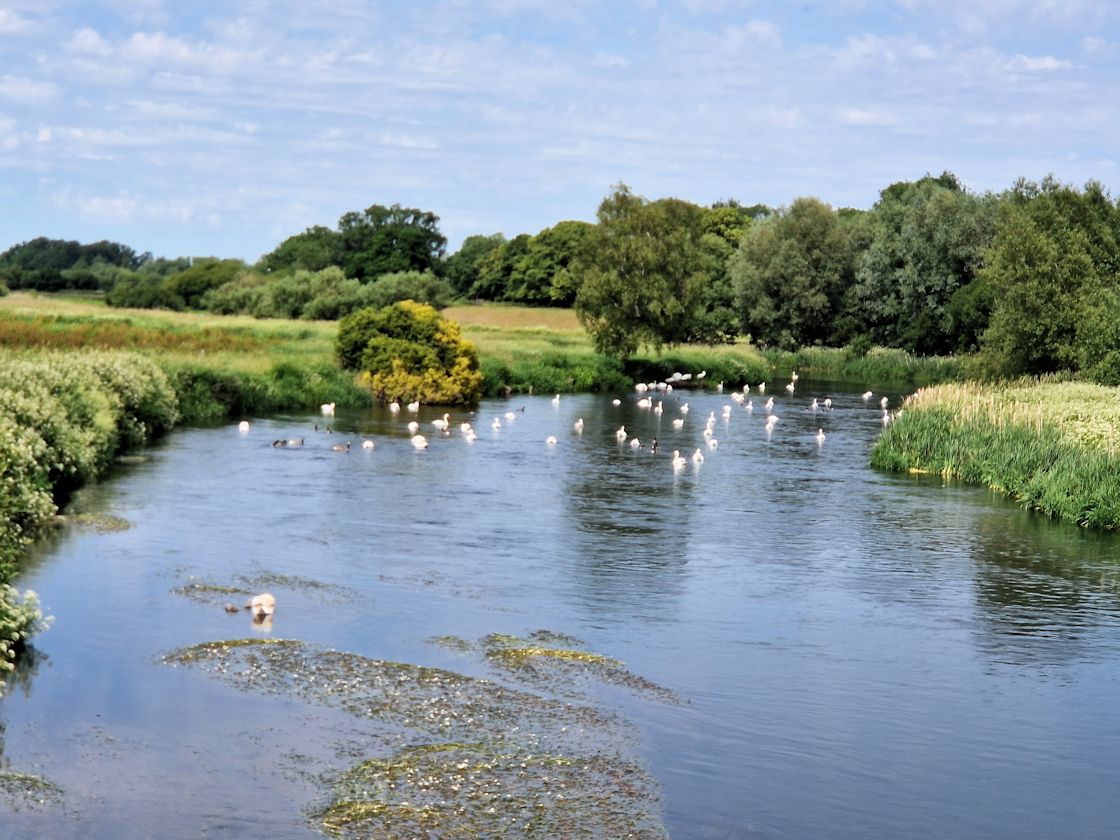
It would seem we still have good numbers of non-breeders on the river, rubbish photo but it does record the numbers. Last years avian flu was devasting for our swans with less than a quarter of the established pairs surviving. If the number of birds present upstream of Ibsley Bridge last week is any indication breeding pairs will soon be back to their pre flu numbers. There are cygnets with the bird in the foreground, another sign of a return to some sort of normality.
28th May
A different approach!.
It's a good job its not in the New Forest, the local authority would have removed it as a health and safty risk! (See April 8th)
27th May
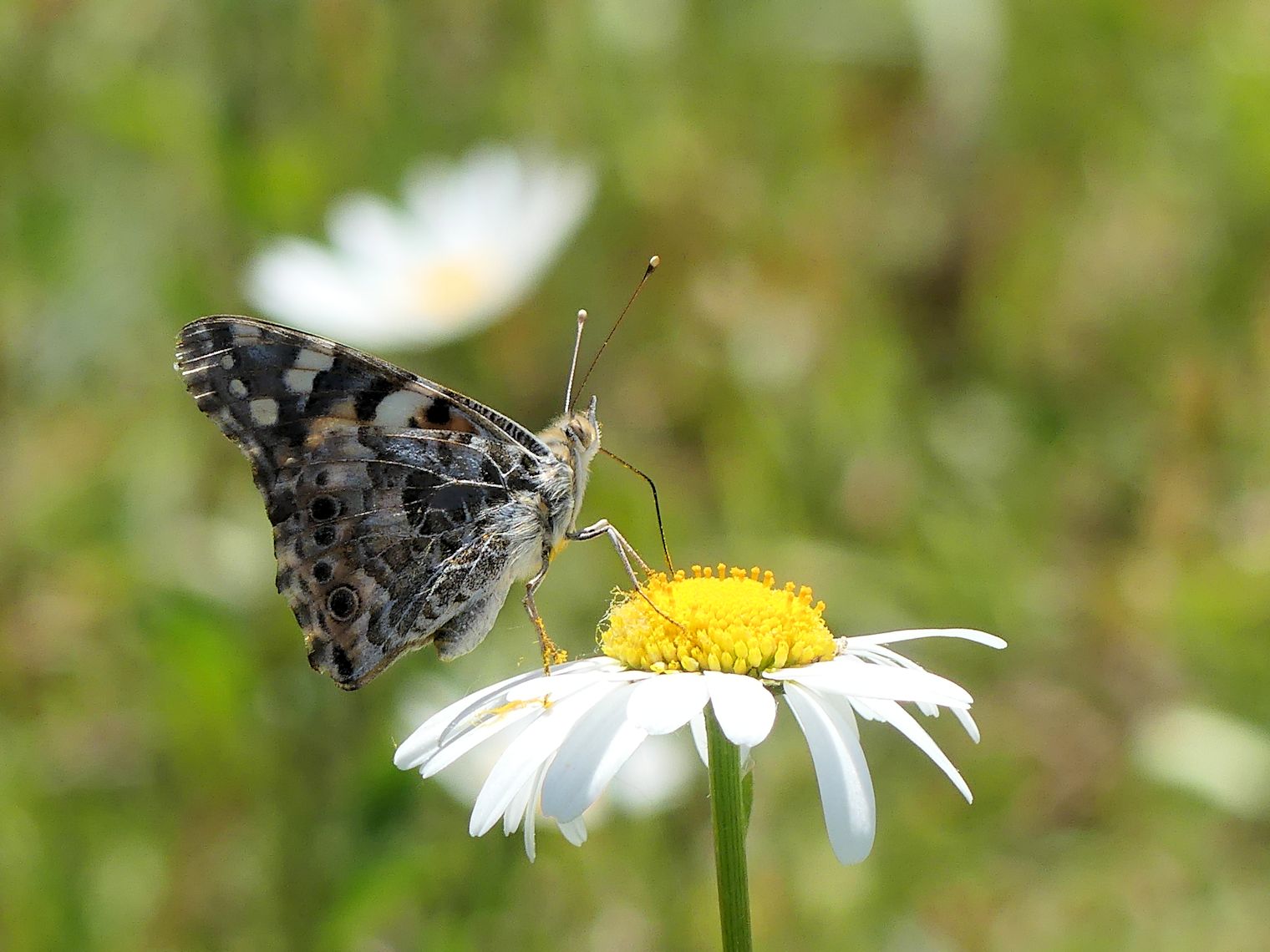
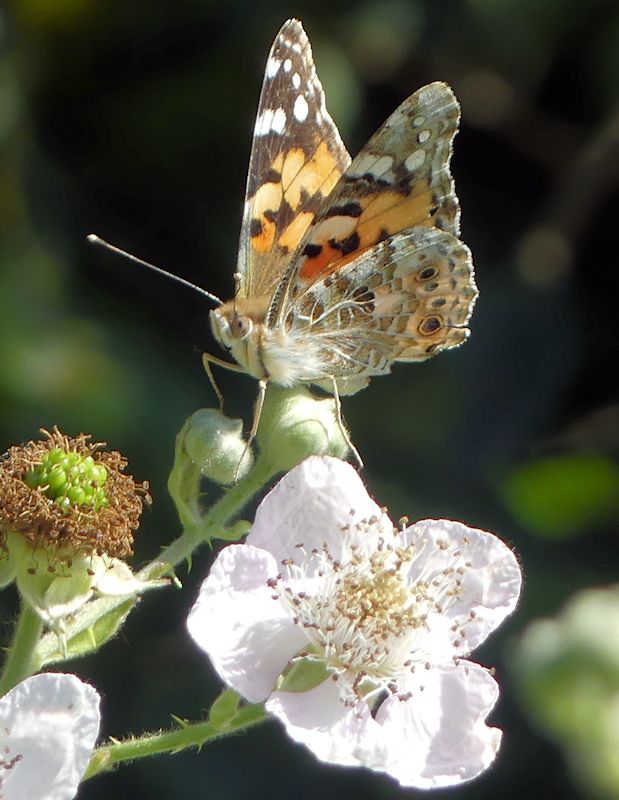
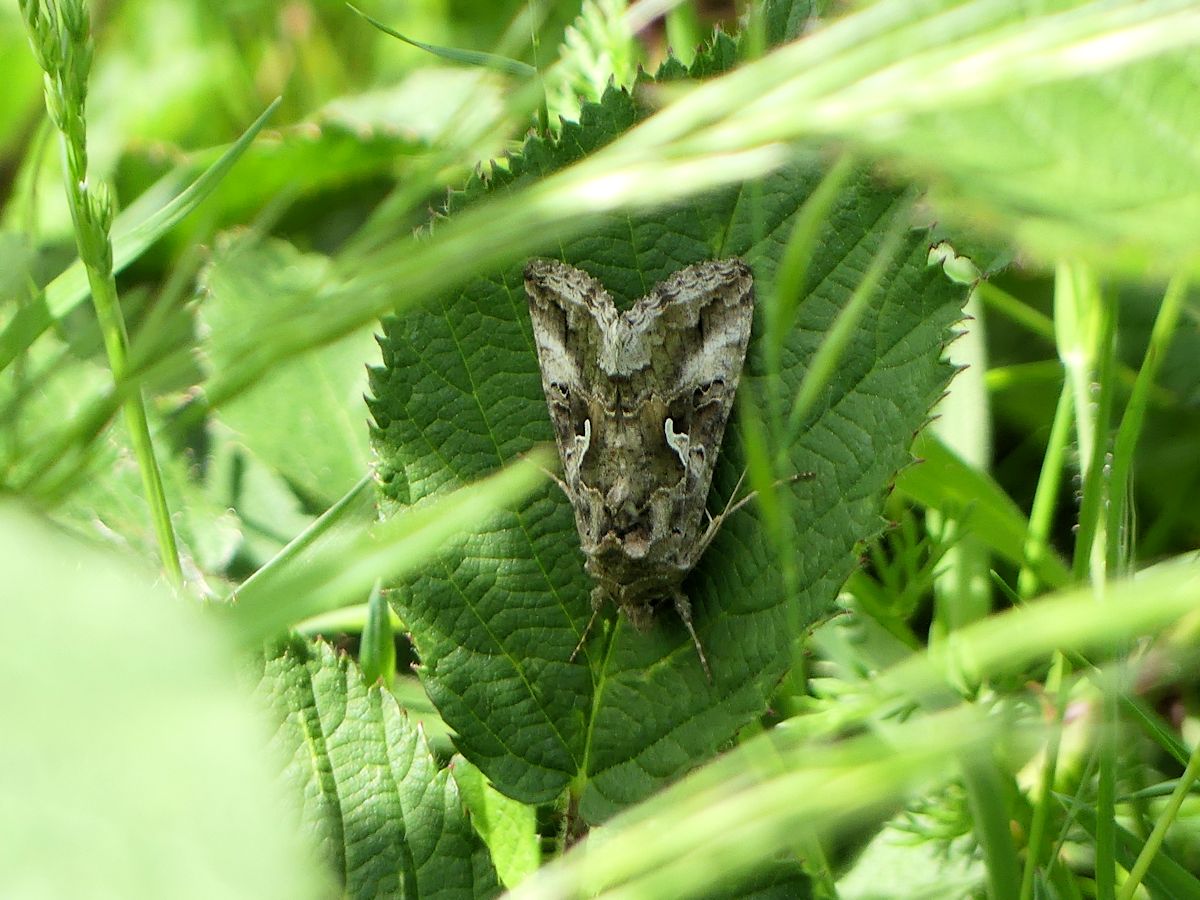
I guess there's a silver lining even to the heatwave we are currently suffering. The hot southerly winds have produced a massive influx of migrants from across the channel. Not those arriving in small boats along at Dover that everyone is getting their knickers in a twist about. I'm referring to the arrival of dozens of Painted Ladies, Red Admirals and Silver Y moths that have crossed from France and Spain with the assistance of the following warm winds. If one adds the continuing Mayfly and Blue winged Olive hatch on the river in the cool of the evenings. Plus my favourite insect in the shape of the Stag Beetles that have been emerging around our garden at home. Yesterday evening just on dark I counted over a dozen as they droned overhead doing their motorised matchbox impersonation.
25th May
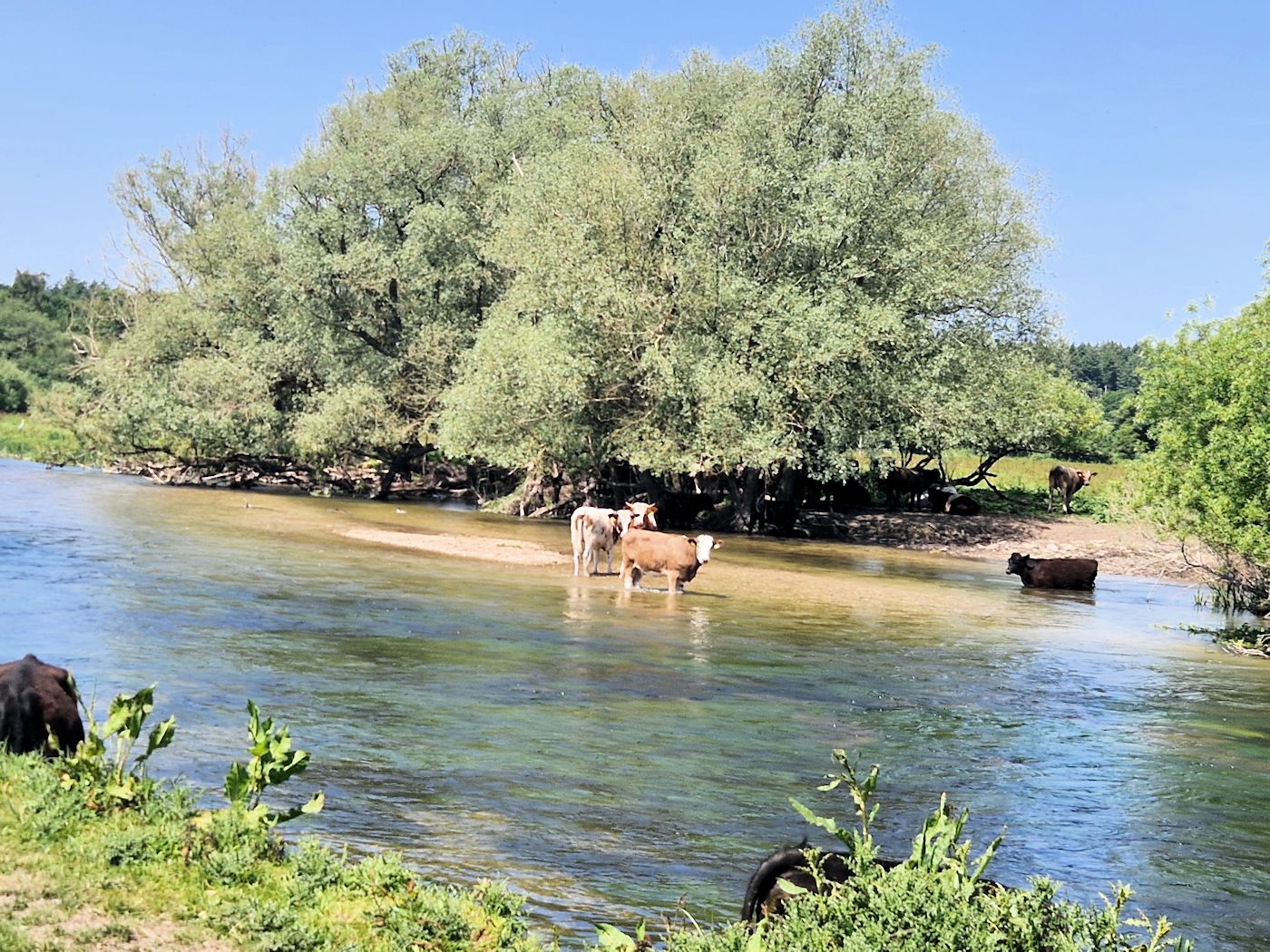
I think these probably had the best idea today. The brief respite the couple of days rain provided a week ago now seems long gone and just a distant memory. The water temperature has rocketed, which of course means that salmon fishing is currently suspended. I can find very little good to say about this weather, perhaps the coarse fish fry will benefit from the warm water and this summer will lead to a good recruitment year. The warm water is just one issue facing the salmon. We are entering a very low flow year, to add to the salmon fishing misery. Our water height has dropped like a stone. Flow remains reasonably good yet the last three years of very high winter floods has scoured out many of the gravel shoals and weed banks that we would normally expect to coffer the water levels back up to a reasonable level.
23rd May
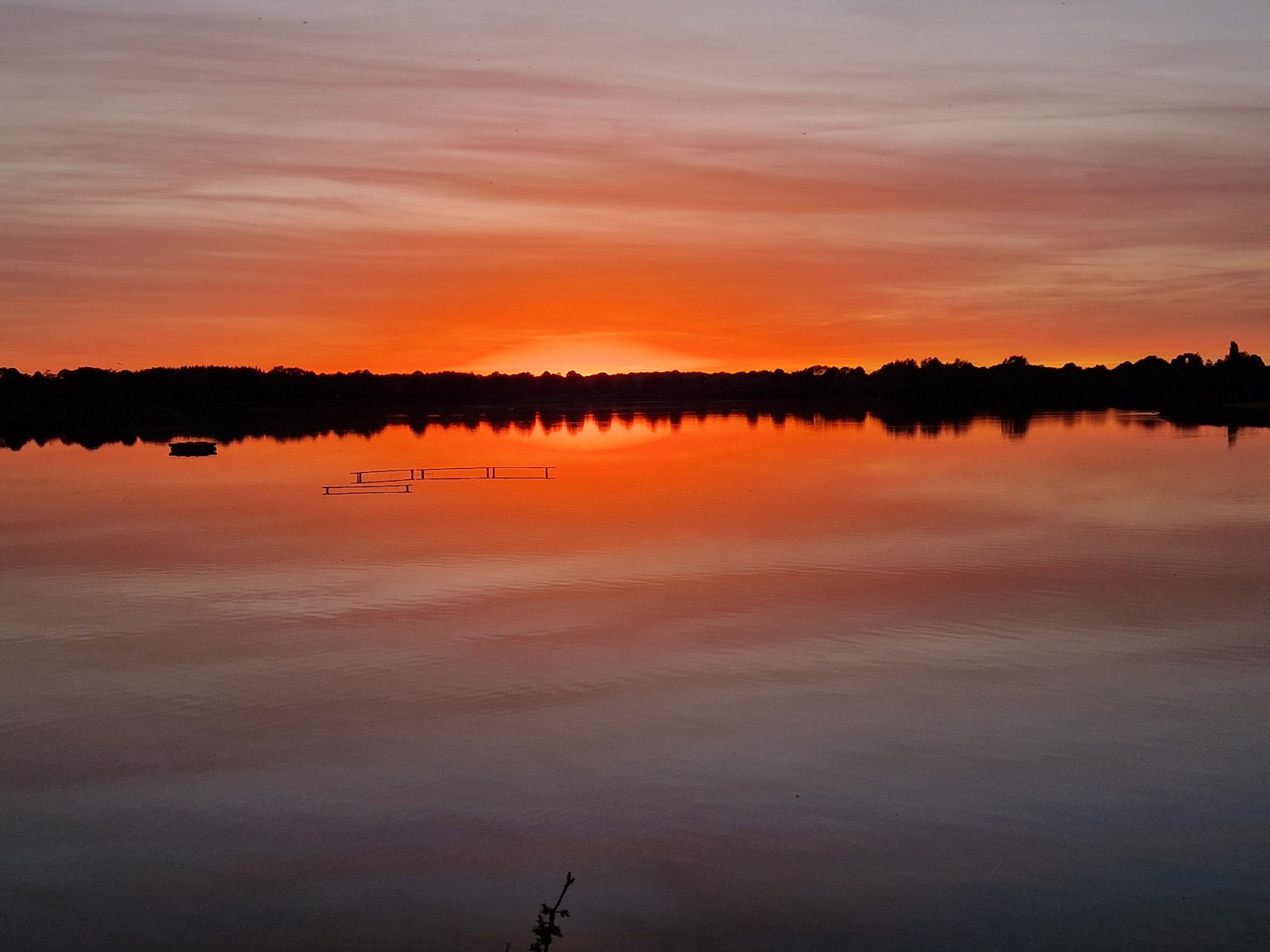
A wonderful sunset from Goosander hide, across Ibsley Water, this evening. If the red sky is a true indicator we are in for another scorcher tomorrow.
21st May
There has been some interesting feedback on my recent moan about the state of our rivers. There is quite a lot more to say on that subject and I'm sure I will get around to doing a follow up piece.
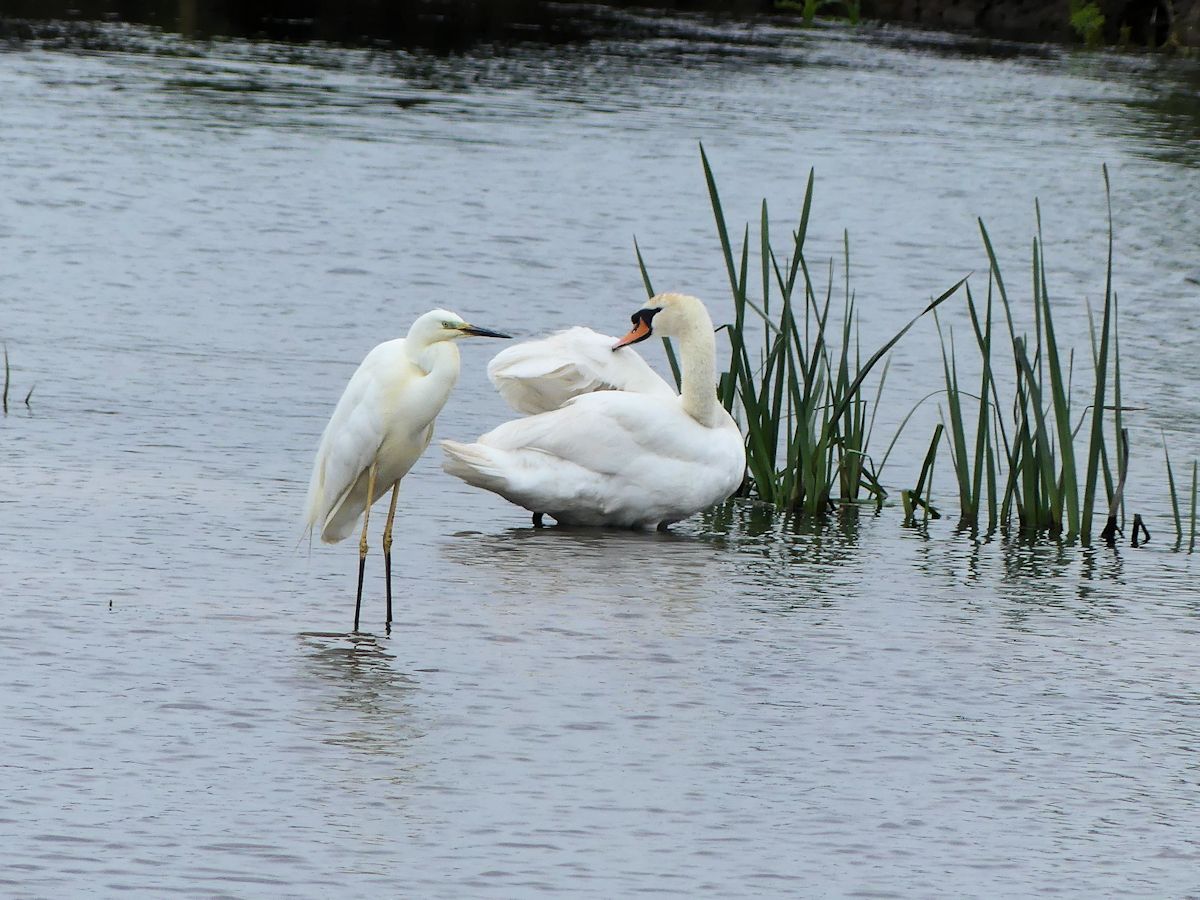
Odd couple! I put the photo up as it shows a Great Egret in its mature colour, with the dark beak. We still have two or three about the valley but I don't think we have them breeding. I will certainly take a closer look as to where they arrive from in the mornings and depart to at dusk.
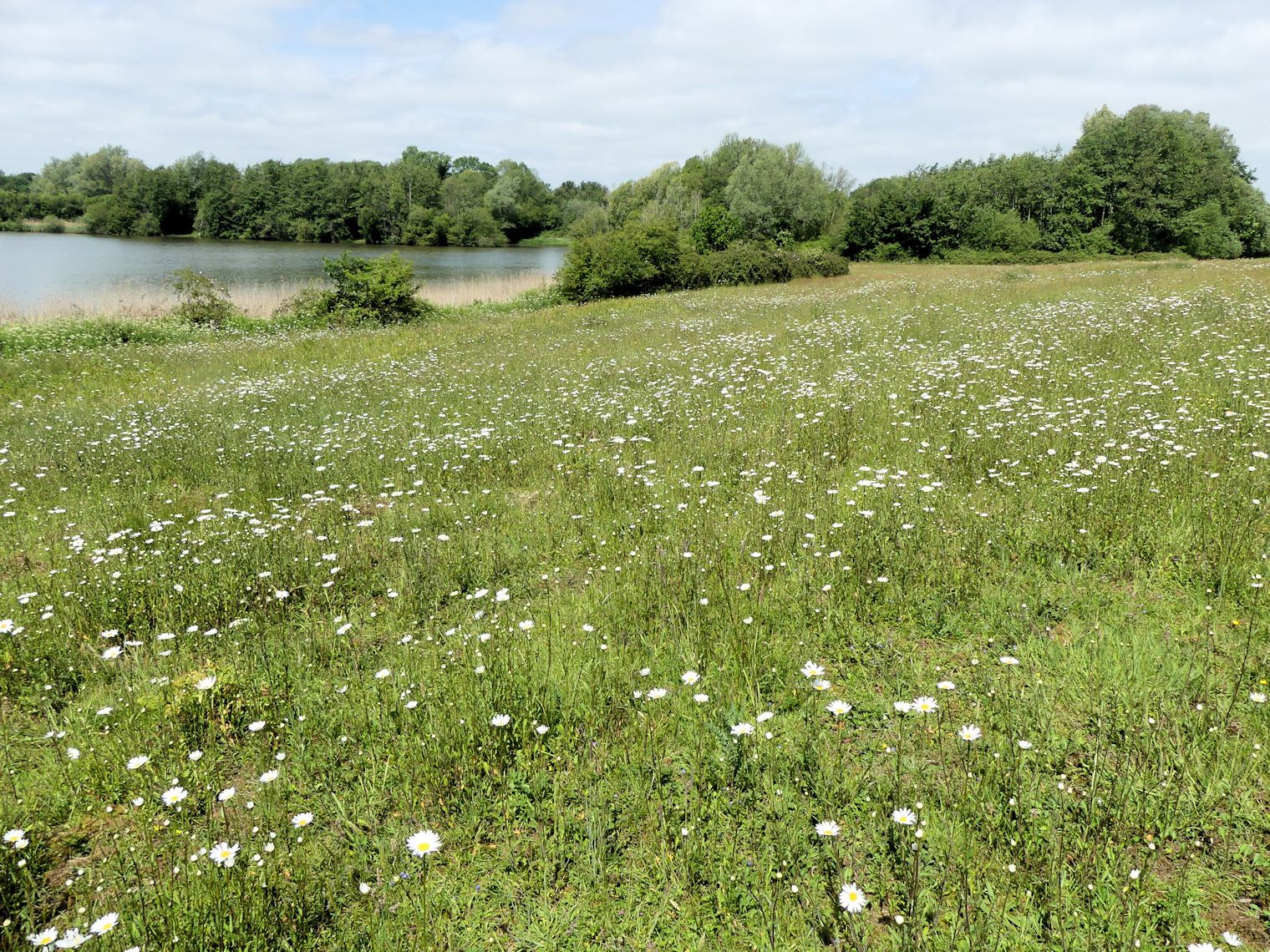
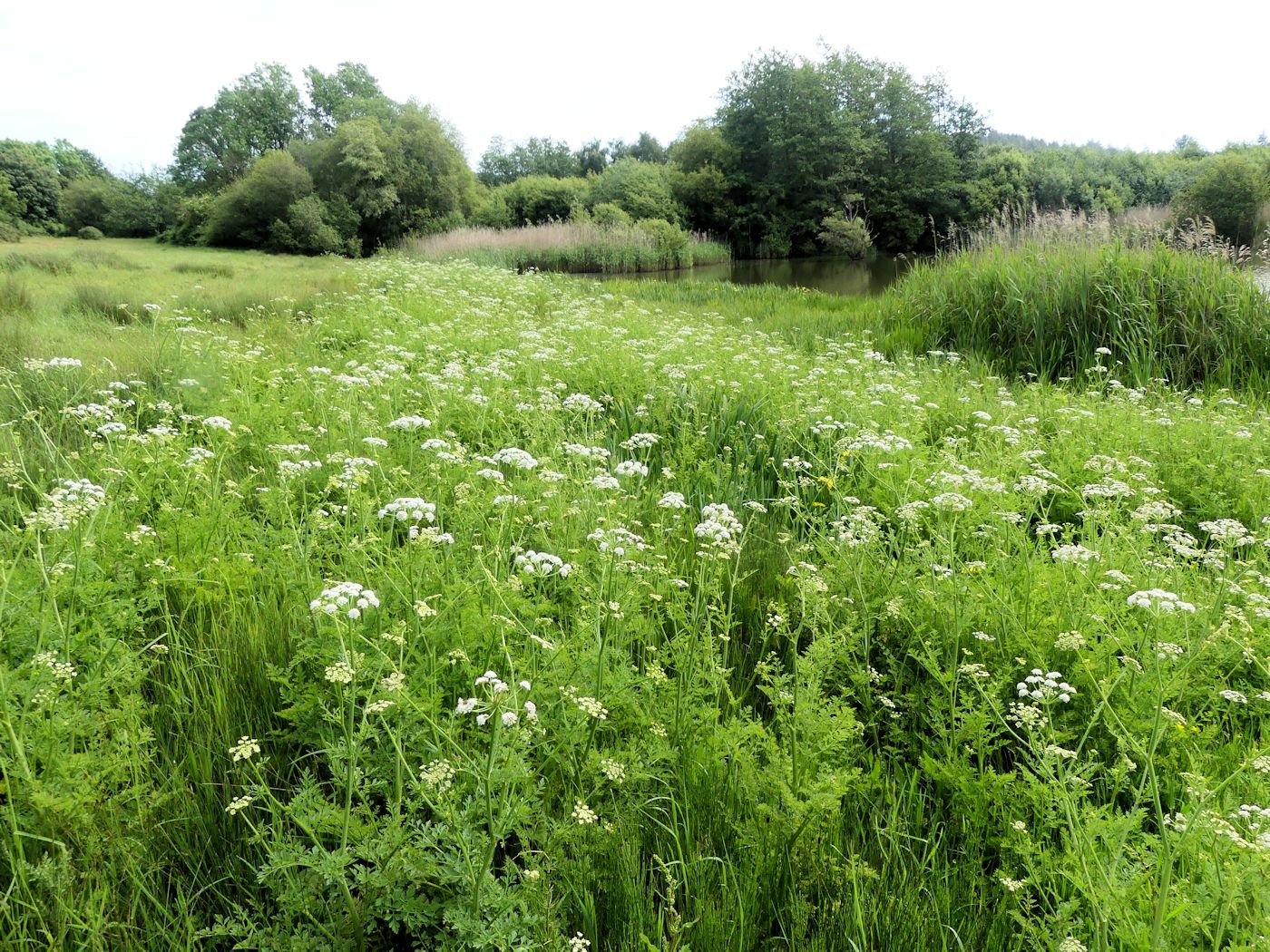
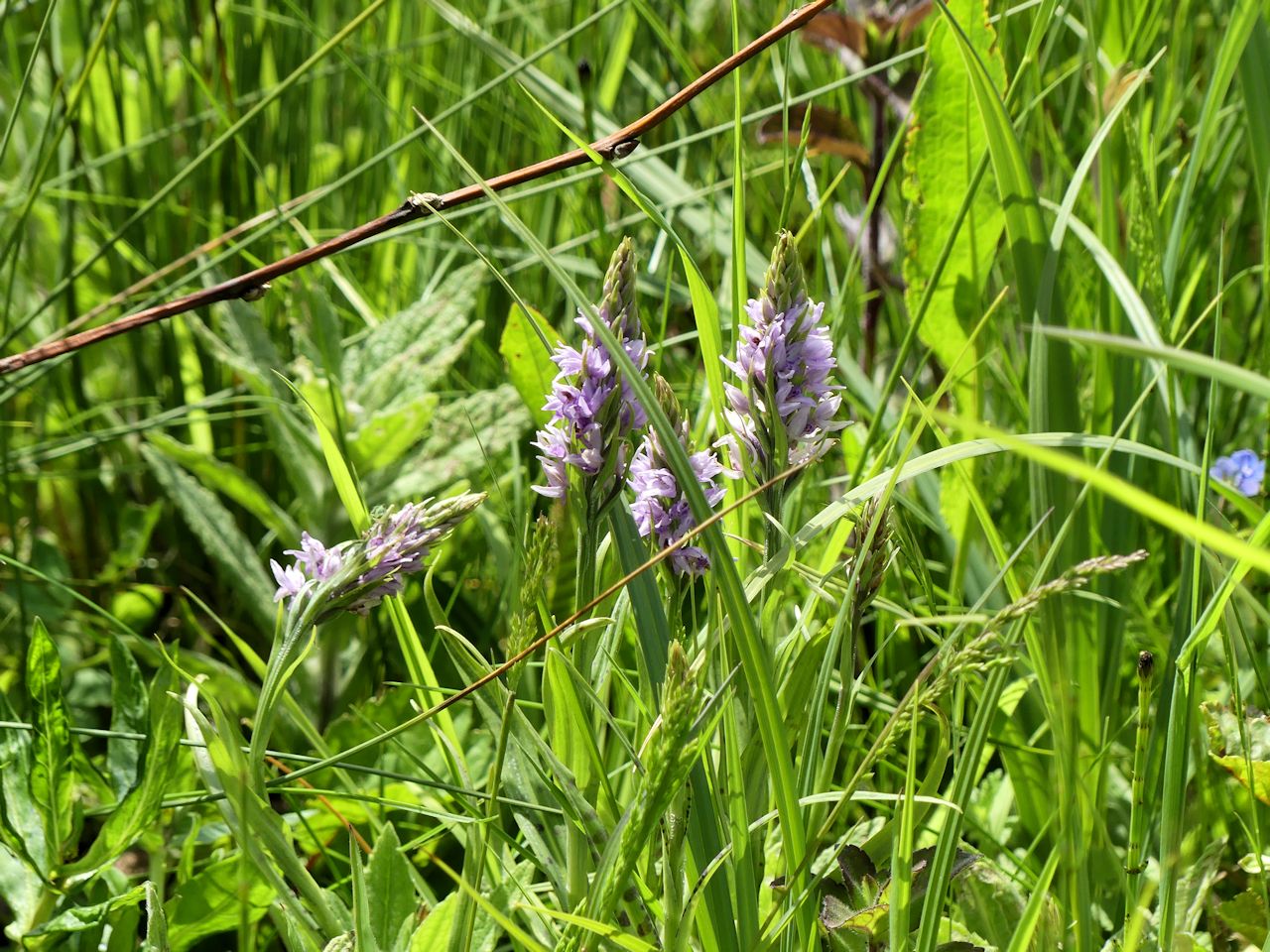
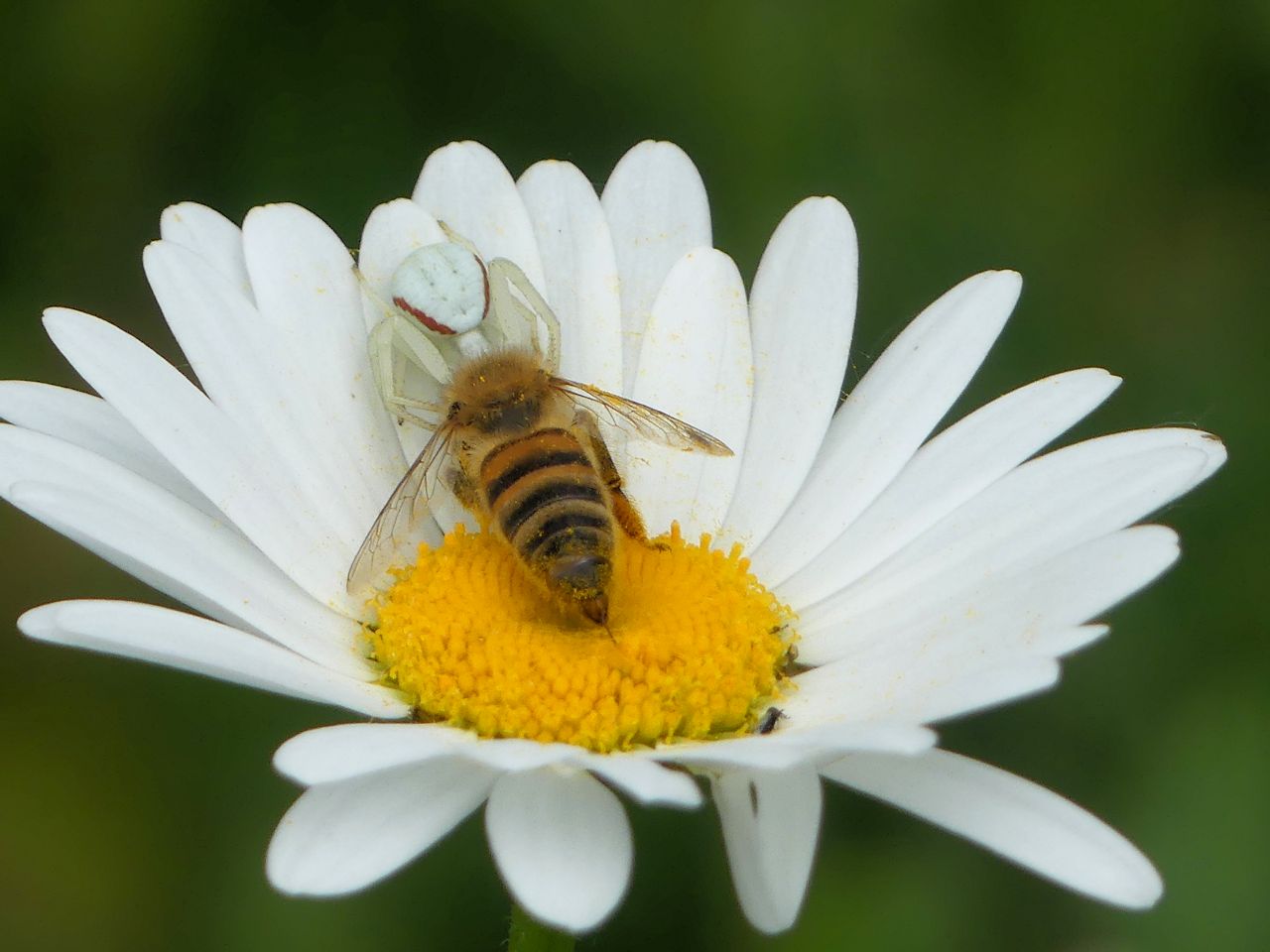
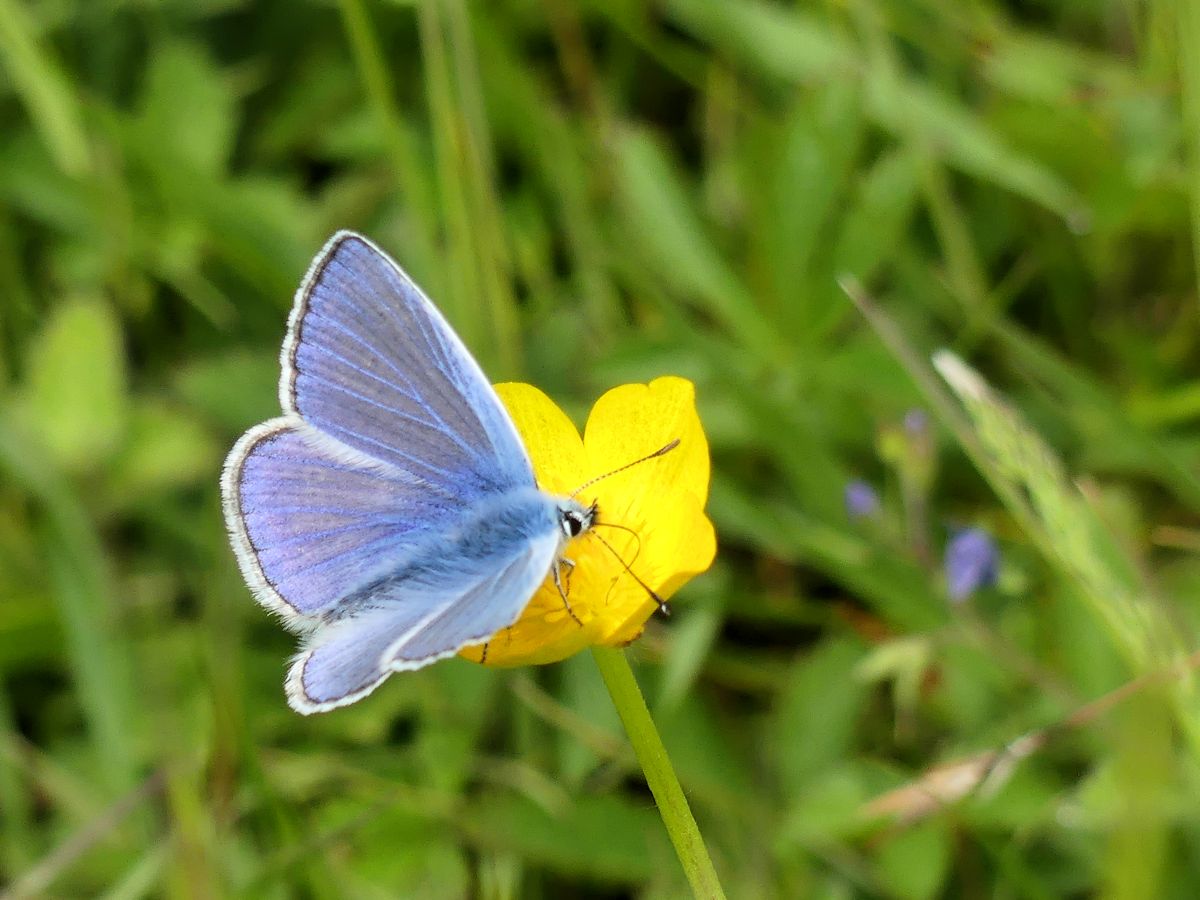
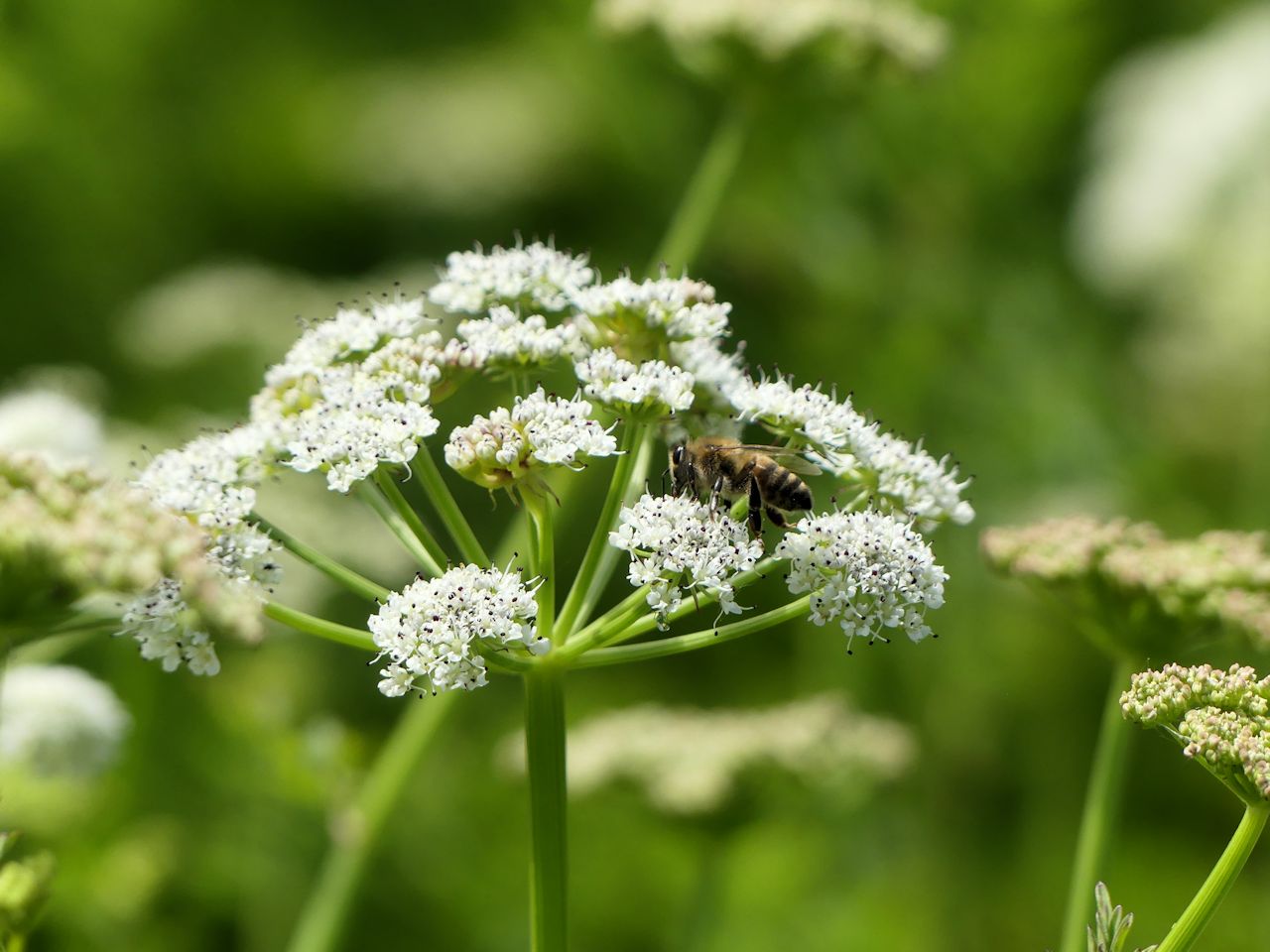
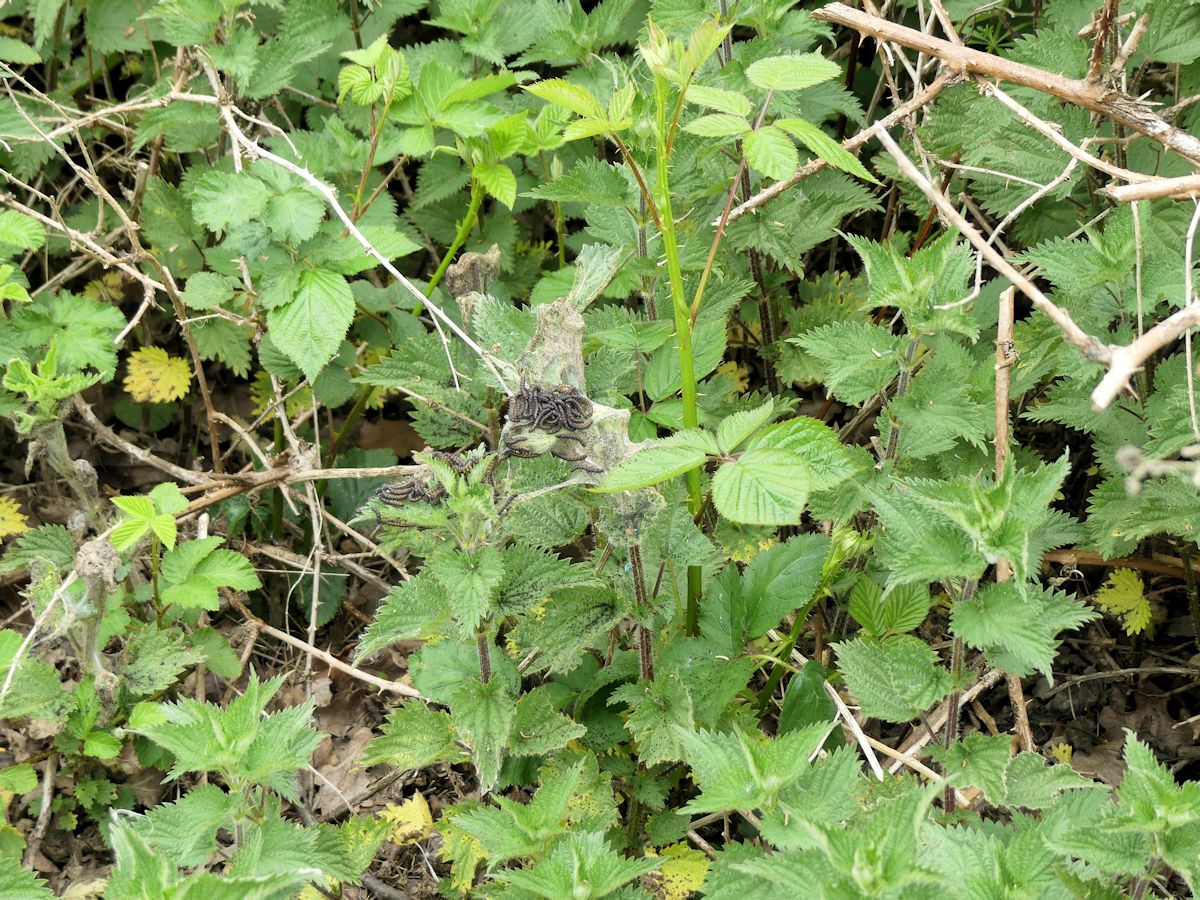
I think leaving it until the eleventh hour best sums up the arrival of the recent rain. If we had suffered a further dry week I think the meadows would have failed completely. Lady luck smiled and the rains came and saved the day. A couple of photos showing the Ox-eye daisies and the water dropwort.The dropwort is the more popular with the bees and hoverflies yet all the meadow flowers are doing their bit and have taken a huge sigh of relief. One shot in praise of the much maligned nettles and a find the crab photo.
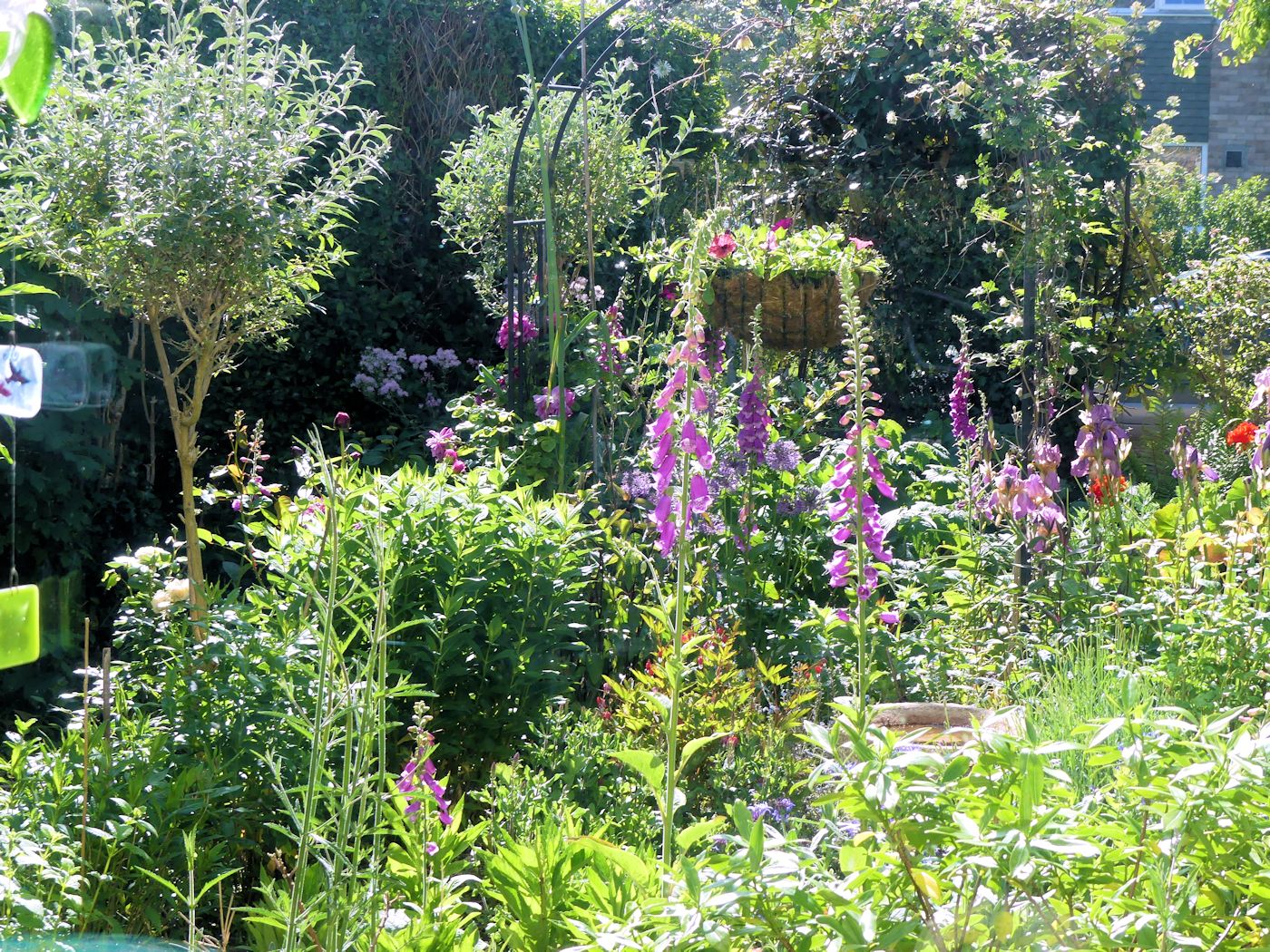
Its not only the meadows around the lakes that have appreciated the rain, my garden at home has come alive with bumble bees and hover flies on the foxgloves.
18th May
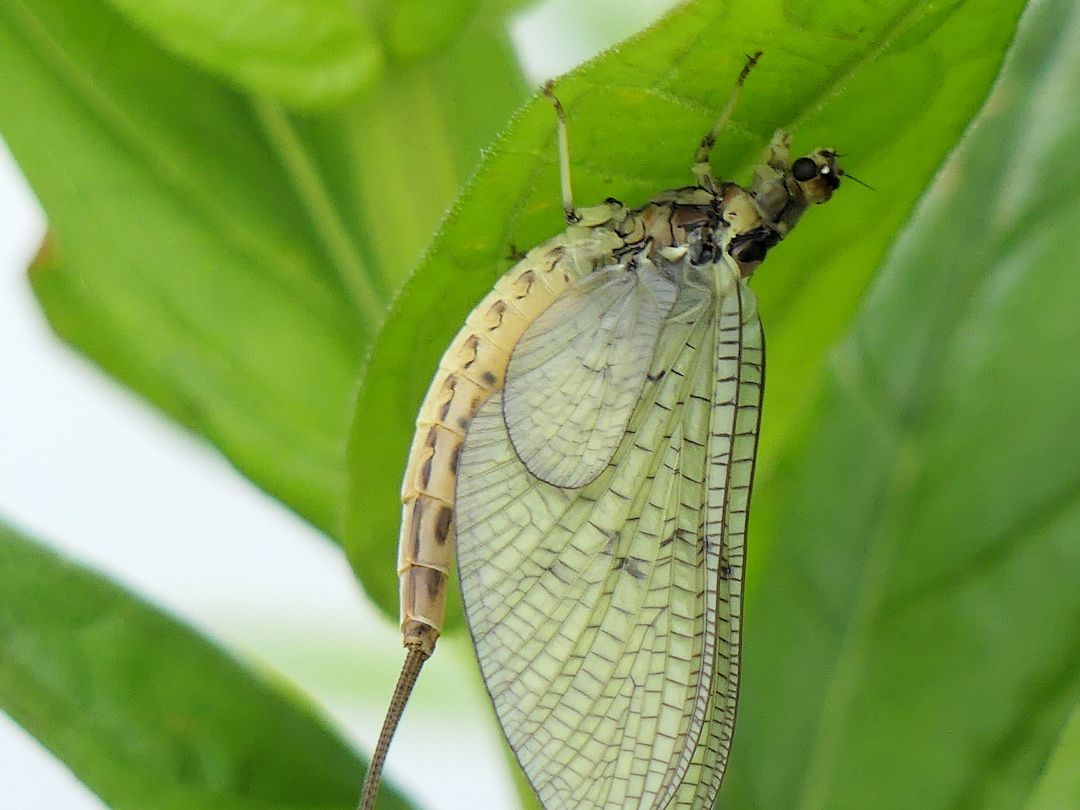
Despite the most welcome rain and not so welcome wind there was a wonderful hatch across the length of the main river this afternoon. Mayfly, olives and sedge in the form of Welshmans buttons in such profusion at times they covered the water. Mallard, gulls and even the geese were all feeding on the unexpected food supply. Those blown from the river were quickly mopped up by the Martins and Swifts that joined the feast over the meadows. Of course the most pleasing of all, the trout, grayling and dace that were also not missing out and could be seen rising to snatch the welcome morsels from the surface.
14th May
If the floods we have experienced for the last three years are to become the norm our lowland chalk stream salmon, face an entirely new set of conditions. They will need support if they are to adapt to these extended periods of high water, scouring redds, invertebrate food sources and alevin from the system. The freezing conditions of January and February that used to be the norm, after the autumn floods had cleaned the gravels, are a distant memory. The low flows and high water temperatures of Summer are becoming all too familiar. The river is out of sync with its inhabitants, for whatever reason, be it climate change or pollution, the physiology of the valley is out of kilter.
We can write an entire book on what might be the factors that are killing our salmon and many have. Unfortunately another book will not save a single parr, we need direct action to explore practical solutions from habitat improvement that can be introduced on a landscape scale. To enforce the existing legislation ensuring those that would pollute our rivers face the full deterrent effect of the law. To explore, release areas, life stage release and timing.
Waiting for another ten years for single approach to fuck it up yet again, as is proposed on the Frome, will solve absolutely nothing. Far more than likely driving the final nail into the coffin. We need every catchment group in the country to be running trials and projects in an effort to understand the unique characteristics of their river. Those characteristics, or unknowns, may relate to habitat, pollutants or fish species and their food requirements. For the most part they remain a mystery with guess work and dogma driving policy.
In recent years the universities have become far more active at looking at many of these issues. An expansion of collaboration between the catchment management teams and the universities has much to be said for it. What would also be extremely welcome would be support from the regulators, as opposed to the, "we know best, do as we say," attitude we all too often see today. I am sick to death with being told what is best for our river by people who struggle to know which way the river flows. The greater part of the research and information the dogma we face is based upon is outdated and all too often pseudo science, at worst guess work.
We need just one or two of those multiple attempts to get it right, or bring new ideas to the fore, ninety nine attempts to solve the problems will probably fail, just that one in a hundred to get it right and lead the way for the rest of us, is our lifeline.
I guess and hope, this is a case of watch this space for something has to change.
Lets hope so. Stay positive.
I'm not sure this is quite what he had in mind when he wrote it but its a sentiment we can only hope applies to our river. Its a great track so worth a listen anyway!
12th May
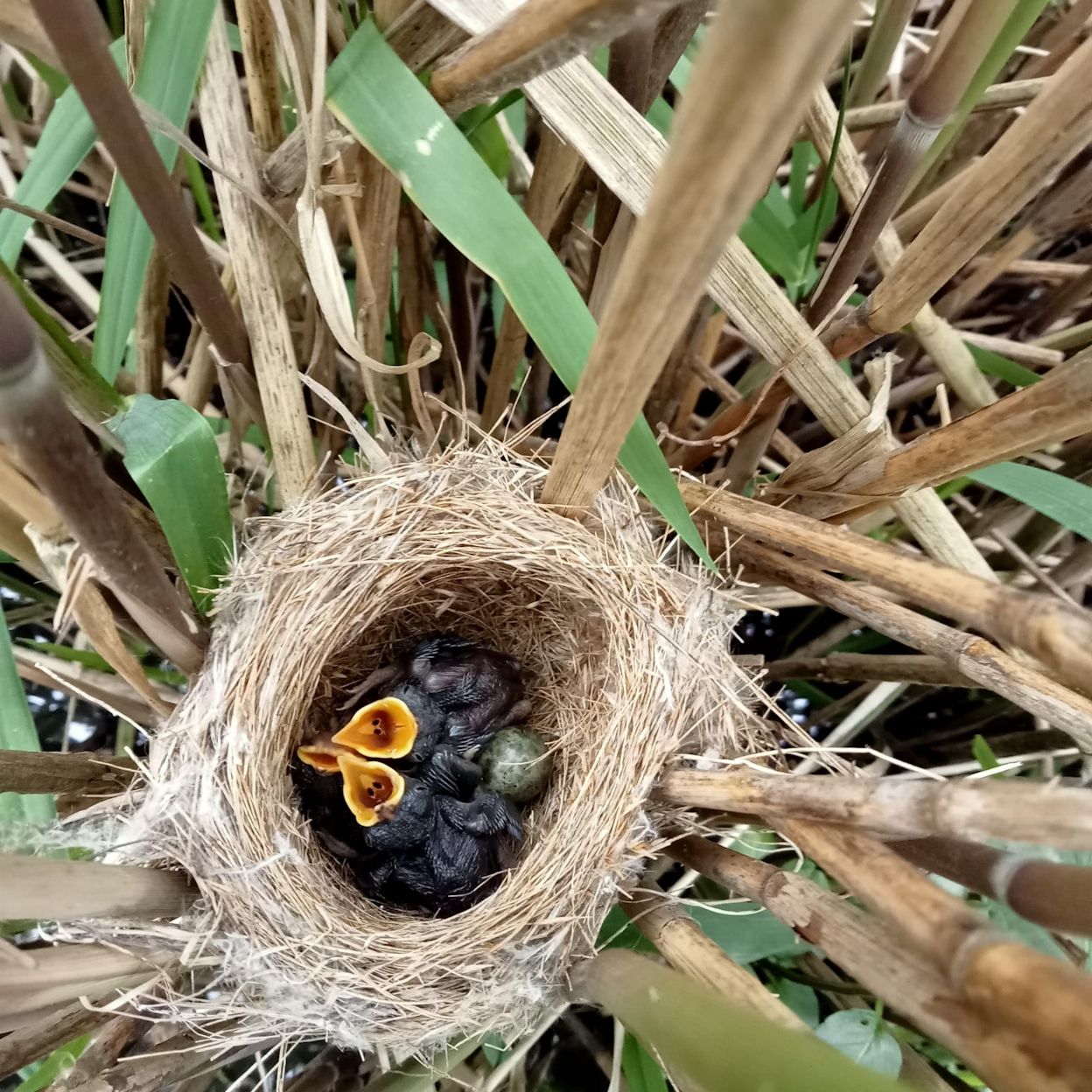
Brenda sent through this photo of an early brood of Reed Warblers from over at the lake. Forming part of Brenda's ongoing study the warblers seem to have made a good start to the new season. I'll look forward to reading the outcome of this summer's study later in the year. Thanks for the photo's Brenda, I always enjoy seeing how they are progressing.
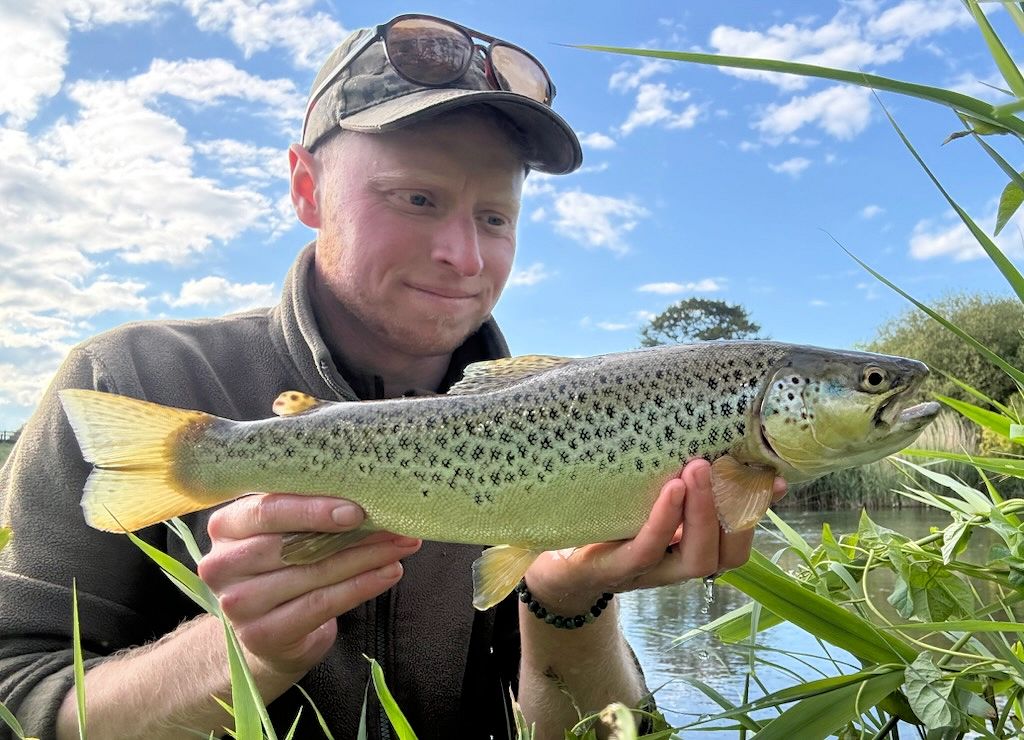
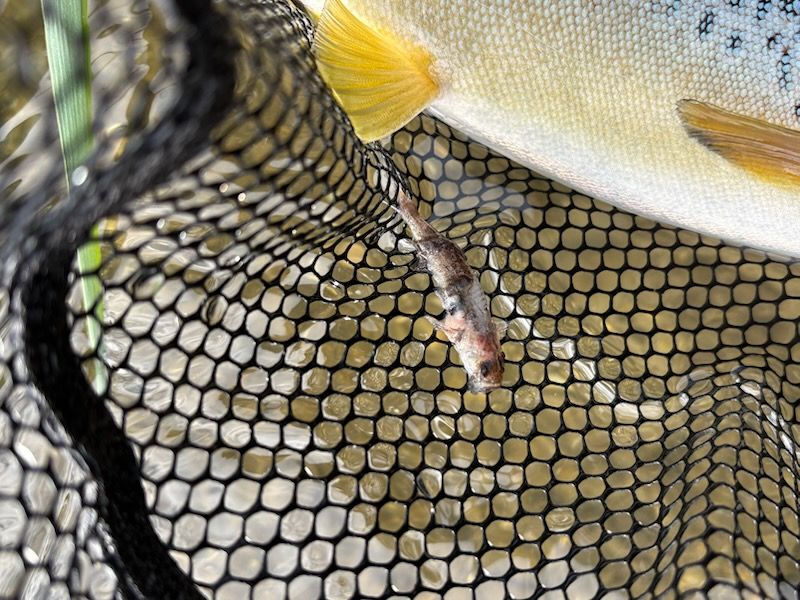
Interesting photo of Jonny with a nice brown trout taken during the ongoing mayfly hatch. I say interesting in that this is probably a stocked trout from higher in the catchment that has moved downstream. The crushed bullhead resulted from the trout regurgitating it into the net. Bullhead or Millersthumb are of course part of the River Avon designated species list. I know over on the Test, where they see far more of these migrating stock fish, there is concern about the detrimental impact they may be having on the native juvenile fish stocks, particularly our salmon. I'm sure we'll hear more about the number of stock fish permitted in our rivers in the future.
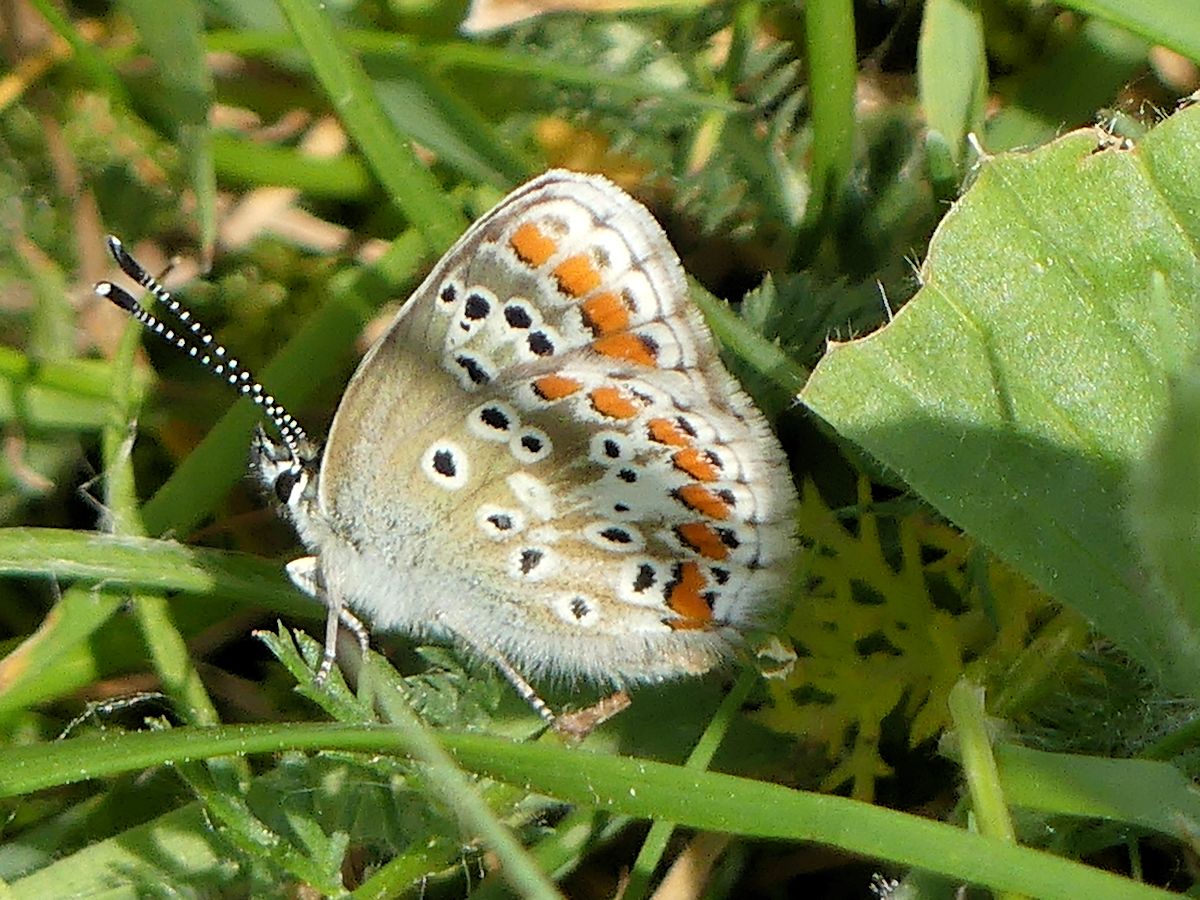
Despite the overnight frosts and the cold northerly wind I did see a single, brave brown argus, whilst on the transect today. I simply hate this dry, northerly wind, it is no use to man nor beast. Just as last year the meadows are rock hard and already browning off. The wildflowers are wilting and the nectar flow has ceased. The hay and silage crops are stunted and maturing far too early. An old lay preacher I knew in my youth was often heard to say that it was a wicked man that cursed the wind, well it seems I'm to be cast into the fiery furnace.
9th May
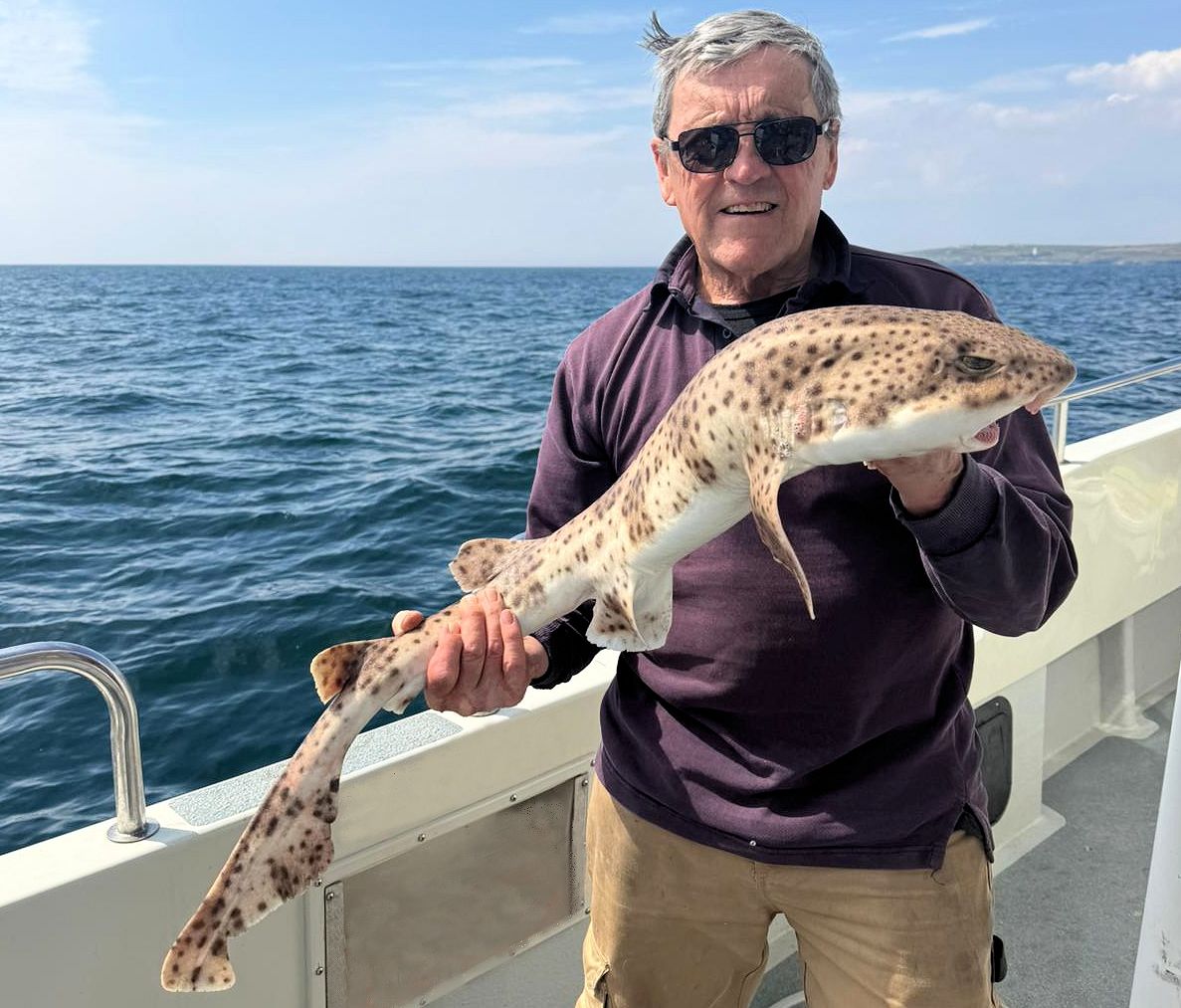
A good day out from Portland with plenty of bass, plus conger and bull huss. With turbot, black bream, tope and mackerel also on the boat what was forecast as a very windy day turned out to be perfect, slight sea and sunshine for most of the day. I do like huss, I have put photos of them up before, they are like dogfish on steriods, with attitude and teeth.
7th May
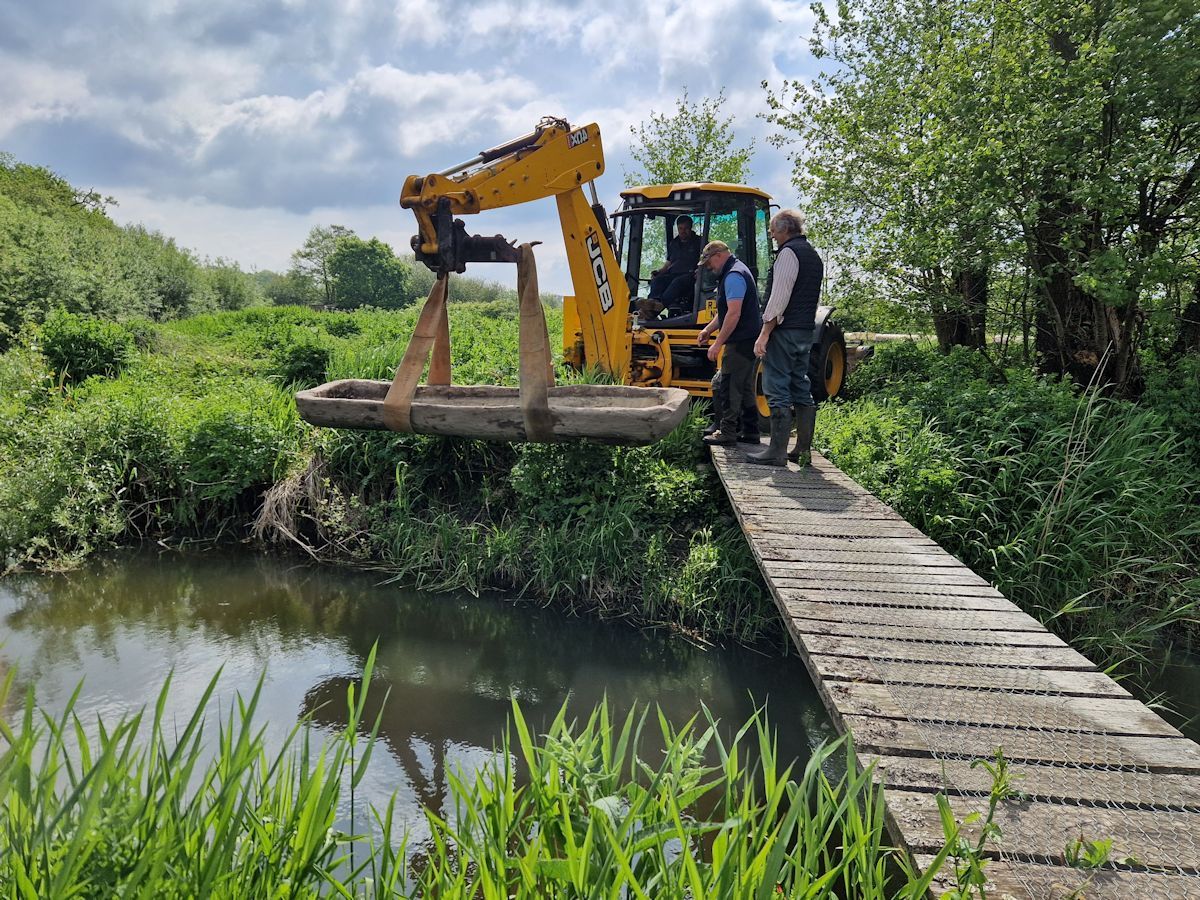

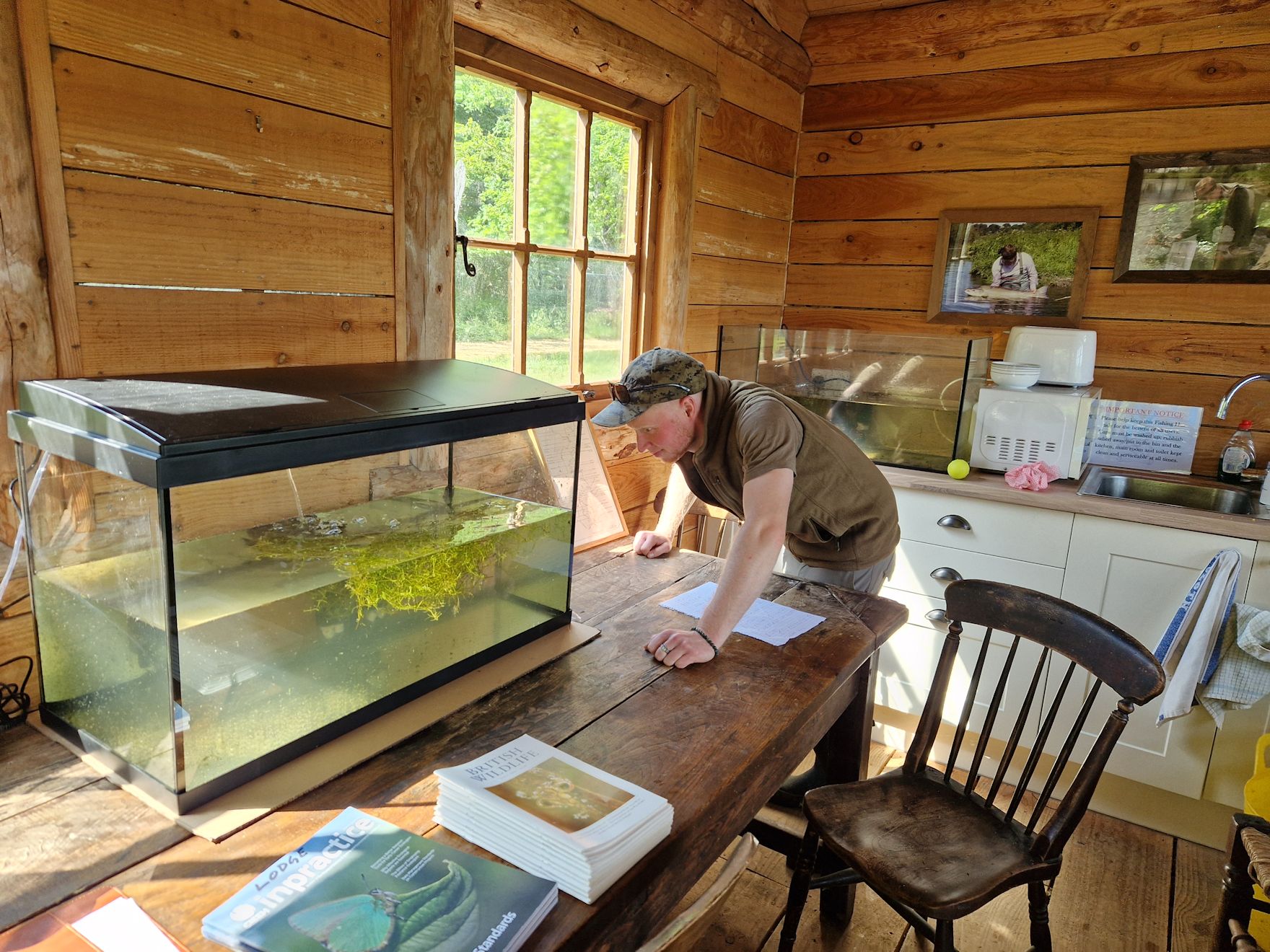
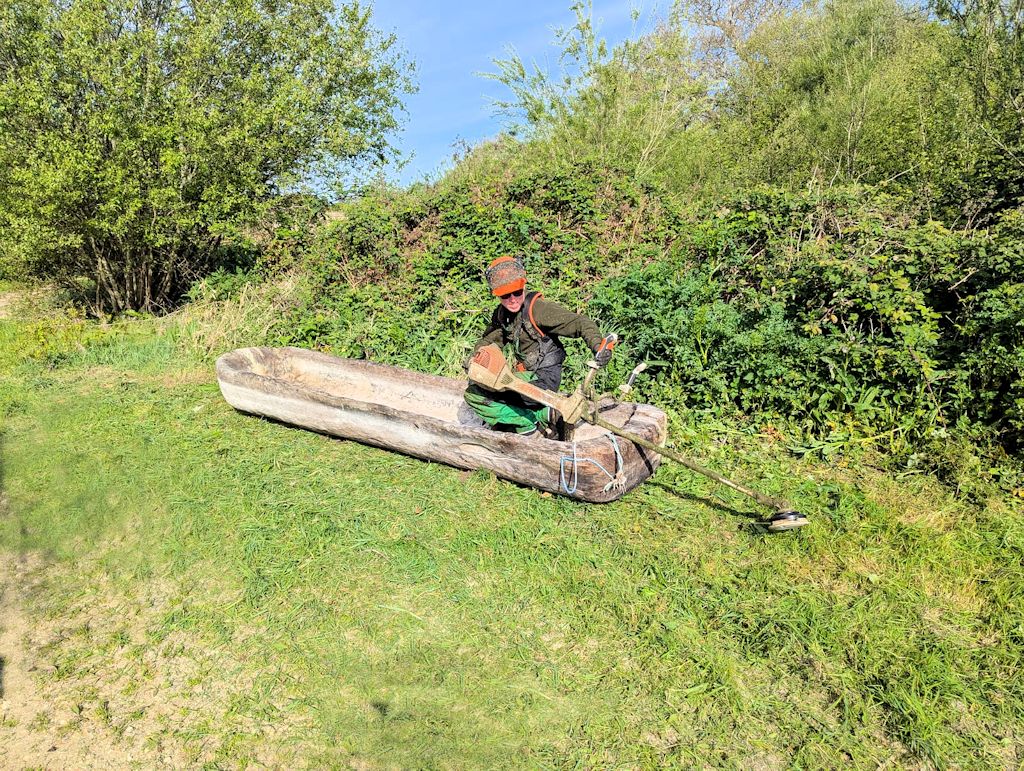
The first shows us rescuing a mesolithic dugout found in the old oxbow. The middle shot shows one of Jonny's mesolithic ancestors thought to be the owner of the canoe. Today Jonny has been setting up tanks in the lodge to test the effectiveness between our lake and river water in hatching and rearing fry.
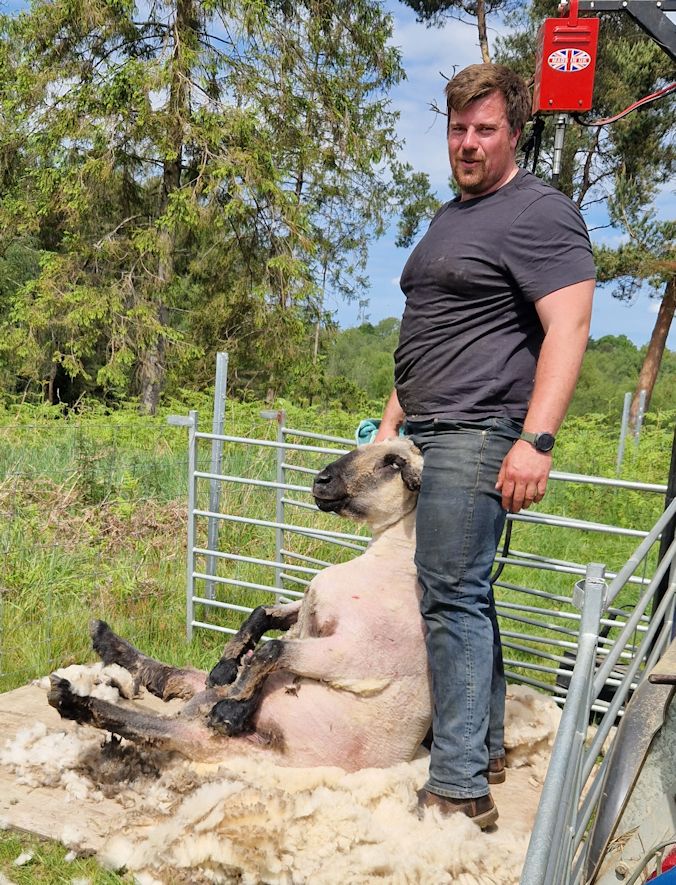
Phil shearing one of our huge Hampshire rams. This can be a stressful excercise for the poor old thing, fortunately the ram just lays back and takes it in it's stride.
3rd May
The pair of beavers busy on the tributary have created a pool that is proving attractive to an increasing number of creatures. The past two days have not only seen the fallow and the otters, there has been a contiuous stream of visitors, roe, muntjac, brown rat, stoat, fox, badger, Canada Geese, Kingfisher, Mandarins and Mallard. Quite the little menagerie making the most of the new pool.
Fallow Does.
Visitors to the new pool.
Otter cubs.
This pair haven't long left the holt.
29th April
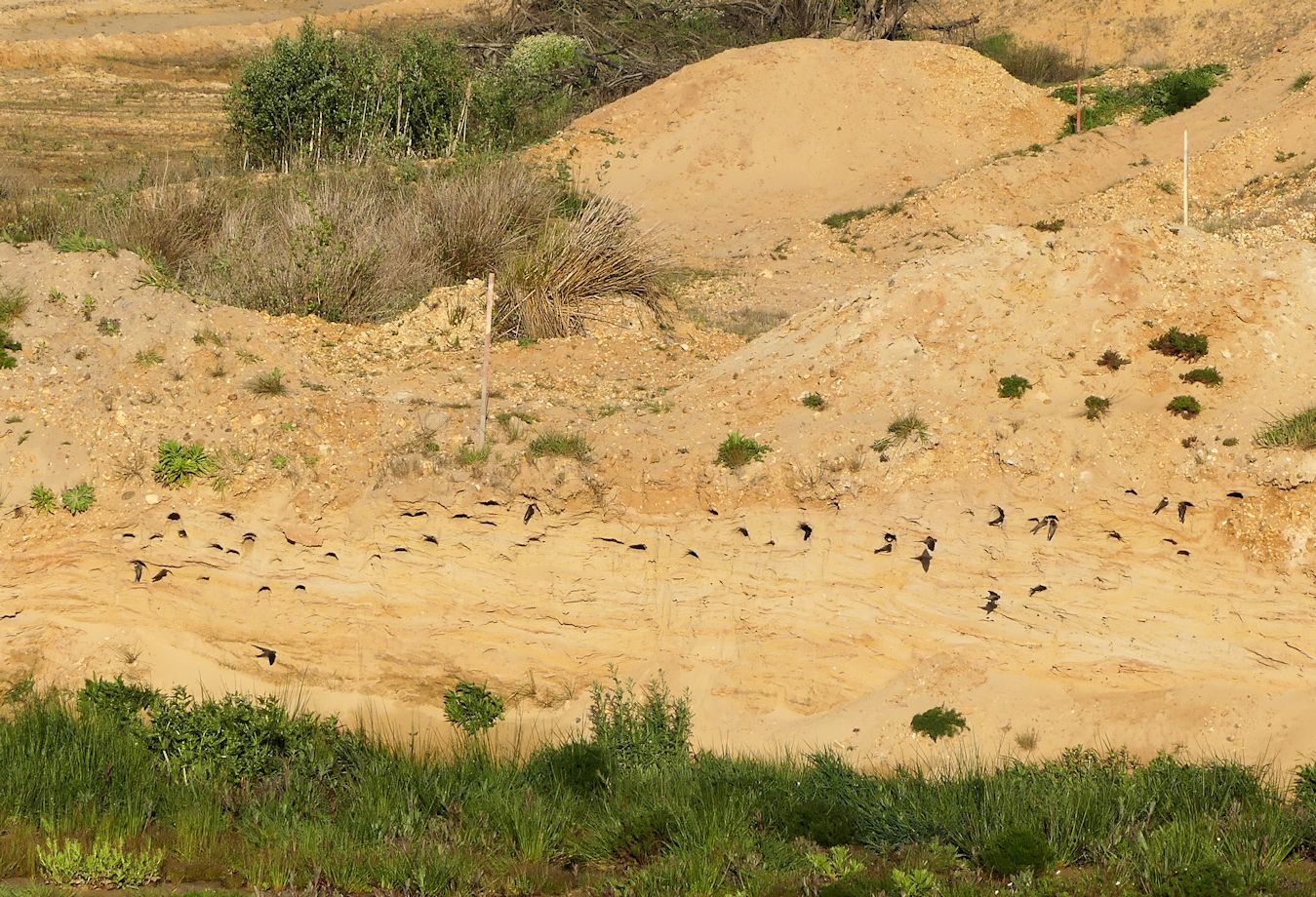
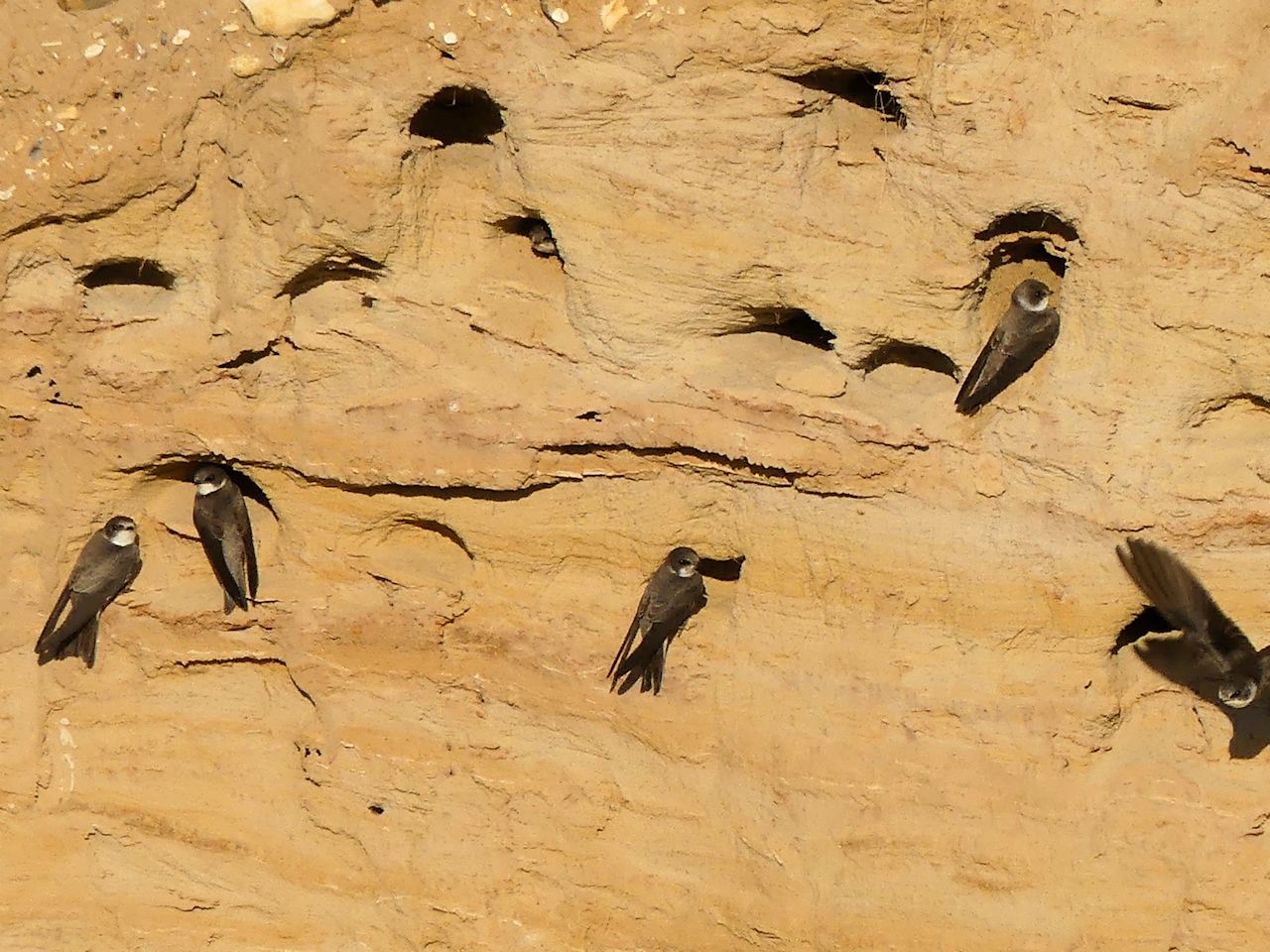
This years Sand Martin colony, once more on a bank the foxes can reach. They don't seem to be the sharpest tool in the bird world tool box.
27th April
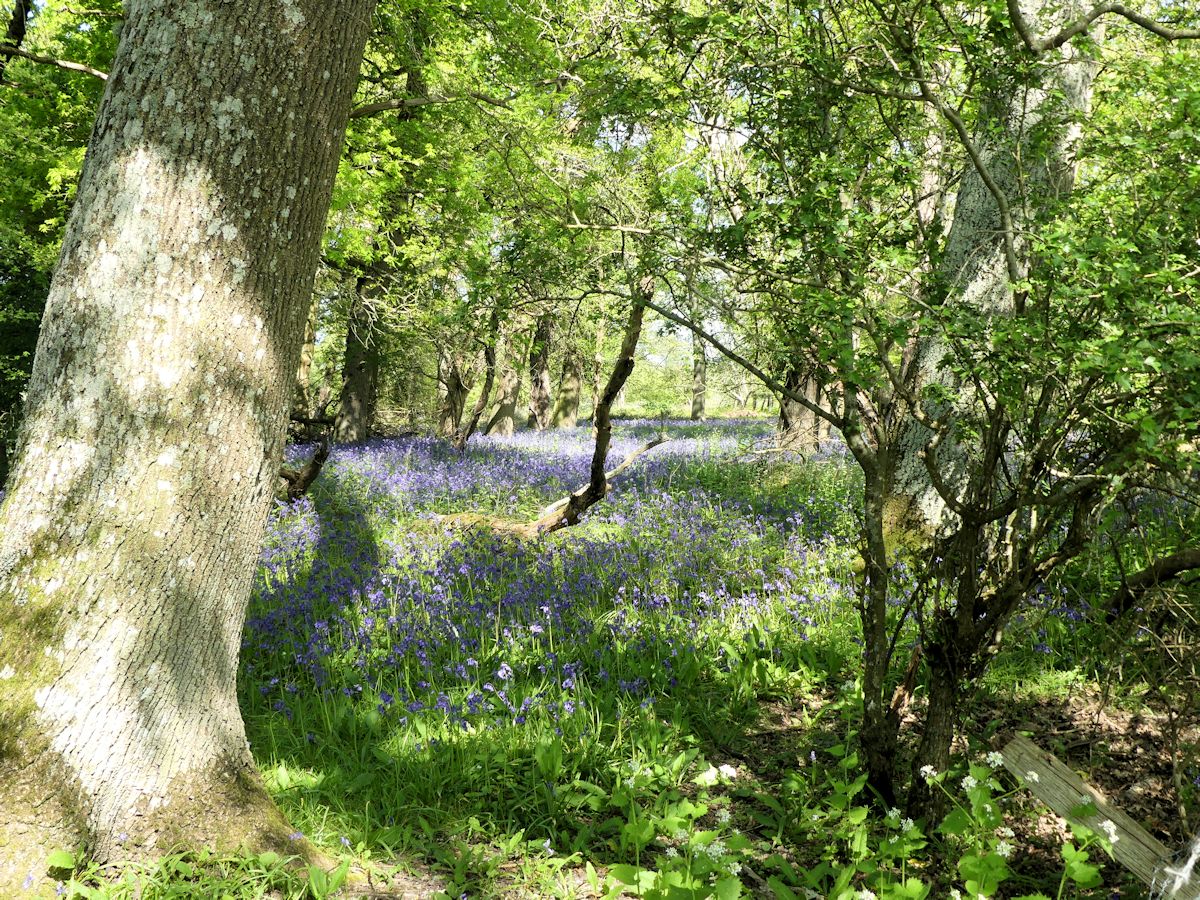
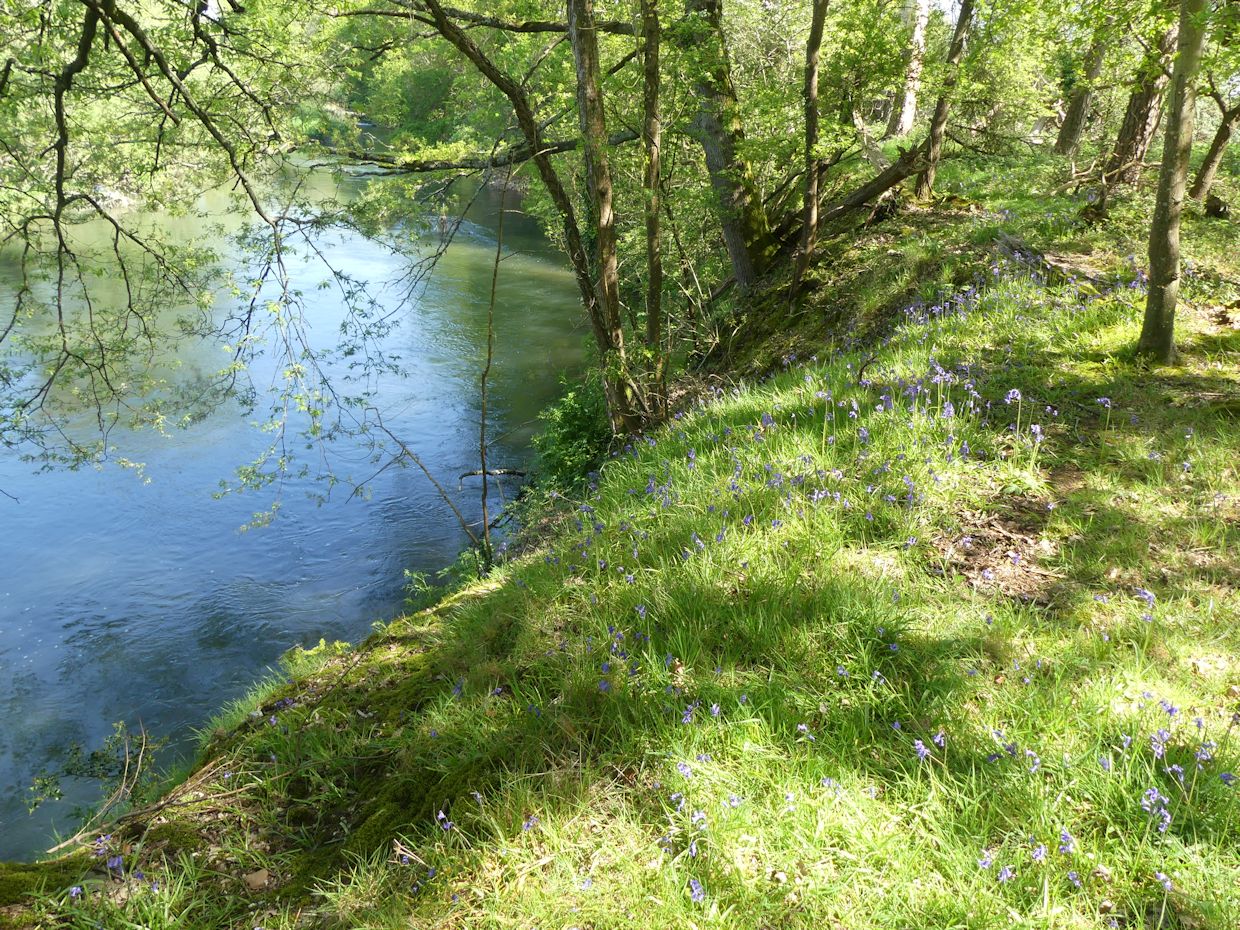
The woods are taking on the wonderful colours of Spring.
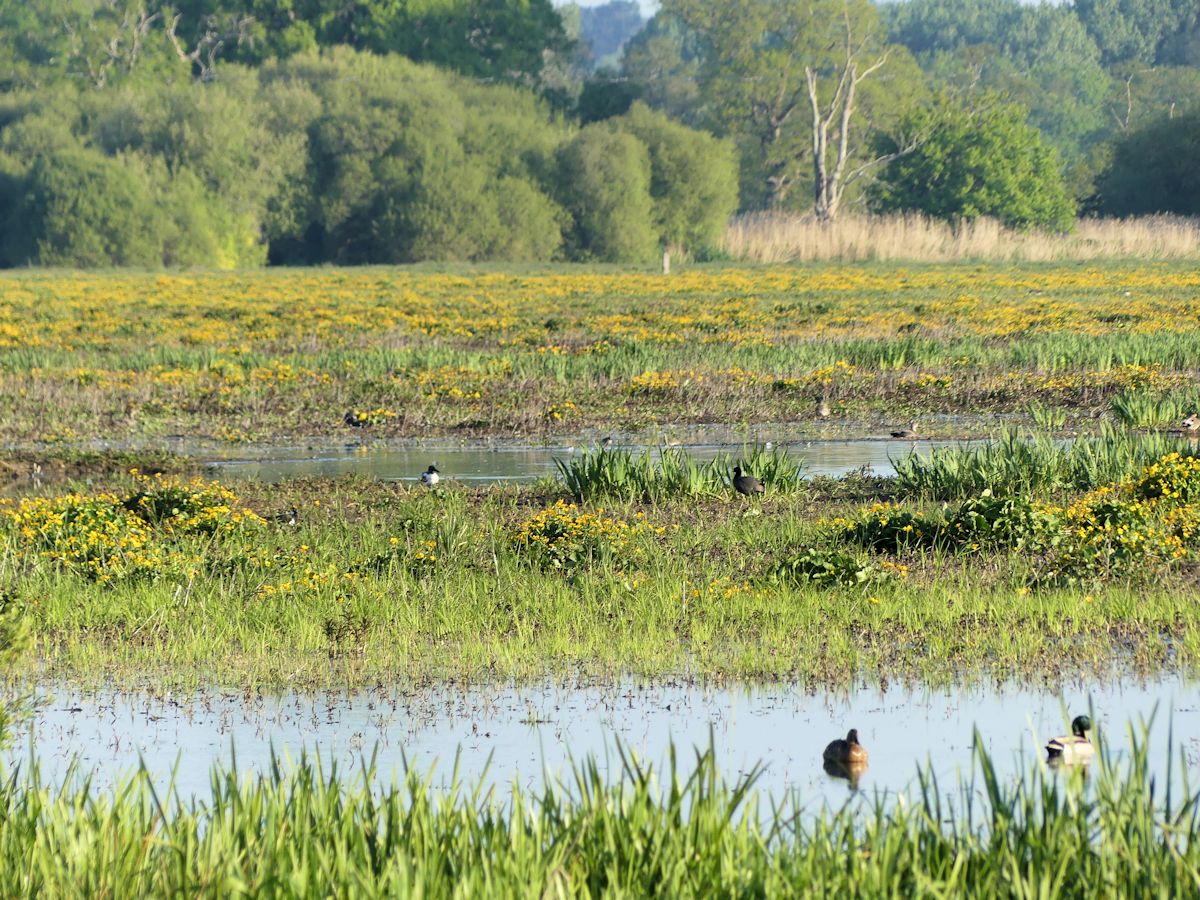
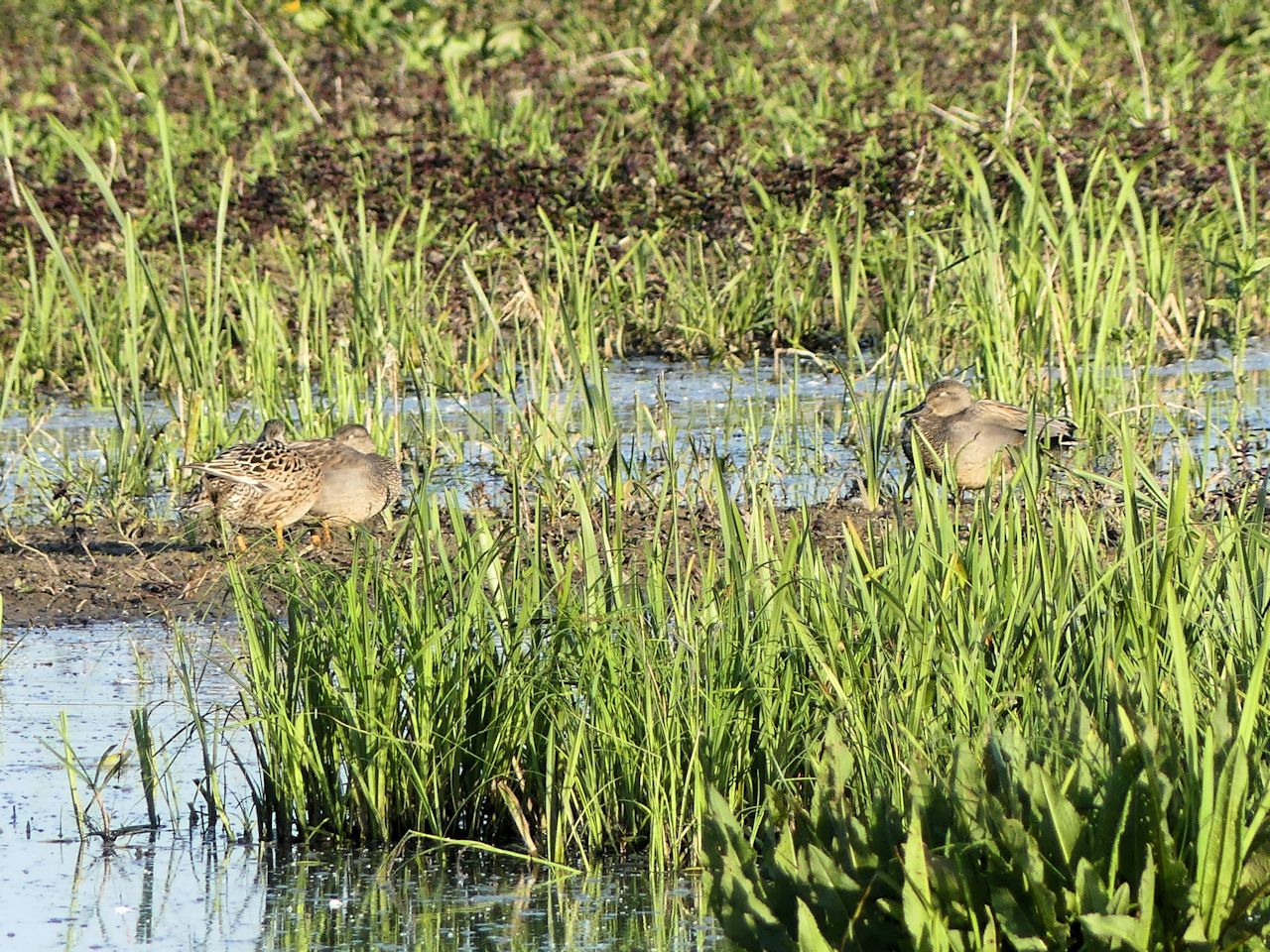
The Marsh remains well flooded providing wonderful habitat for an amazing number of birds. Alongside several pairs of Lapwing and Redshank there remain somewhere in the region of 50 Gadwall and at least two pairs of Shoveler. Egrets Great and Small, plus one or two Black-tailed Godwit still with us. Add the backdrop of the kingcups and all is looking well in that section of our watery world.
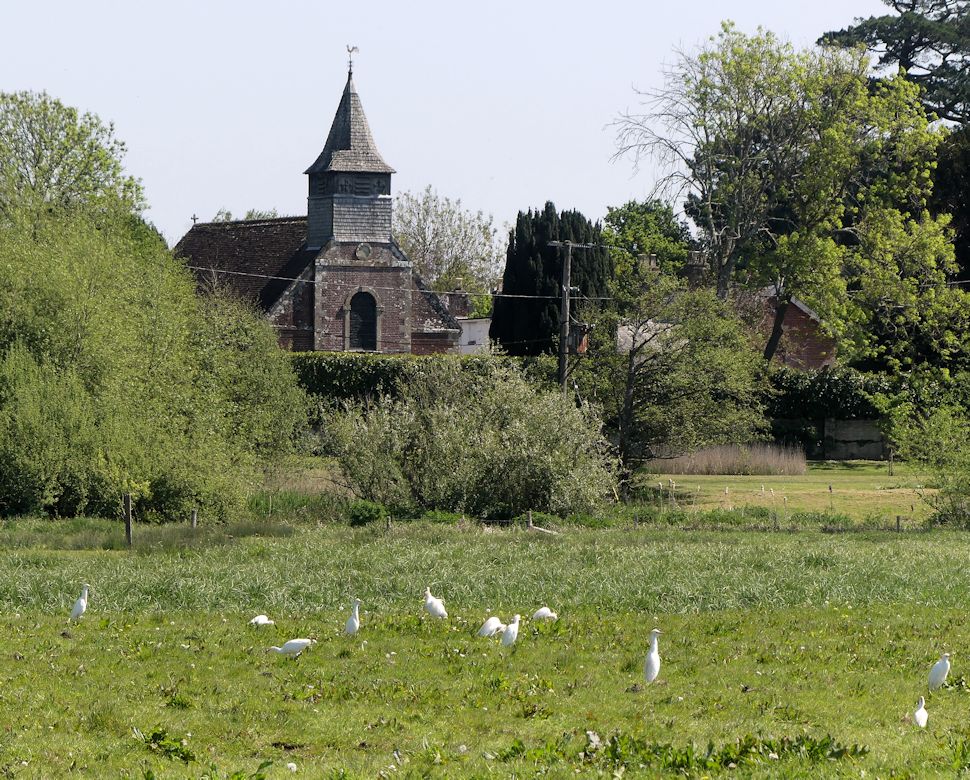
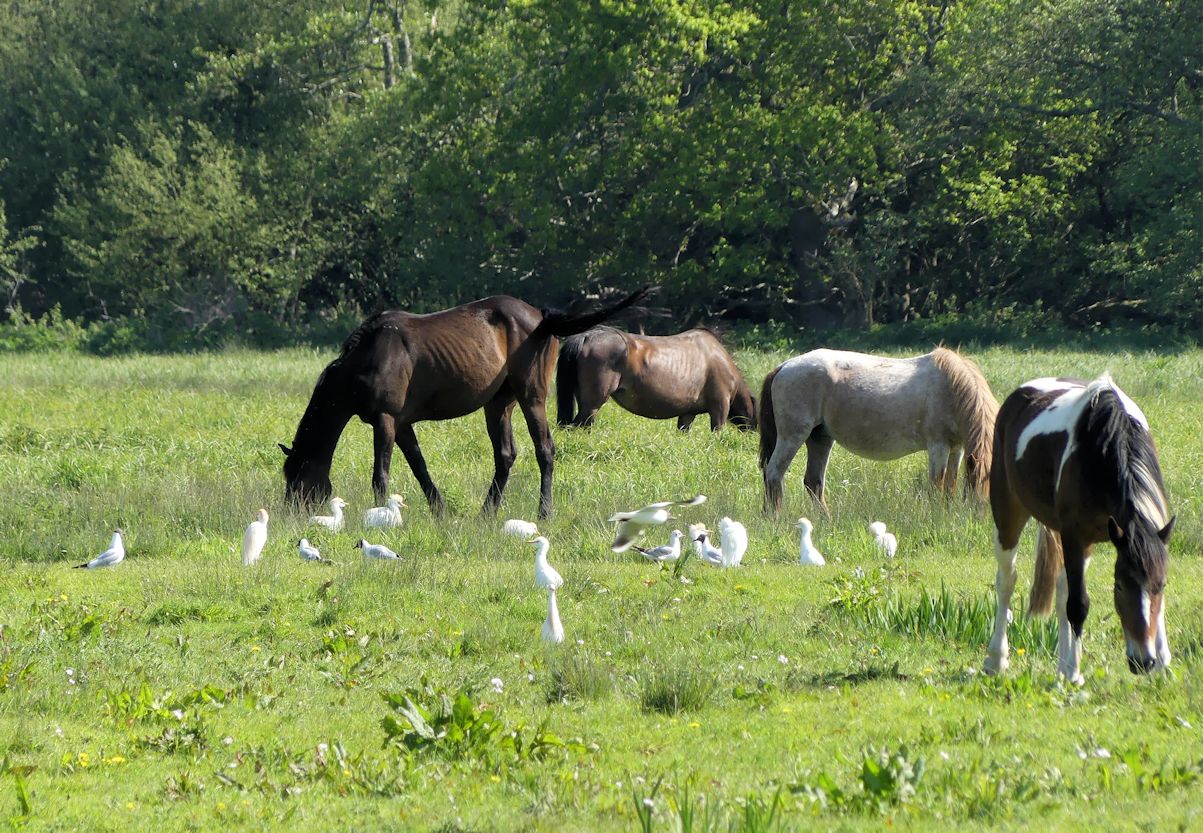
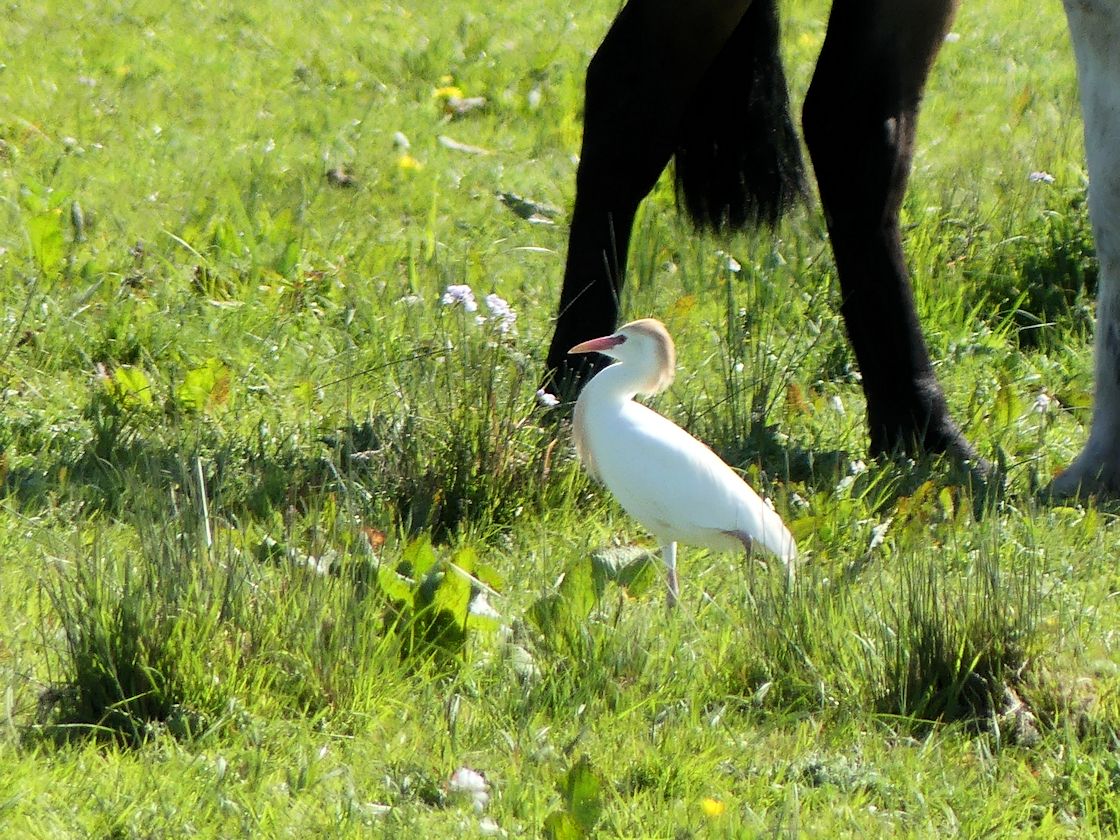
Elsewhere on the watermeadows it was good to see 18 Cattle Egrets feeding under the hooves of the ponies
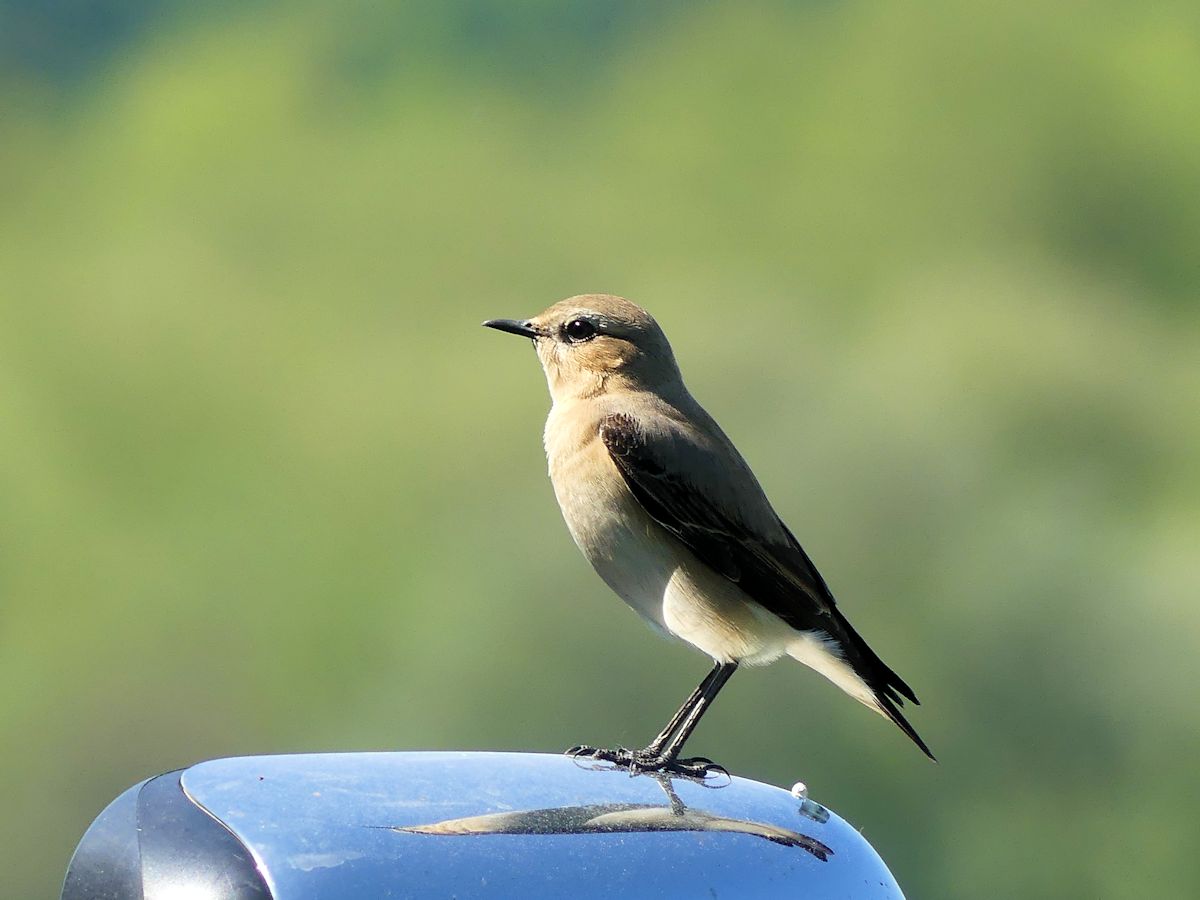
Good numbers of Wheatears have been passing through this Spring. The one in the photo decided the wing mirror on Jonny's truck provided the perfect resting place.
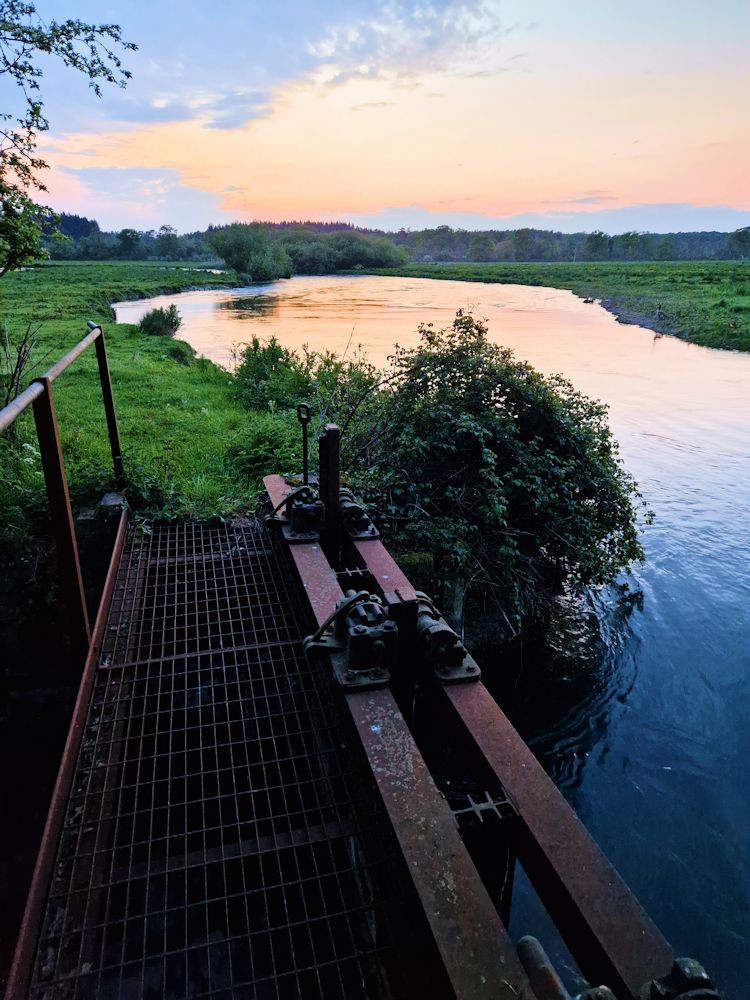
Sunset at the Woodside Hatches.
26th April
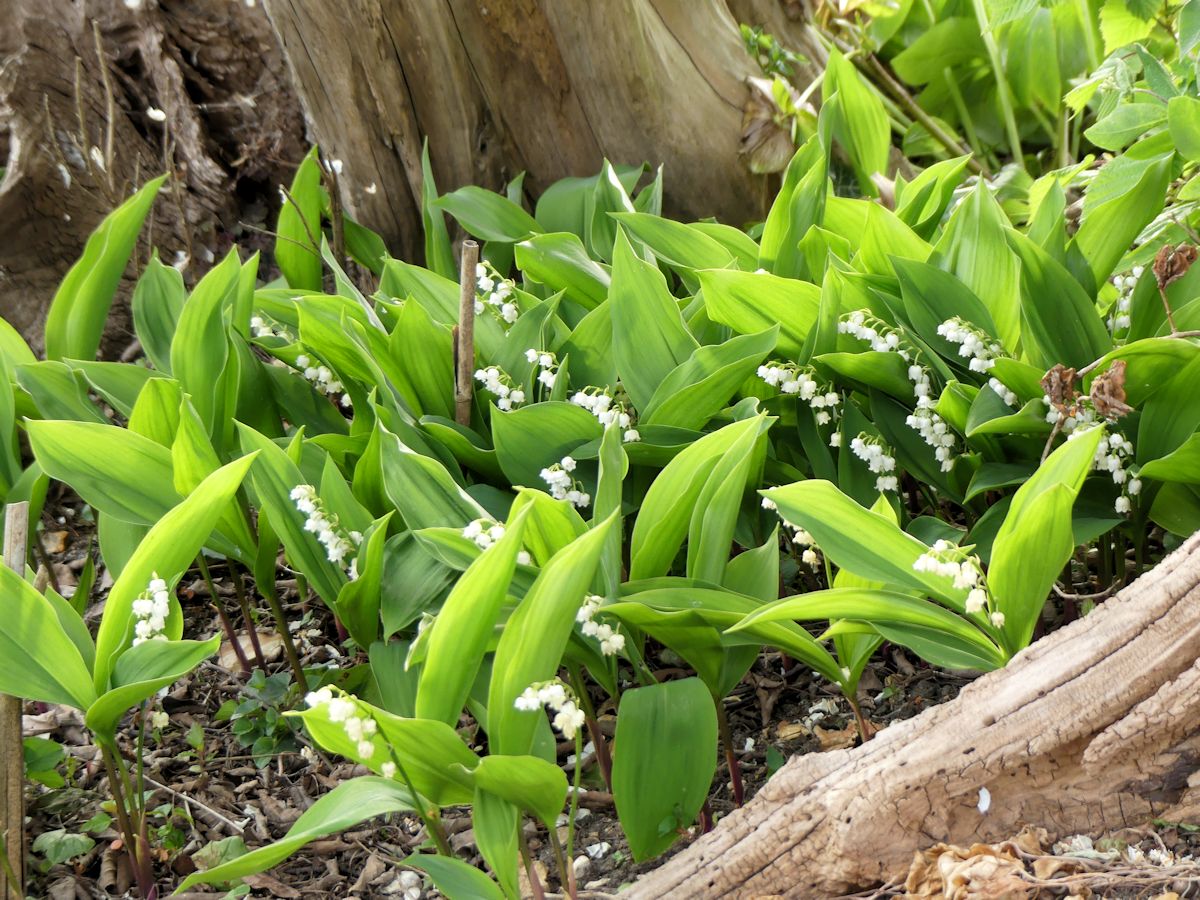
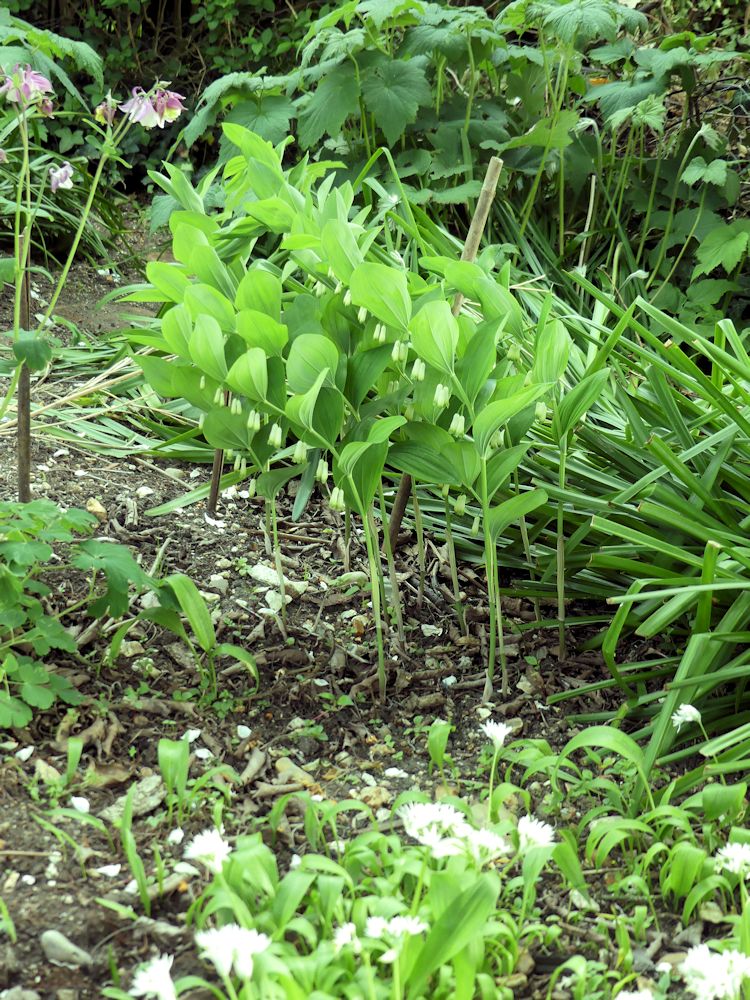
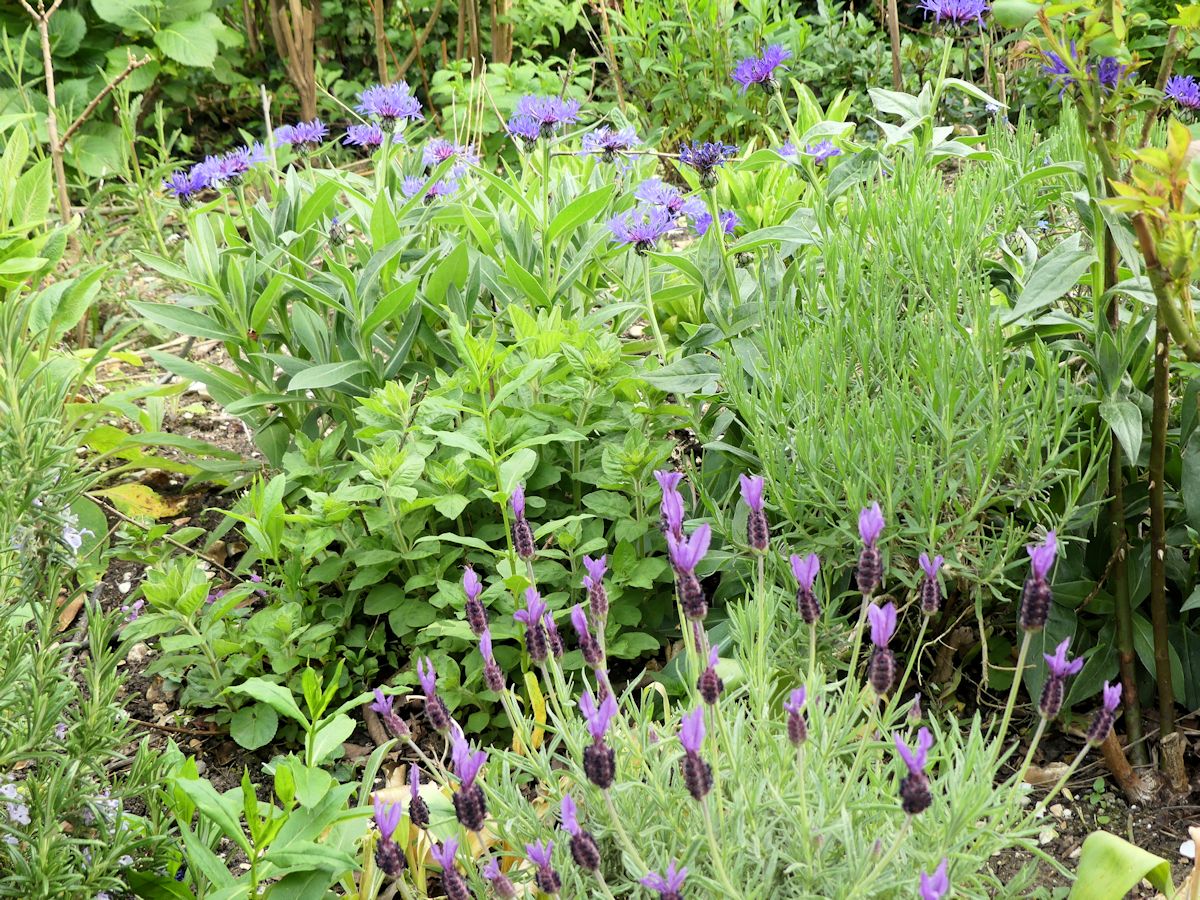
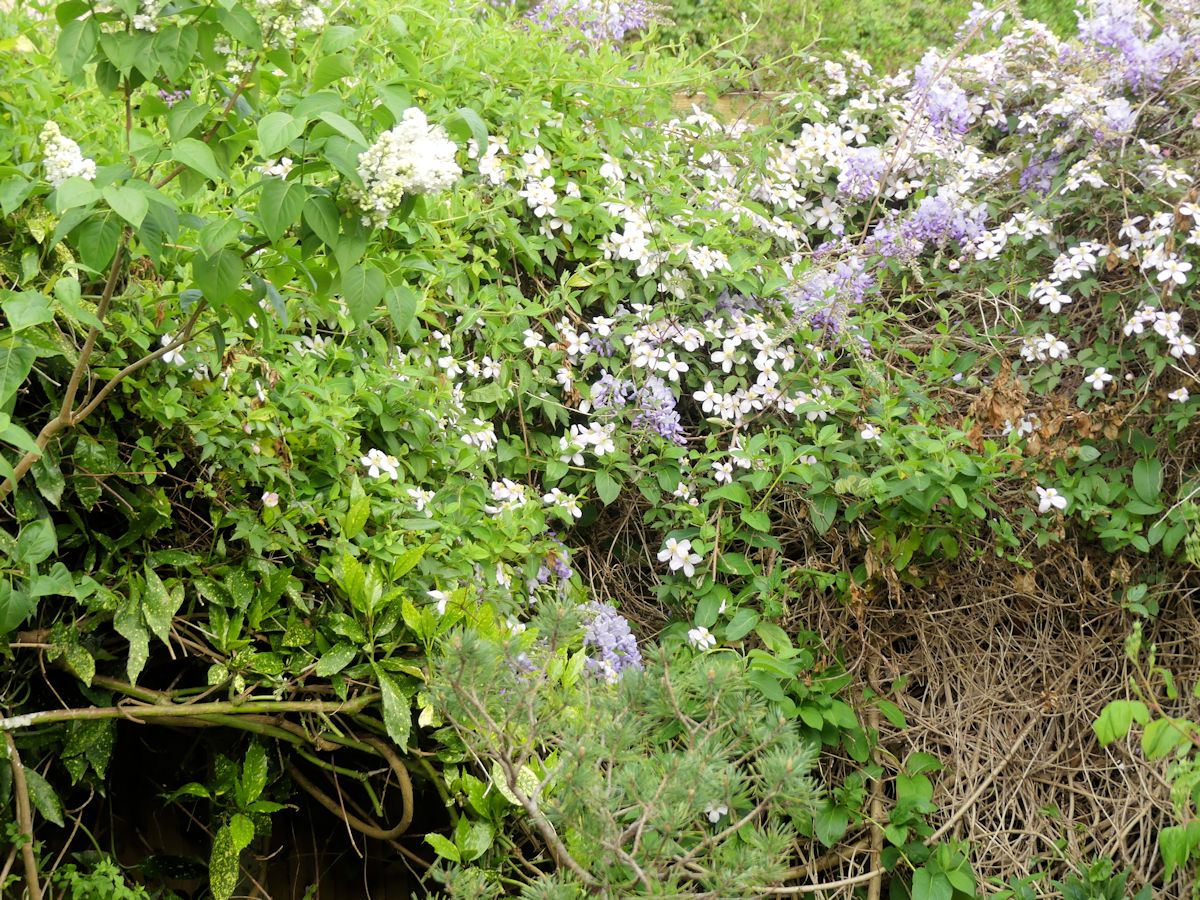
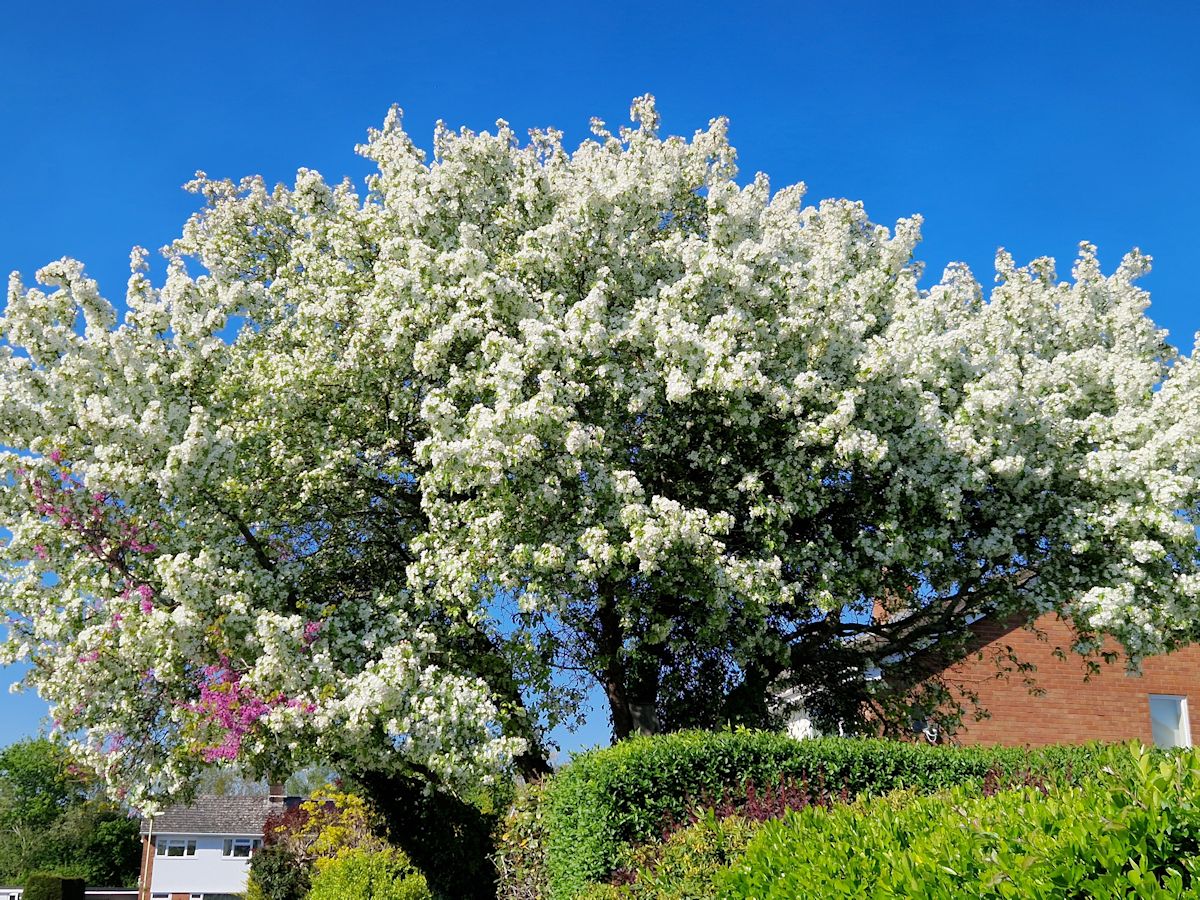
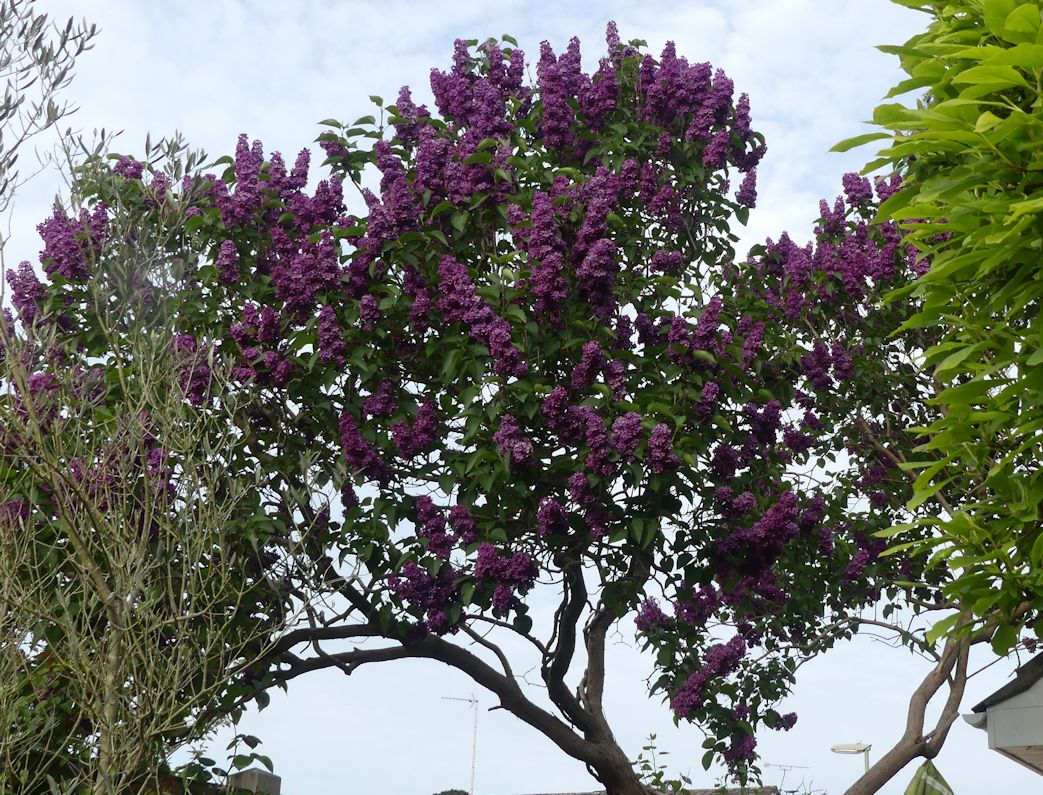
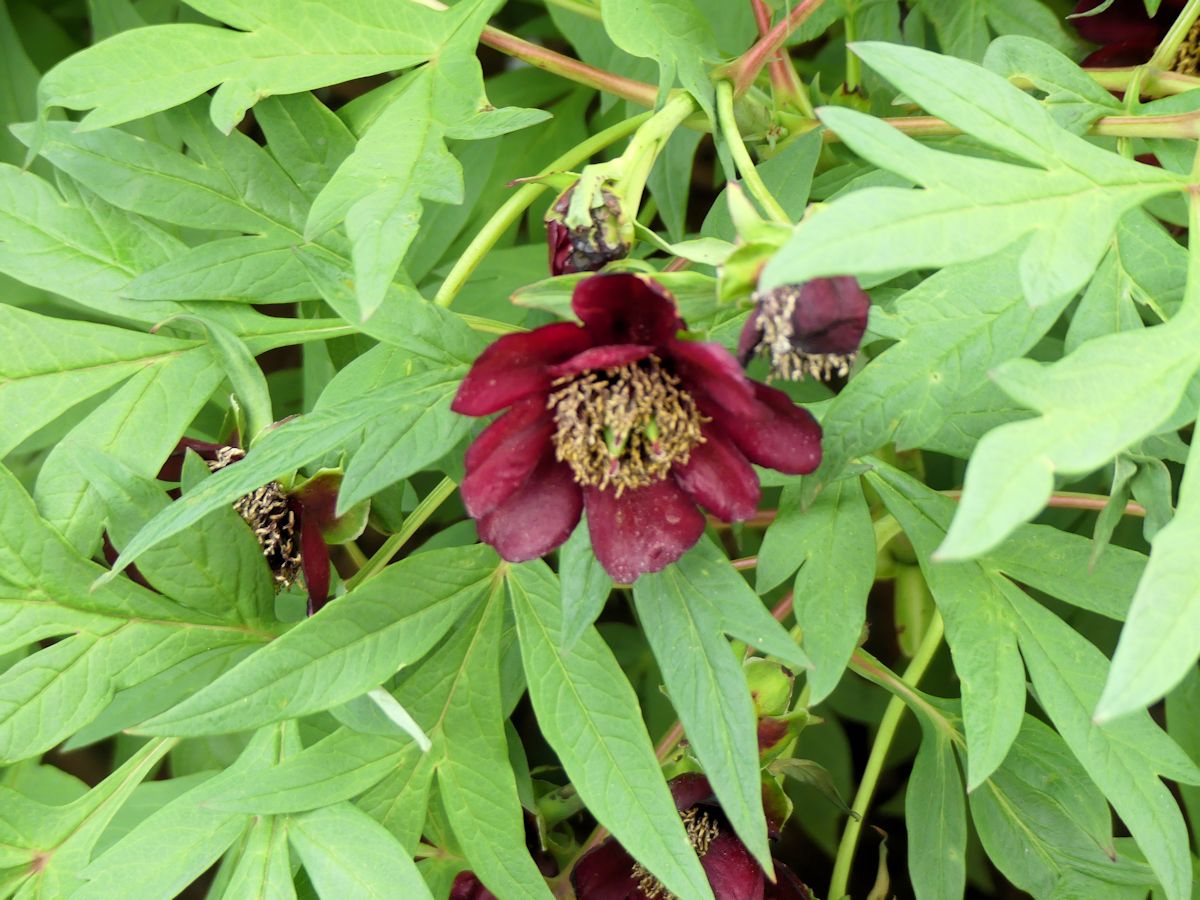
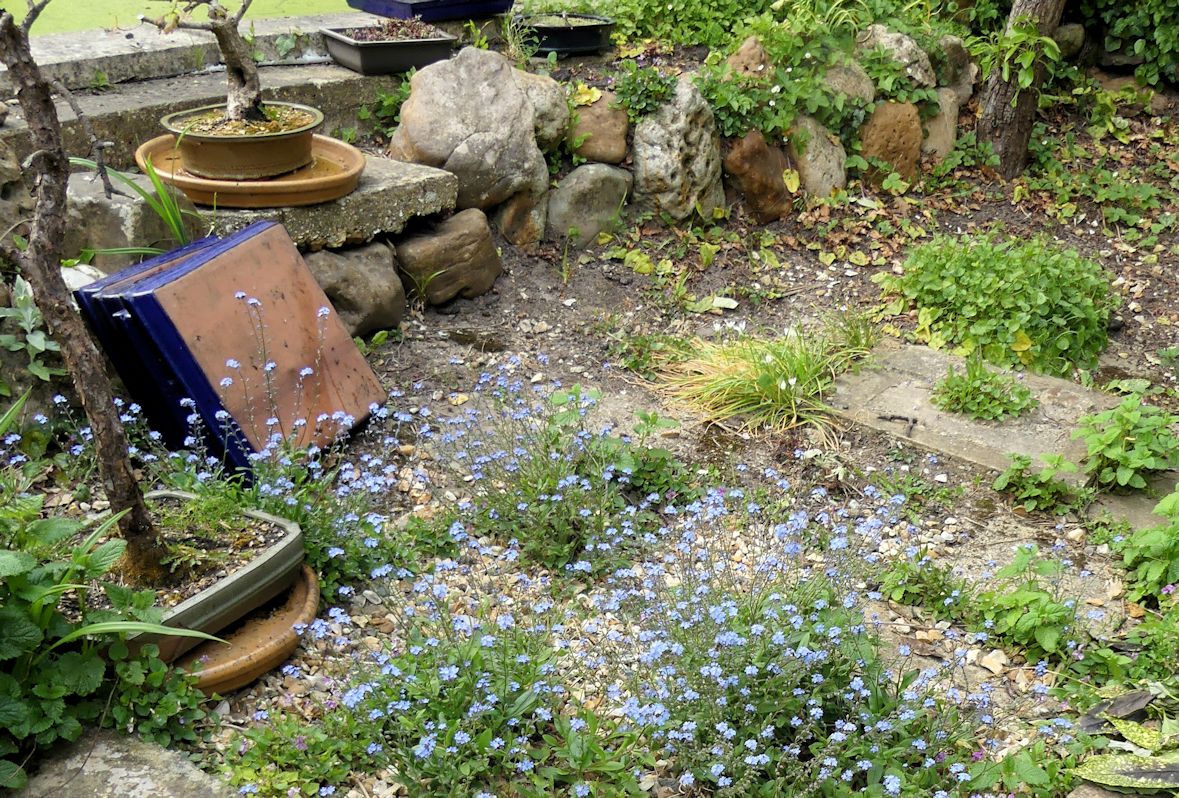
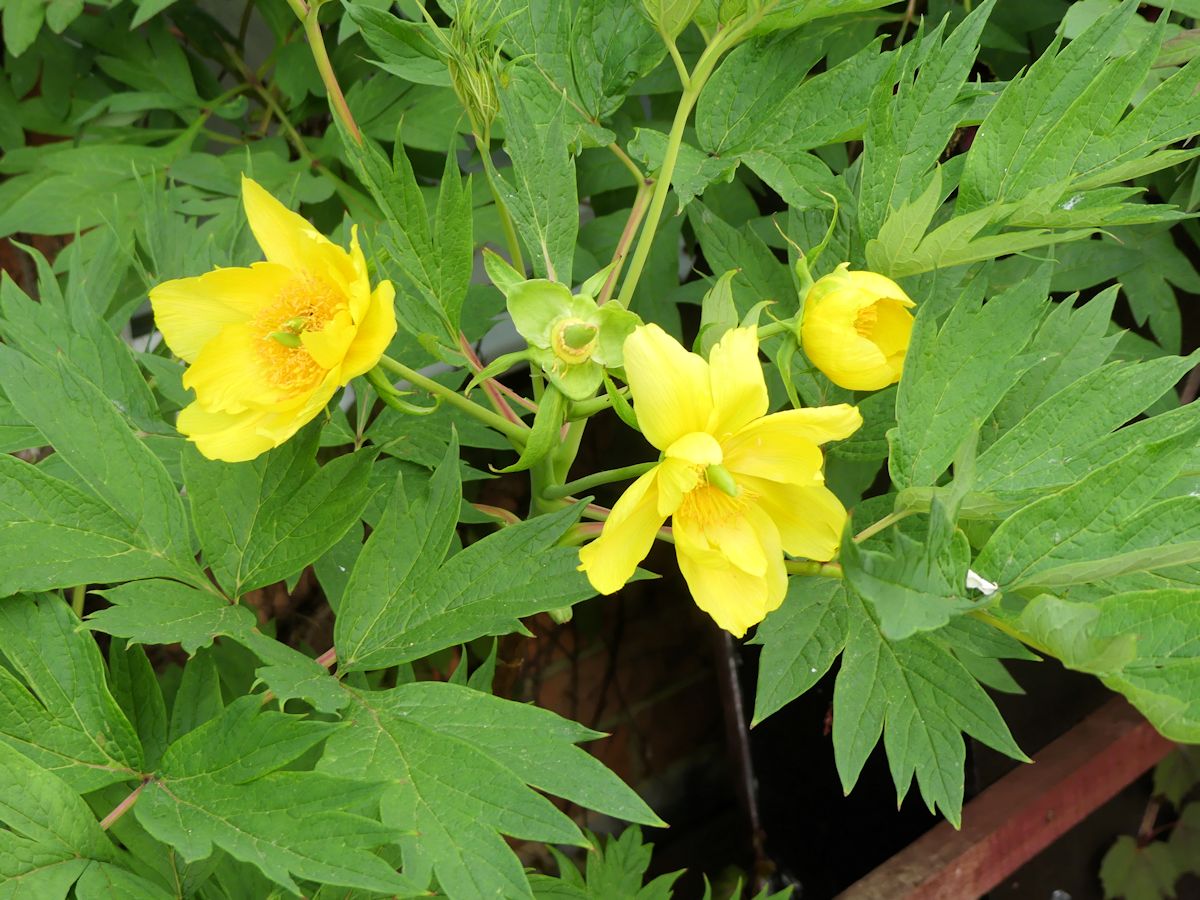
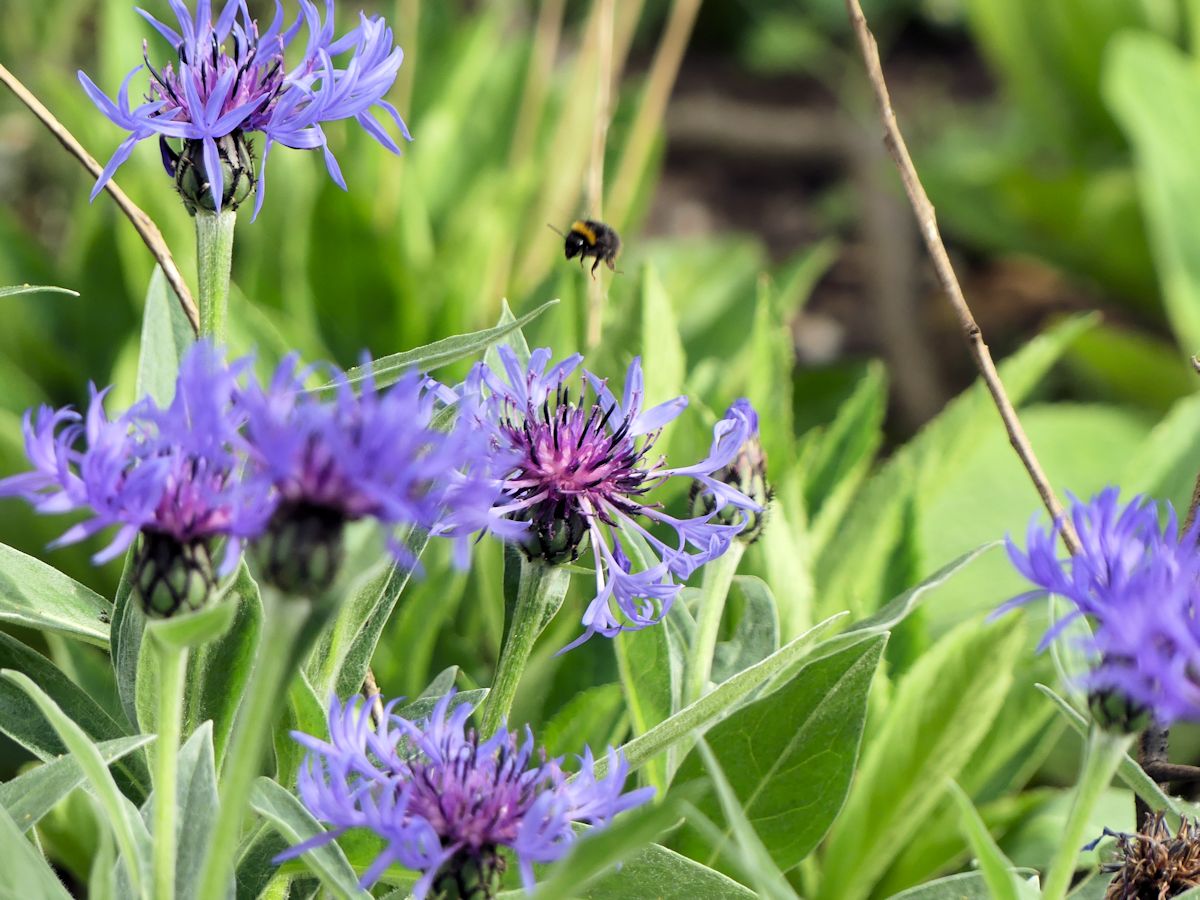
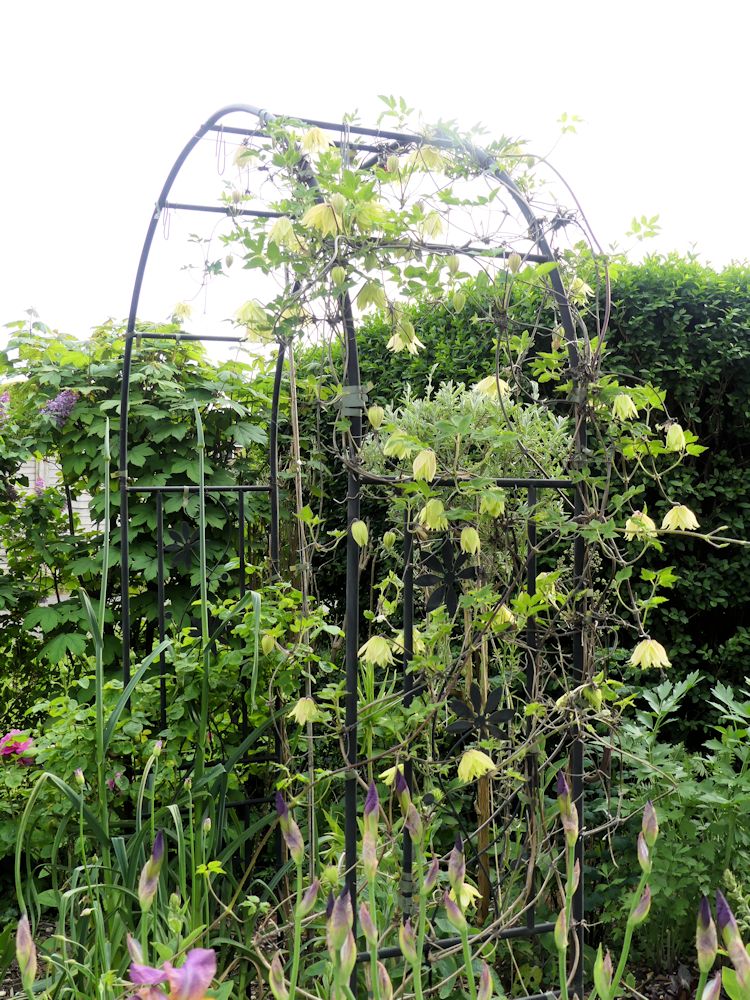
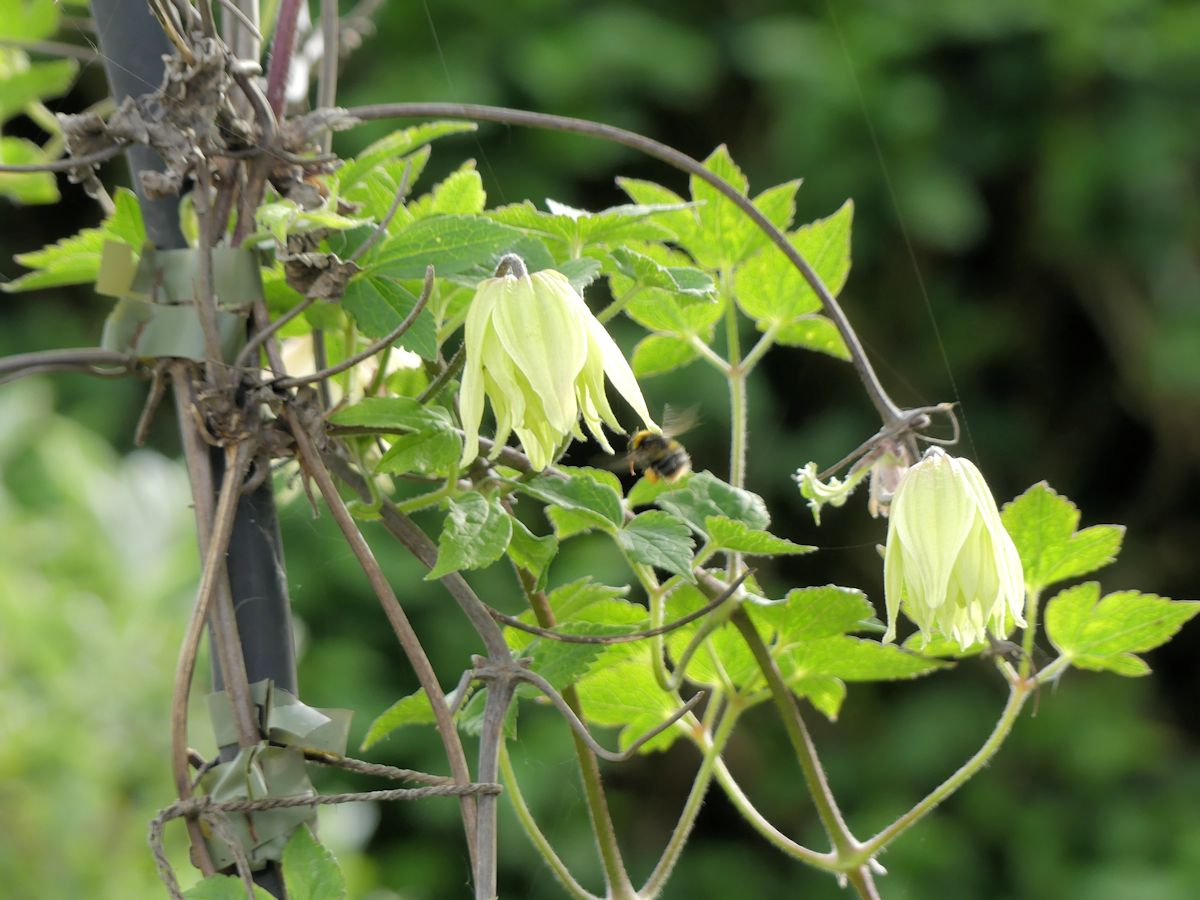
Good to see the flowers in bloom brightening the garden and attracting the insects they were intended for. As an added bonus our fourth pair of Swifts arrived home this morning.
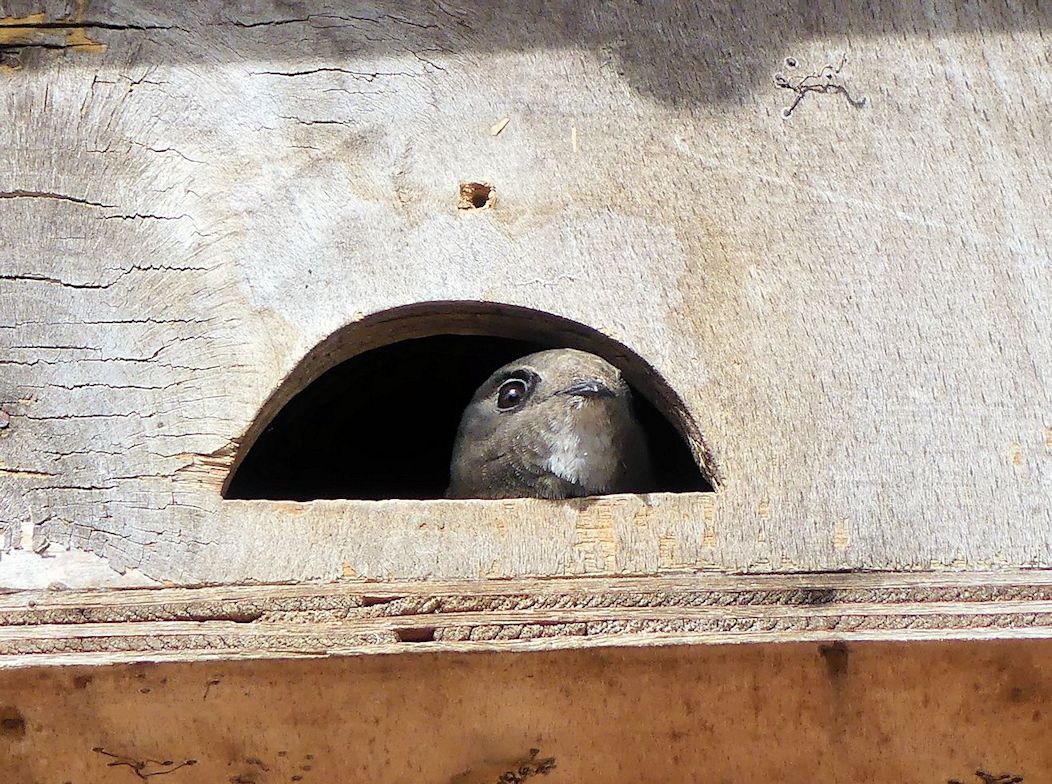
24th April
A record shot of one of the third pair home about to enter the box.
20th April
A note to those who may have noticed I have opened a Face Book account. This is not a platform I intend to post on, I have had to open my own account as Anne has banned me from using her's to check on how well the charter boats I go out with are getting on. She said she is fed up with continually getting fish and fishing tackle adverts on her account. Seems a little harsh but I guess I can see her point.
Daylight dam building.
For reasons best known to themselves the beavers have taken to occasionally building during the day.
Jonny, fitting the new work boat outboard motor.
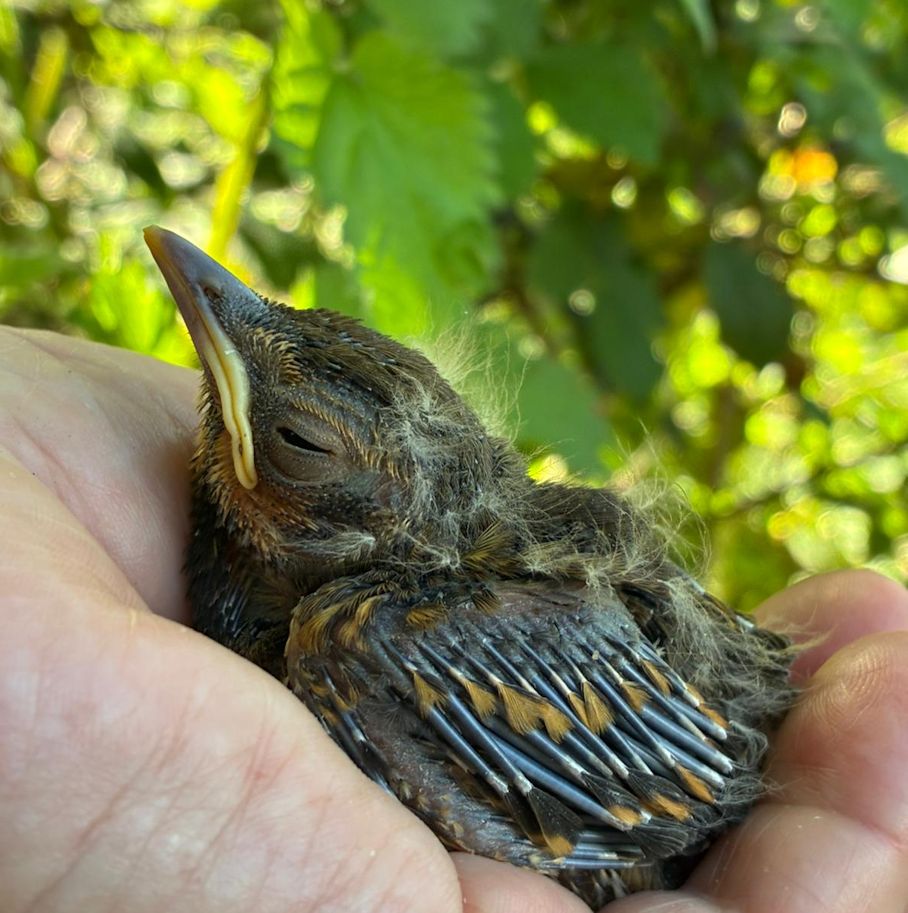
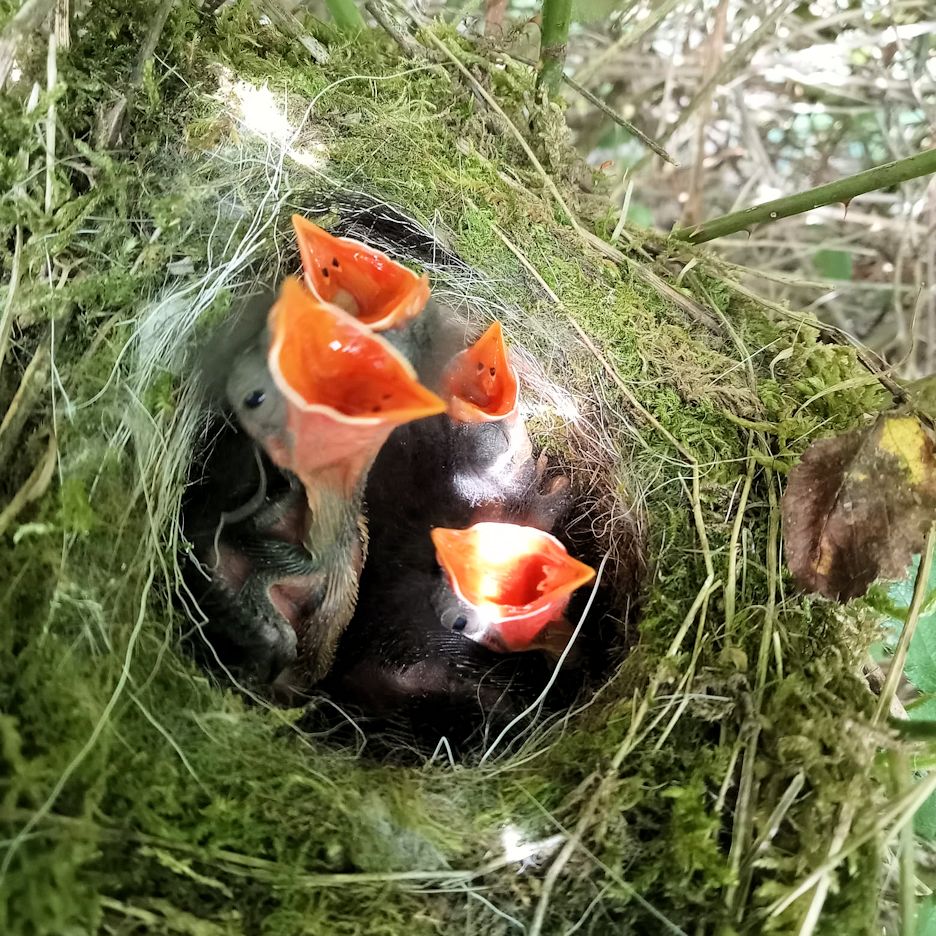
With Spring now well underway Brenda is busy ringing juveniles around the lakes. The Song thrush and the Dunnock brood are looking well, lets hope they stay that way with the cold nights and northly winds we have suffered of late. These cold winds from the north and east seem to become the norm at this time of year. We certainly seem to have several weeks of cold dry weather that have set nature back over the last three years. The butterfly emergence and the bird nesting have probably suffered the most. If it continues it won't be long before the wild flowers and the water temperatures begin to suffer. Playing havoc with teh nectar flow and the fish spawning. Thanks for sending through the photos Brenda, fingers crossed for a return to warmer weather in the near future.
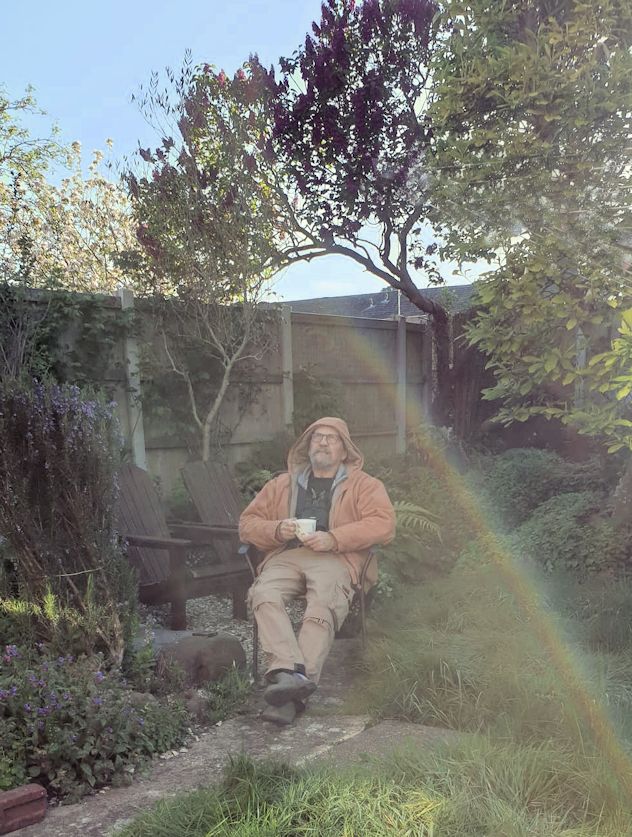
Swift watching in the back garden Sunday morning at 07:45 and it was extremely chilly before the sun came around to warm things up.
19th April
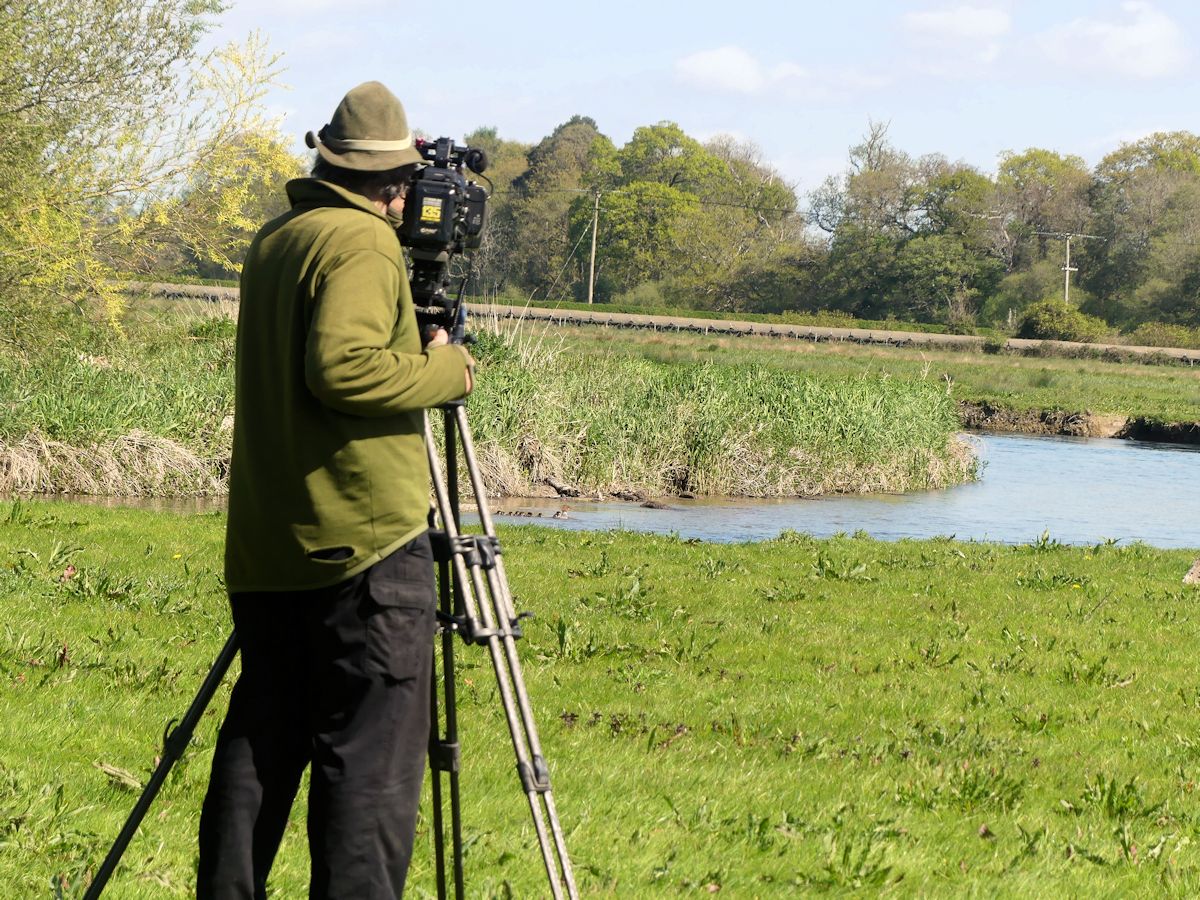
Quite a rare shot that actually shows a wildlife film maker out in the open during daylight. The lengths film makers will go to to get the shot they require is quite astonishing. Manny has spent the last four or five days, for up to fourteen hours a day, stuck in a minute hide surrounded by brambles at the bottom old pine tree.
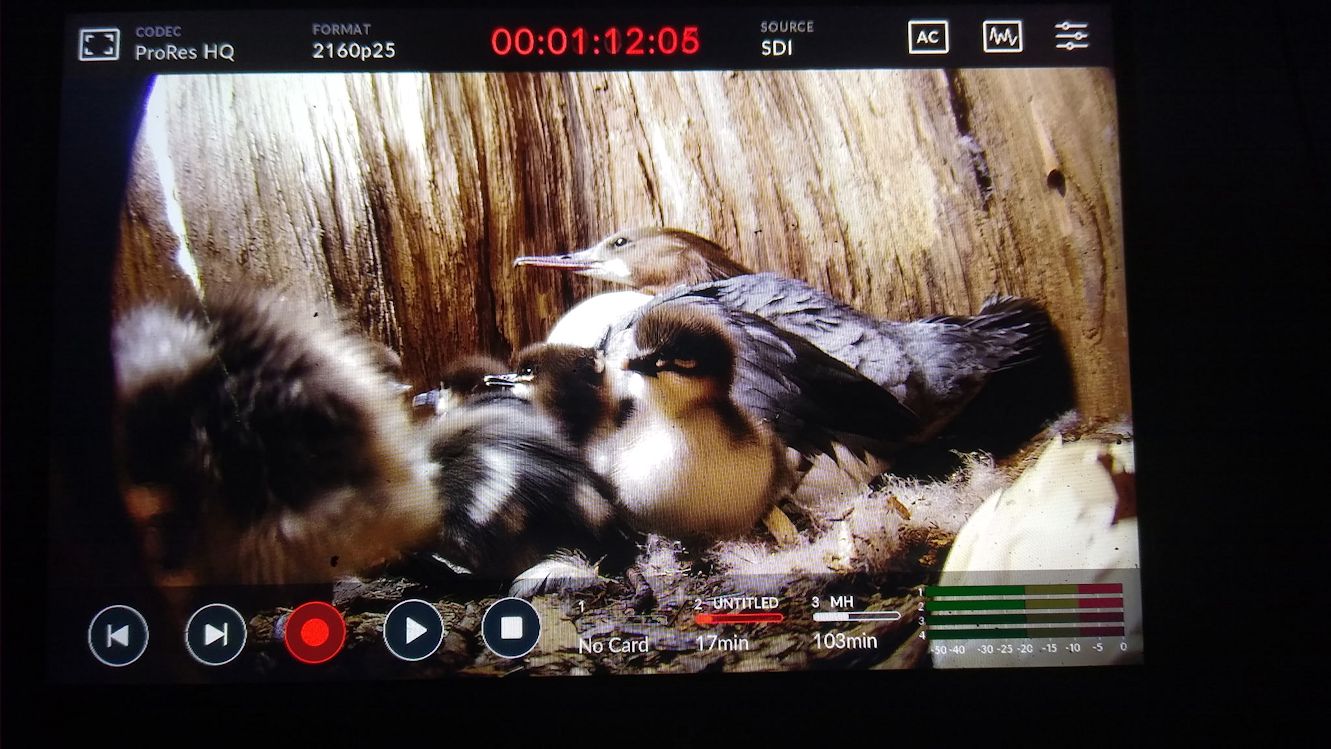
The frame grab above is just a taste of the footage Manny's vigil achieved.
Also on the bird front, our Swifts arrived back this morning, the earliest they have ever made it home. Before seven this morning the first arrival was heard colliding with the front of the nestbox as I still had the covers on to stop the Starlings taking up residence. A mad panic then ensued as I rushed to get the ladder out and take the covers off the boxes. Happily the blocked entrance didn't do any harm and within an hour she was back in the box.
In the hope of jogging someones memory, the following items have been lost around the lake. A rig box possibly on or close to the last swim on the north shore of Mockbeggar and the weigh scales tripod lost a while back on Kings-Vincents has shown up. Added to that Manny has lost a large lens support between the seat at Pile Pool and Coomber Pool on the river, 15mm diameter and about 10" long black anodised ally.
17th April
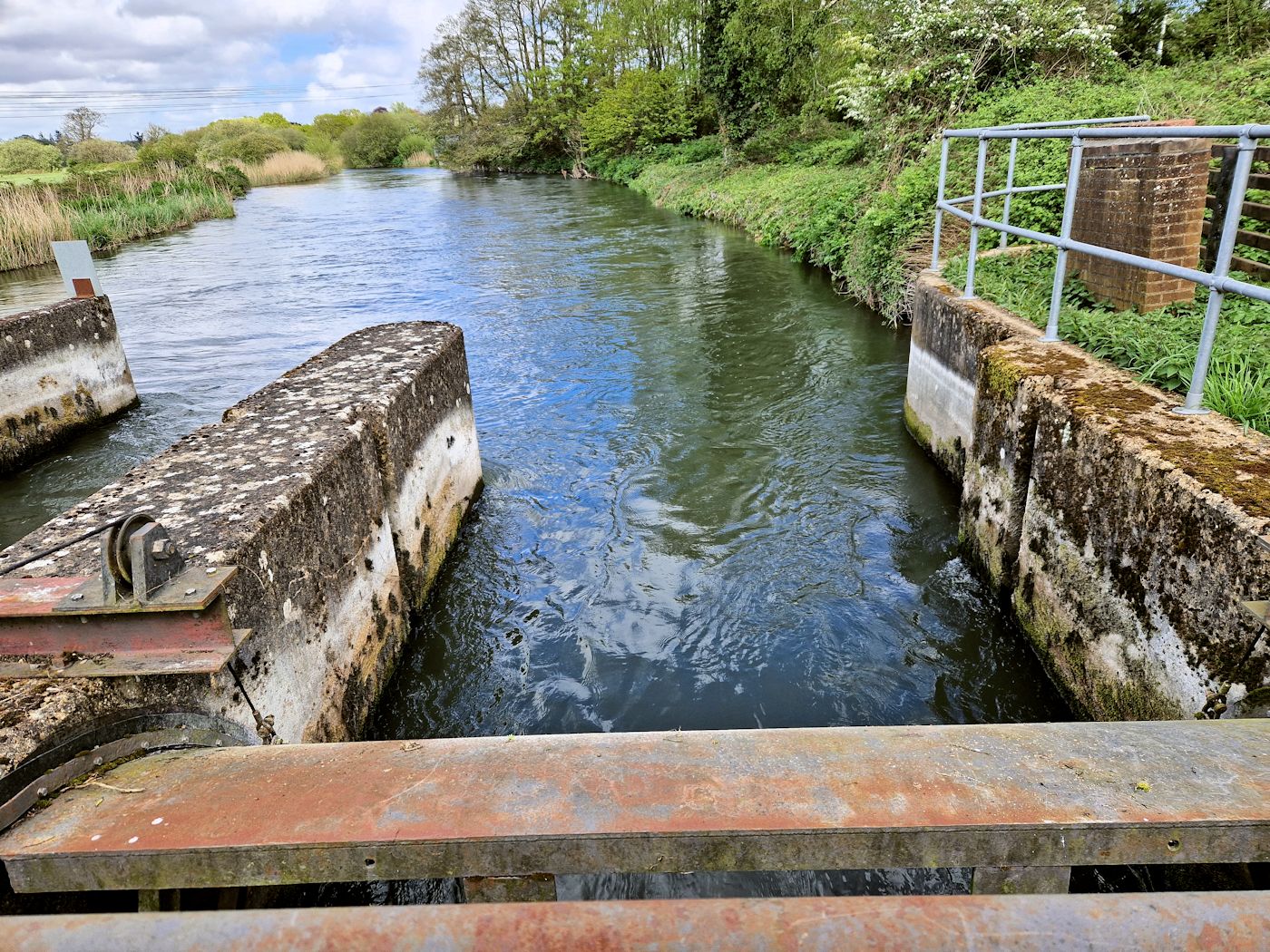
Now the left bank, radial gate is clear of the tree that has been stuck in it all winter, I strimmed the left bank upstream of the gates. Should a fish be hooked in this short stretch the fear of it running downstream through the gate isn't the end of the world. Pick the line up on the downstream side of the bridge, cut and retie it to carry on the fight.
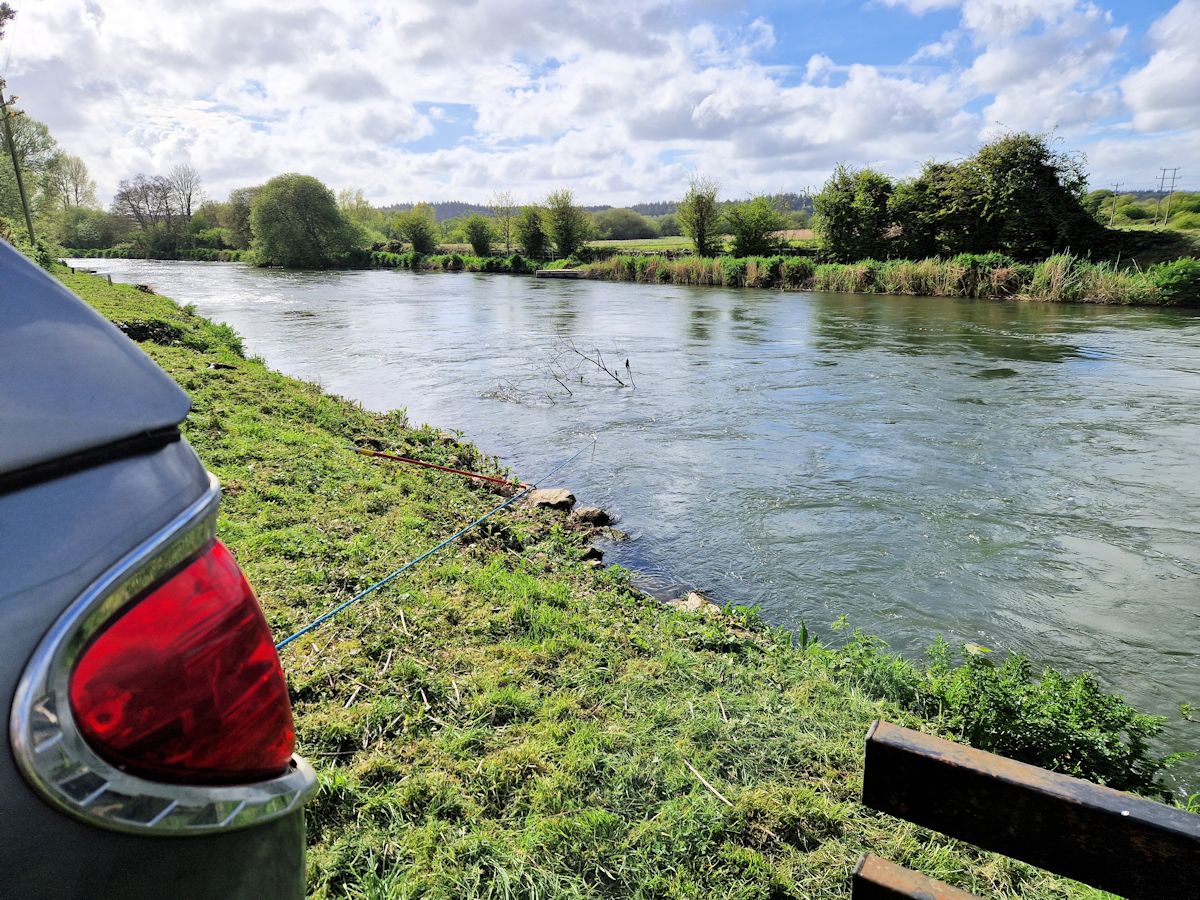
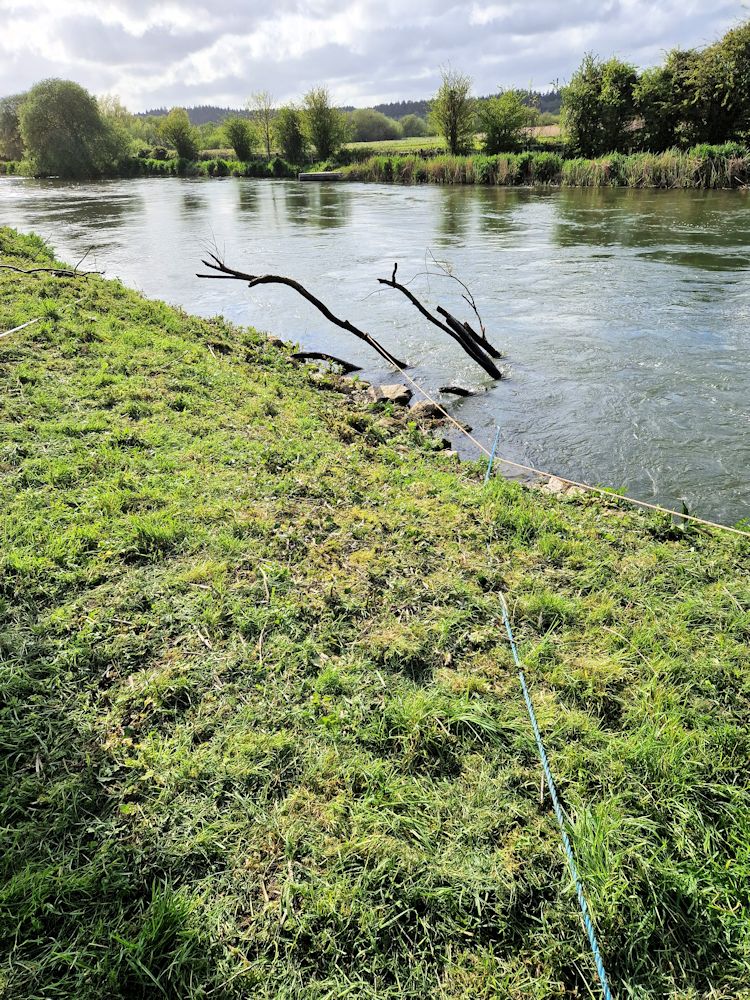
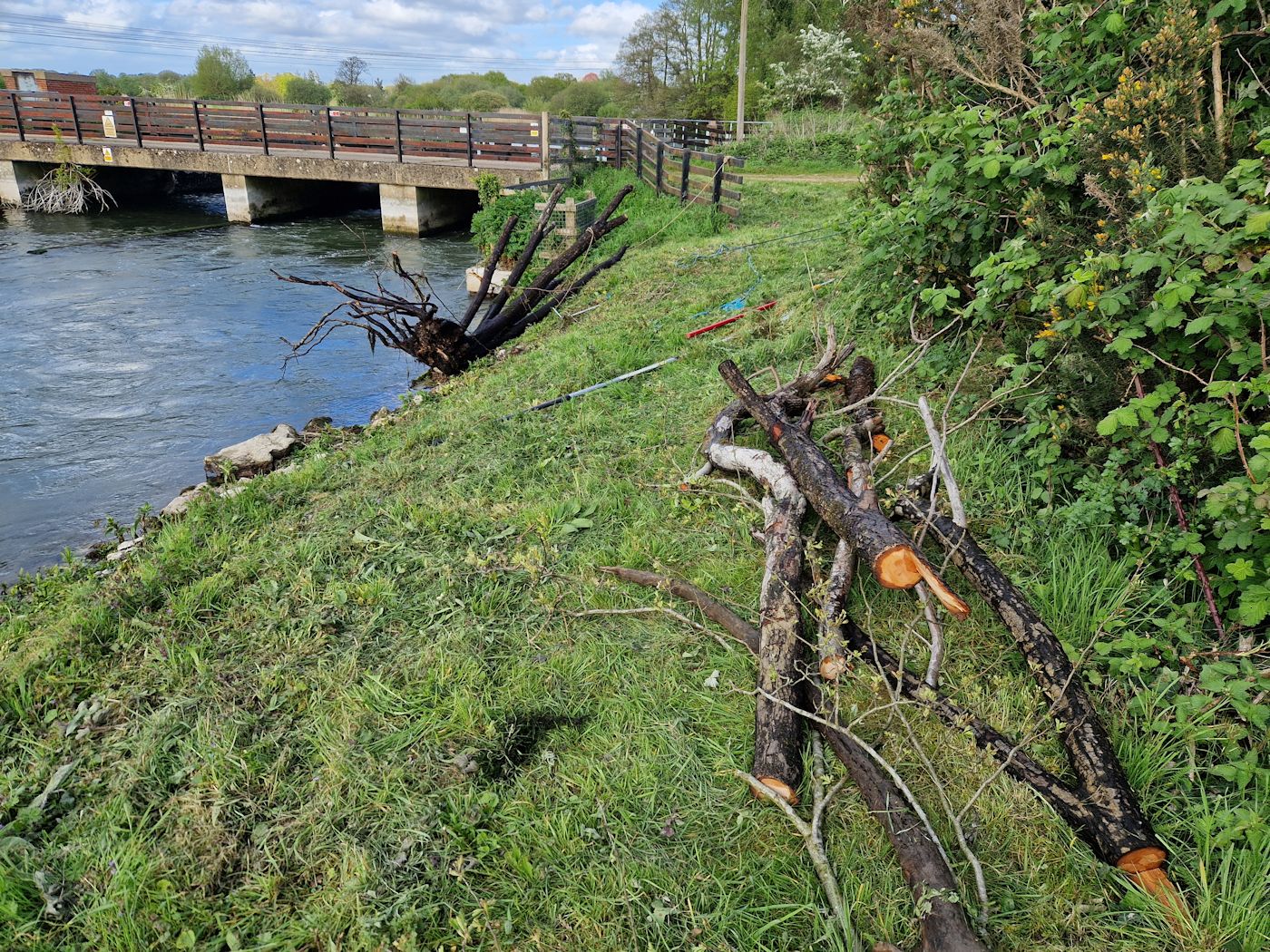
It turned out the tree from the hatch ended up in the middle of the weirpool. I spent a frustrating couple of hours getting the wretched thing out. I was going to send it downstream to Stuart, on the Severals, fortunately a pang of conscience convinced me that wasn't the most neighbourly thing to do. I know, I know, you didn't think I had a conscience, well it just goes to show I sweat blood dragging that thing out to avoid it heading off downstream.
Don't forget a we are on Spring tides and there have been a fish or two about this week that may suggest there are one or two fish running. Ringwood Weirpool is a running fish pool and if there are a few fish about they may well rest for an hour or two before facing the gates. Always worth a try if you have an hour to spare.
16th April
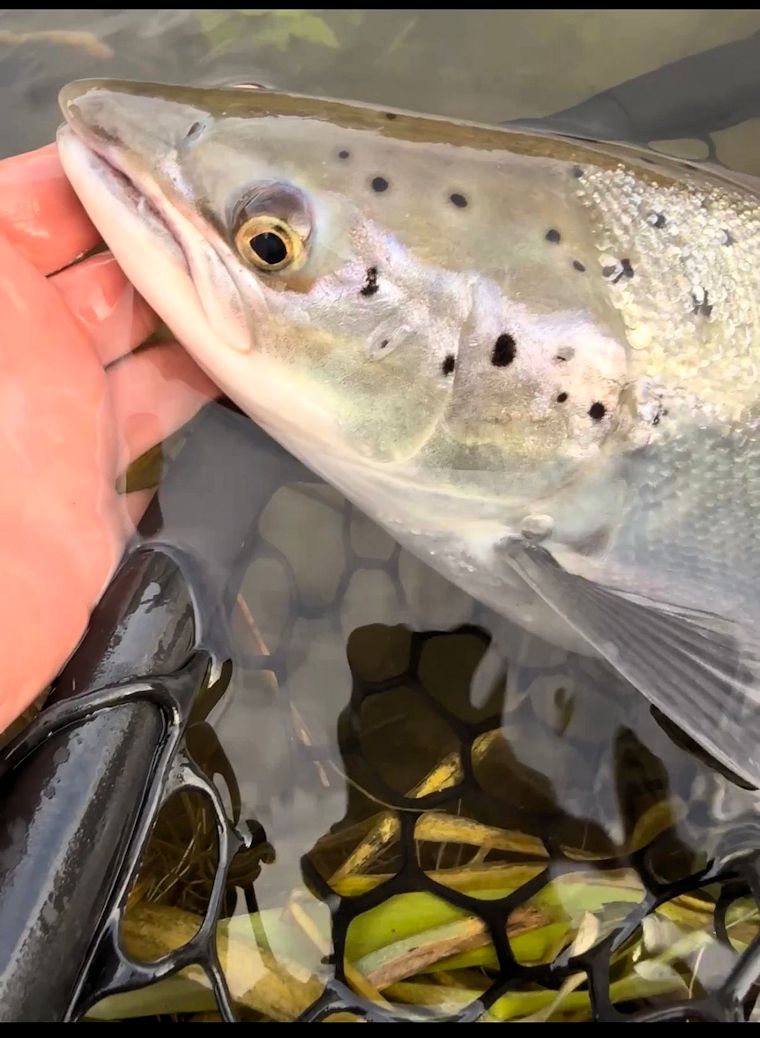
Congratulations to David Will on landing our first 2SW fish of the season. David is a new member and had put in a long day in attempting to get to grips with our water. A wonderful reward for the effort came early this evening in the shape of this bright beauty. I think I am almost as delighted as David as it seems to have taken a long, long time to see our second fish on the bank. Many thanks for the report and the photo David, a great result, well fished.
15th April
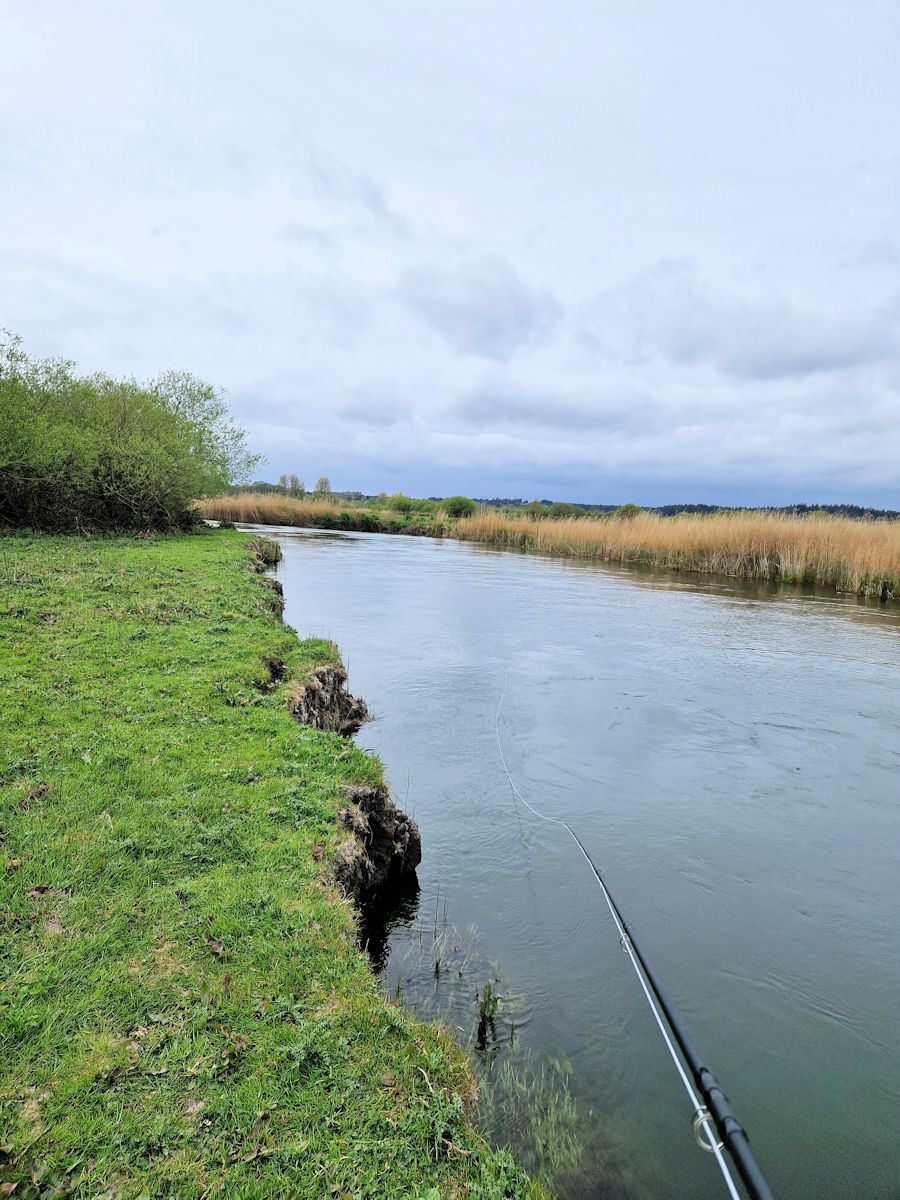
The tail of Lifelands Pool, where yesterday I had a run in with good salmon that managed to miss the fly. We had cleared a path through the clump of willows at the head of the pool and having the rod on the truck I decided to fish through this much neglected pool. Just before reaching the willows, "Above the Cut-through" on the left bank, I was lifting off when a large silver flank flashed behind the fly and departed in a huge swirl. It may well have been for the best the fish failed to hit, as hooking a big fish in the moment the fly leaves the water would have resulted in enormous strain on the gear. Having said that I wouldn't have minded if it had hit the fly a few seconds earlier, when the fly had finished its swing. I am fishing a floating line and I doubt the fly was a foot beneath the surface for the entire swing so the fish could have just put on a spurt of speed grabbed the fly earlier. I guess thats fishing.
T&I counter.
The Test and Itchen counter figures that contains some interesting work on escapee stock trout.
10th April
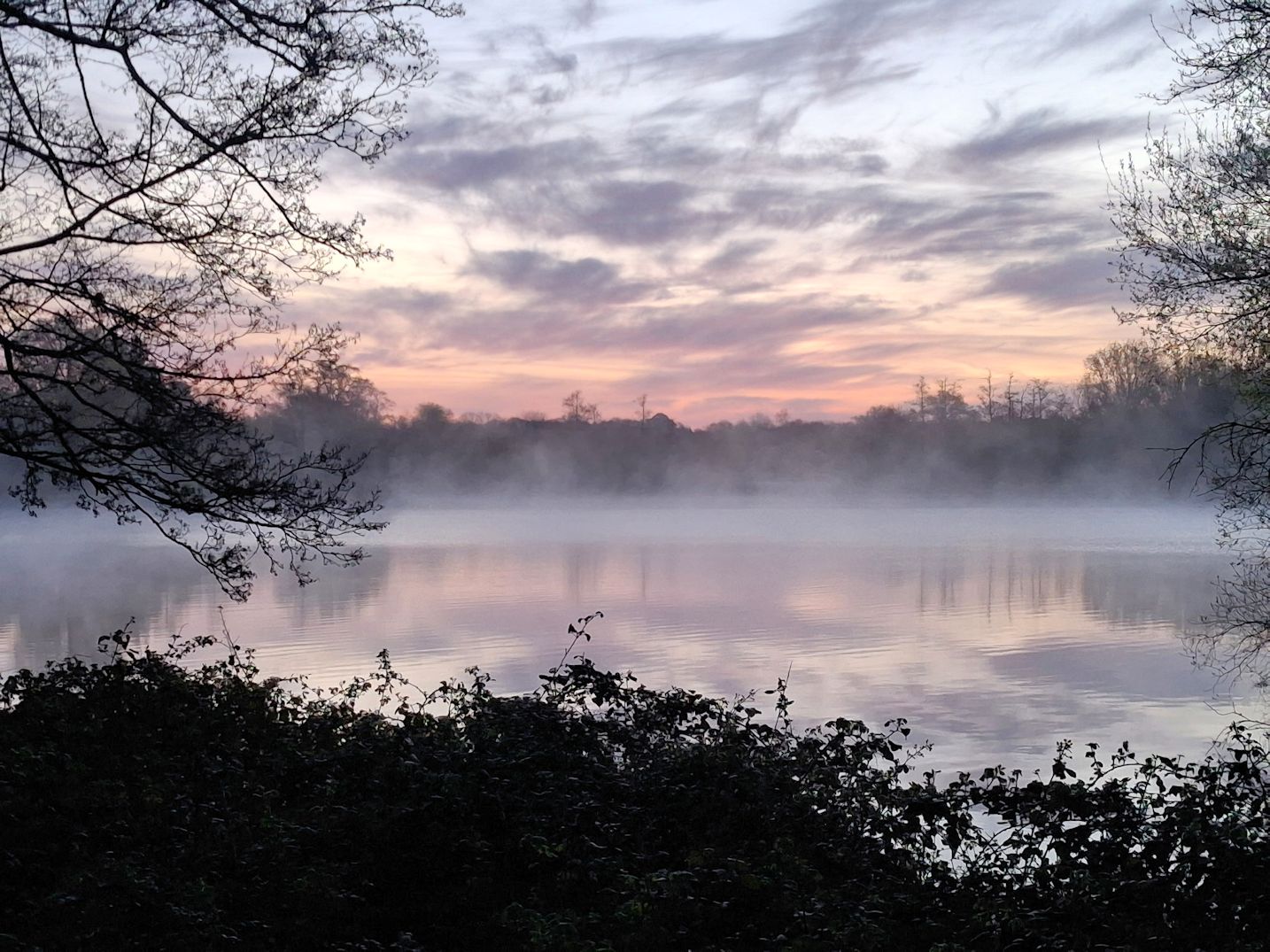
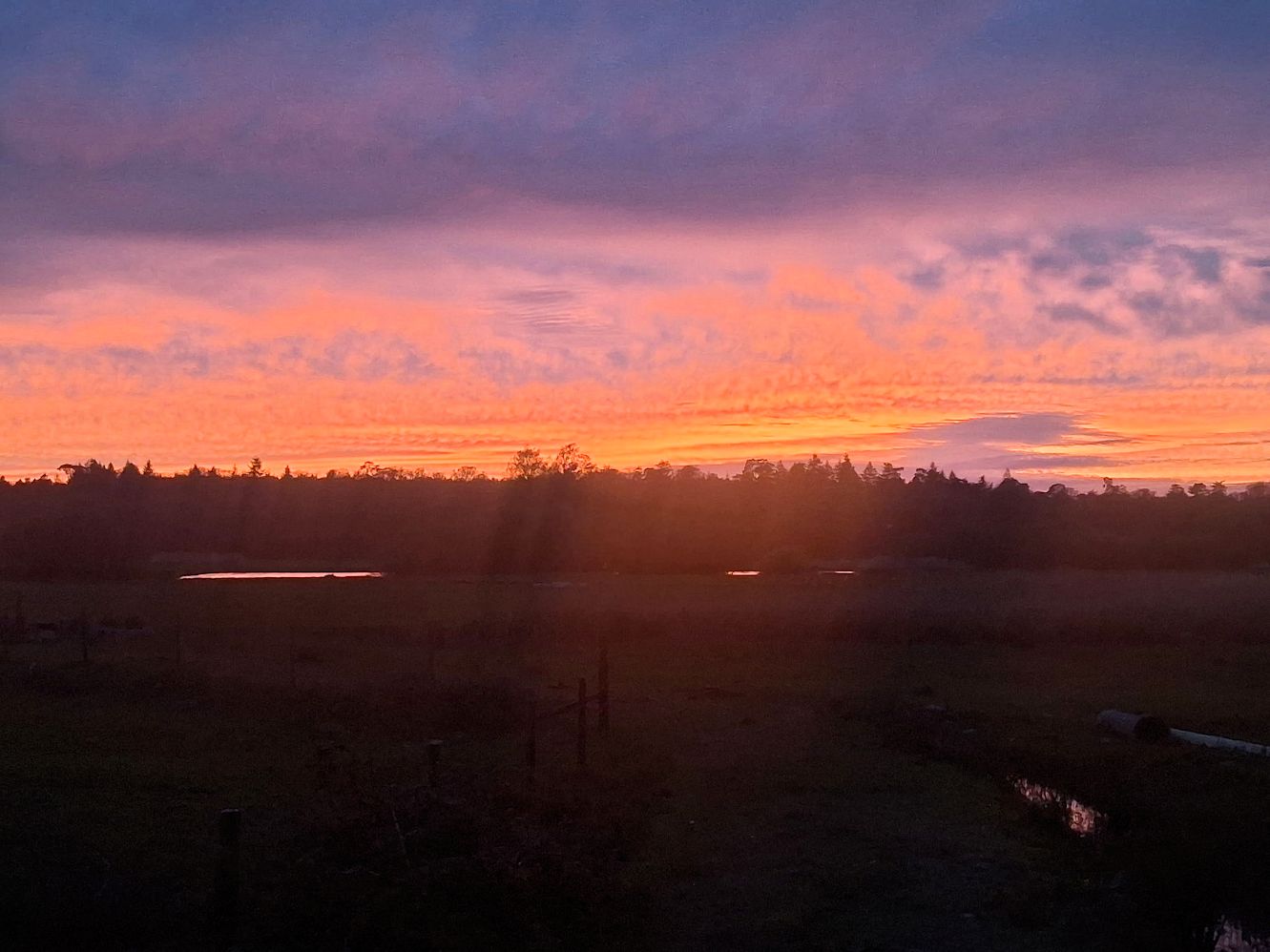
Thanks to Tony Myatt for sending through the photos above that capture the magic of dawn and sunset on the Estate so beautifully. To start and end the day in such a stunning environment is priceless, for which I feel very fortunate indeed.
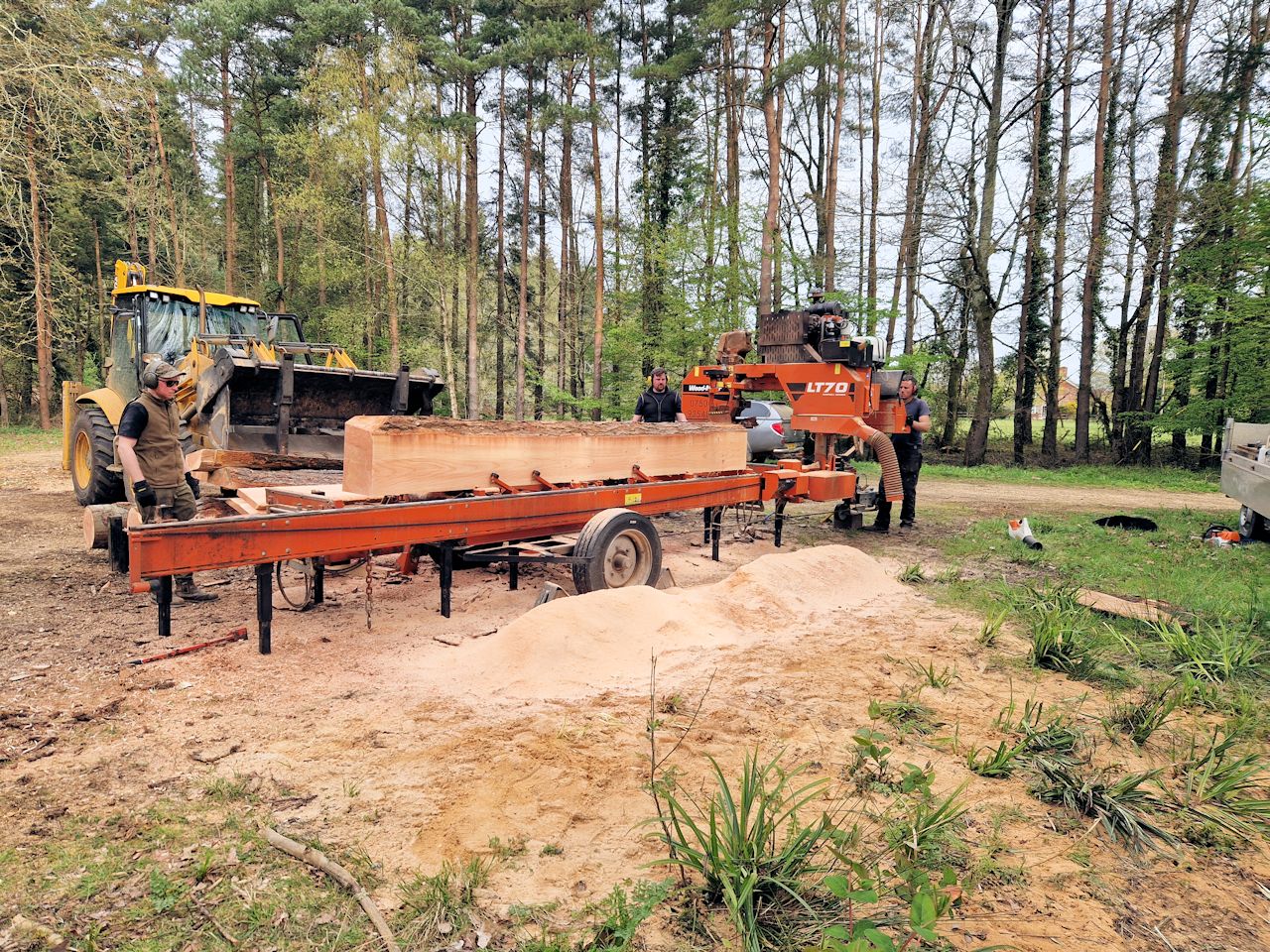
Will has been in again with his wood mizer to convert the timber from some of the trees we recently felled.
8th April
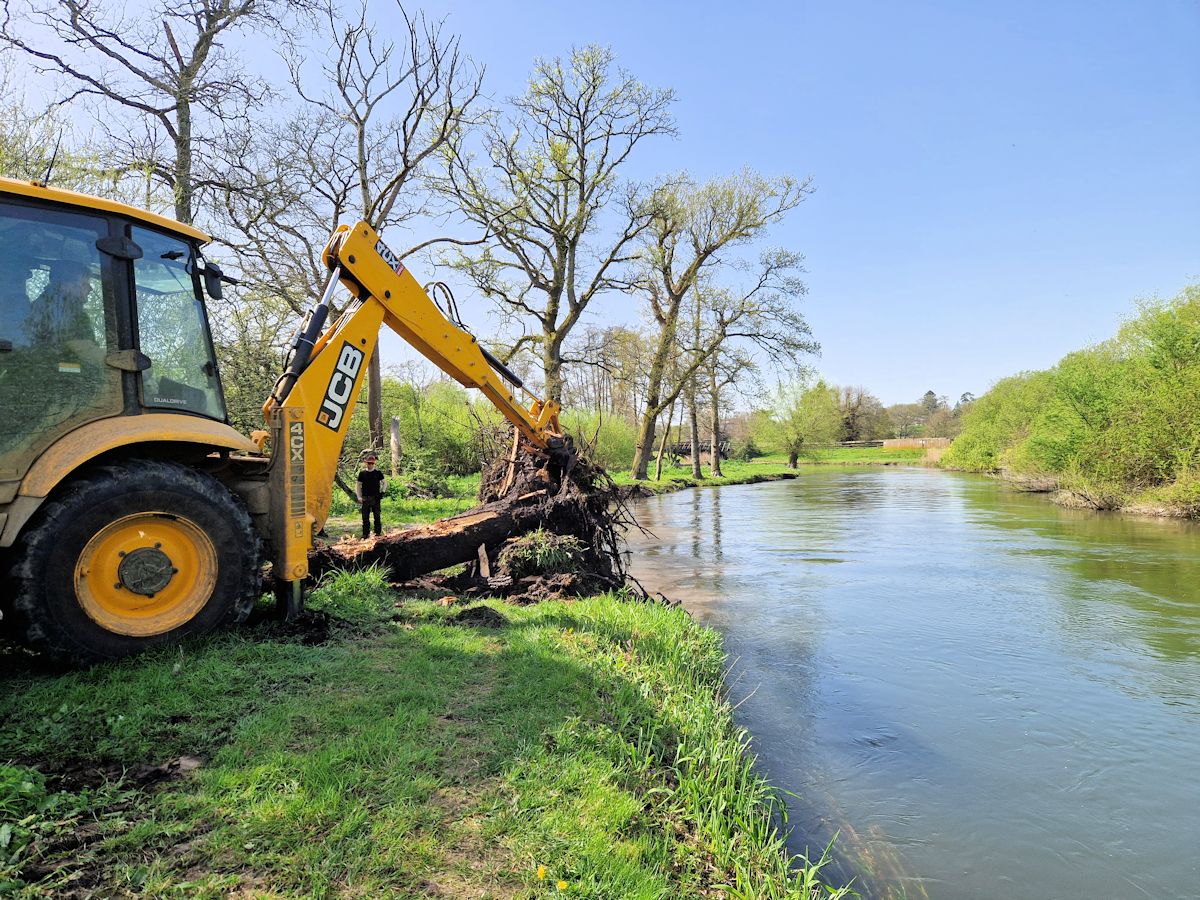
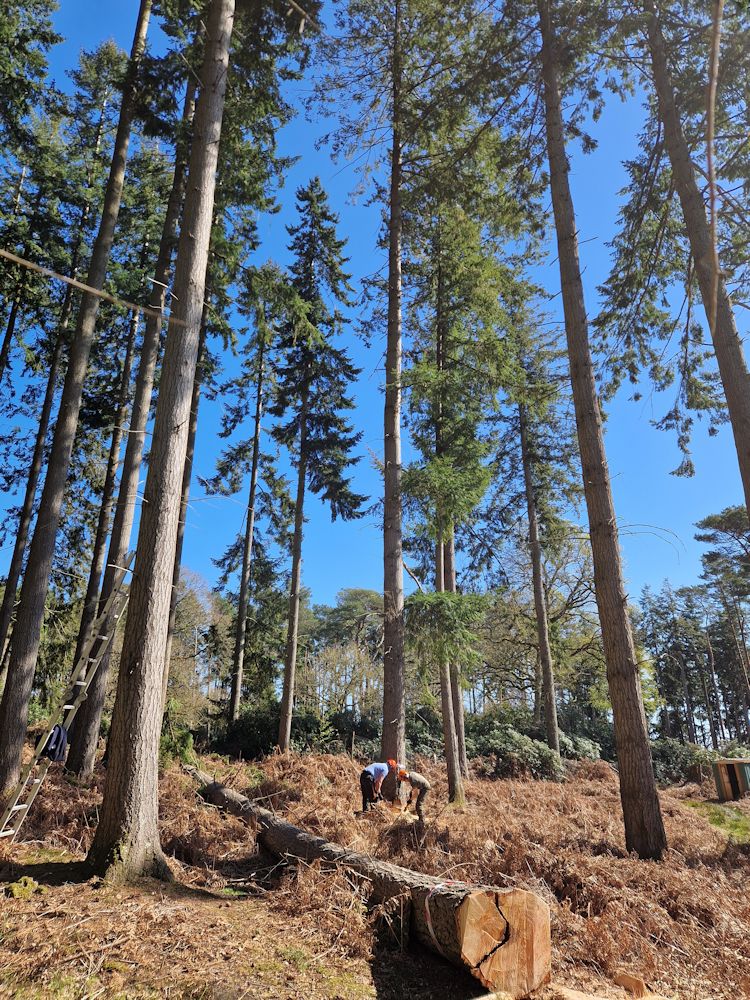
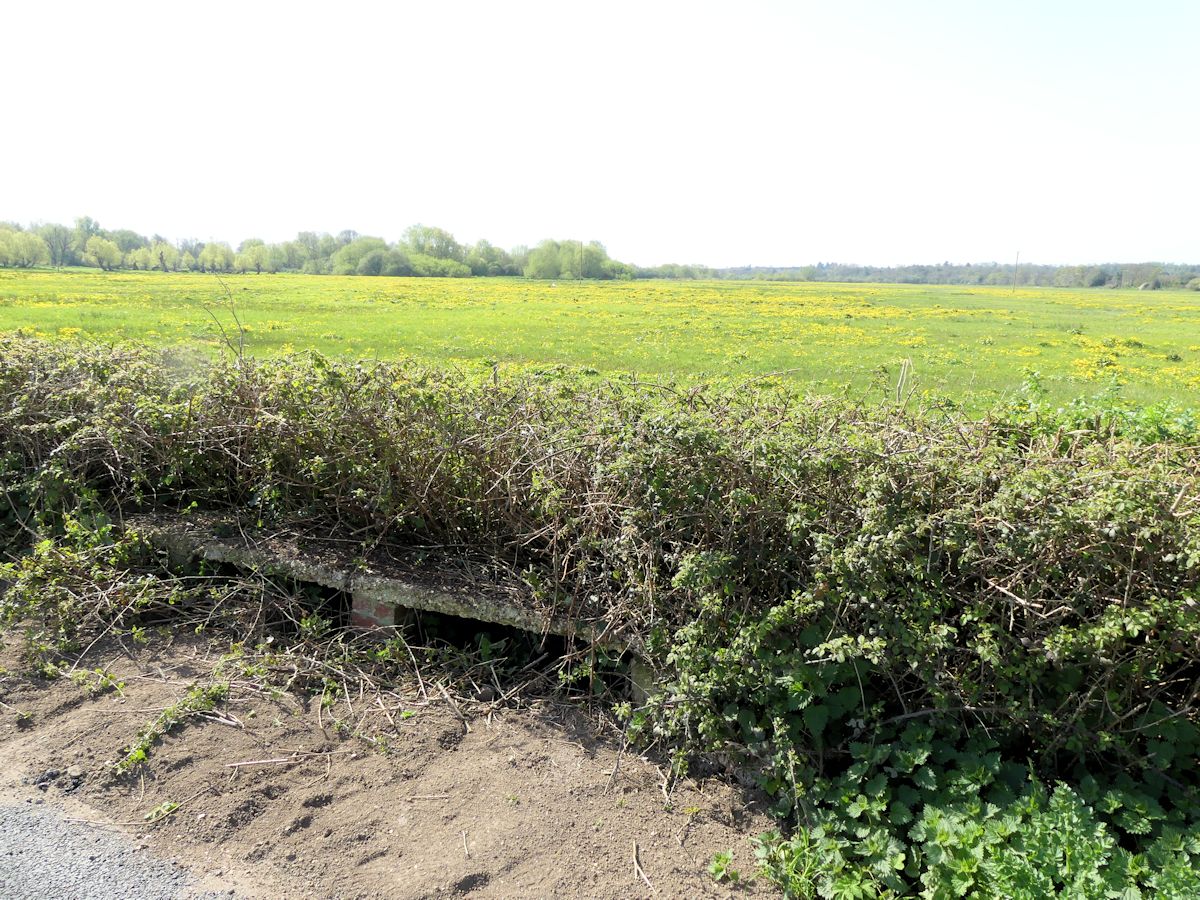
A busy week removing split, dangerous and dead trees that posed an immediate danger to life and limb. The first is Phil dragging the root plate of the oak that was stuck in Broadwater and undermining the path. The middle shot shows Kevin explaining to Jonny the finer points of felling a dodgy, one hundred and twenty foot Douglas Fir. In the foreground a felled fir with a split that ran well up the trunk that had allowed water to access the heart wood where rot had set in making it a very difficult and unpredictable tree to fell.
The righthand photo shows a section of the old walkway that ran the length of the Harbridge to Ibsley Bridge section of road. The elderly inhabitants of Harbridge knew a thing or two about the Avon Valley, not to say the current elderly inhabitants don't also know a thing or two about the valley. Back in the distant past the residents knew the Avon had a habit of, surprise surprise, flooding the flood plain. If they wished to get from Harbridge to Ibsley and access the A338 road to attend school and go to town they either had to get very wet, see 2nd February entry, or build a walkway over the flood. I'll let you guess what those clever old Harbridge fore-fathers achieved, the clue is in the photo. It took the desk bound geniuses in the Local Authority to condemn the walkway as a health and safety risk and let it fall into disrepair. If we were on Dartmoor it would have been a deemed a tourist attraction and people would have travelled miles to experience the path. If it still existed it would also have meant the Avon Valley Path would not have been unusable for weeks on end during the winter floods.
If I were a young and enthusiastic resident of Harbridge I would put together a project to honour those earlier old beggars and rebuild that walkway. I doubt the local authorities would be of much help, it would have to be based around a Lottery funded or serious local business sponsorship scheme. A great project to get stuck into that would result in an amazing restoration of a local landmark.
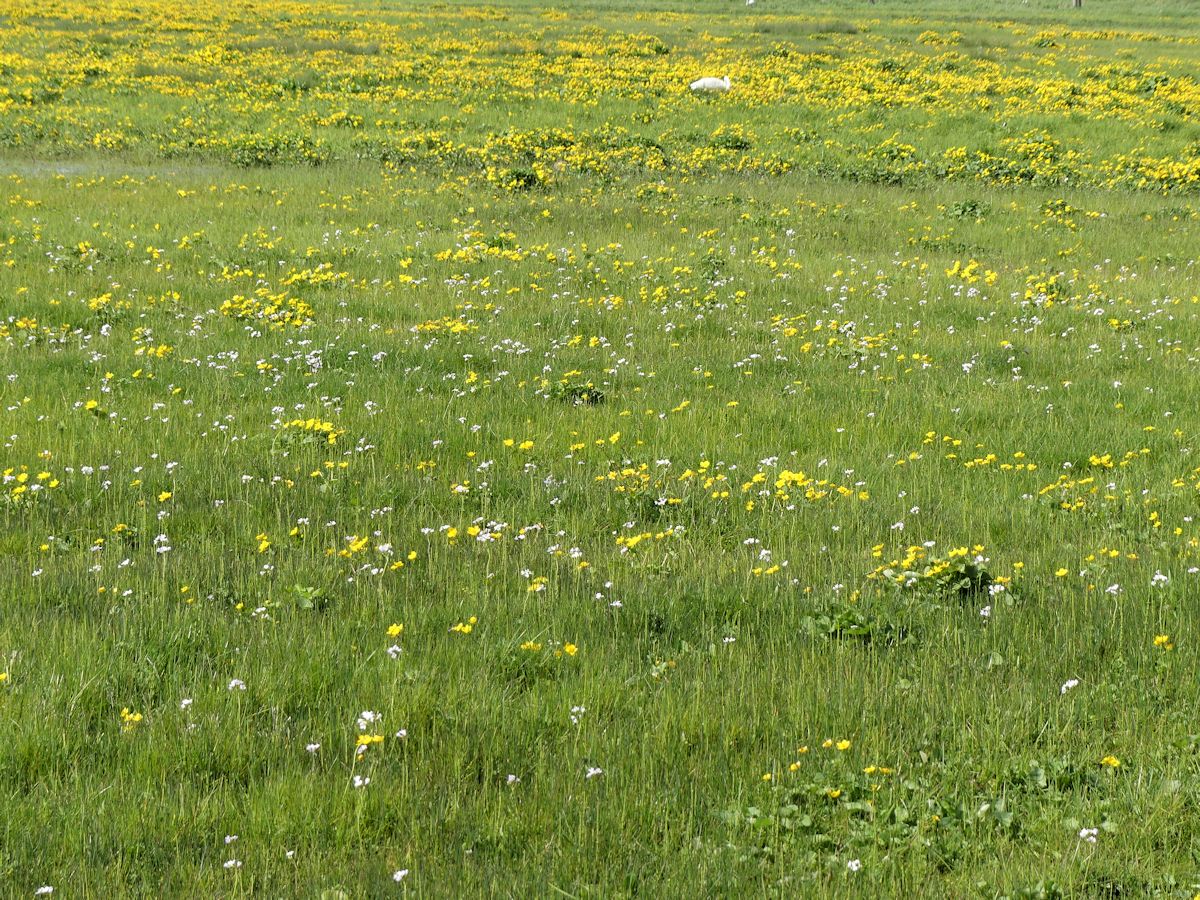
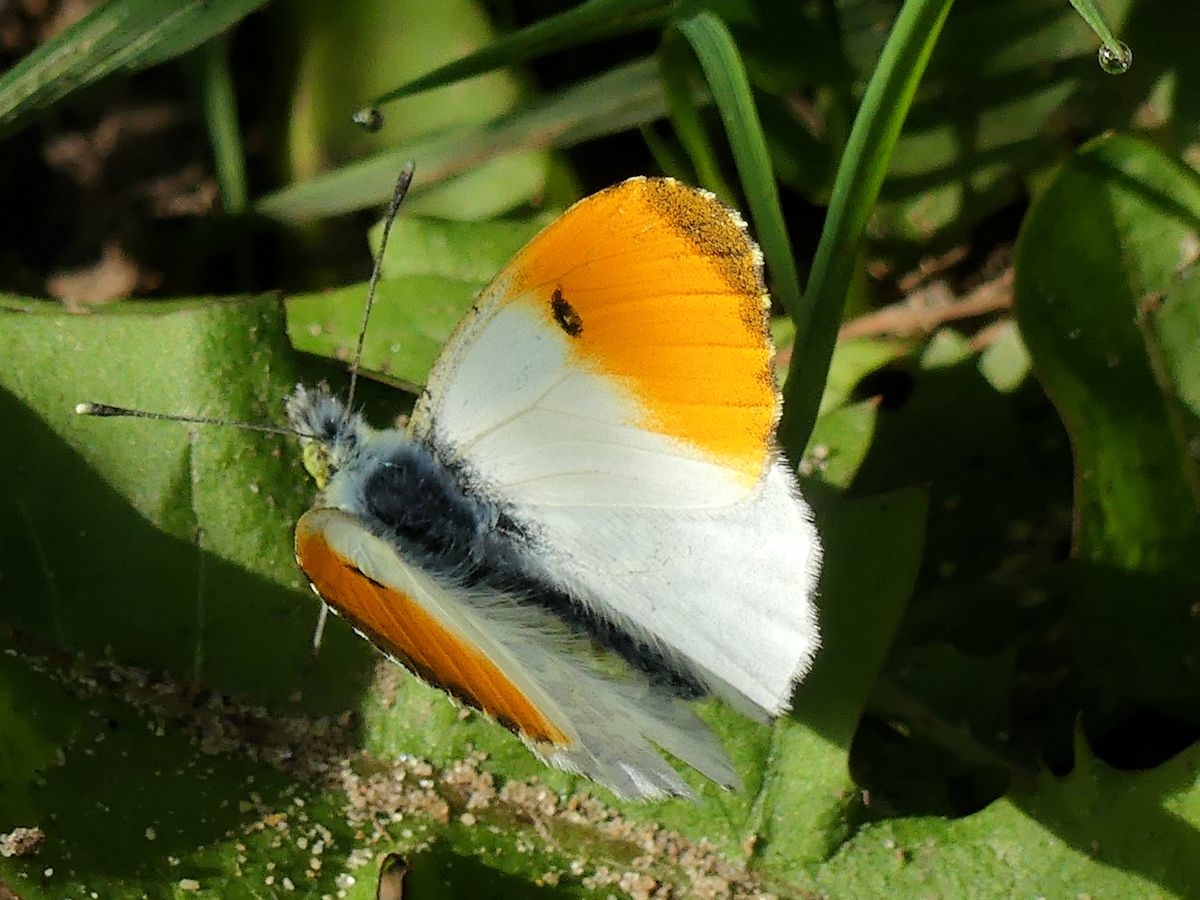
The water meadows looking wonderful in today's sunshine with the marigolds and Cuckoo flowers in full bloom. The Orange Tip was also out looking for the Cuckoo flowers as one of its food plants.
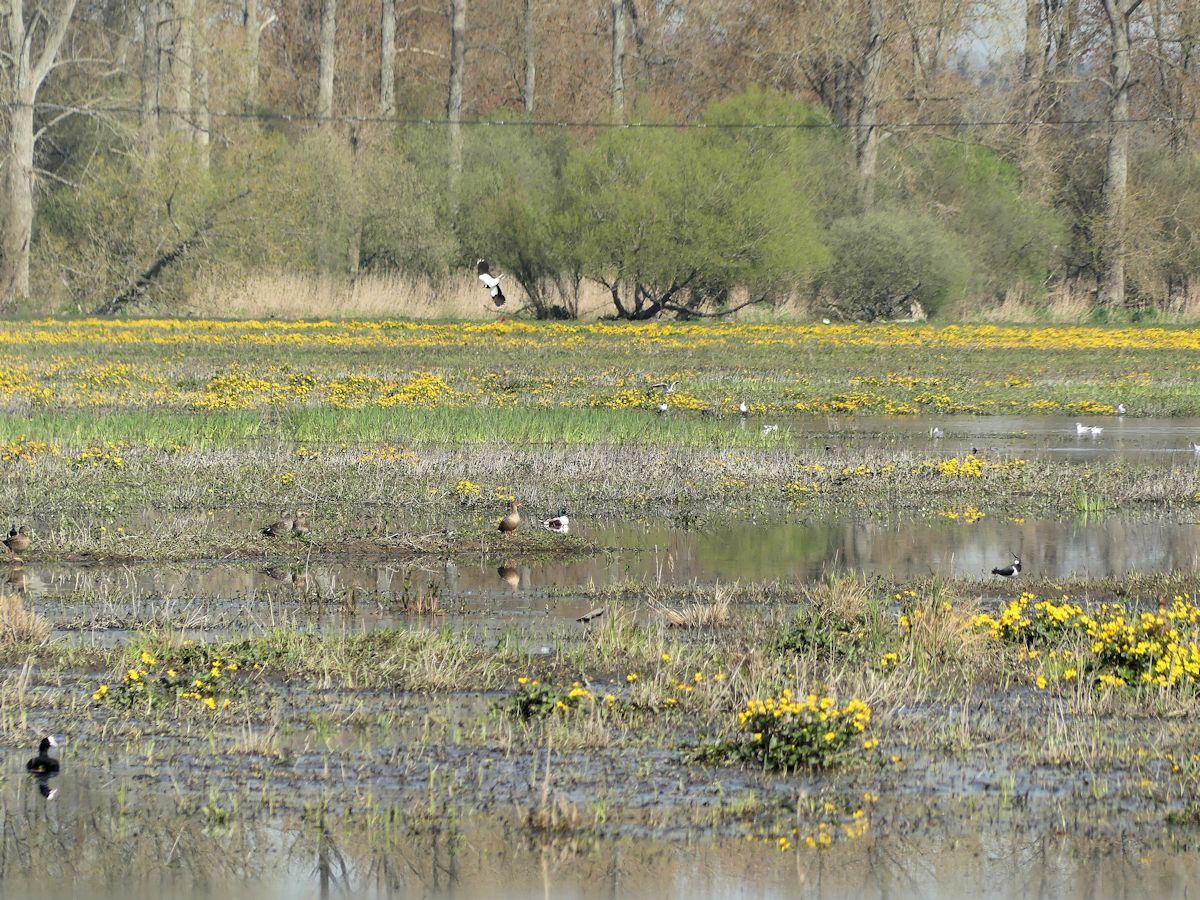
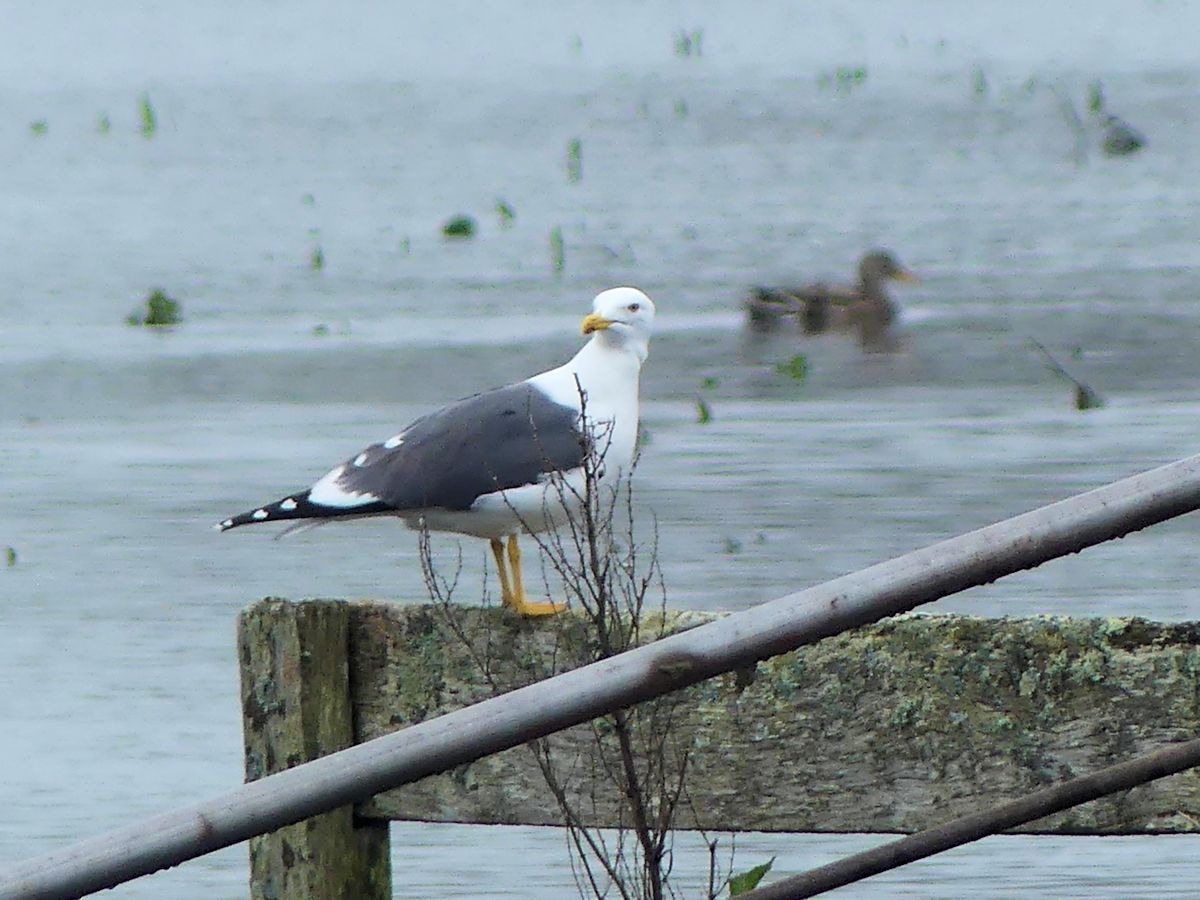
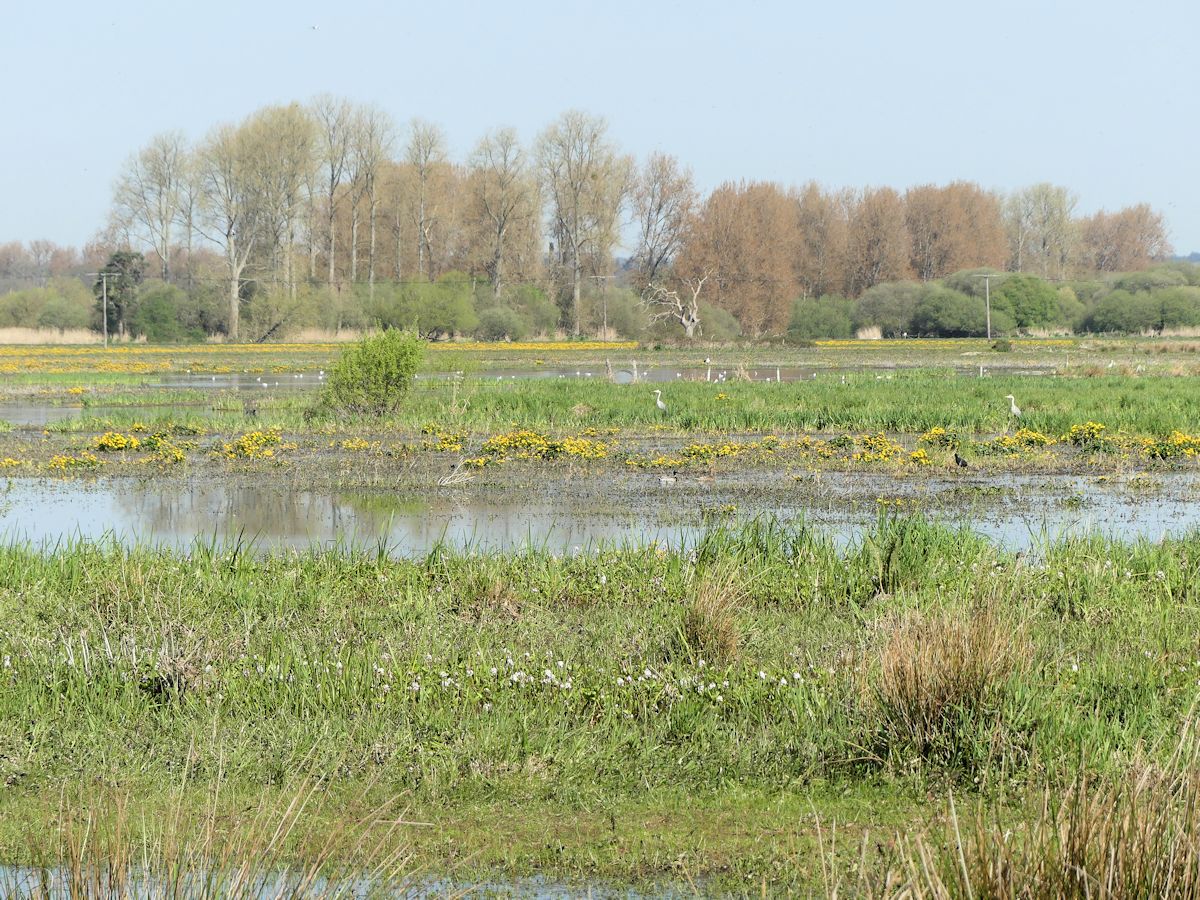
The marsh remains flooded in many areas providing wonderful habitat for many waders and wildfowl. There are Lapwing, Redshank, Gadwall and even Shoveler among the dozens of birds on the marsh. The calling Redshank and Lapwing are the most evocative sound of wetland habitat. The appearance of a Marsh Harrier brings Lapwing from all directions to call and dive bomb the unwelcome visitor. Perhaps the most unwelcome visitor that has almost habitulated itself on the marsh, are a pair of Lesser Black-backed Gulls. They have spent weeks just sitting and watching the nesting waders and wildfowl and robbing the eggs from any birds that forget they are watching them. As well as the Marigolds and the Cuckoo flowers the bogbeans that grow in several of the channels are in bloom adding the glorious backdrop of the marsh.
7th April
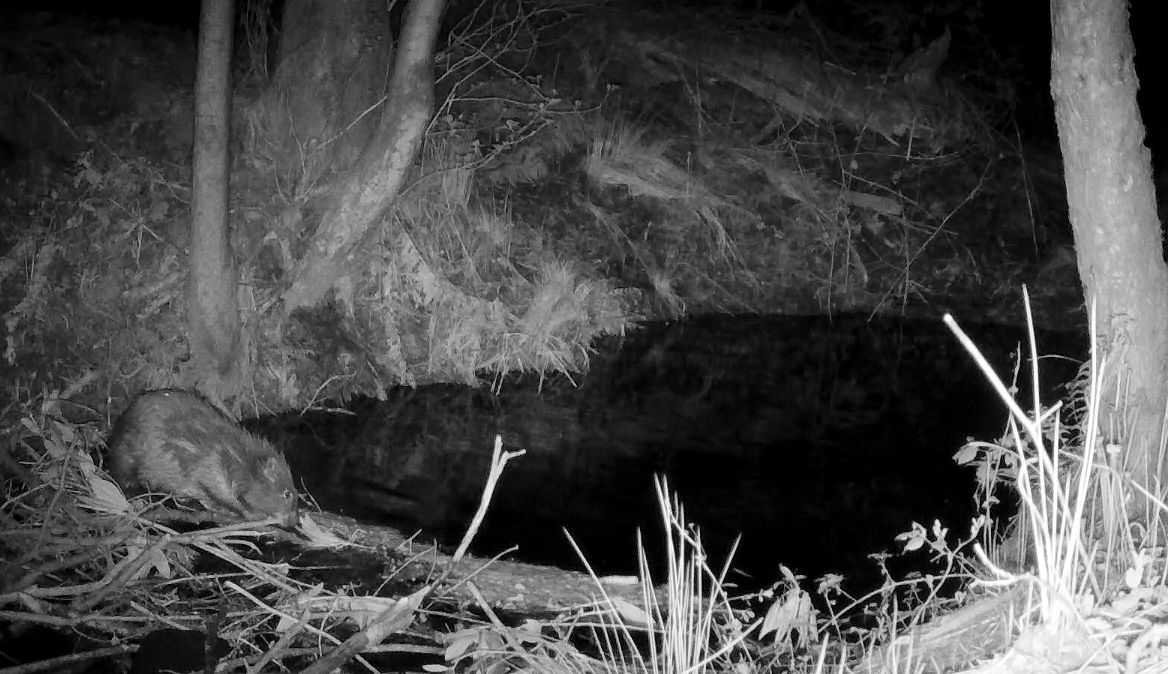
I'm not exactly sure when they started building this dam, around about four weeks ago I think. The photos and the clip below show some of the wildlife that has already started to make use of it. One of the construction techniques that surprised me was that most of the branches they add are placed with the flow and not across it as you might expect when trying to block a channel. When you see the construction in action it all makes sense. Having long at the base of the dam gives it more immediate stability and prevents it being washed away. Clever little beggars, I guess they've been building dams for quite some time and have got the hang of it by now.
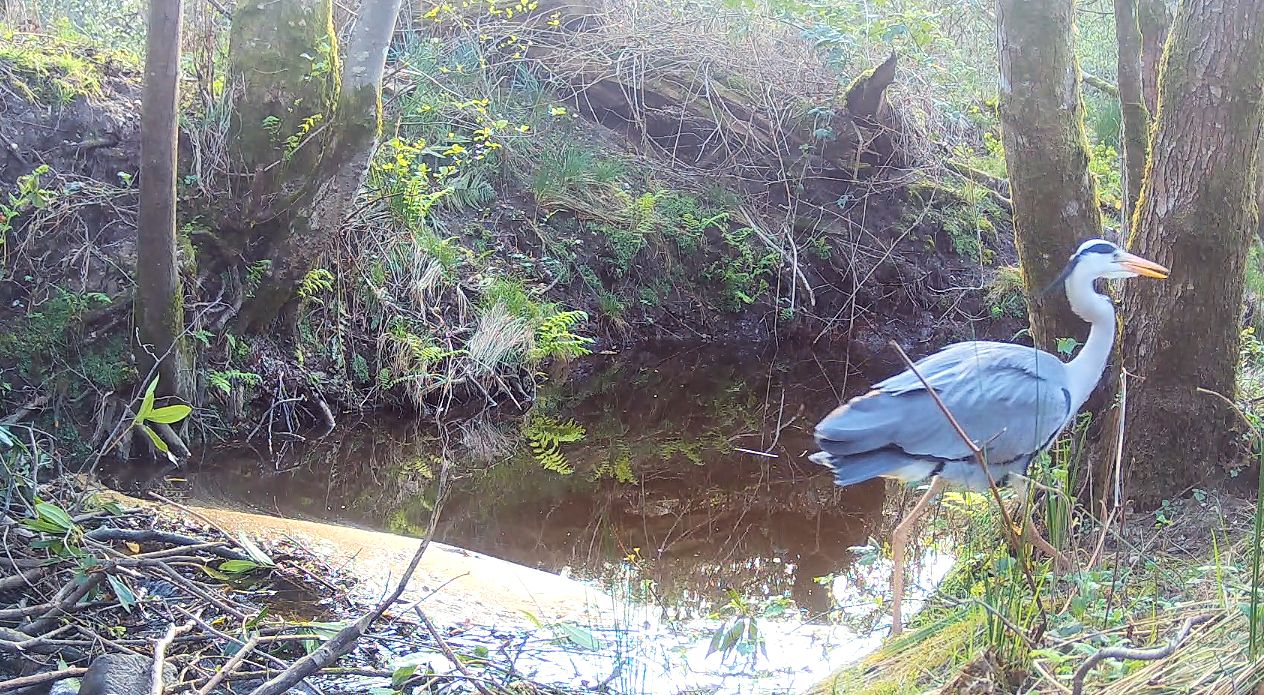
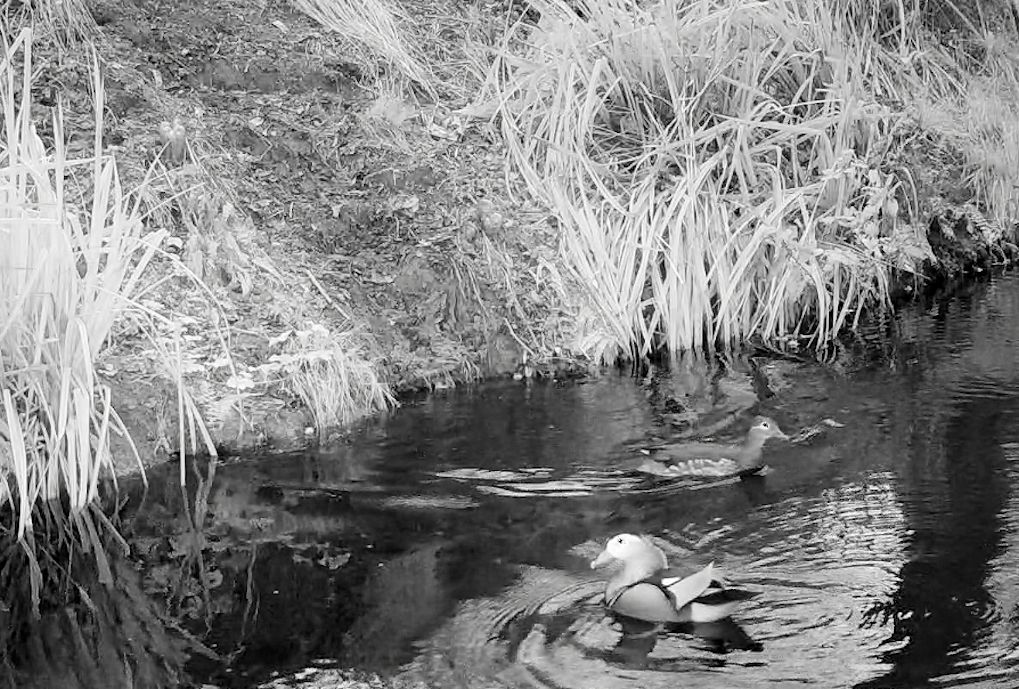
A Grey Heron and a pair of Mandarin seem pleased with the new pool.
Kingfisher.
New fishing grounds.
4th April
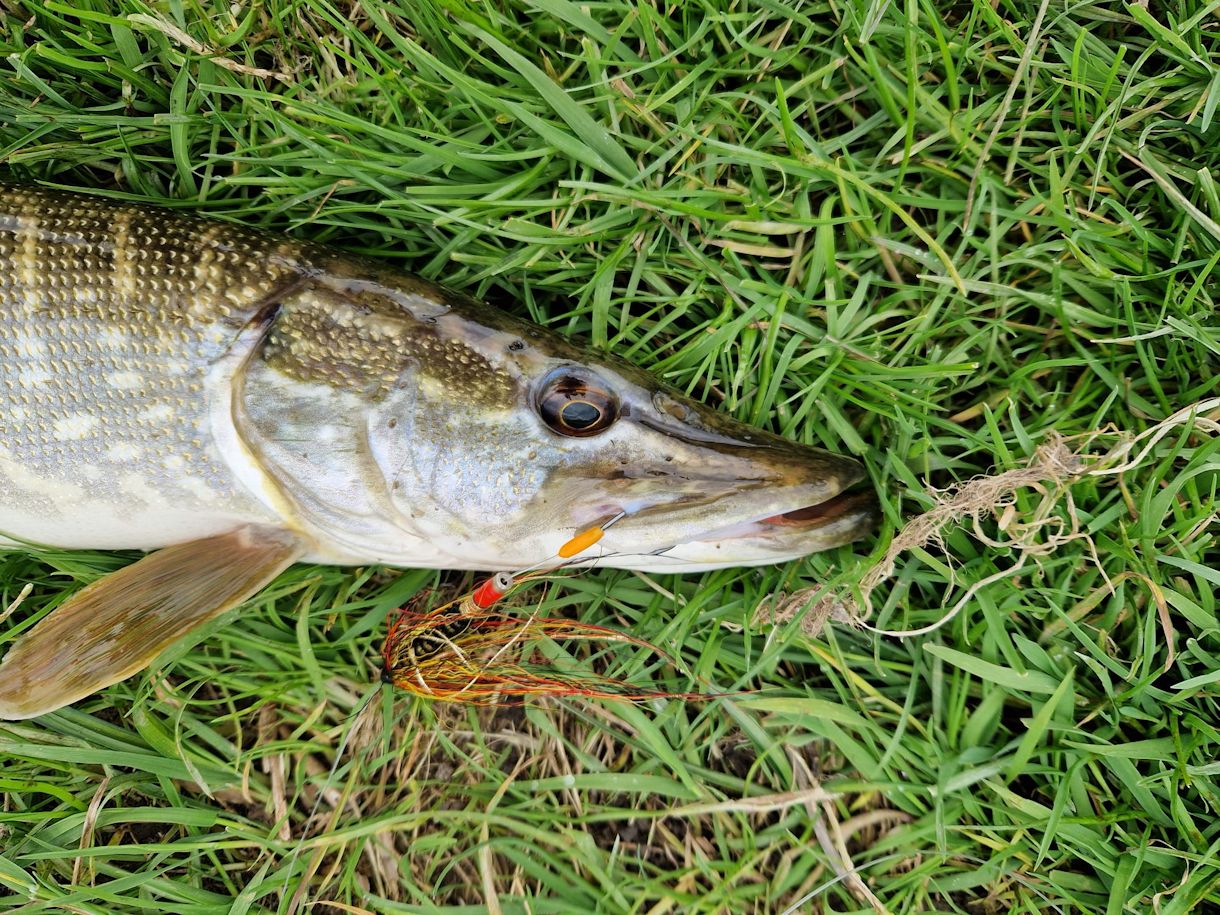
Tomorrow I was supposed to be out from Portland fishing for fat flatfish to accompany some lemon butter sauce. Unfortunately storm Dave put paid to any chance of getting out, making yet another trip cancelled. In an effort to get the drop on Dave I decided I would take the salmon rod out this afternoon and take a look at a pool or two. As it turned out Dave had other ideas and within an hour the south west wind was gusting at well over twenty miles an hour. I spent a further couple of hours unintentionally upstream tubefly fishing, as the wind blew the flyline back upstream. I'm afraid no salmon showed, I did however pick-up a couple of trout and the pike in the photo above that at least made the heart skip a beat or two. I put the shot of the pike up to illustrate, once more, just how effective the swing fly hook up is. As well as the perfect hold in the maxilla the swing fly set-up nine times out of ten prevents the pikes teeth coming into contact with the line.
3rd April
Dam building.
The new dam.
2nd April
New material for the dam.
The clip above is a test piece to see if I am winning with the problems I've been suffering in writing the diary. Its a clip of the second pair building a new dam.
That seems to have worked, hopefully. That's what solving most of my IT problems is based on, hope and good luck!
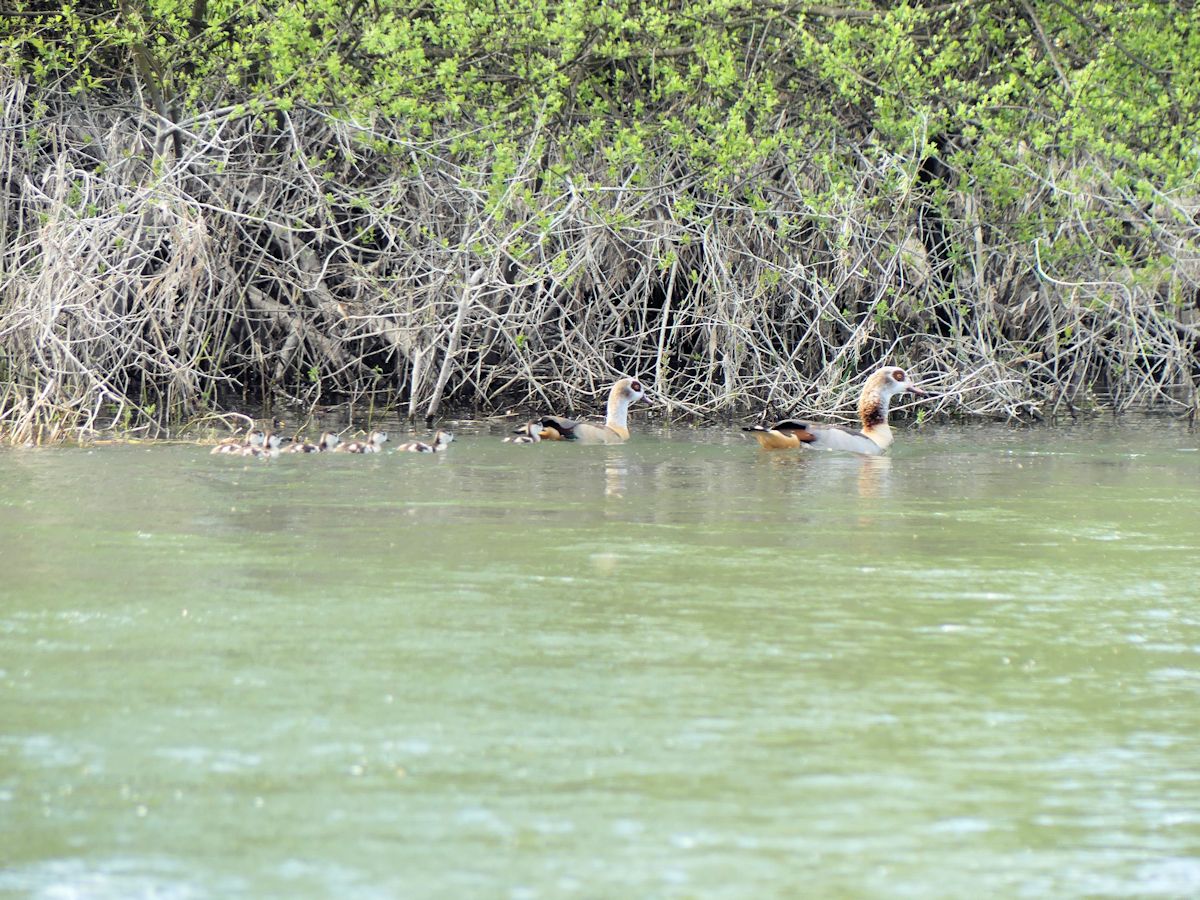
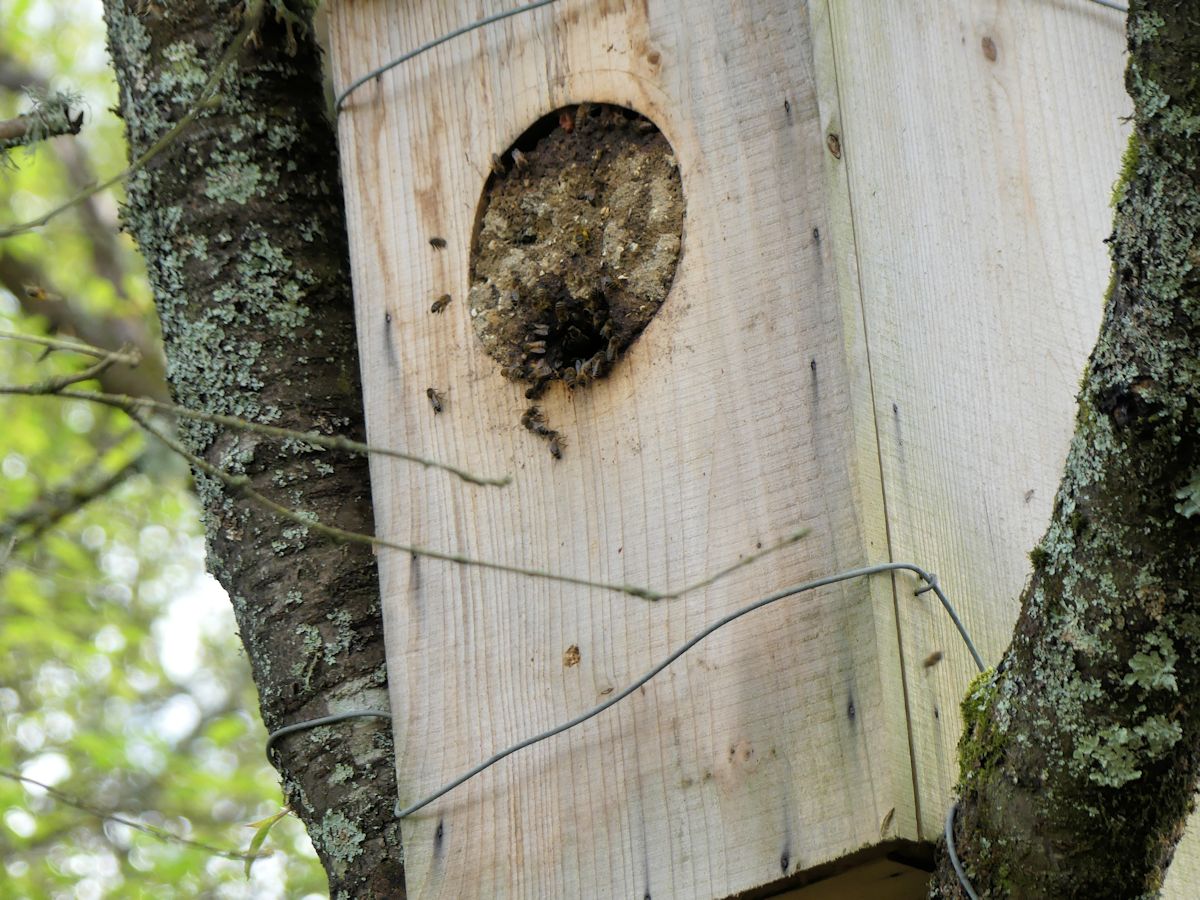
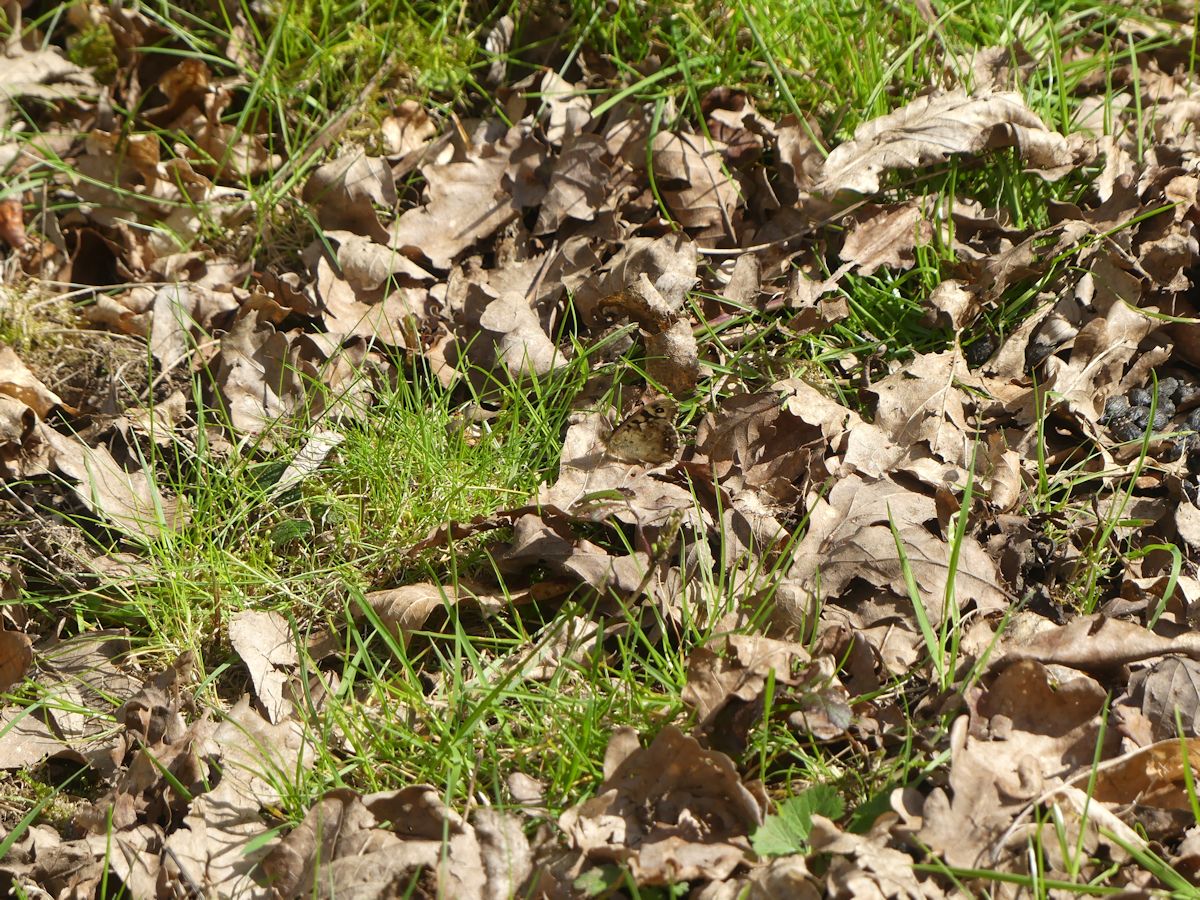
With the programming back in action, a snippet or two from the day. Firstly, a brood of Egyptian Geese, unfortunately an increasingly common sight about the valley with several dozen birds nesting in the hollow trees. The middle shot shows the bee colony is still in the duck nestbox that they took over, after the Nuthatch had cemented up the entrance. On the right, spot the Speckled Wood, the butterfly transect season is up and running for the Summer.
There remains little news from the salmon fishery, a good fish lost at the net being the only result for all the effort of recent days.
31st March
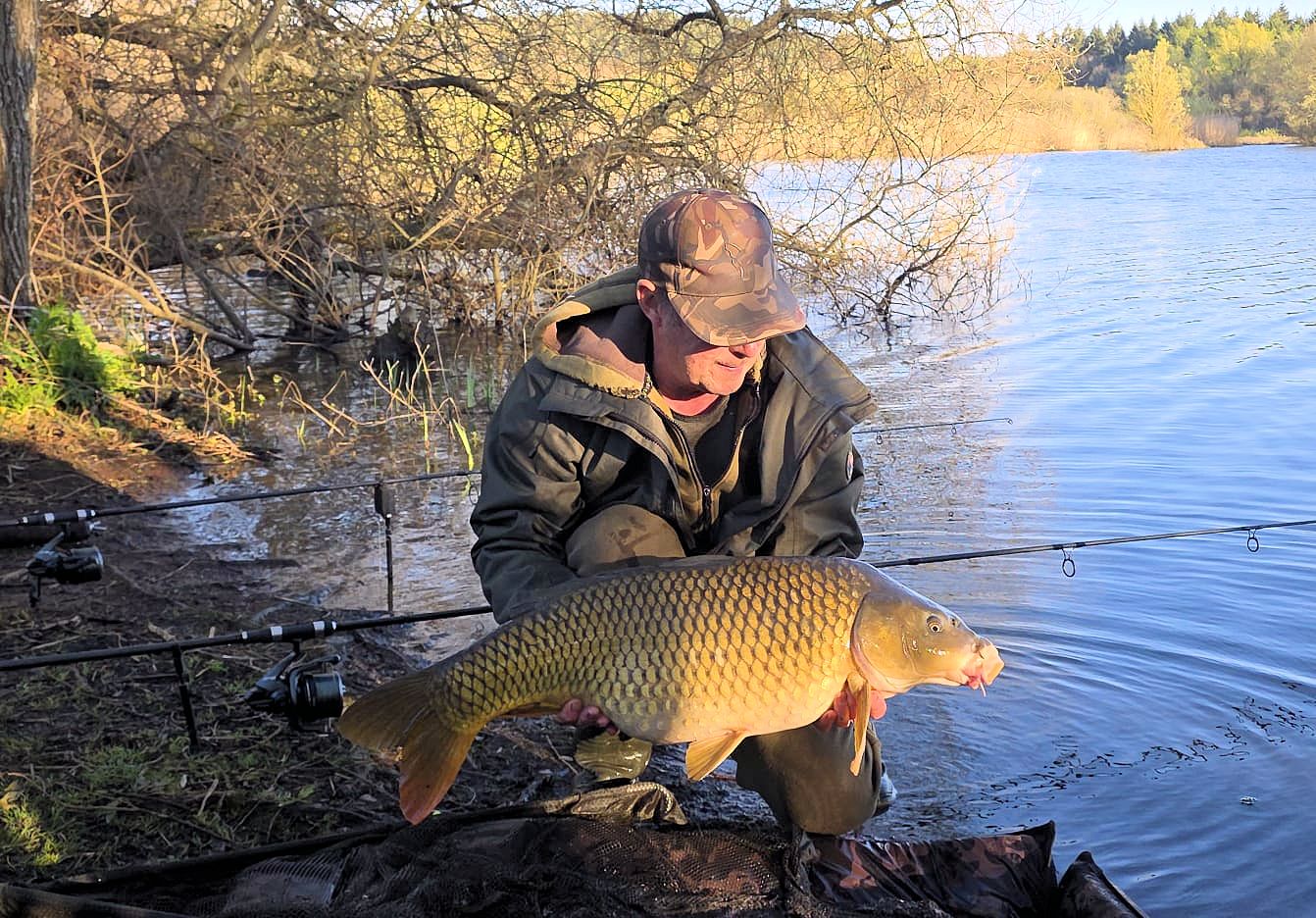
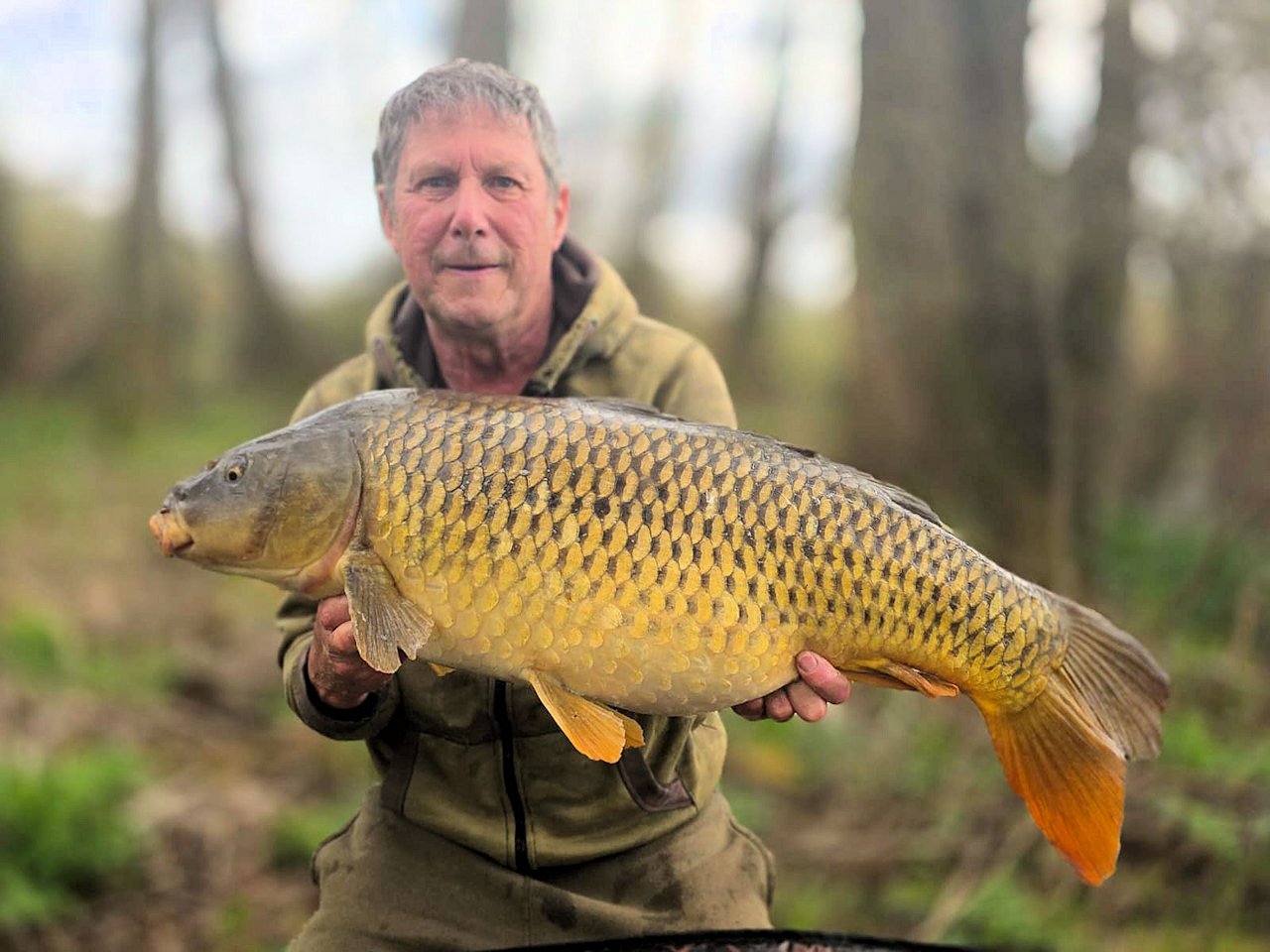
Andy with two, of his three twenty plus carp from Mockbeggar today. I believe he also managed a further couple of doubles to add to a very successful ten hour day session. Well fished Andy, thanks for the report, very much appreciated.
Below a couple of video clips of our second pair of beavers busy constructing a new dam. The original pair are now very quiet very few signs of activity around the lodge. I am guessing this is deliberate to avoid attracting unwanted attention as the kits are probably inside and vulnerable to attacks from bears and wolves. Not that we have many of those but you can't be too careful!
Collecting mud to seal the dam.
Off home for a nap.
Could I ask any forgetful syndicate members if they picked up a weigh scales tripod on the back of Kings-Vincents. One has been left on the bank so I assume someone has picked it up as its not there now. Let me know if you picked it up please.
27th March
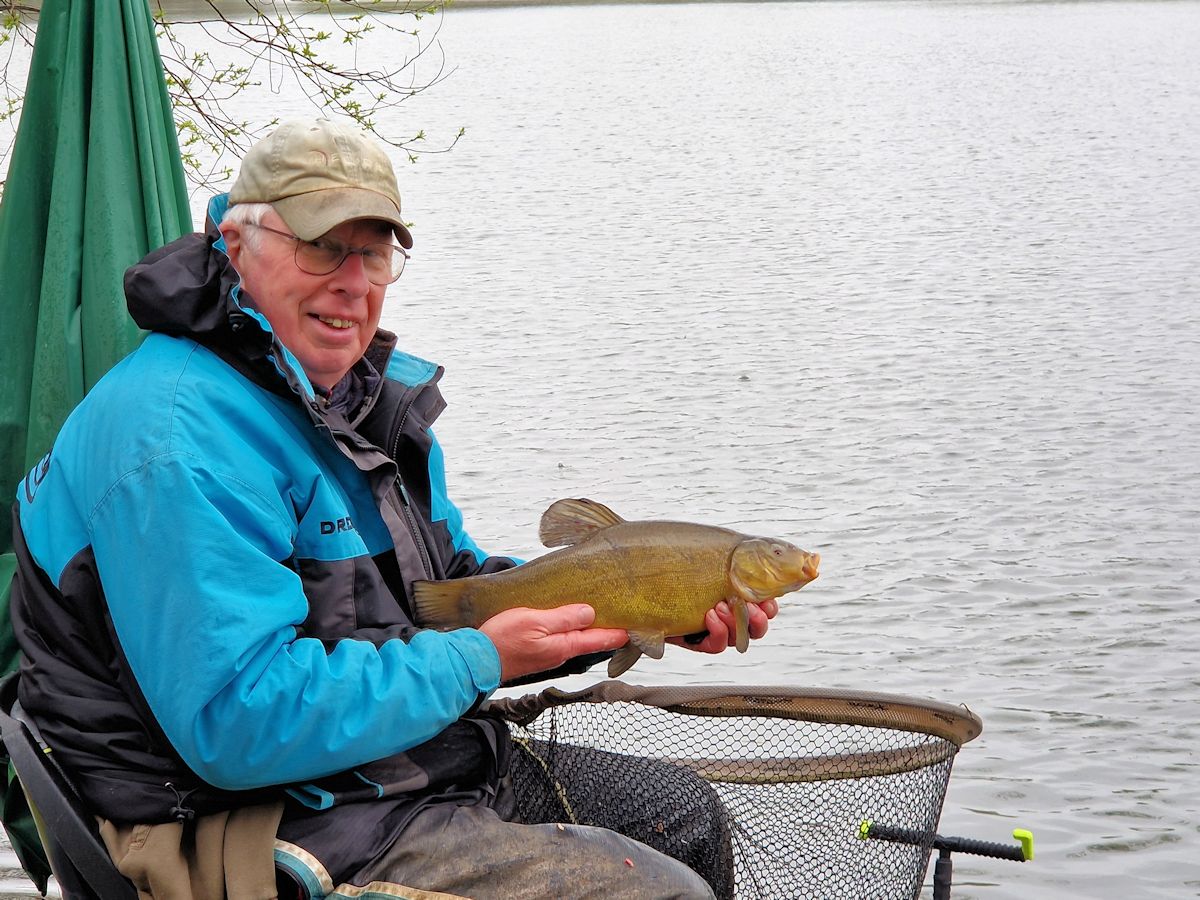
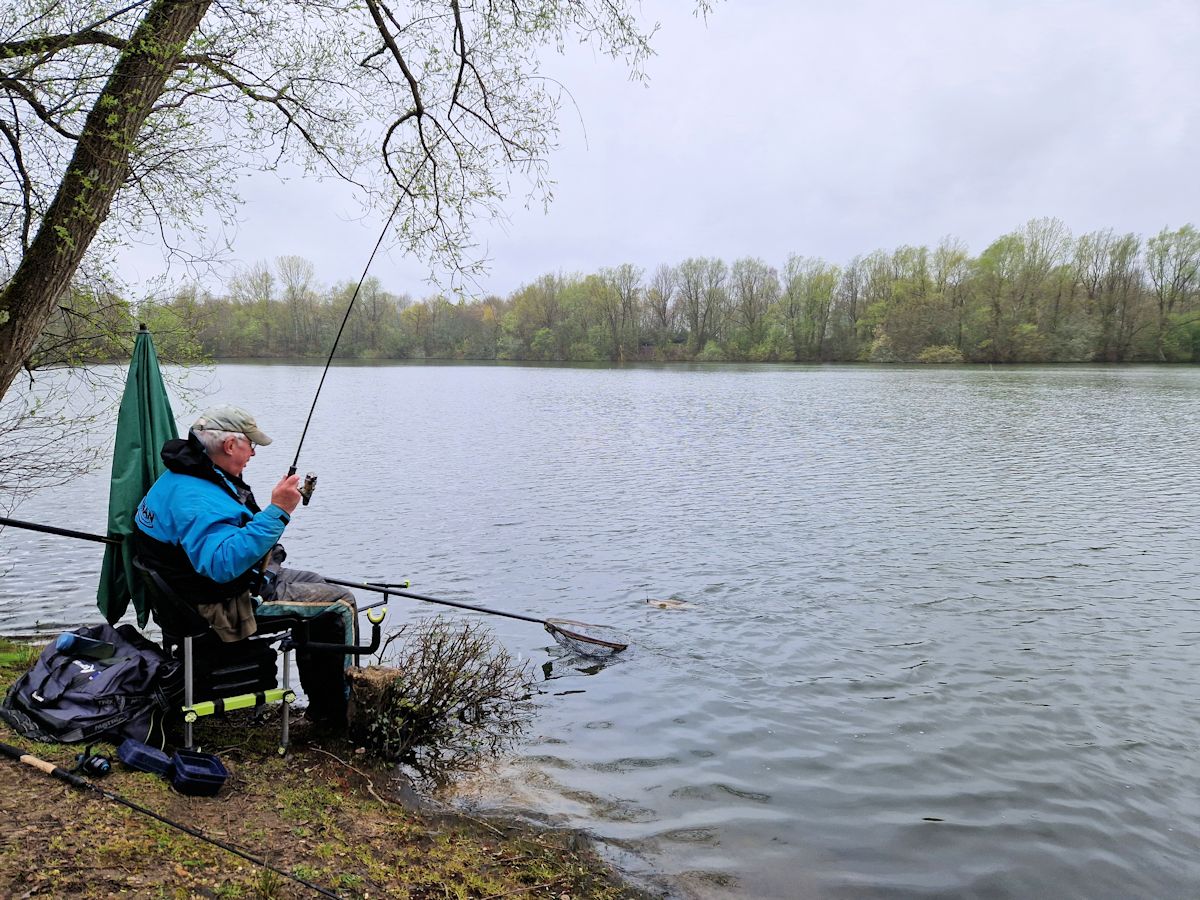
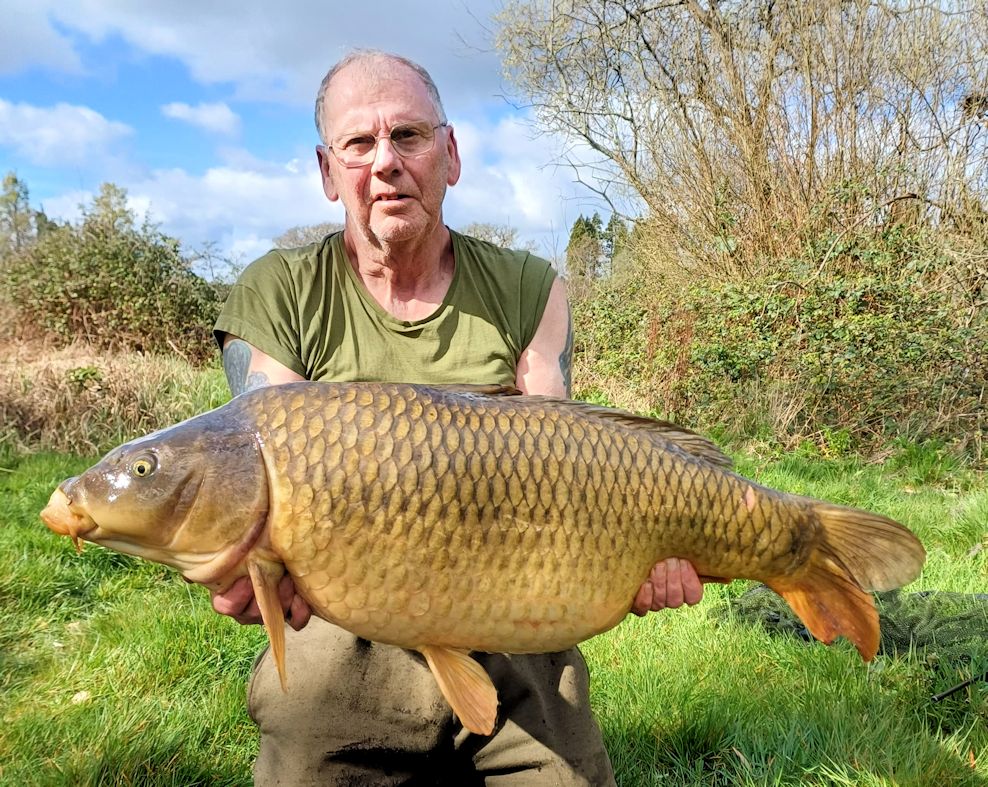
With the season on Meadow and Kings-Vincent Lakes about to come to an end and Nige having had a good hit with the bream, I decided a tench and bream session was required. To that end I was up at 5 am and heading for the lake to put a bed of twenty balls of crumb, pellet and chopped worm. A mild night, SW wind and a good chop on the water, things looked spot on. An hour to allow the swim to settle I was fishing by seven and expecting great things.
Three hours later I was on first name terms with the dendrobaena on the hook, I had seen it every fifteen minutes without a mark. It would seem despite the ideal conditions the fish had other ideas as the carp were also slow to show for the carp guys. Three hours without a touch was enough for me and I called it a day. Having packed up I drove over to Mockbeggar to see if the fish were being more cooperative for the angler over there. I found John Slader on the south Lake who told me despite a couple of quality roach earlier things were very slow. This made me feel a little better about my failure to catch over the road at least. That feeling didn't last long, as I was about to go on my way John hooked a fine looking tench proving it may be slow but worth sitting it out.
Steve was fishing his favourite swim on the north lake, in the Gravel swim on the Tower Bund. It would seem from a text in the afternoon the carp weren't obliging but he had landed three tench. It would seem I was definitely in the wrong place at the wrong time! The carp have been coming out over at Mockbeggar in the last week with several twenty plus fish being landed. Fingers crossed we get some settle conditions to bring the fish onto feed more consistently in the coming weeks.
The photo on the right is Paul with a 38.14 common, the best of a brace of 30's he managed from his last visit to Meadow. Nothing like we have become accustomed to on meadow at the close of the season, there were however several other good fish landed in the last week to provide a little encouragement.
26th March
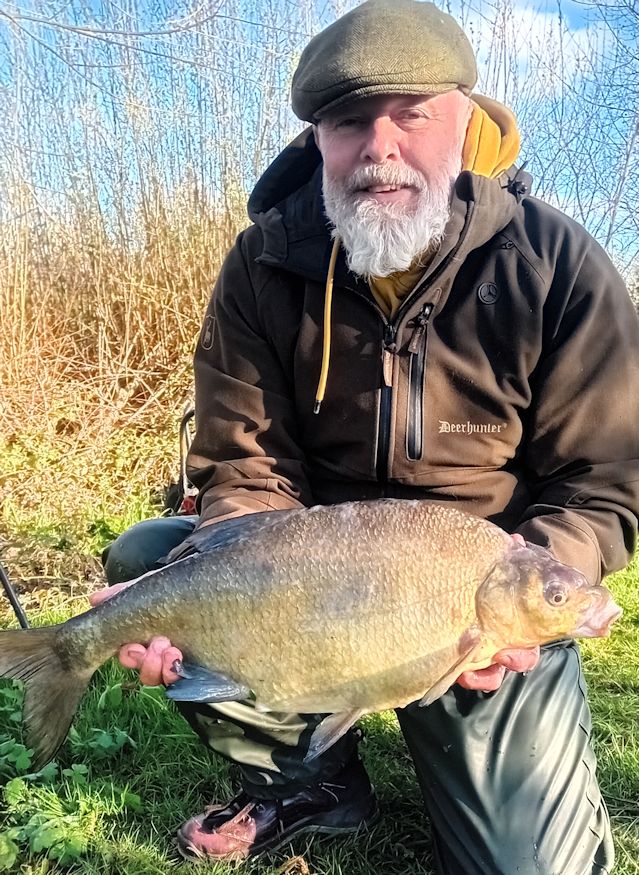
Here's a great pic of Nige with a nine pound plus bream. Nige is a keen bream angler and had a good day yesterday with eight good fish to 9.04. To target these difficult fish is certainly a very skillful practice and a result such as this bag is a great piece of angling. Great result Nige and thanks for the report and the lovely photo.
24th March
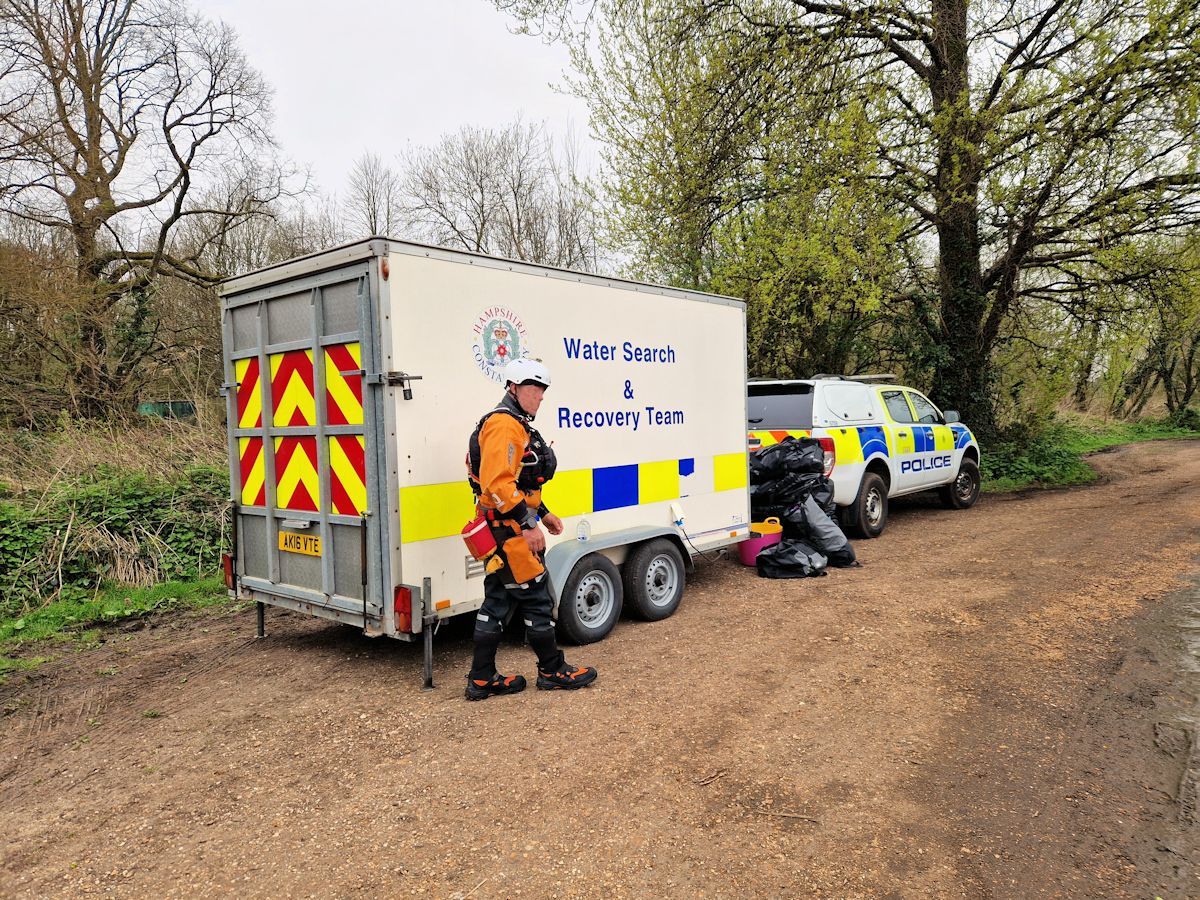
To avoid undue concern on the part of anglers arriving on the beats, please be aware the Water Search and Recovery Team, do some of their training with us on the Estate. They will be for the most part in the weirpools at Ibsley, so should you come across police vehicles and brightly coloured officers, do not be surprised.
23rd March
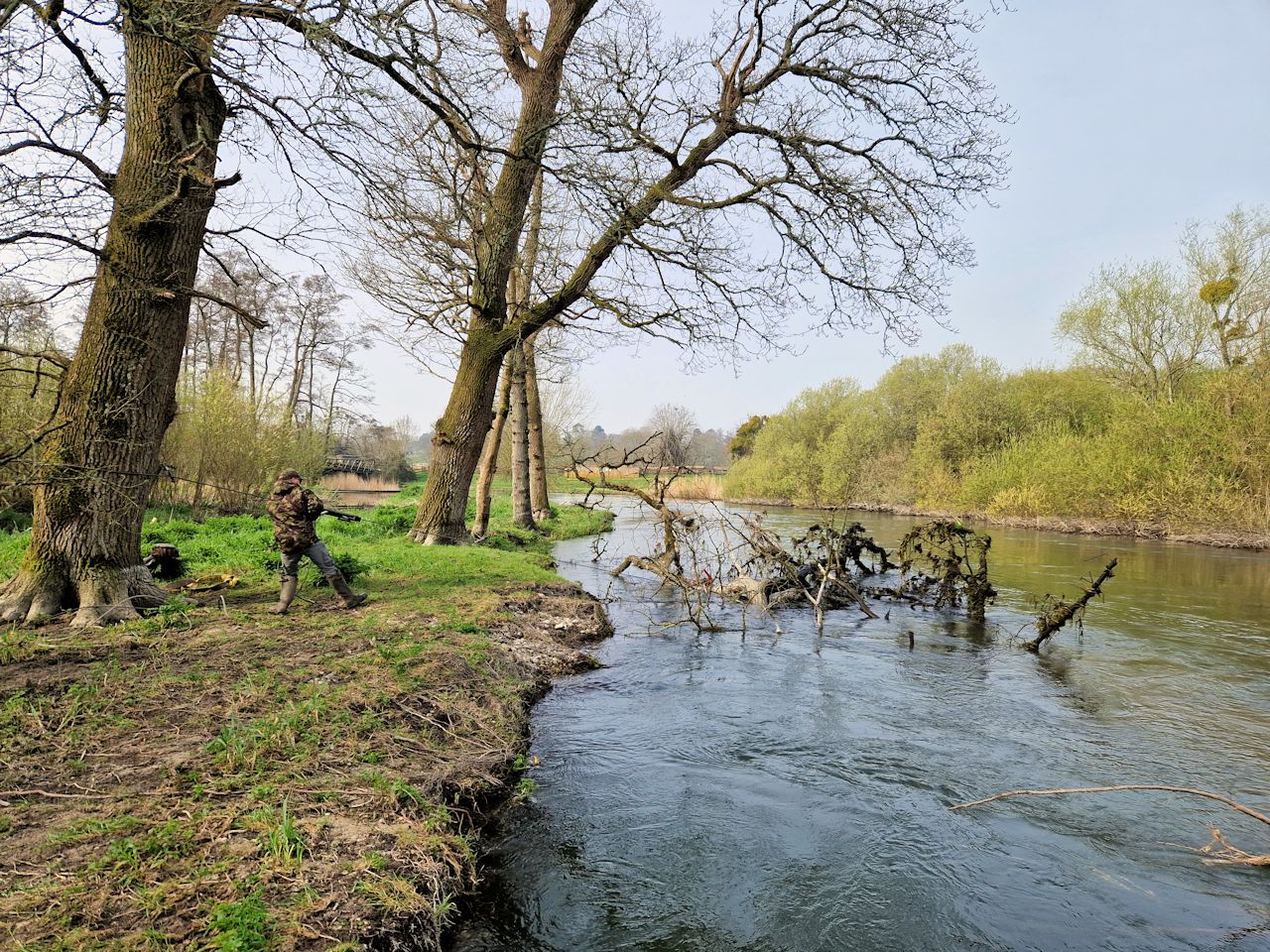
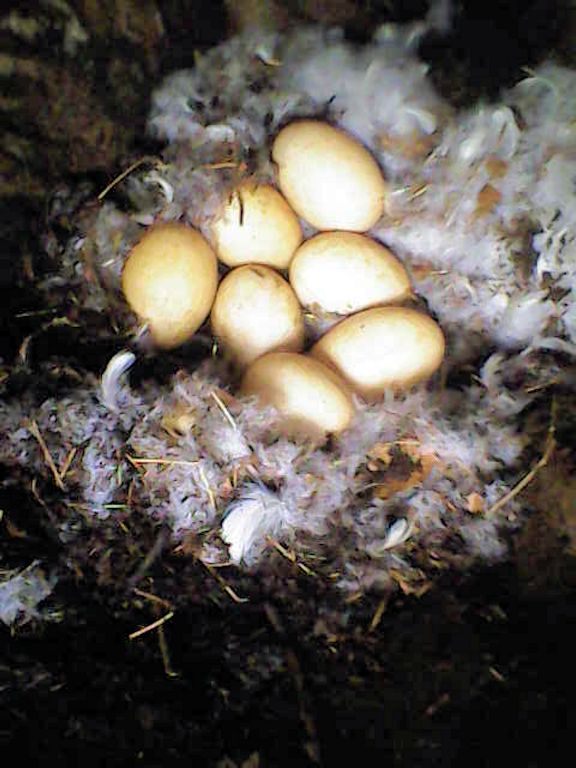
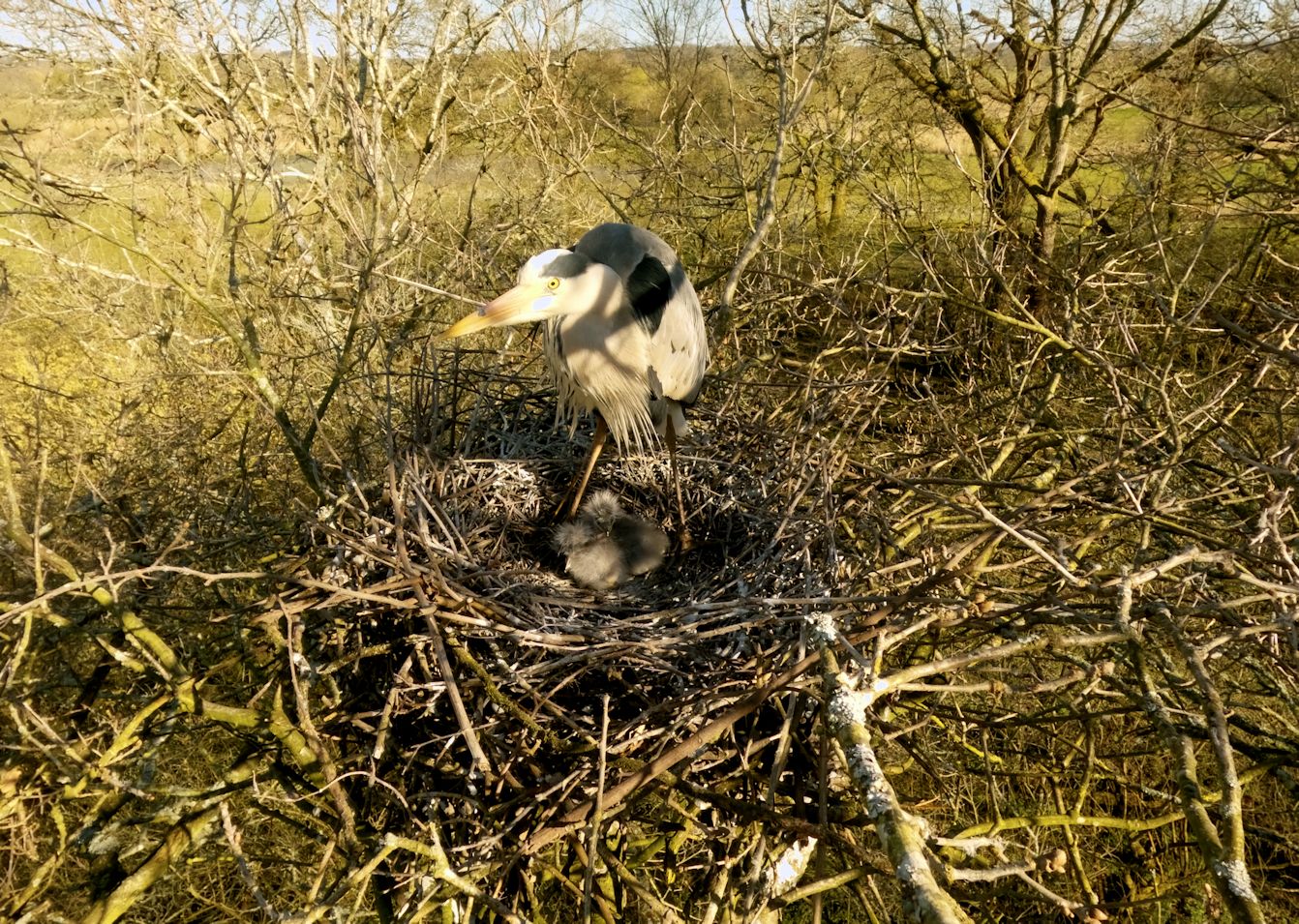
Jonny and I spent the best part of today attempting to winch the large fallen oak out of Broadmeade Pool. We managed to remove the head but I'm afraid the stick and root plate had us beat. Once the ground dries we will get the tractor winch down there and remove the rest of it. Whilst we were busy with the tree the bird population seems to be busy rearing the next generation. The middle shot shows a clutch of Goosander eggs, in a hollow tree in the Park. Manny kindly sent through a shot of the herons already with juveniles in many of the nests in the heronry.
Jonny on the Tirfor.
We managed to remove the snaggy top-wood, the rest will have to wait for the machines. I did fish through there this afternoon and whilst it is now fishable it certainly isn't easy.
21st March
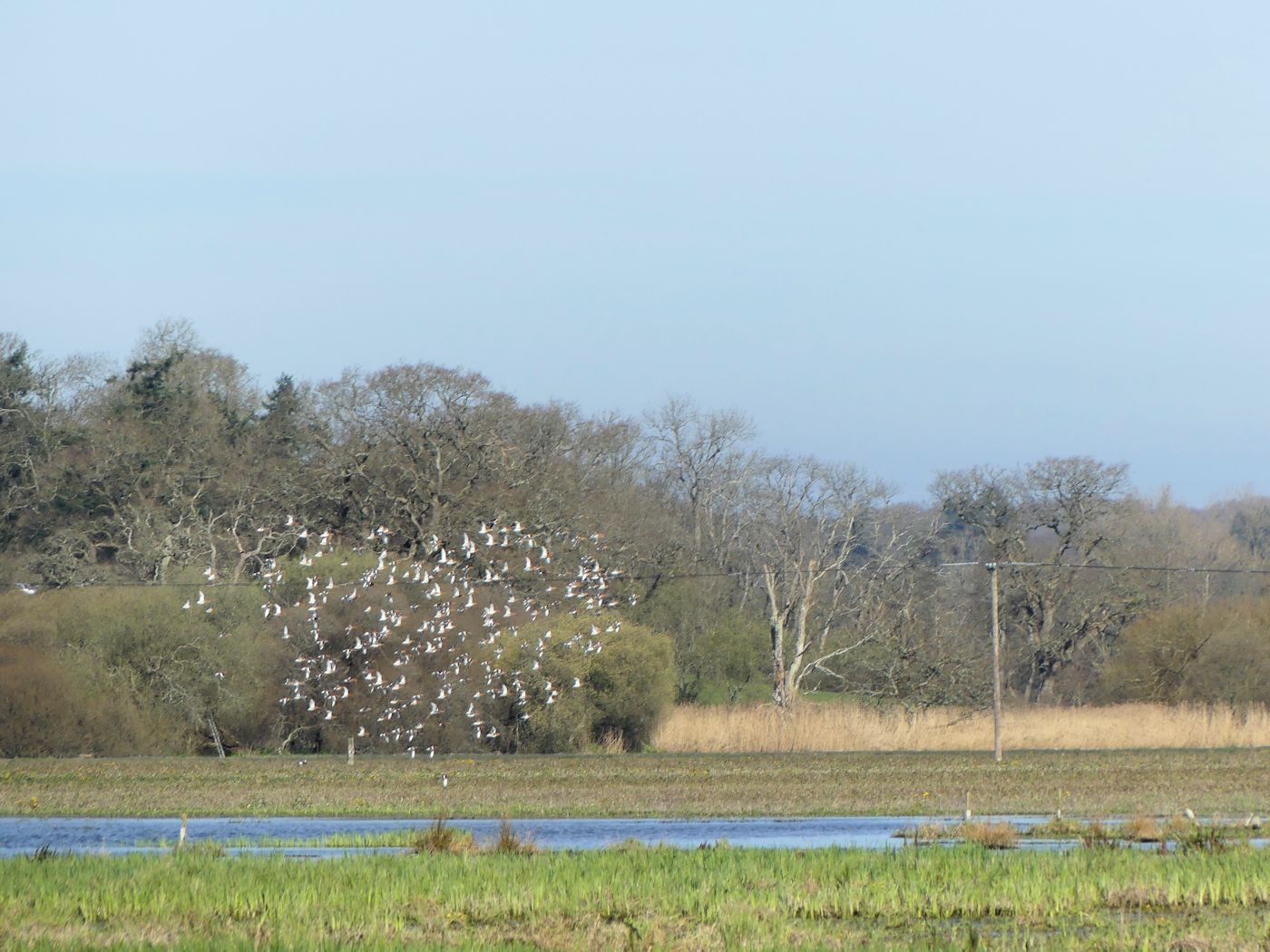
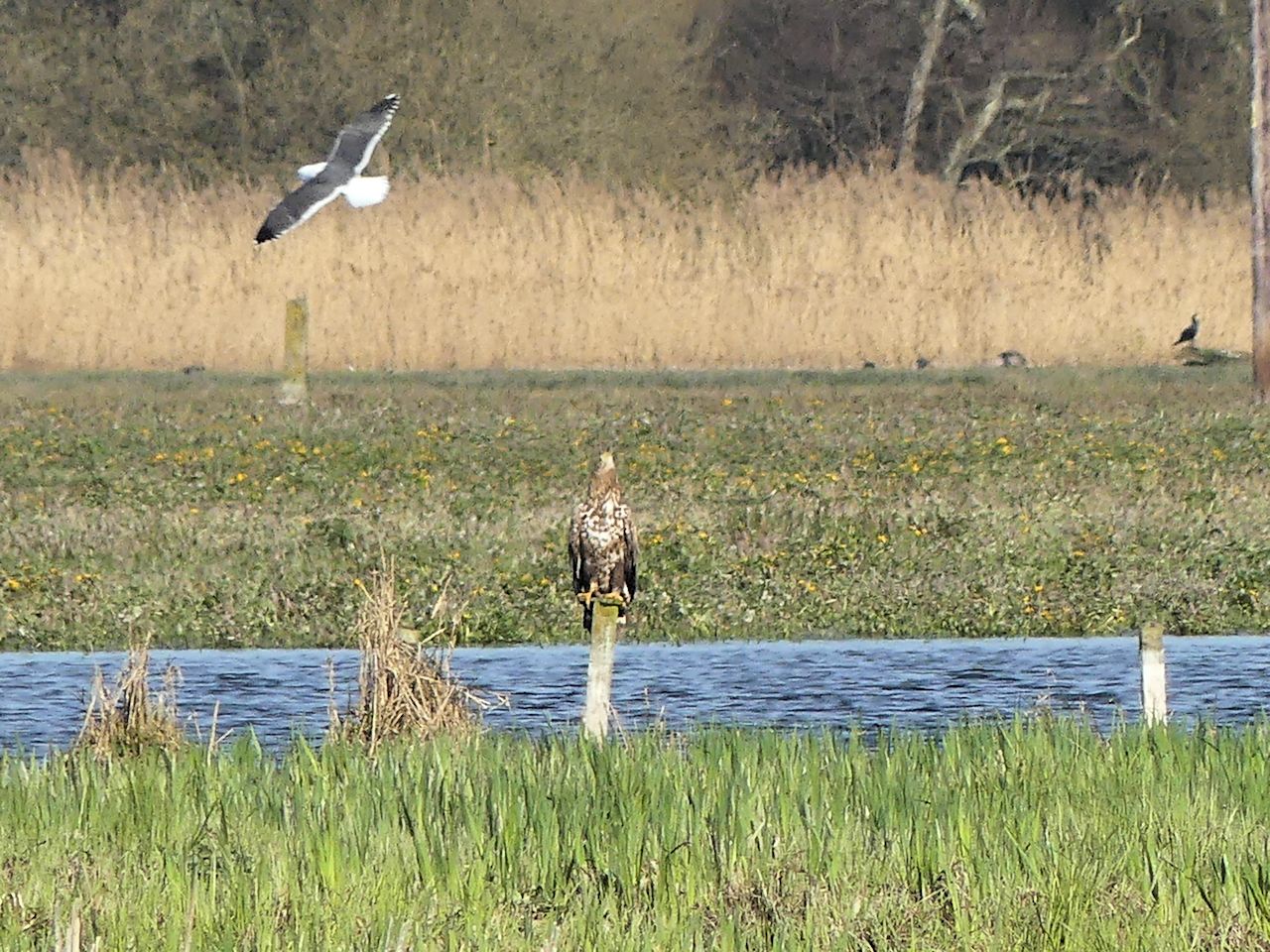
Above are a couple of shots from the marsh this morning. The first has the Black-tailed Godwits circling the marsh having been disturbed by a Marsh Harrier. I did a digital count of the flock and there were 267 (digital count) of them feeding on the receding flood this morning. The second a White-tailed Eagle being mobbed by a Black-backed Gull. I believe we had three in the valley later on today.
Below is a list of some of the birds present on the marsh this morning. I recorded all of these stood in one spot, so as not to disturb the early morning feeding. This is not a reserve, or some rewilding adventure, it is private working farmland, when the weather permits that is. It wasn't eligible for the carbon off-setting scheme as the ecology was at such a high quality due to the management over recent decades. We would have been better off trashing it with a dairy herd or aquaculture if we wished to enter those very lucrative schemes. Another Defra wonder scheme designed by a desk bound genious.
>br/>
Cormorant 7.
Crow 4.
GBB Gull 2.
White-tailed Eagle 1.
Great-crested Grebe 6.
Coot 83.
Black-tailed Godwit 267.
Little Egret 8.
Great White Egret 1.
Snipe 1 (probably many more but that one flew by)
Mallard (dozens).
Gadwall (dozens).
Shoveler 6.
Redshank 6 (paired off).
Heron 7. (The heronry has 15 occupied nests at present)
Egyptian Goose 14.
Canada Goose. (dozens)
Greylag 18.
Red Kite 1.
Buzzard 2.
Lapwing 14. (paired off)
Mute Swan 4. (Avian flu has devastated our swan population)
Goosander 4.
Wigeon 34.
Reed Bunting 2.
Stonechat 2.
Cettis 1.
Goshawk 1.
Curlew 4.
Oystercatcher 2.
Kingfisher 2.
Shelduck 2.
Marsh Harrier 1.(male)
As I got out of the truck the usual woodland birds were in full voice, Chiff chaff, Nuthatch, Chaffinch, Robin etc
By no means an exhaustive list but it does go some way to illustrate the value of working farmland in the valley if carefully managed.
20th March
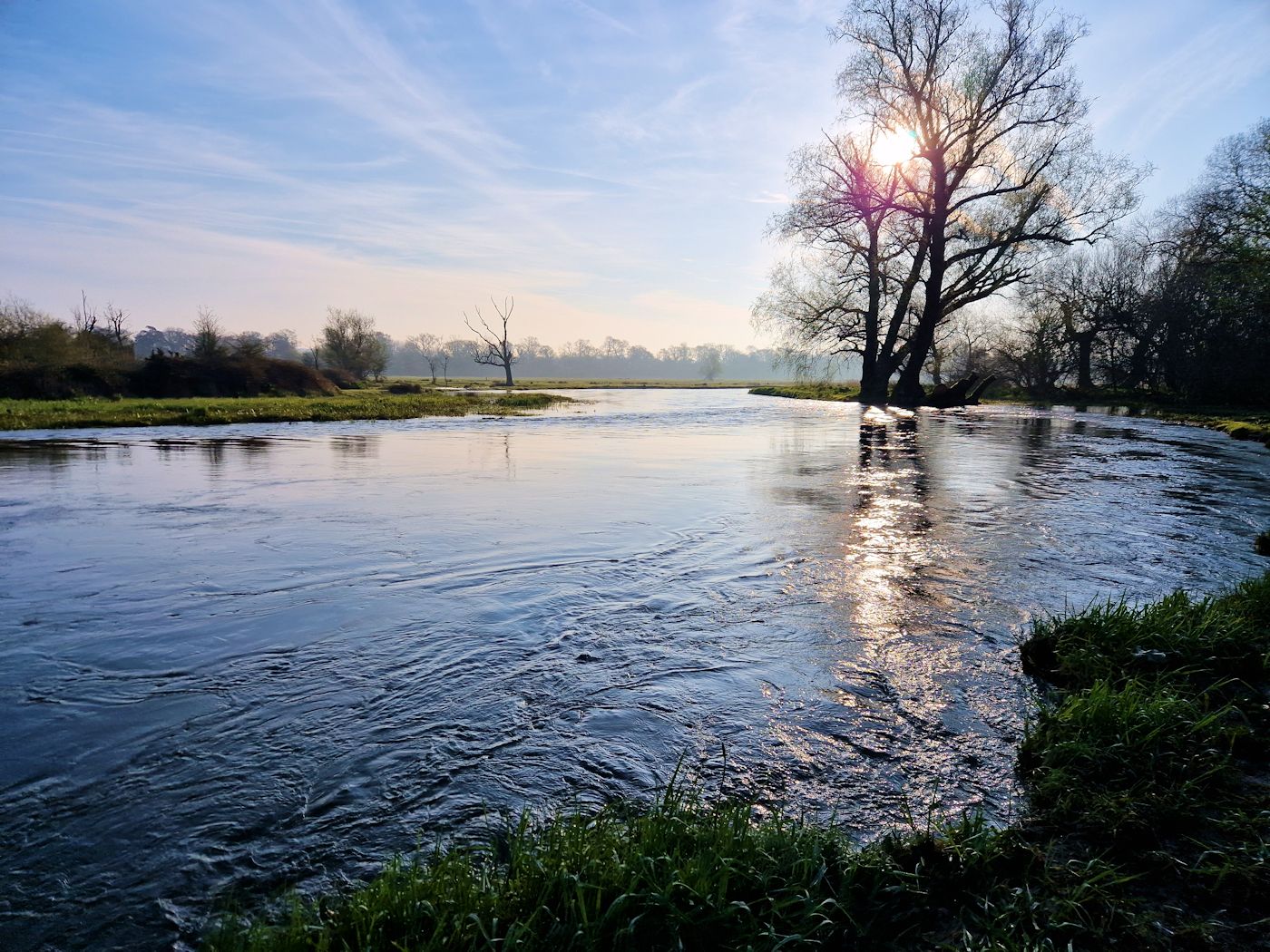
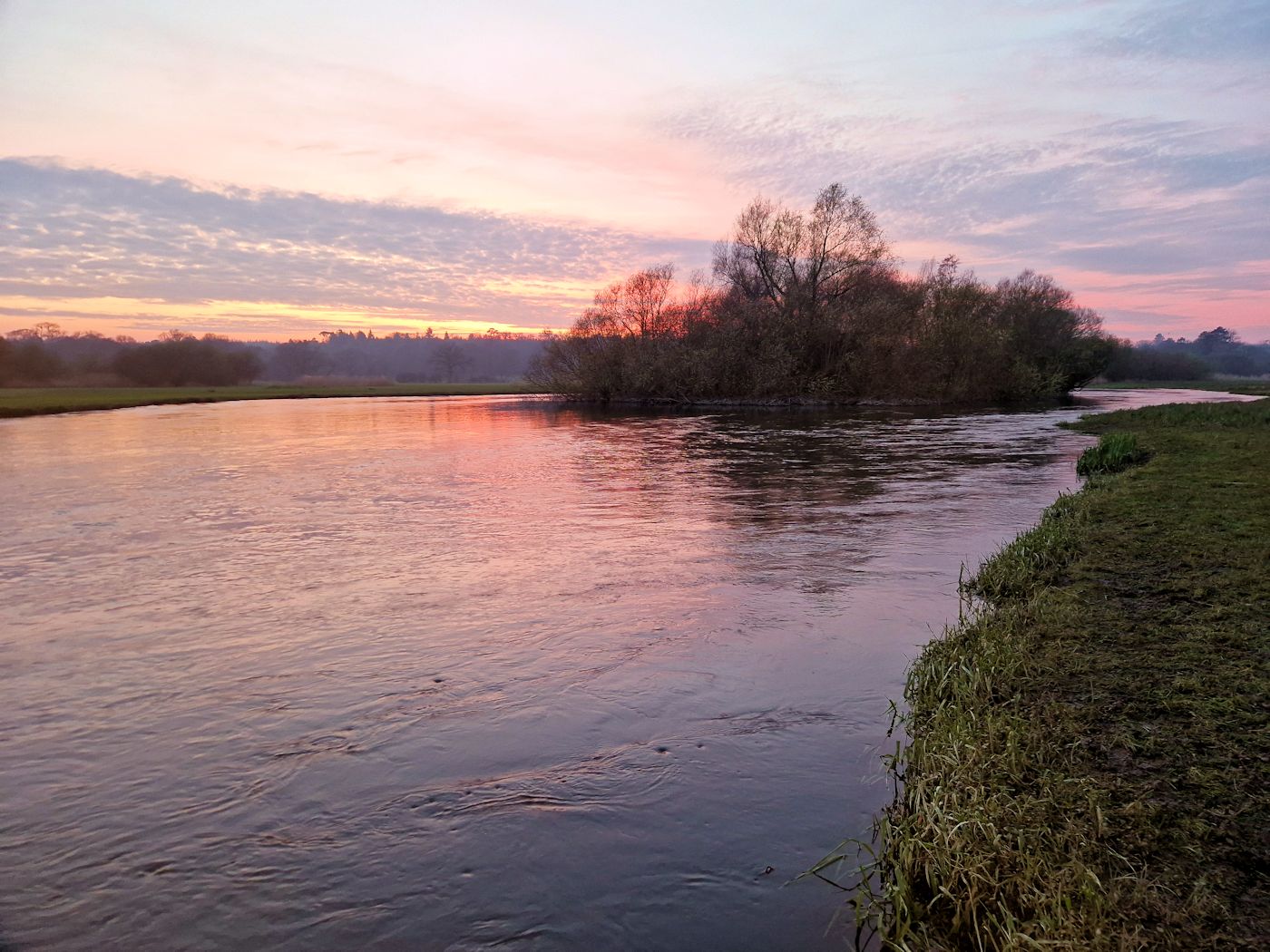
Dawn and sunset on the Spring equinox.
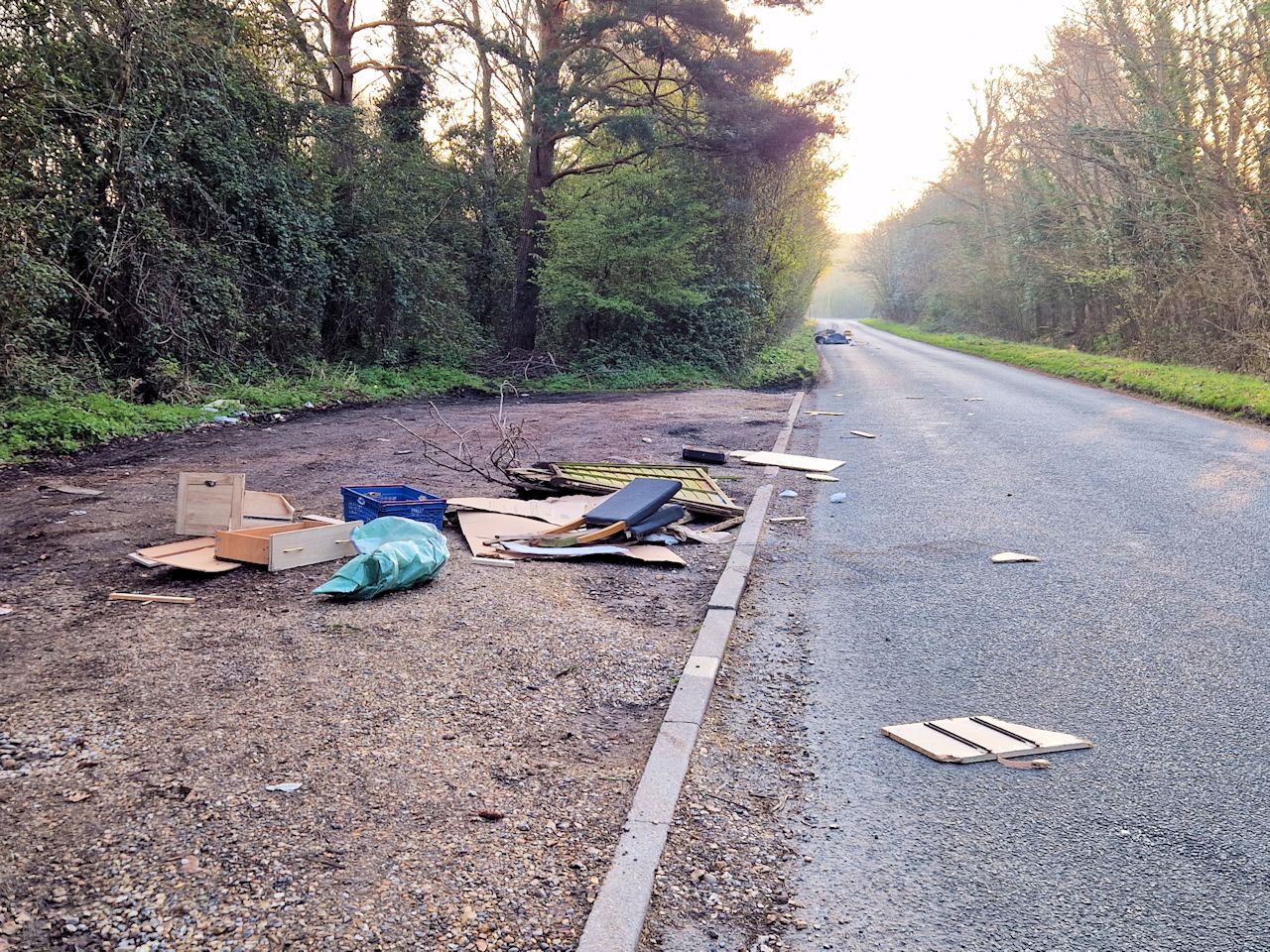
The New Forest District Council free tip has been working at capacity in recent weeks. It must have cost tens of thousands of pounds of public finance to have cleared that site over the decades the council have failed to resolve the issue.
19th March
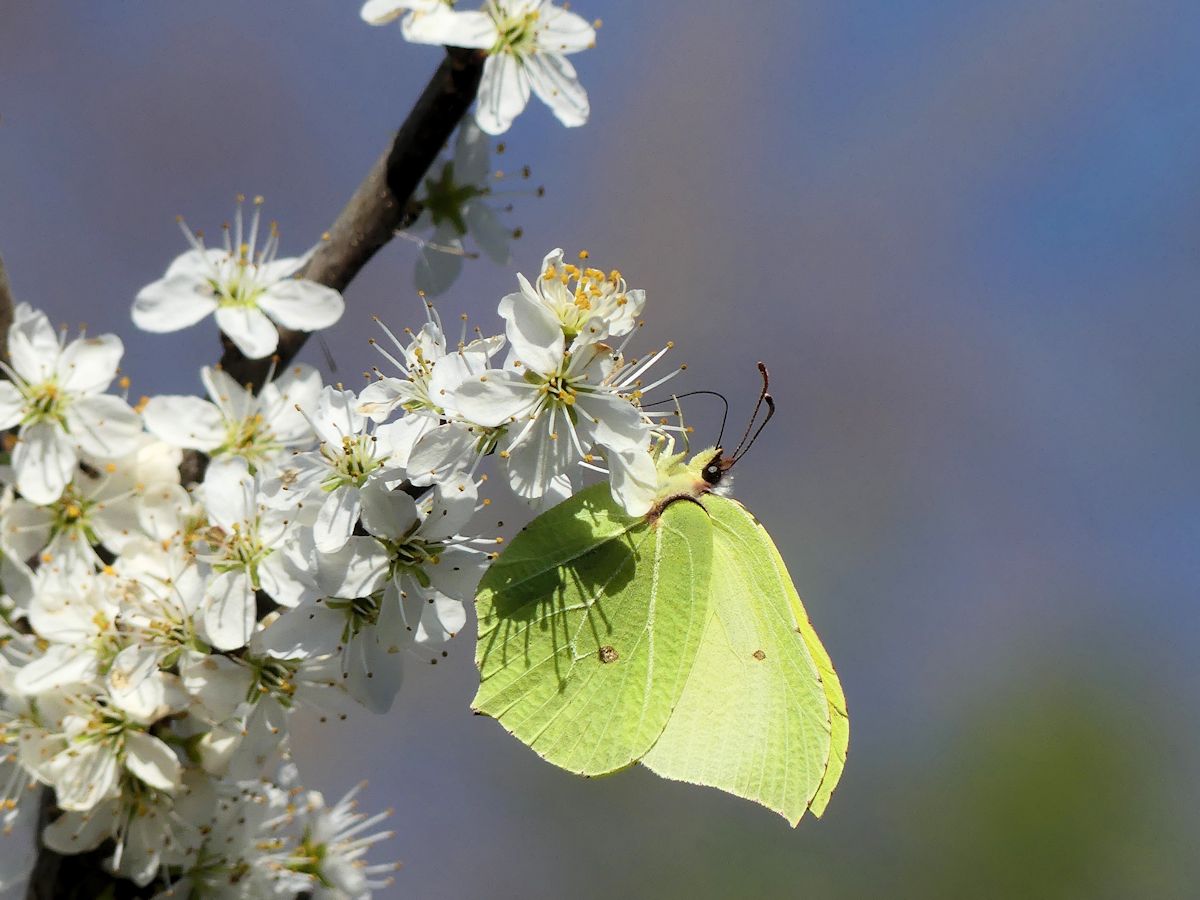
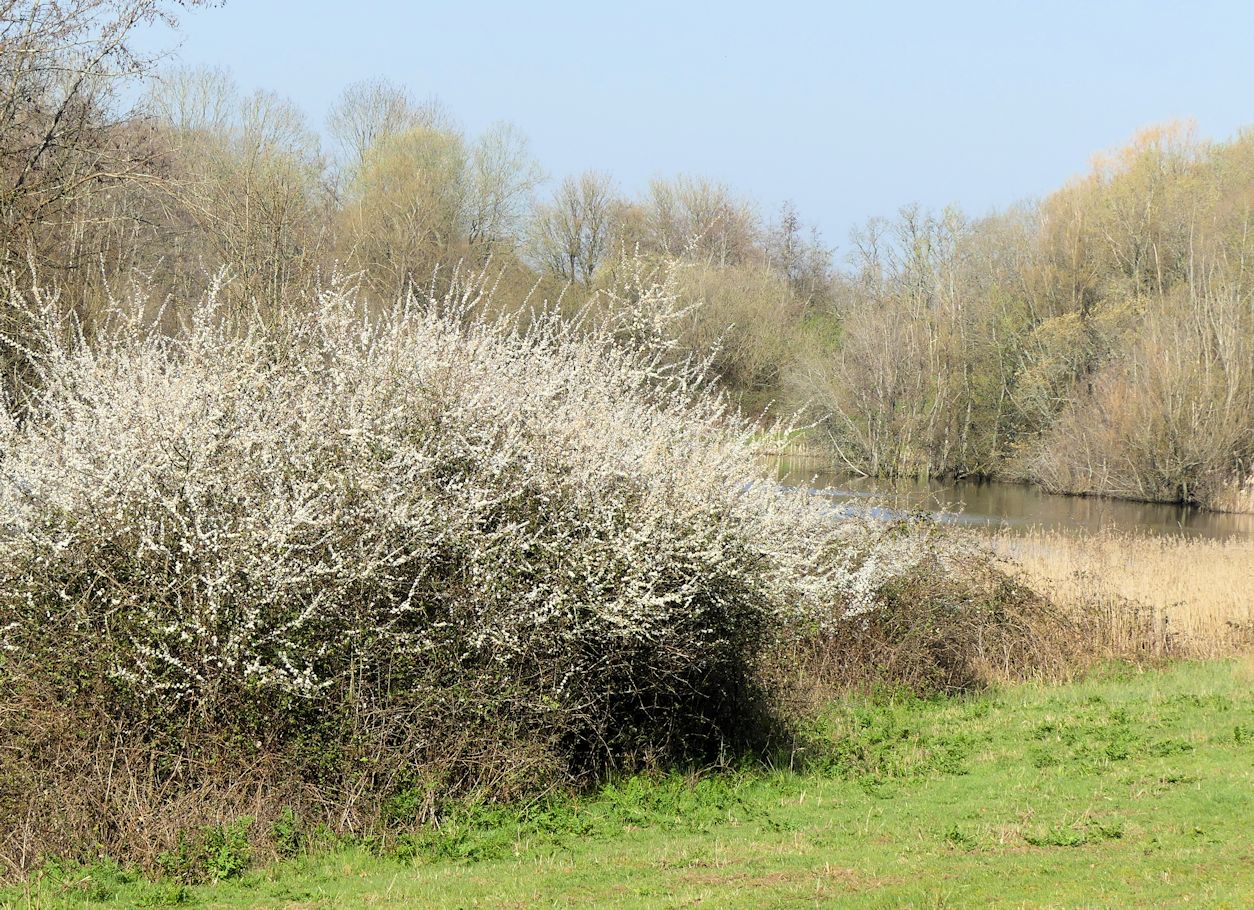
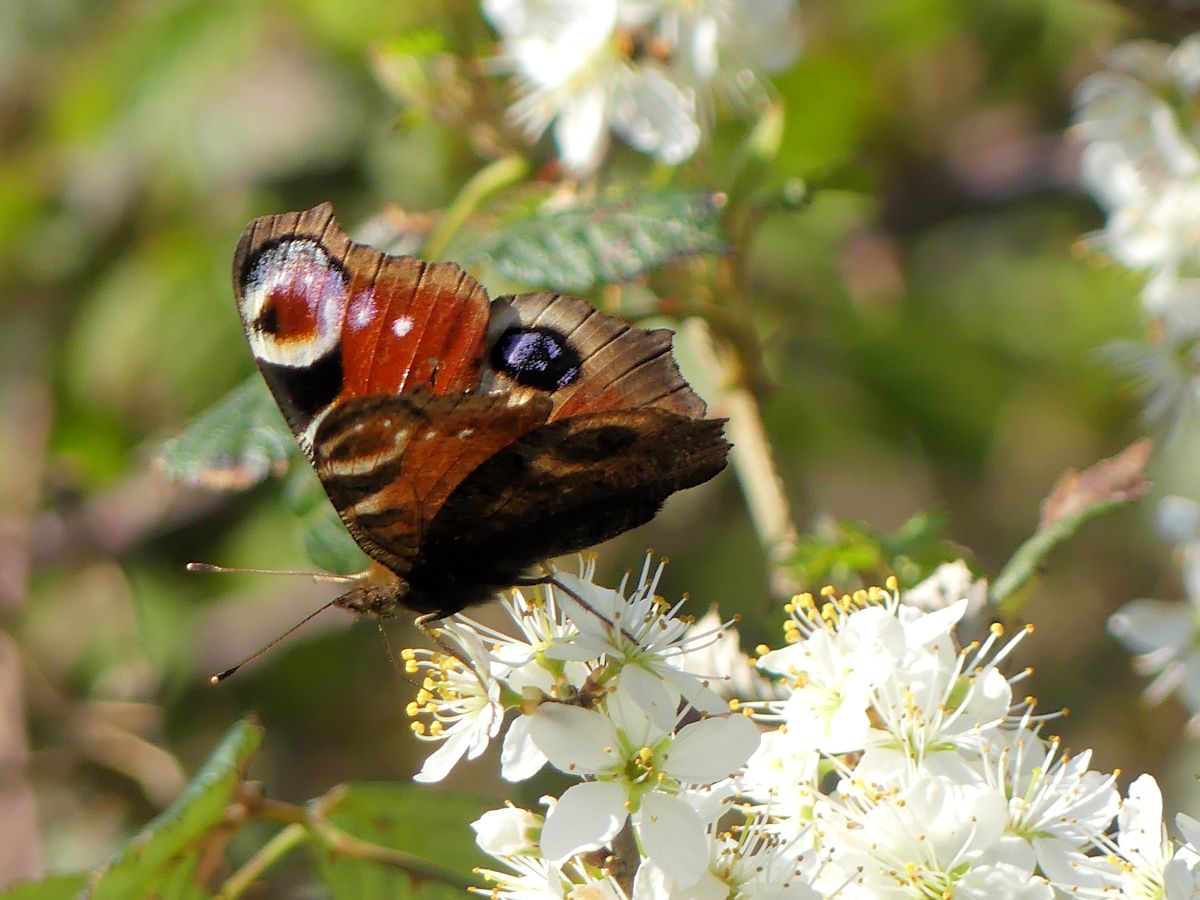
Breakfast pit-stop, provided by the many clumps of blackthorn currently in bloom about the lakes. As the temperatures begin to rise, after the chill of the night, the emerging butterflies head for the many blackthorn to charge the batteries for the day. Its actually more involved than may at first appear. This all too often overlooked, scruffy bush, actually staggers coming into bloom in an effort to outwit the precarious vagaries of Spring weather. Many of the bushes, in more sheltered or shaded areas, may spread the period of coming into bloom over two or three weeks. This provides a more prolonged supply of nectar for the overwintering butterflies to hopefully emerge at a time food is available. Today, some of the clumps had as many as a dozen butterflies making the most of the pit-stop.
18th March
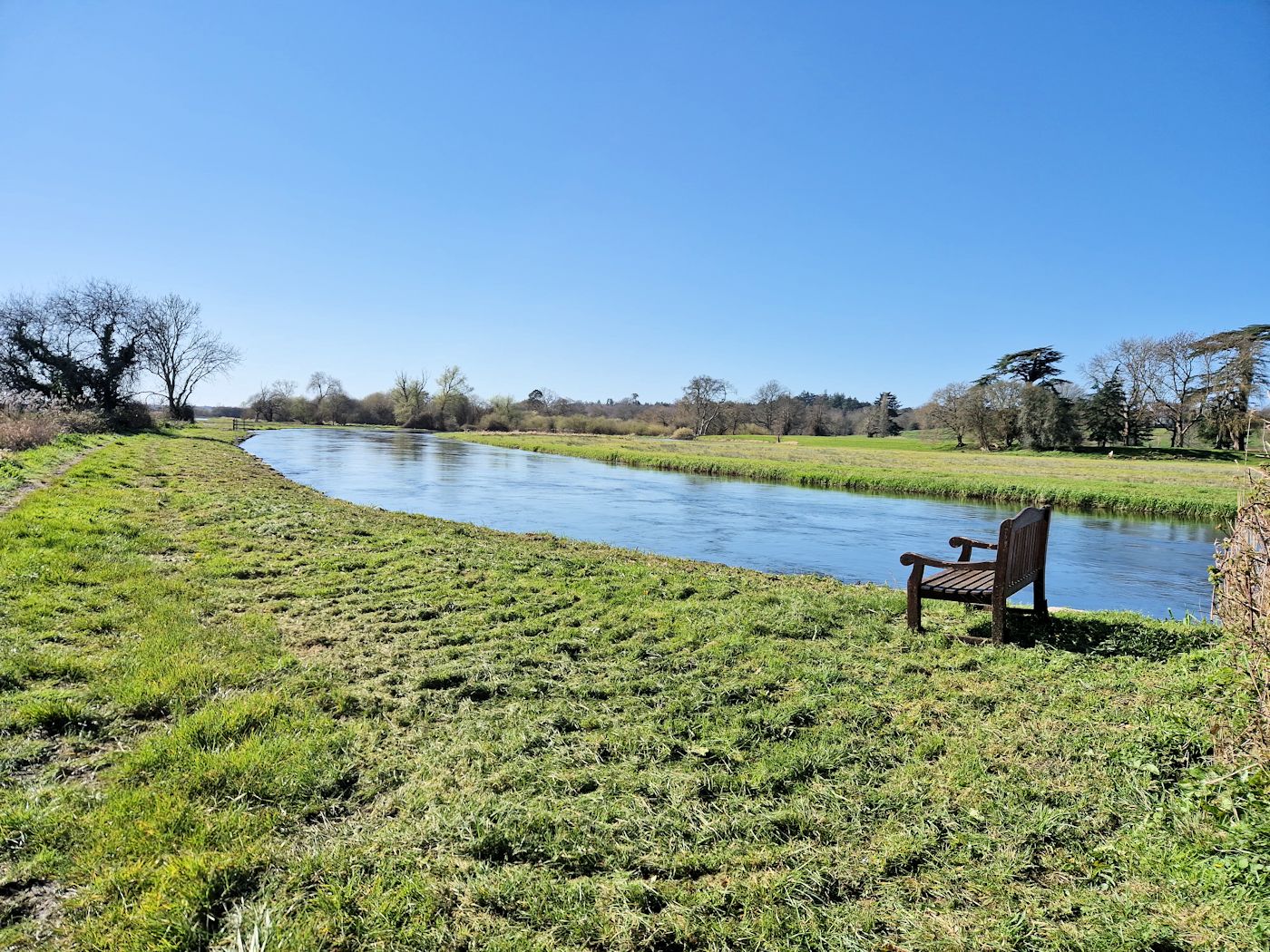
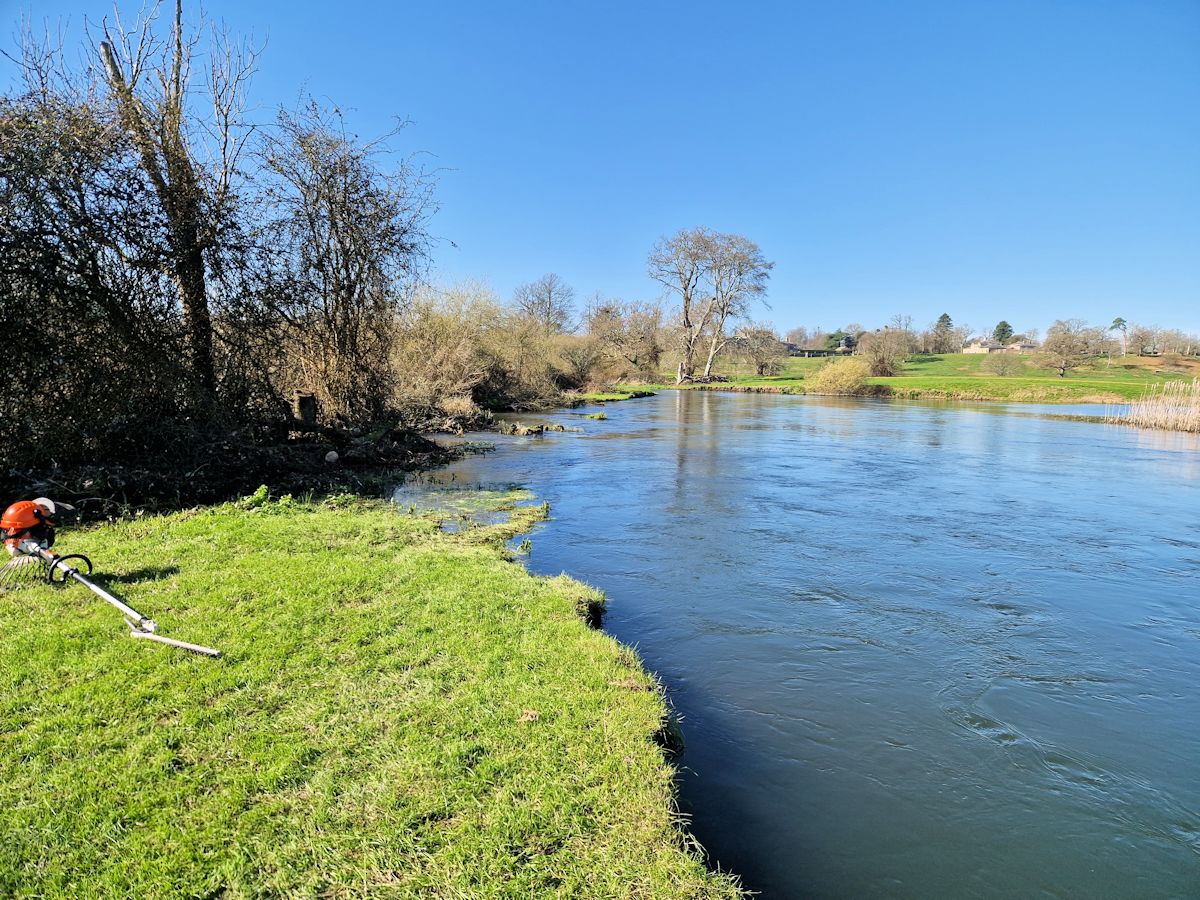
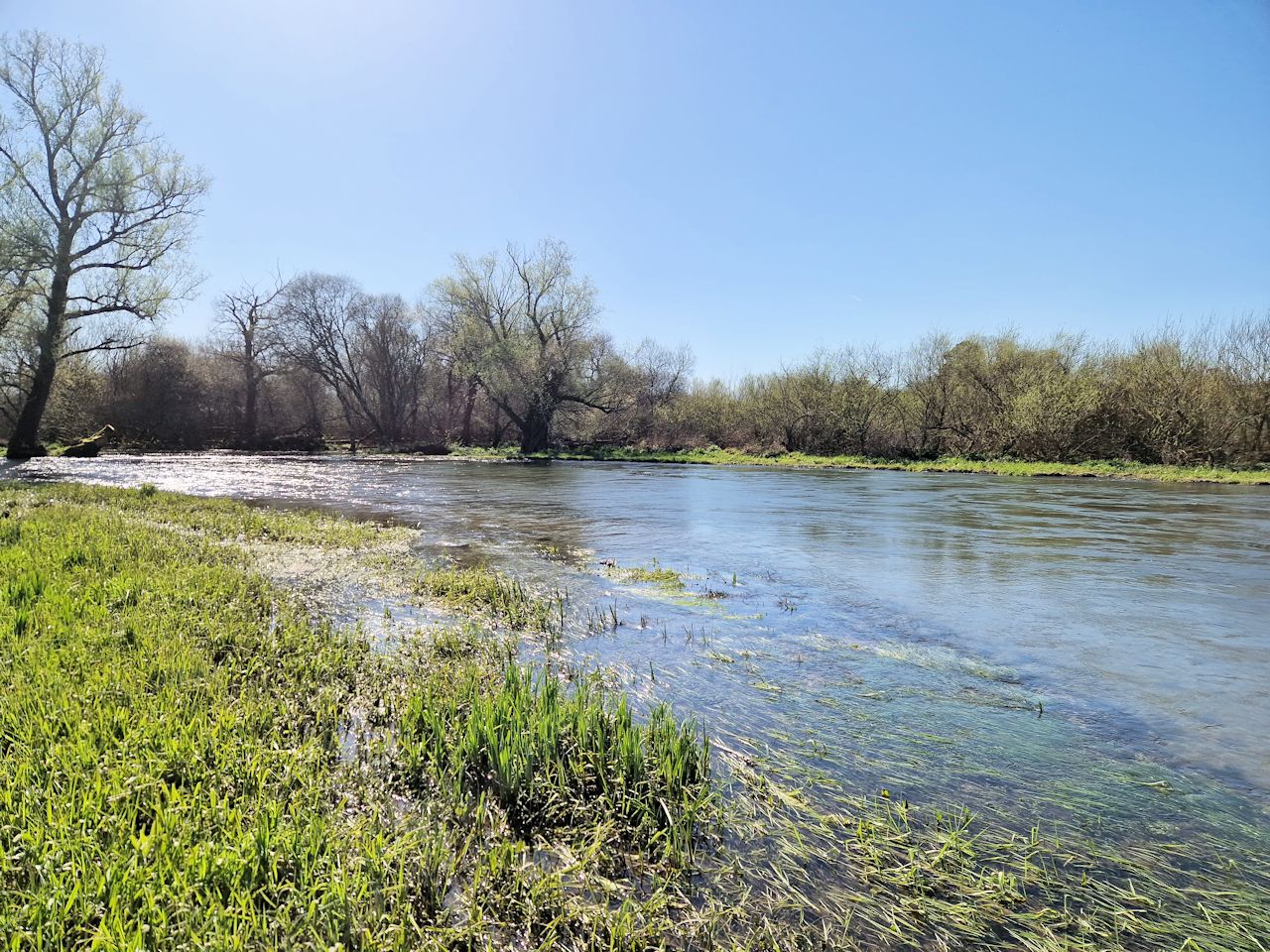
With the water dropping I was able to get down to the head of Park Pool and clear some of the flotsam and brambles that blocked the path. It is now possible to fish from the seat to the tail of Pipe Pool. Care has to be taken at the head of Park as there is still a channel that requires careful wading. Alternatively head upstream from just above the pipe to the corner at the head of Park. It may be a rather circuitous route but worth it to fish down from the head of the pool, through the middle run, to the tail below the willows. Its a big fish holding pool
17th March
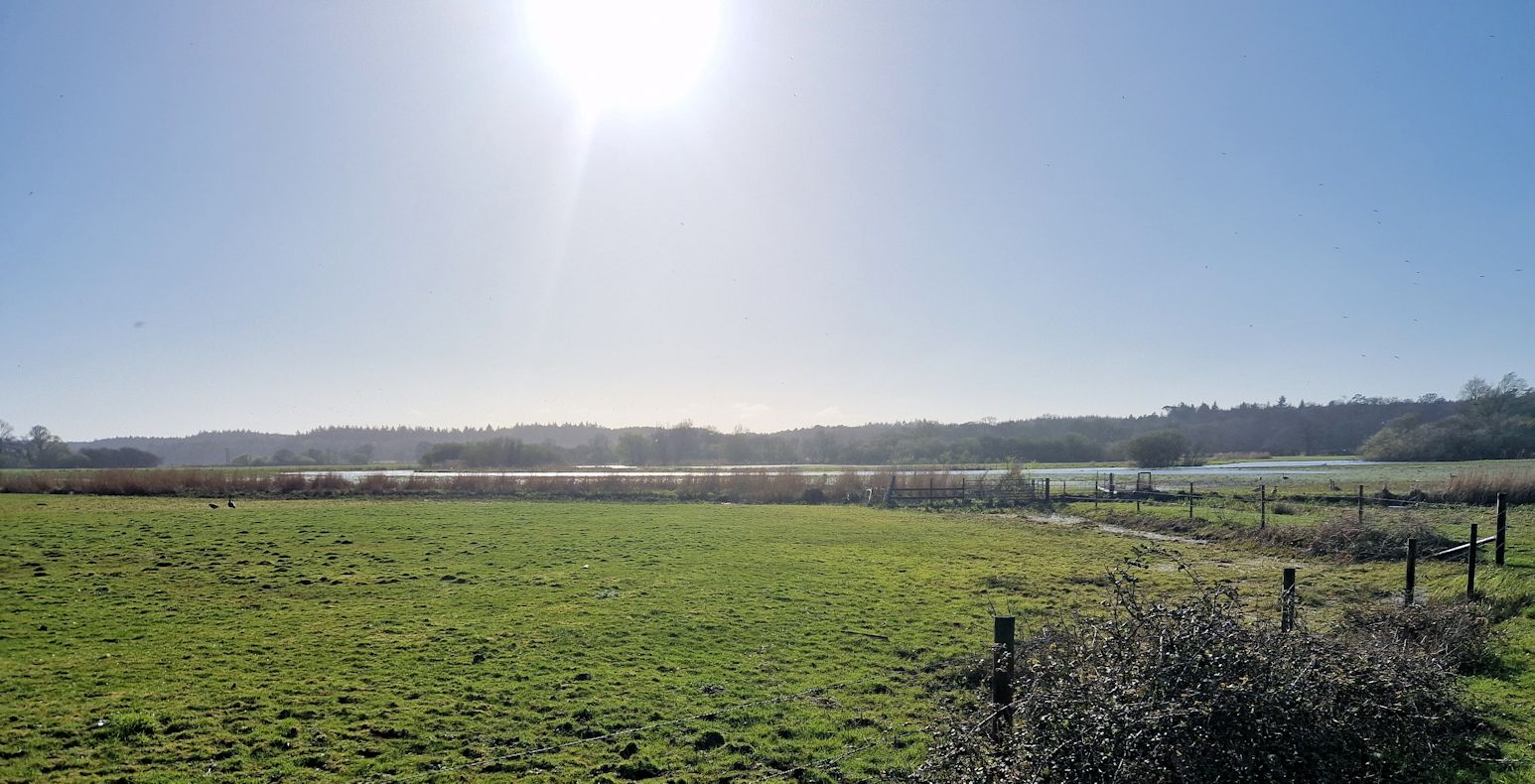
I should write the following with caution for fear of jinxing the return to some sort of normality we enjoyed today. The river continues to drop back into its channel, grass can actually be seen in the flood plain, the sun shone and we had more rods out today than for well over a year. We didn't see a salmon landed but there again you can't have everything. It was very satisfying to see seven rods on the bank today with almost every pool between Ibsley and Ashley fished. I didn't get down to Lifelands or up to Hucklesbrook so there may have been even more rods out than the seven I bumped into. Its been a very long time since the fishery felt so alive, definitely a good day on the river.
14th March
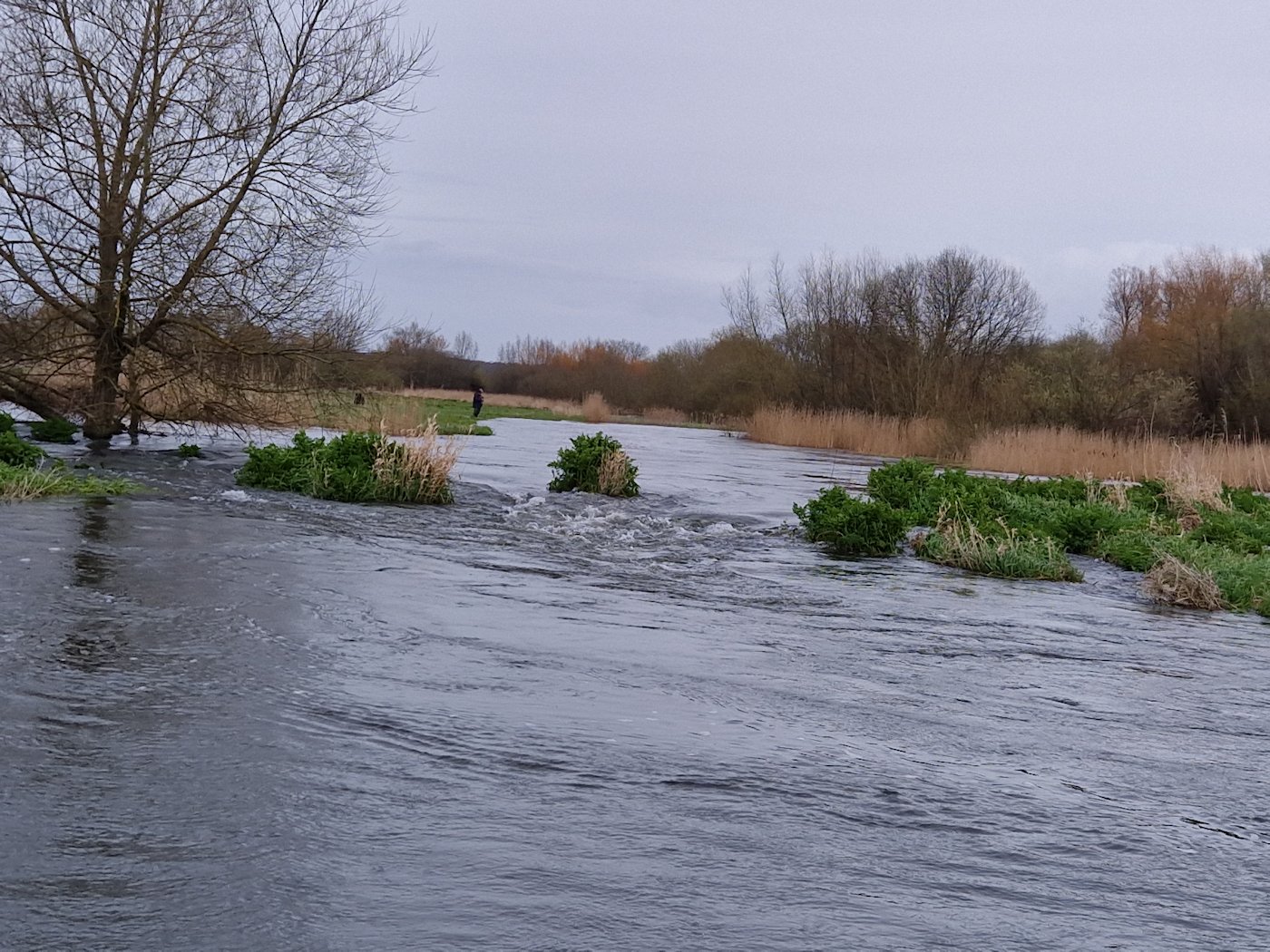
There can be very little of the bund left to be washed away. Don't be tempted to wade the channel, it's over eight feet deep.
The river coarse season has drawn to a close in yet again a most undignified fashion, the third consecutive closing flood. Despite the high water those that did brave the rotten conditions were rewarded with some stunning fish. If you could find them the chub still continued to feed with one or two incredible bags of fish to seven pounds. Very few barbel came out in the clear water, I only heard of one in the final week. Perhaps the saving grace from what litttle dry land that could be found were the pike with teh best going 35.14 with good numbers of 20's to compliment her. I'll do a more comprehensive report when I have more time.
PS
Two barbel in the last week! Darrel has just emailed me the result of his last visit yesterday.
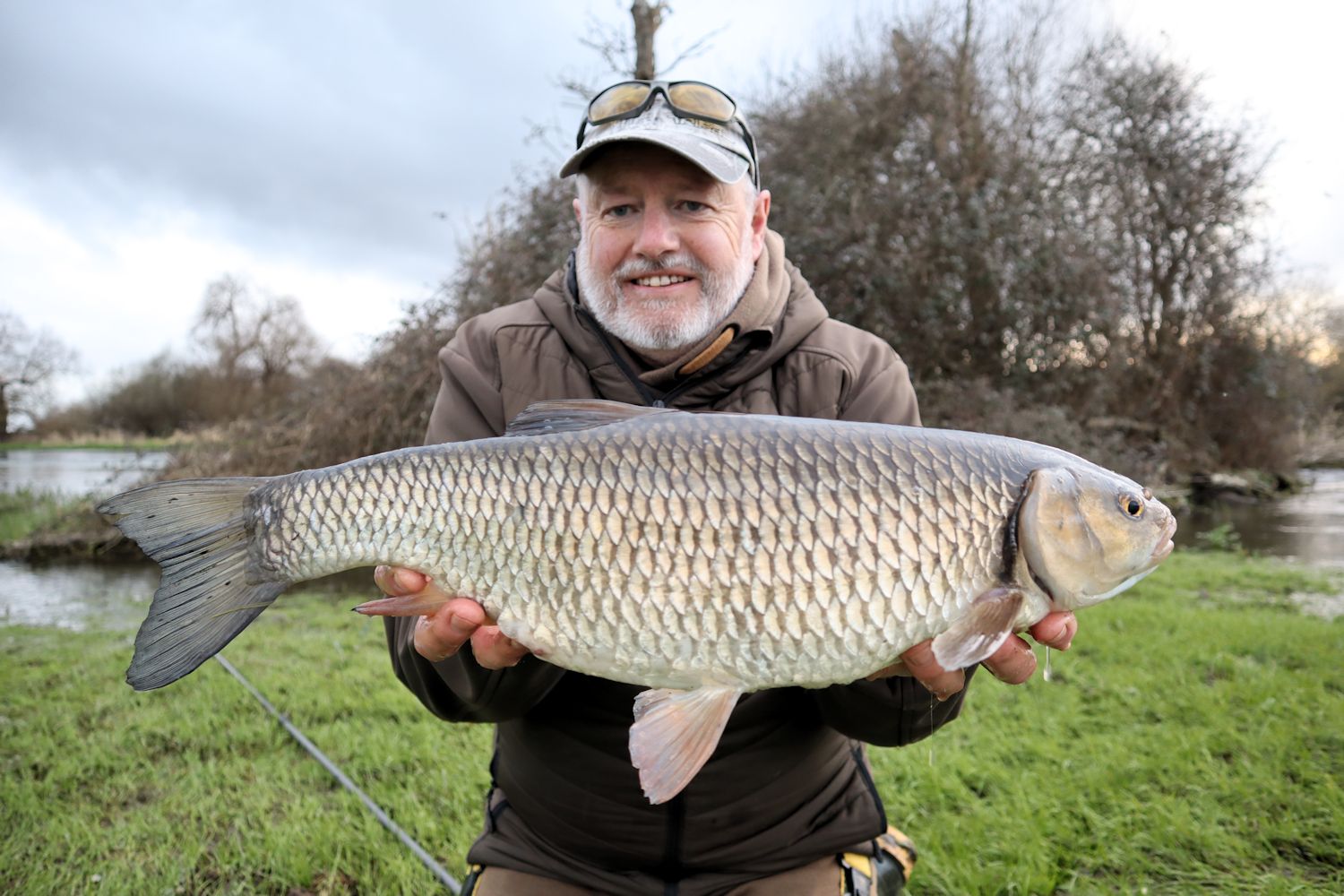
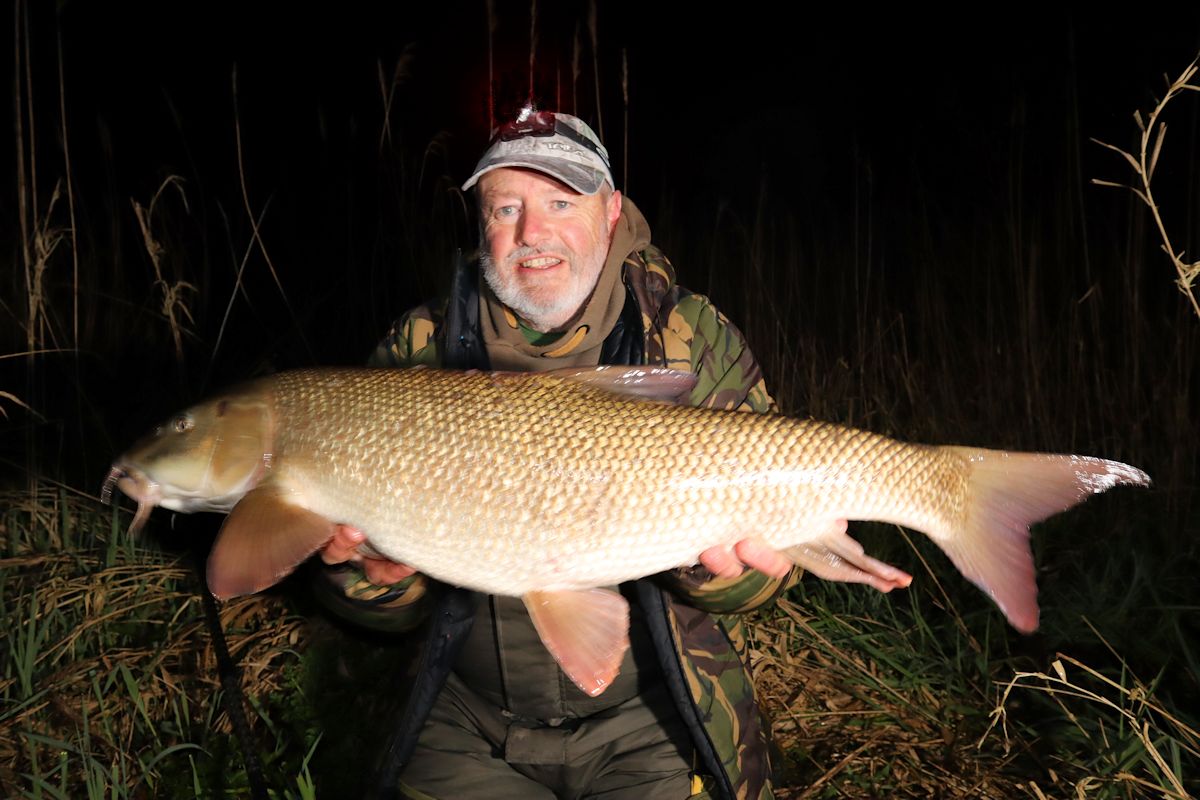
That's a pretty good way to wrap up the season, 6.05 chub and a 14.12 barbel. Well fished Darrel, great result and thanks for sending through the report.
Knappmill counter report February 2026.
Make of that what you will. Perhaps the clear water is the excuse we need to hang onto in an effort to explain our lack of success!
13th March
The water level data that displays the height above which spinning is permitted (1.18m) is now once more available on the East Mills Flume website.
12th March
I appreciate that the lack of a working water level guage at the East mills Flume has given rise to concerns over the level above which spinning is permitted. Unfortunately debris on the controls has made accurate information impossible to achieve, thus the data is not being published. Once it is deemed safe to clear the debris the website will be back in action. In the meantime the current levels are quite clearly above the cut-off level so spinning is permitted. I am reliably informed that until accurate data is once more available the EA will not be chasing anglers to ensure adherence to the rules.
Whilst on the subject of spinning I have promised several rods that I will put up my interpretation of the spinning rules. Unfortunately the conditions related to hooks etc seem to have been imposed without consultation with a salmon fisherman. The barbless element doesn't worry me as I have fished barbless for years. Unfortunately hook sizes 4 and 6 are fine with flies that are in the region of a couple of inches, or less, and relatively slim. When attached to a three or four inch lump of metal or wood ensuring the hook sits proud of the preceding junk is not so easy with these small hooks, perhaps adding size 2 would not have created too many issues. Assist hooks are not possible with singles, without unbalancing the action, so we are left to adapt as best we can. Below I have put up a photo showing my interpretation. Its not definitive by any means but it does offer a realistic chance of setting the hook. Adapting the spinners is a different matter, a steady hand and a pretty comprehensive tool kit and finding the bits are the order of the day.

The important feature of both set-ups is that the hook is able to articulate independently of the body of the spinner. In the case of the Mepps a simple split ring. The Devon is a little more complicated involving a complete rebuild of the mount. With a Devon the body rotates on the line, requiring an abrasion resistant mount, be it heavy mono or wire trace. I have used wire in this example in the hope bite-offs from pike will be reduced.
11th March


It's definitely a daffodil year as the wild dafs are putting on a brave show across the Estate. The dafs provide a wonderful setting for the specimen oak and the surrounds of the lambing shed. Inside the shed things are getting busy as several ewes and lambs were brought in to shelter from last night's driving rain. A night under cover had them ready to enjoy today's sunshine as they are returned to the paddock once the morning chill has lifted.
10th March

It looks as if Phil and Milli are in for a busy couple of months as lambing gets underway.

One of the noticeable things about this prolonged flood, as in similar high water years, on any but the coldest days there has been a massive hatch of midges, or gnats. I wouldn't know what the difference is between a midge and a gnat, suffice to say there have been millions of them drifting across the flood on many days. It begs the question is there anything out there making the most of the hatch and filling their stomachs. I have concerns that after a third year of prolonged high water our S1, and S2, come to that almost any size of fish, may have been flushed through the system. The miles of carriers and oxbows that in a normal year would back-up and provide slack water sanctuary, have been inundated and scoured out as the water has been out on the flood plain. It will be an anxious wait until the clear water of next summer allows to assess the stocks.
7th March


One of two pairs of fed-up looking Redshank that have arrived back at their breeding sites, only to find them completely underwater for the third year in succession. If the high water fails to drain away sufficiently for them to start nesting in the next few weeks do they abandon the site and nest elsewhere, or miss a years breeding? The Lapwing haven't even bothered to turn up, they are sat about on the islands in the nearby gravel workings. The presence of a WTE most days, also acts as a deterrent, certainly to the ducks if not the smaller waders. As the eagles fly across the marsh the geese and ducks scatter in all directions, yet I've never seen them catch a goose. I guess they're working on the better safe than sorry principle!
4th March

The water is finally starting to drain from the watermeadows.

Its now possible to cut back across the point to the head of Park Pool on the left bank. Should you get over to fish the head of the pool be careful about wading down the gravel bar. If you wade too far downstream you will find you have deep water on both sides of you and have to wade back upstream to get back to the bank.


Butterfly have been emerging in large numbers with the recent warm days, Peacock, Brimstone and Comma fingers crossed the early start to the season doesn't catch them out in the weeks to come. Not only butterflies but bumblebees but solitary bees in large numbers on the sunny, sandy banks. I'm not able to identify the species involved but they were certainly enjoying today's warmth.
3rd March

I bet this lot will be glad when the water eventually drops back as they have been stuck at the top of this scaffold tube, out in the flood, for eight weeks.
Hummingbird Hawkmoth.
Worth planting the daphne just for this one sighting of an early Hummingbird Hawkmoth. Anne managed to video it on her phone out of the lounge window, a really positive result for the pollinator friendly planting and a lovely record.
2nd March


The sun came out and all is well with the world. Well almost, our second pair of beavers seem to be settled and active in their newly established territory. The Douglas Fir regen is looking better than might have been expected considering how dry it was last summer. Perhaps the not so well bit is that the car that was abandoned in the flood at the end of January has suffered a further indignity. It would seem that now the road is once more passable someone got fed up with driving around the wreck and has tipped it off the road. I don't think it was ever going to be a salvage job after having been out there a month as it was. It's certainly a complete right-off now.
26th February
An update on river conditions for rods keen to get out on the bank.

Blashford Pool remains flooded and difficult, especially if the wind is from the south or south west. The link below gives an update on the state of the meadows.
Blashford looking downstream to the south.
The water remains out in the meadows so come prepared.


The wild daffodils are looking well, bringing a welcome splash of colour to the woods.

It looks as if we may have a second family of beavers with us.
23rd February


The gorse is putting on a bold display that has been warmly welcomed by the pollen and nectar dependent insect world. In the brief hour of sunshine at midday the honey bees in the wild nests were flying strongly in search of this vital early season food supply. As well as the bee population enjoying the warm spell the over wintering butterflies appeared within minutes of the sun breaking through. Along the more sheltered sections of the lakes side track I spotted my first Peacock and two Brimstone butterflies on their first flight of the year. As well as a welcome sight for the bees and butterflies the hour or two of unseasonal warmth and sunshine certainly lifted my spirits after what has become a very long and very wet winter.

As well as the first signs of Spring I received another message today that cheered me up. It came in the form of a Whats App from Roger with a photo of what was a weighed and I stress weighed, double figure bream. I have long been told of large bream being landed by the carp guys but this is the first anyone has actually weighed, so I am most grateful to Roger for taking the time to do so and confirm these super fish do actually exist.
I'm not sure Roger looks overly delighted with landing a bream but his stoic feat of weighing the beast will surely be rewarded.
Knappmill counter data.
Now having read that have a look at the entry I put on the diary back in 2017. Read it with the fact the Avon fishery is dependent on MSW fish, not grilse. If we wished to go into the potable water supply industry and applied for consent to put such a structure across the river, it would not even be considered.
24th November 2017
As many of you are well aware I am an ardent supporter of removing barriers to the passage of migrating fish. As such my favourite website at the moment is “Dam Removal Europe”
Back to the dam news and what was particularly of interest to me was a paper produced at Glasgow Uni. “The impact of a small-scale riverine obstacle on the upstream migration of Atlantic Salmon” (Newton et al, 2017) As I was previously saying, my often expressed argument that to allow many of the structures on the Avon to operate as they do is damaging to the best interests of the Avon fish population, would appear to be supported by this paper.. In fact this paper would seem to add considerable support to this argument. To allow a water company to bang weirs across a river at the tidal limit and operate them for commercial gain is beyond the grasp of many in Europe. What makes it even worse in our case is that the EA support this barrier with their use of it as a means to count fish. This would also appear to significantly increased the risk as a jump to gain access to the higher level is often required, as opposed to a flume. I recognize they have to count fish to meet the requirements of the current legislation related to conservation limits etc I find it somewhat puzzling that this counting is implemented at the expense of the Avon fishery that they have an equally legislative responsibility to Maintain, Improve and Develop?
The impact of a small-scale riverine obstacle on the upstream migration of Atlantic Salmon
We are continually told by the EA that salmon can pass these barriers at times of increased flow. A fact I have never disputed. What I have always maintained is that these barriers; delay, exhaust, increase predation and add considerably to exploitation, in an unnatural and artificial fashion. I have always maintained if these fish were not confronted by these artificial barriers they would take up low water lies in the slower deeper sections of the lower river as they do in natural regimes around the world. In the case of the Avon I would expect the lower gradient beats at Bisterne, Tyrell and Winkton to be the chosen summer pools.
It would now appear someone else is thinking along the same lines and taking this problem seriously. Whilst our obstacles fall well down the height scale determining a small riverine obstacle <5m most of the potential impacts apply. In keeping with the old adage, the scientist is the most destructive element of any salmons life, you may also have reservations about method and means. Having said that, they meet all current methodologies and practices so are considered sound, peer reviewed science.
As one reads the paper the varying time span of delays is clearly shown. Apart from the obvious barrier its potential to adversely impact has other factor such as low flow and water temperature that is undeniable. Perhaps the most interesting aspect from the Avon fisheries perspective was the proof that the smaller, shorter fork length fish over came the structure with the least impact. If you take that to its obvious conclusion on a river such as the Avon, which is famous for its large MSW catch, any impact will be significantly increased on these larger fish. Apart from the significantly increased impact of the delay on MSW fish the success enjoyed by grilse will ultimately favour their population dynamic. In light of the proven “grilse beget grilse” principle it doesnt take a genius to work out a long-term result. As in the case of the previous three or four decades our flows have become more erratic with any migration impacts increased on our MSW fish. Its no good me trying to quantify the impact with our current state of knowledge. What can be said is that with a fish having a four or five year life cycle a swing in favour of any element of the run will quickly multiply.
The other significant and I must stress, extremely significant, impact of these structures in upon our coarse fish population. This paper was written solely looking at salmon our most powerful, anadromous swimmer. Many of our coarse fish in a natural environment undertake spawning migrations of tens of kilometres within the river system when the urge takes them. It is assumed that along with the riverine fly populations these lengthy upstream migrations are undertaken to compensate for the downstream drift of larval stage fry. I have often discussed on here the impact of these weirs and our dependence on the network of braided channels the water meadow system afforded the Avon with regard to its coarse fish. I could name half a dozen weirs, structures or fish farms on the Avon that offer huge potential delays, distractions or barriers to our coarse fish and these aren't even on the agenda.
I could rant on here for a further ten pages about precautionary principles, the polluter pays, licence fees or future representation but I need to get some sleep and I'm sure it I've reached my rant limit and your indulgence quotient. I can also bet it won't be too long before something else winds me up about this topic and the red mist rises once more.
PRECAUTIONARY PRINCIPLE, what's that?
Perhaps I am too close to the issue of defending the river to see the overriding issues that put the protection of our river as such a low priority. I have to admit I have correspondence and magazine articles complaining about the barrier at the tidal limit, that was constructed in the late forties, going back to the early 1950's. At that time at least the turbine channel had screens preventing salmon accessing the Parlour Pool. With such total disregard for the wellbeing of the river going back three quarters of a century, it seems little has changed. Perhaps coincidently, the recorded decline of the MSW fish on the Avon begins in 1954!
21st February


I dropped in at Ringwood Weir today, mainly due to the roadworks having moved north. I was surprised how much old vegetation was standing after the final cut last year, there must have been quite a growth spurt last autumn. I had a strimmer on board so a productive couple of hours had the place looking a little more angler friendly. I fished through above and below the weir after I had finished strimming and it fishes very well. This is definitely a running pool, so always worth a cast during this high water. If a fish is hooked upstream of the weir great care must be taken in playing it to avoid it running downstream through the first gate, which currently has a tree stuck in it. In the event of a hooked fish getting through the gates, never dispair, let it rest in the lower pool whilst we get to you to cut-off and retie the line.
It looks as if the EA have started clearing the hawthorn that is blocking the gate. There has been a twig cut off the top, which I think is some kind of Zen approach to work with nature to clear the gate!

I think the camera may have been rumbled. As it turned out its doesn't seem to have had much effect as they have carried on with their daily routine without break..
20th February


We may have a shiny new drive, unfortunately we do not have a car park. Ellingham fishing car park remains under a foot of water.

Three weeks to go and they're off to the lambing paddocks. Phil at the front and that little black dot at the back is me bringing up the rear. Its all very leisurely as the slowest ewe sets the pace and I dawdle along beside her.
Poplar bark stripped.
I've put this up to show the extent of the bark removal from the poplar that our beavers have felled. The entry on the 25th of November 2025 shows the beginning of the felling process.
Removing branches
Taking a poplar branch back to the lodge for stores..
Bark stripping
It is a little misty but worth showing the method of bark stripping.

Finally, I am decidedly unimpressed, in fact I am one hundred percent less than impressed. The two Redmire Willows on Canada and the Duck Two Willow have been defaced in this fashion. Please desist or we will fall out.
19th February
It would seem its not only the birds that have abandoned the valley due to the extent of the flooding. The clip below which was kindly sent to me by Mark Rutten, one of the syndicate who took the clip beside the lake he was fishing a couple of days ago. The vast expanse of water in the valley makes hunting considerably more difficult, which explains their presence at the lakes where food is eaasier to come by. Hopefully signal crays and rudd and not our carp stock.
Otter family over the lakes
I'm not sure how many otters are actually in the clip, I believe there were five about that morning. This isn't the family I filmed earlier in the year, on the stream one hundred meters from where this clip was taken, the cubs on this occasion were much younger. Later they were seen on Meadow Lake and in the afternoon at least three of them came up within feet of me when I was out beside the river. The sooner the water subsides and matters can get back on a more even footing the better. Thanks for the clip Mark, they certainly make for quite a sight playing tag along the bank.
16th February
In the headers above I have put a new link to a government hydrology site that provides most of the relevant details for sites across the country. There remain data records missing from Eastmills and Knappmill due to physical problems at the sites making data inaccurate thus unusable. Hopefully before too long we will see the problems resolved and data once more available.
I will remove the current advertisement ridden sites we use in the headers once we have trialled the new site for a few weeks.
14th February

The gate at Gorley Corner
The North Marsh, almost entirely underwater. The only birds that are able to cope with the conditions are a hundred or so Coot. Most of the wildfowl find the water too deep to dabble. The herons and the egrets have abandoned the deep water in the ditches and reedbeds and headed for higher ground to find easier feeding. Only time will tells us when the levels may drop and the bird world return to the valley.

Dan at the tail of Pipe Pool
You can judge for yourself just how difficult conditions are.
12th February

I spent a couple of hours out on the river south of Ibsley this afternoon. As on our previous visits it involved a great deal of very tiring wading. I would probably have fished a couple of extra pools had the light not started to fade and I didn't want to be wading about out there in the dark. I sympathise with the river rods that don't wish to tackle the flood as it can be quite daunting out of sight of any familiar landmarks.
To give a further flavour of the state of the flood I have loaded up a couple of videos taken from spots most rods would be familiar with.
The Harbridge Bend breakthrough
It looks as if the remaining fragments of bank are taking a good battering.
Taken from the brick bridge over the Harbridge Carrier
Please excuse the thumb but the clip gives a clear idea of the speed of the water currently out in the meadows. Not to be tackled lightly as it will sweep you off your feet if you are not prepared.
Coincidently, after yesterday's entry bemoaning the lack of flow data available, the Wessex hydrology for January came through today. The combined Eastmills flow was approx one hundred and ten cumecs and it has only gone up in recent days. What relevence this has for salmon fishing is that we are lucky in that the flow is dissipated as the flow gets downstream of Bickton and spreads out into the wider floodplain. Of those one hundred and ten cumecs over half are probably out in the valley taking the pressure and velocity off the main channel. Don't over think this, there will be different gradients , perched channels, islands and breached banks but the width of the floodplain works in our favour. As the channel meanders across the floodplain the inside of the bends also flows slower than the outside. If you are a fresh run salmon, swimming upstream against the flow, the obvious resting areas are the clean gravel shoals, on the inside of the bends, Ibsley Pool, The Pipe, Blashford etc. Fish resting on the gravel slopes can adjust their positions with the minimum of effort, as the flows change. A further point to bear in mind is that fresh salmon prefer to chase flies and lures into deeper, rather than shallower water. Fishing on the outside of the bend throw a good mend into your line to hold your fly over the opposite shallows as long as possible.
11th February


With the high water now over-topping the bund at Ibsley, I spent a couple of hours today clearing and resetting the hatches. I don't think my efforts had a great deal of effect, current flows take up any slack almost instantly. I did however unfortunately lose the two or three percent of the gate settings I like to keep in hand for use in the event of a blocked gate requiring an inch or two of adjustment to get a cable or rope around the blockage.
I've been trying to work out the percentage of flow that is currently in the main channel, compared to that which is flowing down the valley via the flood plain. Given the variations in gradient and width it not as easy as I had hoped. With the width of the flood plain throughout the Estate in the region of three hundred and fifty meters with an average depth of thirty centimeters a considerable volume is out in the valley. It would have been easier to estimate had any of the EA websites been able to supply current flows but I'm afraid I couldn't find any info for the Middle or Lower Avon. In reality it doesn't make a great deal of difference as once it gets above twenty or so cumecs, it's beyond the scope of the hatches to control.
The second photo is just a reminder of how well mended some of the Hampshire Avon kelts can be. This hen would have been a 2SW fish and would have weighed more than twice her current weight. By the look of how well conditioned her fins are she probably had a late run to the redds and cut without too much effort. She has silvered up in readiness for reaching the sea and returning to the high seas feeding grounds. It is only a very small percentage of the hen fish, all the cock fish die from exhaustion fighting for dominance with the cutting hens, that run back to sea with the potential to become second spawners. Reaching the sea is only the beginning of her trials in attempting to once more returning to her natal river. With her strength all but gone she now faces the thousands of miles of open sea attempting to survive the seals, dolphins and a long list of other predators that will look on her as an easy meal. Thanks to Danny Taylor for the photo, its always good to see one surviving to attempt another cycle of these amazing fish. Wish her luck and keep everything crossed she makes it.
9th February


I have now, despite the conditions, introduced Jonny to the majority of the salmon pools within the Estate. There are some further odds and ends at the top and bottom that can await lower, more angler friendly conditions. Today at lunchtime we fished down through Gypsy and Dog-kennel and it fished really well. Later this afternoon we fished down Blashford in the p*"#ing rain and cloying mud. The mud is a result of the bloody cattle that poached the meadows just prior to the rise in water. As well as making walking uncomfortable the clouds of disturbed muck covers the downstream path where you need to see where your putting your feet. Be warned whilst the pool looks and fishes well, the bank is a sod.
In other news, Ellingham Drive will be closed all of next week. Anyone wishing to fish the left bank at Ellingham will have to walk in from the Lodge. We are having the drive resurfaced and I'm sure anyone who has negotiated the potholes recently realises it had to be done. If the machinery is between the bridge and the car park you will have to give that area a miss please. As all members will have been informed via email access will only be via the Verwood - Alderholt road. Ashley Drive, Nea and Lionsground gates, will get you across the Estate to the river. Please bear with us whilst we get the road sorted out.
Don't forget you can still access Blashford through the lakes, if you don't mind the road works and the mud, also Ibsley left bank, Hoodies, Upper and Middle Cabbage and Lake Run, via the Pink Cottage opposite the Old Beams.
8th February

I can't remember which rod it was that lost a fish last year in the roots of the oak at the top of Broadmeade. It won't happen again, as the oak has recently fallen into the pool. Unfortunately it makes the pool virtually unfishable and it will be some time before we can get machinery out there to remove it. Having said that I did wade through there today and I would suggest the water height makes the area best avoided. Where the oak stood there is now a huge lump of the bank missing and the water flowing from the river makes progress extremely difficult, so best avoided for the next few weeks.
7th February
Yesterday afternoon Jonny and I returned to the scene of my recent capture to finish the introduction to the pools I had promised. Having grassed that fish in the second pool of our previous visit a further eight or nine pools on that section remained to be introduced. I had called an early bath on the previous visit as adrenaline and age had suggested one fish was more than sifficient for the day.
Yesterday's visit not surprisingly failed to produce a further fish although a couple of trout were more obliging to at least make the heart skip a beat. Despite the failure to find a fish the pools looked good and fished very well and had there been a fish present I'm sure we would have moved it. Although saying we didn't see anything exciting the photo below captures what looked like the high water may be responsible for a further creature, alongside our beavers, to take up residence on the Estate as it passed close by in the flood!

Don't look now Jonny but that looks remarkably like a crocodile circling us!

Pile Pool looking challenging as I headed downstream to check on the dugout. It actually fished very well despite the high water and gale force wind. A quicker retrieve than perhaps desired as if left too long you ended up fishing in the field!
Pile Pool

The dugout was still where I left it.
Pipe Pool
The river is actually bending around to the right, the flow behind the dugout is overflow into the meadows. if you get down that way beware as from twenty meters or so upstream of the digout and twenty meters downstream, the bank has become severely eroded.
5th February

Painted several decades ago by a local artist and hanging on our wall at home, is a scene down at the "Run" showing the "Black House" on the far shore and what I believe to be Paul Shutlers first boat in the foreground. No name or registration number but it does look like Paul's first boat the "Shangri La" A painting that is never going to threaten Van Goch for market share, I hang it to remind me of the hundreds of hours spent collecting salmon for release from the netsmen. It will now have a further memory of the Old Salt when ever I glance up at it.
Attached below is a copy of Paul's service that took place yesterday. Paul Greenacre has kindly sent through for any of Paul's friends who couldn't make it down.
Paul's Service.
3rd February

Attention all birders.
............ and now for something completely different from yesterday. I know many readers enjoy catching up with Brenda's efforts as she chases her warblers about, around the lakes. I have attached Brenda's reports below for your enjoyment and edification. Thank you for allowing me to add them to the diary Brenda. Your continued commitment to the study after all these years is highly commendable and truly remarkable.
It appears the warblers on Mockbeggar enjoyed a very successful year, despite the attention of the Cuckoos. Such long-term studies will hopefully shed light on how our bird population will cope with the climate changes we all face.
Ringing at Meadow Lake.
A link to Brenda's ringing report for Meadow that will appear in your downloads.
Ringing at Mockbeggar Lake.
And the Mockbeggar report.
2nd February

There's always one! In actual fact that one is me, as I head out across the flood in search of the river and a salmon to open my account.

For readers having trouble finding the photo of the fish I have taken off the child locks!
Playing a fish
Playing a fish
A couple of short clips of playing the fish. Jonny took these part way through the struggle that took in the region of ten minutes in total.
Today it was just written in the stars, a memory for ever.
It began when I decided the intended chainsaw work was not going to happen in the pouring rain that greeted us at eight o'clock. The forecast hadn't mentioned this rain and I hate getting covered in sawdust and chippings that tend to stick to you like the proverbial to an army blanket. I had forgotten to insure our Volvo, the current drive away policy was due to expire at midnight tonight, so I headed home to make sure I renewed the cover. That took ten minutes and as I stood in the lounge looking at the rain I decided if I was going to get wet it was whilst I was fishing. I donned the gear again and headed out for the valley. I gave Jonny a call, who was busy on the Estate and told him my intention to take the rod out and have a first cast of the season. It was a perfect opportunity to introduce Jonny to one or two of the pools in high water. We met in the car park and were soon headed out through the flood to find the river. It may have been drizzling and grey but salmon like those conditions, making the effort worthwhile if only to encourage more rods out, if an "old scrot" like me could get out there I'm sure others might make the effort. In all seriousness the fact there were two of us the risks were minimised, I would strongly recommend anyone intending to fish teams up with a fellow rod before venturing out.
Back to our tale. We sploshed our way across to the river that on arrival looked perfect, amazing visibility and with much of the flow out in the flood plain the channel looked spot on. My set-up as most of you will know is a little old fashioned as I still use a Spey line and I had on a wetcel 2 with ten feet of T10 to a couple of feet of 24 pound tippet. I suppose the fly has to be considered, which of course was a 2" aluminium, black and yellow, (surprise, surprise) conehead tube. With a barbless, straight shanked, size 6 circle, fished on a swing setup. The first pool resulted in a take from a rattly trout, which failed to engage, but it fished beautifully. We walked down to the second pool and within a couple of casts a perfect take and splash from an obviously good fish. The couple of minutes that Jonny captured on the clips is a snapshot of the ten minutes or so it took to land. In the first you can hear us discussing a second fish that showed twenty feet or so upstream of the fish I was playing. Two fish in a pool in February on the Hampshire Avon is quite amazing. The value of having a fishing buddy to land the fish is that it could be netted quickly, as opposed to played to a complete standstill, minimising the stress of the battle. My walking up and downstream alongside the fish for the duration of the fight is to ensure the minimum length of line is between me and the fish, keeping pressure on the barbless hook the entire time. By staying alongside also keeps the hook from changing direction, straining and enlarging the hookhold.
We were fortunate that when ready for the net we were beside a near-side eddy, providing a short length of reversed flow. The fish came strongly across the flow from midstream where upon hitting the reversed flow the momentary confusion provided the chance for Jonny to slip the net under and safely engulf the now what was obviously a stunning Springer.
The recovery and return was also as near perfect as we could have wished. The fish remained active during the five or six minutes resting in the net, before we looked for the hook. As hoped for the hook was perfectly set in the maxillary and came out with a gentle tweak. A quick photo and a further five minutes rest before a very active fish shot off into the depths. Simply magic.
The clips give a taste of the struggle and the conditions. As can be seen the banks are water logged and at risk of collapsing so I was stood well back from the edge. The other important factor I had on my side was the fact I had a lucky talisman with me. Yes, you've guessed it, Jonny. If you find yourself down here without a fishing buddy try and arrange for Jonny to accompany you for both safety and good luck.
Further news on the salmon front as I see we have an email from the EA letting us now there is approval for high water spinning. I'll stick up the rules on here later today when I have time. Perhaps the most important condition, apart from the water levels of course, is single BARBLESS hooks only on ALL lures and spinners.
Apologies for the late delivery of this email.
I am very pleased to inform you that we have received official approval for the early season spinning trial to cover the Lower Avon for the period 1st February to 15th May 2026 providing that (as well as the rules in the Hampshire Avon Code of Practice being followed) the following conditions are adhered to;
Spinning can only commence on days when the water level at East Mills Flume exceeds 1.18m at 04:00hrs (please use https://riverlevels.uk/river-avon-fordingbridge-east-mills-flume for reference)
The agreement only covers the section of the Hampshire Avon from Salisbury to the lower boundary of the Royalty Fishery and excludes all other parts of the Hampshire Avon.
The tackle to be used is as follows; A single size 4 (standard gape) barbless hook on all spinner/wobbler type lures such as Flying C, Mepps, Toby, Spoons. No multiple hooks will be allowed on any lure including plugs.
We will require landowners and fishery managers (or anglers directly) to provide catch returns for this period (1 February to 15 May) by 30 June so that we can monitor the numbers of fish caught within this trial period to assess any possible impacts this trial might have to the salmon stock. Nil returns are extremely important in helping us to understand how many fish are caught relative to the fishing effort. The address for returns is on the returns document and can be posted or emailed.
I have attached a disapplication letter to cover the change in the local bylaw and also a catch return, please distribute them to any fishermen using your beats.
I have used contact details and some other information from previous correspondence in the attached disapplication letter so could you please check this carefully and inform me if there are any errors or omissions that you can see so that I can correct them and make sure that the document you hold is accurate.
Somerley Disapplication Letter
Spinning trial catch return.
Now you know as much as I do. If you are tempted to try a traditional devon, or whatever, please ensure you adhere to all the above requirements.
1st February


Spot the salmon rod! The conditions out in the valley may be difficult but the salmon season is now, well and truly underway. There were a couple of rods out today to welcome the season, I think probably more as a gesture in wetting a line than a prolonged search for a fish. Having said that there will be one or two fish in the system. In the words of that well known saying, you have to be in it to win it, so always worth a shot.
The second photo shows the result of pushing one's luck, as the car has been washed off the Ibsley Harbridge Road. Even with a fatality on a nearby ford last week people are still prepared to enter deep water.
29th January

Blashford in full flood. Certainly should prevent rods burning themselves out too early in the season. The water has now been sufficiently high for enough time to have scoured out most of the silt and the water is now clearing. I only hope the redds where cut in areas that didn't suffer the same fate.
Obviously there are very few anglers out trying their luck. One or two in the big slacks looking for a pike or obliging chub. I hope their dedication is rewarded with a specimen to remember. For the most part the wildlife have also moved to higher ground, or eaten by the ever present gulls in the case of the voles. The wildfowl are out in the meadows in the evening enjoying the flooded access to new areas of grazing. Otherwise an eagle drfited down the valley mid afternoon and a pair of Marsh Harriers were displaying over their flooded nest site.
Blashford high water
A glimpse of today's conditions at Blashford.
25th January
I have put the details of Paul Shutler's funeral up as we do not have contact details for many of Paul's friends.
The service will take place at, The New Forest Crematorium, Stem Lane, New Milton, on Wednesday 4th February, at 1PM

Paul, with a bright fish from Dog Kennel.
No news from the valley other than the river continues to be out in the fields. It has just over-topped the Harbridge to Ibsley road and with considerably more rain to come, I expect the water levels to rise considerably in the coming week.
With the valley in such a state I have not spent a great deal of time out there. I have been at home, staying out of the rain and keeping up to date with the exploits of Alex Honnold on Taipei 101. I even watched "Free Solo" once again, outside the theatre of war, perhaps the most astonishing feat of human physical and mental endurance ever achieved.
23rd January

Be careful what you wish for!
In reality this high water is not bad for the season. As I have said before it will ensure the fish can enter the river with the minimum of obstruction down at the hatches at the tidal limit. With the start of the season a week away we will no doubt still have high water to contend with throughout most of February. If you feel you don't fancy facing such conditions don't worry. February is never the most productive month, as there will be very few fish in the system. Unless you are desperate for a February Springer, or can't wait to wet a line, hanging-on a few weeks for the water to drop back to a comfortable level will see the number of fish entering the system increase. Don't wear yourself out flogging a difficult river and burn yourself out before the fish arrive. Fingers crossed that we retain a reasonable height until the peak of the Spring run from mid-March to the end of May.
The start of the season will require sunk lines and heavy leaders to deal with the high flows and cold water. Short tippets will keep the flies down, two or three feet depending on visibility. As for the flies, Yellow and Black and Yellow are the Avon favourites, I'll leave the patterns to you. If you have a favorite pattern that doesn't contain yellow or a sharp contrast, don't worry. Having confidence in what you're using, along with getting it in front of the fish, is the key to success.
High water repairs
Dexterity on show
Just a couple of clips showing how high water is making roof repairs easier.
19th January

Will, brought his mobile saw bench over today to mill some of our wind blown oak. Most of the timber will be put to good use for; seats, styles and bridges on the fishery.


Some of the timber that was too large for the saw we quartered and milled radially and left with a natural edge. These will hopefully provide high grained seats and benches along the river. Some of the boards and four by four that were the end product of a hard days work.
17th January


Fingers crossed the high flows continue. The water levels at present are almost perfect for the start of the salmon season. They will obviously drop back, hopefully not as quickly as last season, to enable the fish to enter thr river safely.
15th January
No Shit Sherlock.
I guess that highlights the risk of one of the three hundred or so chemicals to be found in our rivers. Without the countless permutations that unknown reactions between that lot may impact!
I wonder how our government funded research is progressing in establishing the impact of the other 299? I guess I shouldn't worry as the water companies are monitoring the chemicals that appear in the river as part of the government imposed, inhouse monitoring requirements.
Makes you wonder what ever happened to the "Precautionary Principle" this and previous governments signed up to?
14th January
I hear rumblings that Defra are to consult on giving the public greater access to the countryside, which will include rivers. Having listened to the coverage given this topic by the BBC I only hope those who represent the countryside, environment and angling give a better performance and have researched their arguments before they submit their case to the consultation. They may wish to consider one or two of the points I raise below to bolster the case for further protection of our countryside. Not add more disturbance to already troubled waters.
I do have severe reservations about the very process of government consultations. I am aware there are laid down rules in the government methods of assessing the submissions. Hopefully the days of one in favour, one against are long gone. Just how they assess the input from a community that owns, or is dependent on the subject of the consultation, against that of a zealot purely concerned with their own hedonistic pursuits, baffles me. It certainly leaves room for abuse and the manipulation for predetermined outcomes of cynical politicians.
Their use, as with the use of consultants, simply removes the risk of blame from the shoulders of those tucked up in the Ivory Towers of the Seacole Building and Nobel House.
To help start our own analysis. If you add the membership of the three major clubs between the headwaters of the Hampshire Avon and the sea and include a number of syndicate and dayticket fisheries, you end up with a conservative number of six thousand anglers fishing local rivers.
If you consider the amount of money those local anglers pay the government. For simplicity, if the average cost of a rod licence is taken to be forty pounds, we are looking at a sum approaching a quarter of a million pounds annually. Just the return to government of the Avon Valley, Cash Cow. For which very little in return is received in the way of protecting the interests of the river and valley. You can begin to see why many involved in the rivers feel besieged, ignored and put upon. Talking shops and partnerships don't count as resolutions of concerns.
That's the tip of the iceberg when it comes to the cost incurred by the angling community to gain access to the river. Added to the rod licence fee there is the water rental to be taken into account. Now this may be a payment to a riparian owner or to a club. What ever the way water access is paid for it amounts to a considerable sum each and every year. If for simplicity sake we take the club fees, our six thousand anglers pay in the region of three or four hundred pounds annually. Lets say three hundred and fifty for our sums, times six thousand, comes to a figure in excess of two MILLION pounds. That is just on one river, perhaps in my bias view the finest river in the country, but every river in the land will have an access and upkeep cost.
Where does that angler related financial income get dispersed? The twenty four million or so pounds of rod licence money paid directly to the government, is for fisheries such as the Avon lost to the system. I think it is now well recognised that EA fisheries division are unfit for purpose. We receive no policing, bank, hatch or stock, maintenance or assistance. The only time we ever see a fisheries officer if they are checking rod licences to ensure the continuence of their institution. As for the rental money a great deal goes directly back into the upkeep of the river. Outgoings will include labour and material costs for the maintenance of; controls, trees, banks, carriers, water meadows and ditches etc. Poacher patrols both day and night, very often single handed. Not a pleasant, heart warming experience I can assure you.
In house employment costs, plant hire and specialist contractor costs can very quickly run into tens of thousands annually for many fisheries. That is just to get the physical work of managing the river, up and running. Added to that are the hours of bureaucracy involved in dealing with the regulators. The greater part of which, is all to often an educational process as public money is poured into the consultative trough.
Of course the reason the regulators get so involved in the valley are for the most part the number of conservation designations it is afforded. The environmental sites start with, Ramsar sites - Wetlands of International Importance, SAC - Special Area of Conservation, SSSI - Site of Special Scientific Interest and SPA - Special Protection Area. Just where and if this lot still applies, after the balls-up of Brexit and this current governments environmental record, is anyone's guess but we still have to live under their regulations. Added to that of course we have, conservation areas, footpaths, TPO's and "Uncle Tom Cobley and All" the lot involving local authority planning.
The included photos below are from previous diary entries, added at this point to illustrate some of the presented arguments...... and to keep Phil happy!


Summer's here and the idiots are abroad. "We didn't see any signs" "We're doing no harm" "That law doesn't apply to us" I despair! I don't suppose they'll be the last but at least the police saw these two clowns on their way. More pleasant signs were my first Five-spot-burnet of the year and what must be a record Mandarin brood of eighteen - unless you know differently of course?
I just love sunny weekends


"I didn't see a sign" "Onus of responsibility on the individual, whats that mean?" Wonderful things these public footpaths! Why not do some boating and kill some cygnets? Finally I see Sainsbury's are doing their bit to keep the Avon tidy. I assume its Sainsburys that left it, if it were my name and address all over the litter thats the assumption the regulating authorities would make! Aren't the Great British public wonderful?

Hooray, a new record for the river! The most swans being driven by one canoe, 110 in the photo, 35 further downstream around the bend and about 25 that had panicked and flown back upstream. At 170 that will take some beating. I did ask the couple in the canoe what they thought would happen when they compressed this lot into the section above the hatches. They didn't have a clue! Thankfully, despite having heart burn through having had to gulp down my lunch when Pete's call came in, I reached them before they collected the two lots of newly hatched cygnets in that section, I wouldn't have given much in the way of odds on them surviving the final panic. They were a nice couple just totally ignorant of the impact of their actions. I had to give one of them a lift back to Fordingbridge as they had left the down stream pick up car keys in the drop off vehicle. It just makes your head hurt, half the population appears to be of an equal standard of awareness and that's the polite version. Why, oh why, is not respect for other people and the environment taught in schools. If the Defra policy, through the national parks, is to turn the countryside into a giant theme park, as is the obvious intent with the New Forest, surely they have a responsibility to educate the masses they release on us.
You can tell its a Bank Holiday weekend!

Bank holiday visitors.
Bank Holiday Blues!
There are now numerous videos similar to the one above illustrating the consequences of Mute Swan disturbance on the Avon. I recently spotted one on national TV, filmed at Fordingbridge, with a Swan killing another adult swan that had been chased into its territory. My attempts at video, whilst quite extensive, suffers from my apparent DT's, not I hasten to add actual DT's but seem to manifest themselves in a similar fashion. The sound also requires a little improvement, despite which I have a growing collection of videos that look as if taken on horseback!
I said to the lads in today's photos I would put up a link that would show the Defra view on navigation as advised to the minister at the time. See below. They did say they had an email from the EA telling them they could canoe on the Avon. I have asked for a copy, always assuming it wasn't just a porky, that might well prove interesting if they send it through!
The two links below will appear as downloads in your download box, hopefully!
Defra opinion
Letter to then minister
Defra are responsible for all the redaction etc. not me.
As can be seen, in the eyes of the law, as advised to the minister at the time, Navigation on non-tidal rivers above the tidal limit is quite clear.
It only exists where it can be shown to have been subject to;
Immemorial usage
Which the good Rev Caffyn and others have tried and failed to establish on the Hampshire Avon.
By Act of Parliament
– of which there is not.
Or by expressed grant or dedication by the owner of the soil
Such as Fordingbridge TC who permit paddling on their couple of hundred meters in the recreation ground. Also the reason Natural England will only prosecute the riparian owners in the case of the disturbance or destruction of a SSSI/PAC/ESA/Ramsar/SWALK and uncle Tom Cobbly and all, site in the case of the River Avon and its associated flood plain. Navigation on the Avon requires a consent from NE who will only grant consent to the riparian owner, hence it is the owner that falls foul of the law in NE's view. That seems to be working well???
Perhaps a little more background to our problems might help. We have in the order of twenty two pairs of breeding Mute Swans on the Estate, each with their own territory, spaced about every three or four hundred meters. Add to these over a hundred non-breeders we are not overly short of swans, even before the winter flocks gather. All is well until established pairs interact. Aggressive cobs will not tolerate interlopers, with the worse case individuals that includes ducks, geese and almost anything else they can get hold of. Pairs and cygnets being herded downstream by boat traffic soon meet their neighbours and all hell breaks loose. Once the boats have passed the birds are all mixed up and in the wrong territories resulting in the all too familiar dead cygnet syndrome.
Apart from the obvious impact on swans there are more subtle impacts that most would be totally unaware. For years we have had eight or nine pairs of Great crested Grebe nesting on the Estate's length of river. Strangely the numbers of successful broods fluctuated considerably from year to year. We were slightly bemused why such variations should occur when food and water height seemed to remain pretty much constant. As I'm sure most will be aware they are for the most part fish eaters and the Avon abounds with small fish. Other fish eating birds flourished, Goosander, Kingfisher, Cormorant etc. As GCG nests float, or are anchored to vegetation, summer floods risked flushing them away but the frequency of floods didn't coincide with the dips in nesting success.

Exposed Great Crested Grebe nest.
The penny only dropped when many years ago a renown wildlife cameraman making a film on the Estate filmed the GCG nest being predated by a Moorhen. This opportunistic practice has been witnessed several times since pointing to the cause of our population fluctuations. GCG when nesting usually choose a nest site that is often very open and exposed. To compensate for this visibility the adults are extremely attentive to the nest. Meaning an adult will be on the nest virtually continuously, If not actually on the nest very close by in sight of her eggs. Even when on these brief nearby feeding breaks she will meticulously cover her eggs with weed and sticks to hide them from predators such as Crows and Gulls. Unfortunately the evolution of the GCG nesting strategy had not developed sufficiently to deal with disturbance by boats and Moorhen.
When scared from the nest the sensitive birds, in a similar fashion to our Swans, move downstream ahead of the boats. Not having had time to conceal her eggs that now sit in all their glory exposed to the world. The adults move ahead of the boats until side channels or wide reaches allow them to get back past the boats and head back upstream to their nests. This may take many minutes leaving the exposed eggs fully on view. This is where the problem of Moorhen predation rears its ugly head. The defence strategy of the Moorhen when disturbed by a boat is to simply hide in the marginal reedbeds. As Moorhen are far more populous on the Avon than Grebe there is almost certainly a pair within a few meters of every GCG nest. The boats pass, the Moorhen re-appear from their reedbed hide outs next to the nest and in the meantime the protective GCG are still heading downstream ahead of the boats. The rest as they say is history!
Back to our navigation problems and the other reason we are so protective of the river. Unlike many rivers where there is a right of navigation, such as the Thames, Wye etc established under one of the three aforementioned means, we do not receive government funding for repairs to banks and controls. The Hampshire Avon is classed as a heavily modified river, repair of banks, in perched channels such as the Avon's, can run into hundreds of thousands of pounds. Revetment materials may run into thousands of tons, transporting that material to site, construction machinery etc all cost money. Controls are weirs hatches etc and rust and collapse requiring renewal. The only financial income available to the Estate to pay for these works is that raised through its fishery income. Fisheries are dependent on exclusivity so I'm sure you can work out the equation for yourselves. No fishery, no income, no repairs, its that simple.
I have always said to the BCU and many other paddlers, if they are prepared to pay for the maintenance of the river to the same extent as the angling community please come and see us. We would be more than happy to discuss options. To give an indication of the scale of the investment you will be looking to meet the anglers rental and amenity contribution that runs to well over a million pounds annually just on the Avon. Over and above the quarter of a million plus pounds Avon anglers contribute in Environment Agency rod licence money each year, which we have no say or benefit from its expenditure.
So lads if you bothered to look up this link as I suggested and have bothered to read all this through to the end, that's why I appear as a miserable old git.
I always claim I was a light hearted jovial fellow, full of the joys of Spring, with a constant welcoming smile, until I ran into those that would abuse the Avon Valley! I don't only refer to canoes in that, there are far worse contenders for the crown of least caring. Stand up those that would discharge raw sewage, farm effluent and suck the life blood from the aquifers. Along with those that would sit by and watch such abuse take place, you know who you are!


A pair of dead salmon showing signs of saprolegnia and wear and tear from a long summer. A final added bonus to my day was the arrival of a couple of canoes, you can't win 'em all.
If designated sites are safeguarded who is going to inform and educate the public and police the resultant chaos? I'm sure those that know and understand the law will respect it. Unfortunately we have several instances where even Local Authority officers are unaware of the designations and management that determines the management of the river and valley. Protection of invasive species, with TPO's on Holm Oak, where ten miles down the road in a different authority area, they are actively removing them. Failure to protect designated species within the SSSI, where breeding waders were sacrificed to the mantra of public access, being examples. Even when more walker friendly alternatives were available, at no public expense.


Great Crested Grebe, Lapwing and Redshank still await the water levels to drop back so they can get on with nesting.
We, as land managers and owners, plus of course the environment itself, suffer a constant flow of trespassers incorrectly claiming "The Right to Roam" or the "Right of Navigation." The majority of the general public do not have a clue that many rivers are non-navigable and the land alongside them private. It befalls the lots of the owners, in both time and employees wages, to protect, educate and remove such disturbance. Confronting the misinformed and purely ignorant, is relatively easy, the arrogant, self opinionated and violent take a greater toll. Verbal and even physical abuse are unfortunately all too frequent occurrences.

Bad start to the weekend, wild swimmers last night and an illegal rave to follow. The swimmers weren't serious swimmers, just idiots thought it looked inviting to swim above the hatches and having to climb out through all the nettles. Poor dears got stung to bits! The type that unfortunately become a statistic and a newspaper story. The rave involved cutting the padlock and chains off the gates and setting up in a hay field. Apart from the criminal damage to the gates the hay crop is worthless as baling the assorted poppers, pills, bottles and happy powder is unlikely to do the livestock much good. Much the same mentality as the swimmers I fear.


Interesting meeting with these half dozen guys this morning. They had been on the canoeing websites and seen the usual misinformation related to the Avon. I have to say once the situation had been explained these guys were as good as their word and left the river. In doing so creating all sorts of hassle for themselves in getting their canoes and kit picked up. Just what on earth do these canoeing websites think they are achieving by perpetuating this mistaken belief related to navigation on inland water ways, apart from causing genuine canoers a lot of hassle. Just why don't they publish the Defra advice and legal view on Avon navigation, it would save a great deal of grief and frustration for genuine river users and in many cases their members and supporters. That advice can be found on this blog on the entry dated 29th August 2020. That's not my opinion but that given the Secretary of State.

The spread of beavers across the country adds to the need to minimise disturbance.
Wild swimmers

If asked I'm sure they would profess to be law abiding citizens, living within the social bounds and responsibilities of the rural society within which they live. One area I can assure you they are totally ignorant of are the responsibilities and time scales placed on owners and managers of SSSI's by Defra. Having that knowledge would make little difference of course, were it to conflict with their hedonistic approach to life! At that point respect for the rights of others, English Common Law and environmental law, related to SSSI's, Ramsar sites etc go out of the window. They were firmly of the we're doing no harm brigade and had the actually arrogance and temerity to tell me what I believe in.
When asked why they ignored the half dozen signs, or for an explanation or rationale of their behaviour, claimed to have ear plugs in and can't hear. The signs don't apply to them! Jeez what's all that about?
Insist the footpath affords them the right, thank you HCC, I won't repeat my views on the value of HCC. Suffice to say that many are unfit for purpose and an unnecessary drain on public resources. They have just held a consultation on the future direction HCC should follow, into which I really should have entered a submission. I'm afraid, as with so many of our public institutions and agencies, Parkinson's Law is fully implemented making such submissions worthless and a complete waste of time and effort, institutional protection being the preferred way forward.
Landowners and managers are defenceless against such ignorant and offensive behaviour, the agencies and local authorities are totally ineffective or err on the side with the trespasser on H&S grounds!! The police do not have the resources or the desire to chase infringements of the Wildlife and Countryside Act. We could go down the very expensive route of fencing the footpath. Should we do so Natural England would probably insist we remove it as it may have potentially adverse impact of the designated species. We could take out injunctions against individuals, which is also extremely expensive and time consuming.
Openly confessing they intend to return what is the way ahead? All I can do is to ensure our meeting was as memorable as possible and hope some form of respect for others and common sense prevails.
Give me a run in with a gang of poachers any day, they usually know the law better that I do and are far less obnoxious!
What might seem all too obvious to those involved in the management of the river and valley is the lack of respect for the rights of others and the law of the land. Hedonistic self interest drives the zealot demanding changes to meet personal aims, regardless of impact on others and the environment. That may be harsh, as in the case of many it is simply down to ignorance of the implications, environmental, financial and mental well-being, of those living and working in the valley.
In the event of increased public access landowners would need to ensure their public liability is upto date and they ensure due diligence where risks such as trees are concerned.

The driver of the vehicle swept off Moylscourt ford, who managed to get safely ashore, will now be able to retrieve his car from our tree! During the high water, when it was swept away, just the top was visible so it looks like we are down a couple of feet. What makes people think they can cross a ford when the river is in full spate I can't imagine. Especially when there is a bridge 200m away. What ever it is it appears to be an annual occurrence as we seem to get one or two most years. Thankfully most car occupants have managed to get out unharmed, its been many years since anyone lost their life at this spot.
Amazingly the local authority came and closed the road after the event, when the river had dropped back. I'm not sure which I find more confusing the death wish to drive into a flooded river or the highways closing the road after its dropped!
An entry from back in 2020 highlighting the risks of the Avon.

One of two Paddle-boarders about to duck under the radial gates on the Ringwood hatches. Despite no control in the fast flume both made it safely through and agreed to leave the river once the situation had been explained to them. Interested to see the EA Deputy Director of Navigation is out promoting paddle-boarding and kayaking in the hope of filling the coffers of the regulators quoting the rod licence as an example of value for money. It would seem to be in stark contrast to the deafening silence we hear from the EA about similar activities on the non-navigable Hampshire Avon. Let me assure all paddle-boarders, kayak and canoer users, you will get absolutely sod all for any money they manage to prise out of you. It would be nice to see the EA undertaking some educational programmes to bring the GBP up to speed on the reasons behind the non-navigational status of the heavily modified and conservation designated Avon. I suppose I shouldn't be surprised at anything I hear about the EA these days. Bevan, the Head of the EA, is stamping about town making speeches promoting the lowering of standards of assessment on our rivers now they are no longer bound by the WFD. At the time of the vote to leave the EU I asked what route of independent appeal we will have once that of the European Commission is no longer available to us. I still await an answer. Add the thousands of tons of untreated human sewage they licence to be pumped into our rivers every year, whilst the they wash their hands of any meaningful regulation. Always assuming they are not washing their hands in the polluted river! They should hang their heads in shame. One other aspect of the WFD that might prove interesting is the removal of the obligation to establish the conservation levels of each salmon river. Will this mean we will no longer see hundreds of thousands of pounds of public money flushed down the river through the fish counters that are designed to tell us what we already know.
When the government release the consultation on greater access to the countryside, including rivers, those who purport to represent the interests of the landowners, environment and the anglers need to ensure the government hear the message that a further layer of poorly researched legislation, releasing a wave of uninformed public, will be catastrophic for the rural community and the environment. That is the very nub of this argument, our rivers are struggling as illustrated by the species decline, invertebrates, fish etc. To even consider adding to the problems of, abstraction, pollution, disturbance, to mention just a few, is irresponsible to the point of criminal.
I could bitch on for hours about the abuse, misuse and suffering rivers and valley inhabitants have suffered at the hands of, Defra, water companies, carbon off-setting, housing policy, institutional protection and my piles (perhaps not the latter) but enough is enough, for the moment at least.
In all seriousness, whilst the screed above may seem depressing it expresses the reality that confronts the rural community on a daily basis. There is a great deal more to be said on that subject if we are ever to make headway through the mailaise that we see confronting our river and valley. Unfortunately, the many issues that impact our rivers are mostly political. I have thousands of words written on the alternatives but I am reluctant to put them on here as they will bore many to tears. I will drip feed them into the areana for discussion as the future of the rural community comes under further scrutiny by the government as an easy target for a populist agenda.
In the meantime lets get back to the day to day activity of the river.

A salmon head Jonny found today is in perfect condition for the research project. An unusual fish in that it was an otter casualty that would appear to have still contained ova. By this time of year, under the water conditions, I would have expected all the salmon to have finished cutting. Hopefully the eggs around the carcass were just the remnants of the ova that had been retained after cutting.
Knappmill counter data.
The latest counter data would seem to point to a run that sits alongside the long term average for the river. After the disaster of the Summer I think I would consider that an encouraging run. Lets hope they all reached the redds and spawned safely.
11th January

As last nights blow began to break up the ice on the lakes the Shoveler soon returned to their favourite haunts. The photo shows about fifty birds vortex feeding in the clear areas of the lake with the remaining smooth area of ice cover rapidly disappearing.
Raven.
One or two readers may find the clips a little gruesome but I'm afraid they just reflect the raw reality of Mother Nature. I have hundreds of similar clips of scavengers cleaning up the mess our roads create on a regular basis. Scavengers that keep the carcasses from becoming a disease infected rotten mass. As well as the obvious Raven, Buzzard, Magpies etc I have clips of Robins and Blackbirds finding rich feeding on the fat and maggots the carcass provides. Very little is wasted when left to the natural world to clear up after us. All that is required is time, what ever material or substance is involved. I imagine most of the smaller birds nest within quite a distance will be lined with deer hair this Spring.
Don't worry about the German sniper hiding in the bushes beyond the birds, its just another potential camera position being familiarised.
Some of the most enlightening clips I have record the language between the Raven. I will dig through the eight hundred odd clips I have and try and find one or two that record their conversations.
Fox.
8th January

It looks as if the cold snap we have just experienced is on the way out, as storm Goretti comes rolling in from the south west. I have my fingers crossed the temperature has been sufficiently low to reset Nature's clock.
In keeping with the feeling the weather is never on our side. A downside of the cold weather has been that the water levels have dropped dramatically and the water visibility has cleared. Before the start of the salmon season we need a significant amount of rain to bring the levels back up. Lets hope Goretti is the start of the recovery process.
Roofing the lodge.
As there is not a great deal going on in the valley I have added a couple of clips of the beavers as they attend to the roof of their lodge.
Roofing the lodge.
6th January

Reading coverage of the recent Winter Solstice I was interested to hear of the special mystical qualities of mistletoe that has grown on oak. If that is the case, the oak tree in the photo above must be about as mystical as they come.

On the subject of oak. The stick in the bucket of the JCB is a wind fall from a year or two back that we are collecting together in readiness for a visit from a mobile bench. The resulting boards and posts will be put to good use around the Estate, where good hardwood timber is required.
4th January


Last night's Wolf or Ice Moon. I think the latter if the frozen valley was anything to go by this morning.
Adding to the Lodge.
New Year update showing Mum, dad and junior, busy constructing the lodge.
3rd January

What a sad, sad start to the year with the news that Paul Shutler, one of the most charismatic of anglers ever to grace the banks of the Avon, has suddenly passed away. Of course it wasn't only the Avon that Paul was a regular, he was equally at home in the harbour down at Christchurch and the inshore fishery of the bay, where he made his living. He was part of the very fabric of the river and coast where he was born and brought up. He was the quintessential hard working local fisherman, with a vast knowledge of his patch.
I'm sure both salt and freshwater ran through his veins, where ever there was water with fish in it Paul would not be far away. He was not simply a stay at home angler, he was happy fishing for marlin in the Indian ocean, or salmon in the great rivers of Norway. Many of his travels were with friends he met at Somerley and I'm sure his loss will be hard felt by them all.
His presence at Somerley pre-dates my arrival as he was a close friend of my predecessor, Alan Jones. When Alan was busy Paul used to fish his rod, on Alan's allotted day. The first time I spotted his name was when looking through the catch records on my arrival. He had grassed the first off the river from Pile Pool, the previous February. From that time forward I was to get to know Paul very well indeed and his presence in the valley and down at the coast will be very sorely missed indeed.

1st January 2026

The new year has arrived with large areas of the lakes and the margins of the river frozen. The Shoveler in the photo are gathered on the areas of ice free water.
A brief review of the year
Whilst the coarse season on the rivers was in full swing at the start of the year the water was out in the fields. In light of the difficult conditions for the coarse lads it make sense for me to start a look at the year with the February start of the salmon season and look at the coarse river now, at the end of the year.
Great water height to start the salmon season that dropped dramatically by the first week in April to a point the fish were reluctant to run. We managed to find one or two fish but the hoped for run never materialised. By the end of May we had reached the temperature cut-off point and that basically was the end of the season. We did manage to get back on the water for a fortnight at the end of the season in August but in reality we were not going to see fresh MSW fish. In total we lost somewhere in the region of three months, which makes trying to make any assessment of the season bordering on the pointless. The only saving grace has been that the counter recorded reasonable numbers later in the year and we have seen surprising numbers of fish on the redds with us in the middle river.
The river currently looks spot and I have to admit to looking forward more to this season than I have for many years. I cannot tell you how much I wish to see regular top ups of the water levels throughout the year, unfortunately that is well beyond my powers to influence.
The weather having conspired to mess up our salmon season it then turned its wicked attention to my butterfly transect. Whilst many parts of the country enjoyed the lack of rain and sunshine the shallow gravelly soil around the lakes baked almost to drought levels. It didn't quite get down to those disastrous levels and butterflies struggled on through. Numbers were down with us in contrast to the majority of the transect group. Having said that I still thoroughly enjoy my couple of hours a week seeking the jewels of our meadows.
I should mention whilst over on the lake that Brenda was also over there almost everyday, busy counting her Reed Warblers. It was a a good year for the warblers and an even better year for Cuckoo records. At a time when we hear so much negative news about the state of our bird populations to know that ours seem to be going from strength to strength. A great result Brenda, its good to have it confirmed some of our efforts seem to be in the right direction.
Whilst on the subject of birds I'm afraid the presence of bird flu in the valley had devastating effect on one or two species. Our Mute Swan population has crashed, from a norm of twenty two territorial pairs his year we were down to just five pairs and I don't they were very successful with only a handful of cygnets raised. Our non breading flock has dropped equally dramatically from over a hundred and fifty to fifty or sixty birds. There may be a glimmer of light on that fron in that there are unseasonally high numbers of swans down the bottom of the river at Christchurch Harbour. Have our birds realise there is something killing them in the valley and retreated to the coast. Lets hope so and we see them back with us when this wretched disease burns itself out.
The other obvious concern is that Steve Reeds eagles may scavenge the carcasses that are dotted about the valley and succumb to a similar fate. As yet I have no reports of eagles falling foul despite their regular appearance in the valley throughout the year. Our raptors are doing well with several pairs of Gos and two pairs of Marsh Harrier now well established. Kestrels, Sparrow Hawks and Buzzards, remain in great shape providing hope for the future.
I should review how the lakes have fished at this point. As far as I am concerned they have been absolutely spot on. The difference between the wild fish of Mockbeggar and the angler friendly giants of Meadow couldn't be further apart. It is that difference that makes our lake so challenging. If you want a monster sit it out on Meadow. If you want to add to our store of knowledge of our wild fish, Mockbeggar is the one for you. Fish that look with destain on the over complicated rigs and baits of the modern carp world. Water craft as opposed to a war of attrition, are both on offer and the results on both fronts have been superb. Increasingly large bags of tench from Mockbeggar, whilst the huge bream of Meadow are almost completely ignored. The attraction of massive carp seems to blind many to what else lurks below. All I would ask is that when one of you carp guys get a seriously large bream, even in the early hours and its pissing down, you weigh it. I just need to know! The reason is you can't fish for them all, we are spoilt with what is on offer and long may the mysteries remain. There is nothing more demoralising than knowing the history of every fish in the lake. It is that mystery that keeps us all coming back for more of those frustrating sessions.
Back to our river and the astonishing fish that lay within. I won't list the specimens we have seen grassed this year, suffice to say they have been mind boggling. Even in my wildest dreams in my earlier years I couldn't have believed such fish existed so close to home. The low warm water of the summer made it the year of the bream. They seem to appear in almost every swim. I don't mind river bream, they are great looking fish and the average size being around five pounds they put up a good account of themselves in the fast flow of the river. They may be a bit of a nuisance if you are focused on an eighteen pound barbel, or seven pound chub but don't dismiss them out of hand they are a welcome sight to many. Along with some huge river pike and a welcome resurgence of the roach on the horizon, fingers crossed of more to follow.
One aspect of our river that is never easy to review is that of the surrounding we enjoy whilst on the bank. I have tended this wonderful river for over thirty years. I have known and fished it for over sixty and I still get a thrill from walking its banks and letting my imagination run riot at every pool and shallow. There is magic in every inch and it is second to none in the register of great river fisheries.
We are lucky in having syndicate members who see that magic we are privileged to enjoy. The appreciation members illustrate on so many occasions when we meet is one of the greatest pleasures of my job. We now have a new face on the fishery in Jonny Old and I'm sure he will share our understanding and pleasure in these very special few miles.
I could go on forever about the wonders of this river but I will sign off now and wish you all a very happy new year and look forward to meeting you on the banks in the coming seasons.
31st December
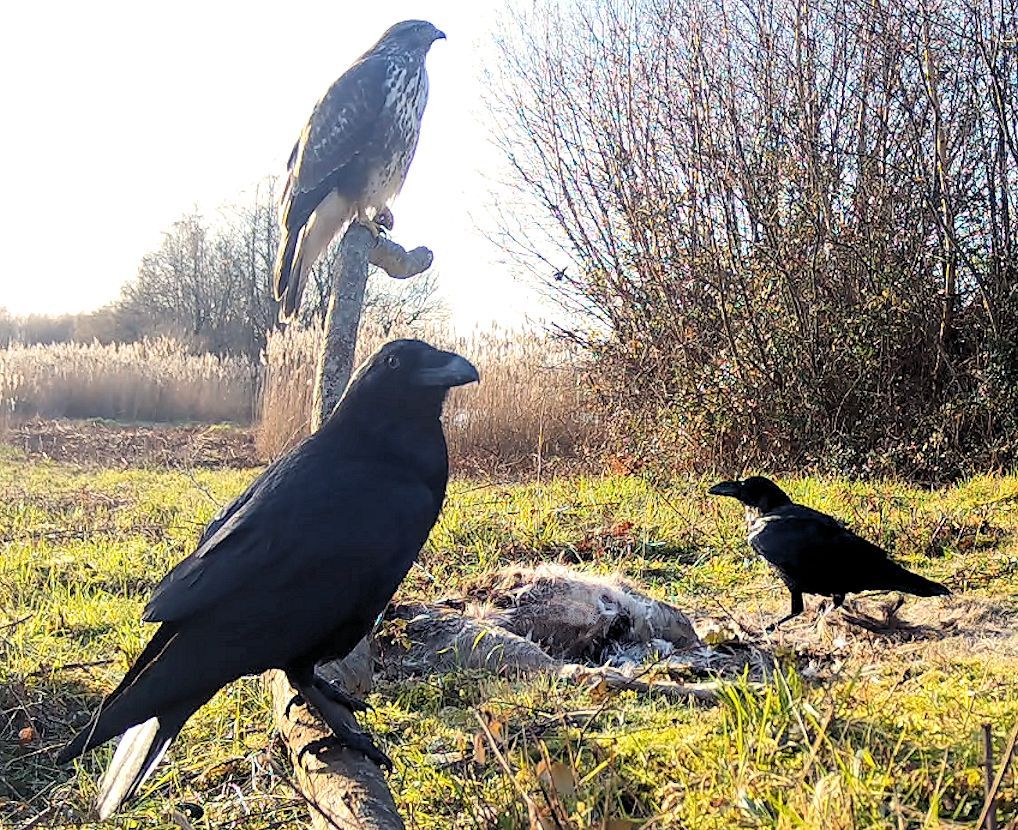
The carcass of the road casualty is proving even more popular in this cold weather, there seems to be a constant queue of creatures glad of a food supply.
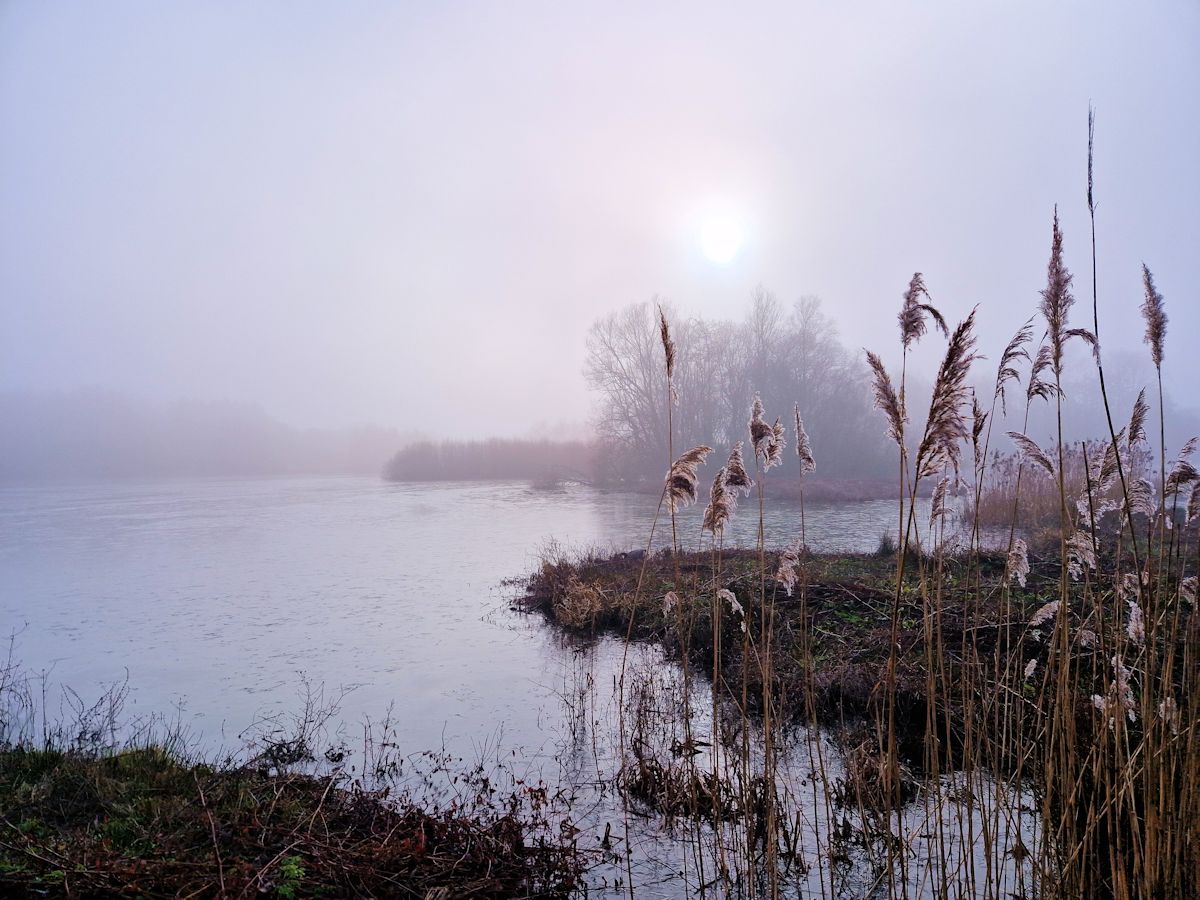
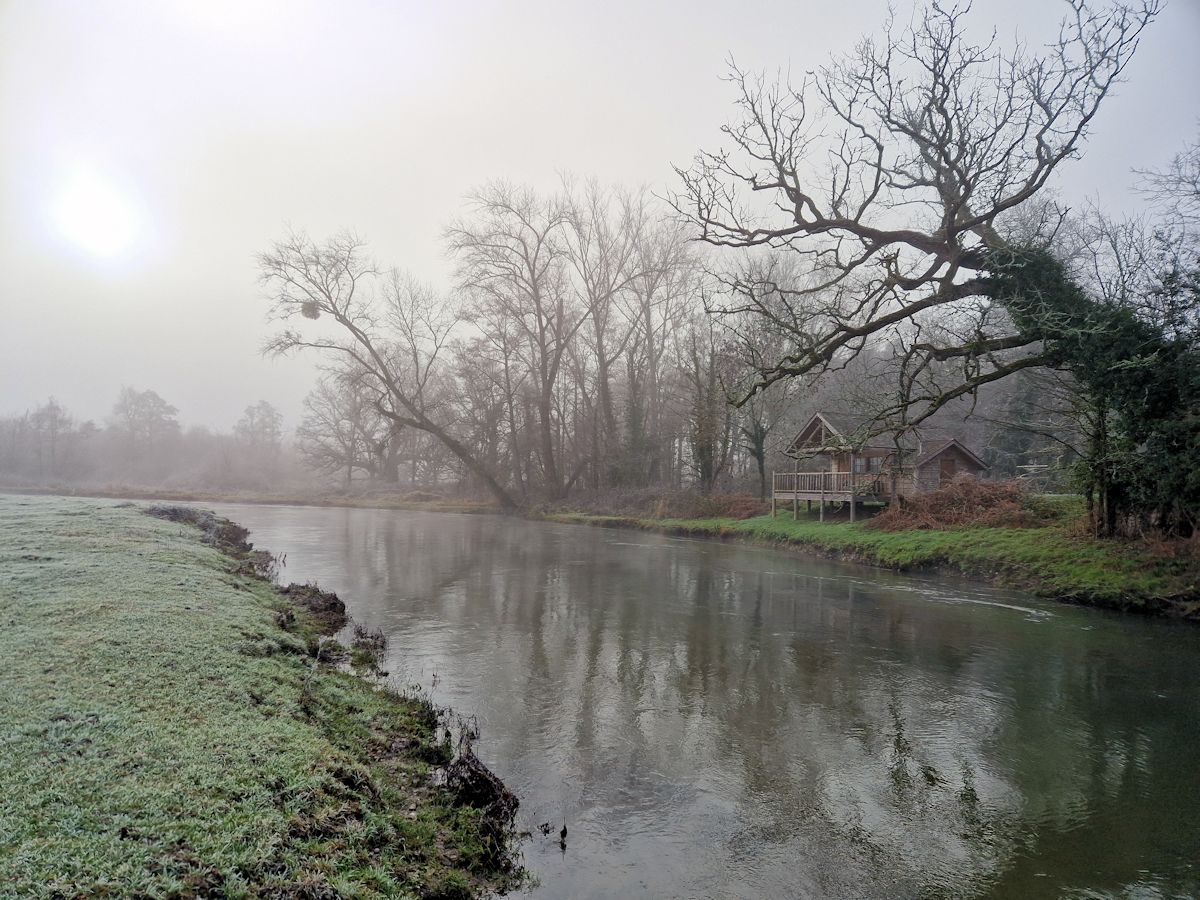
A very cold and misty finish to the year as the lakes froze over and the mist hung in the air all day. The second shot is the river outside the lodge at midday, with the sun still failing to brake through.
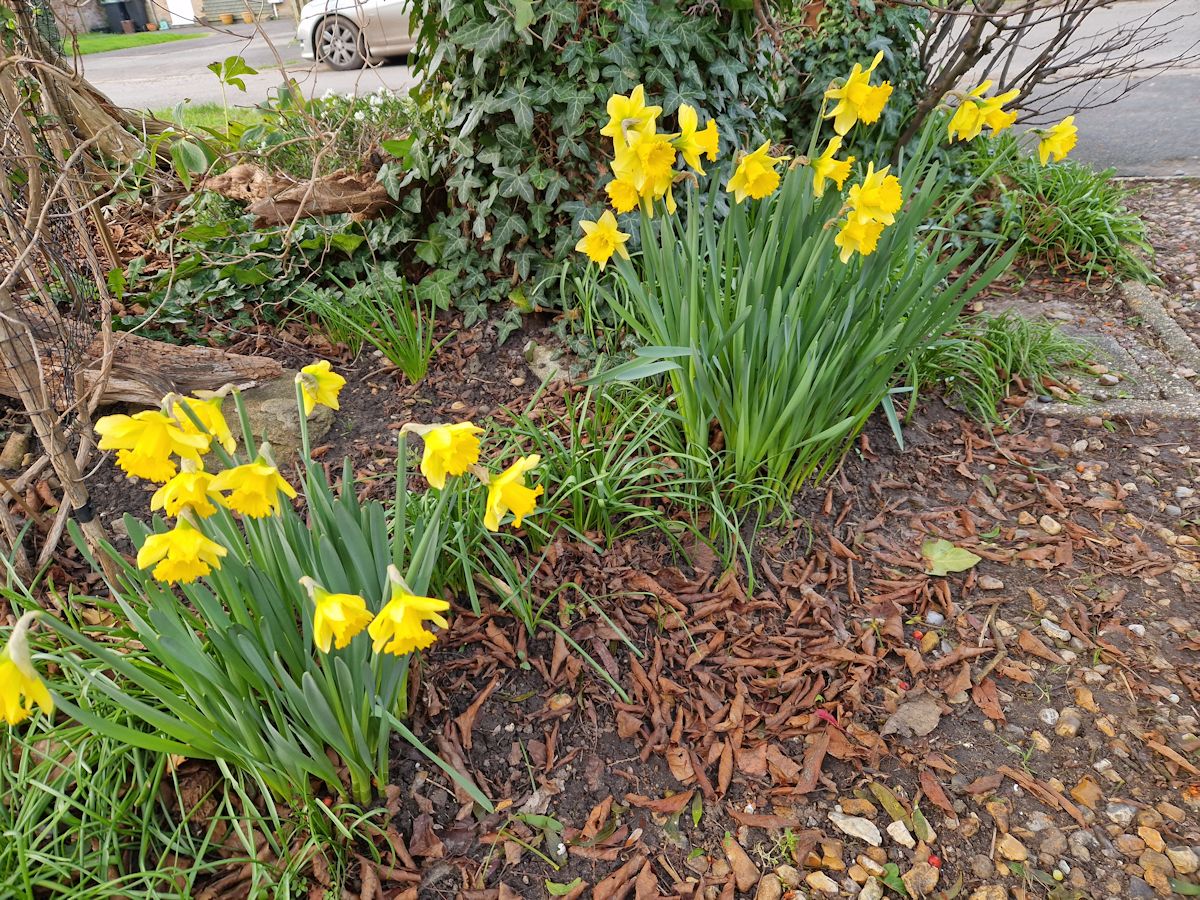
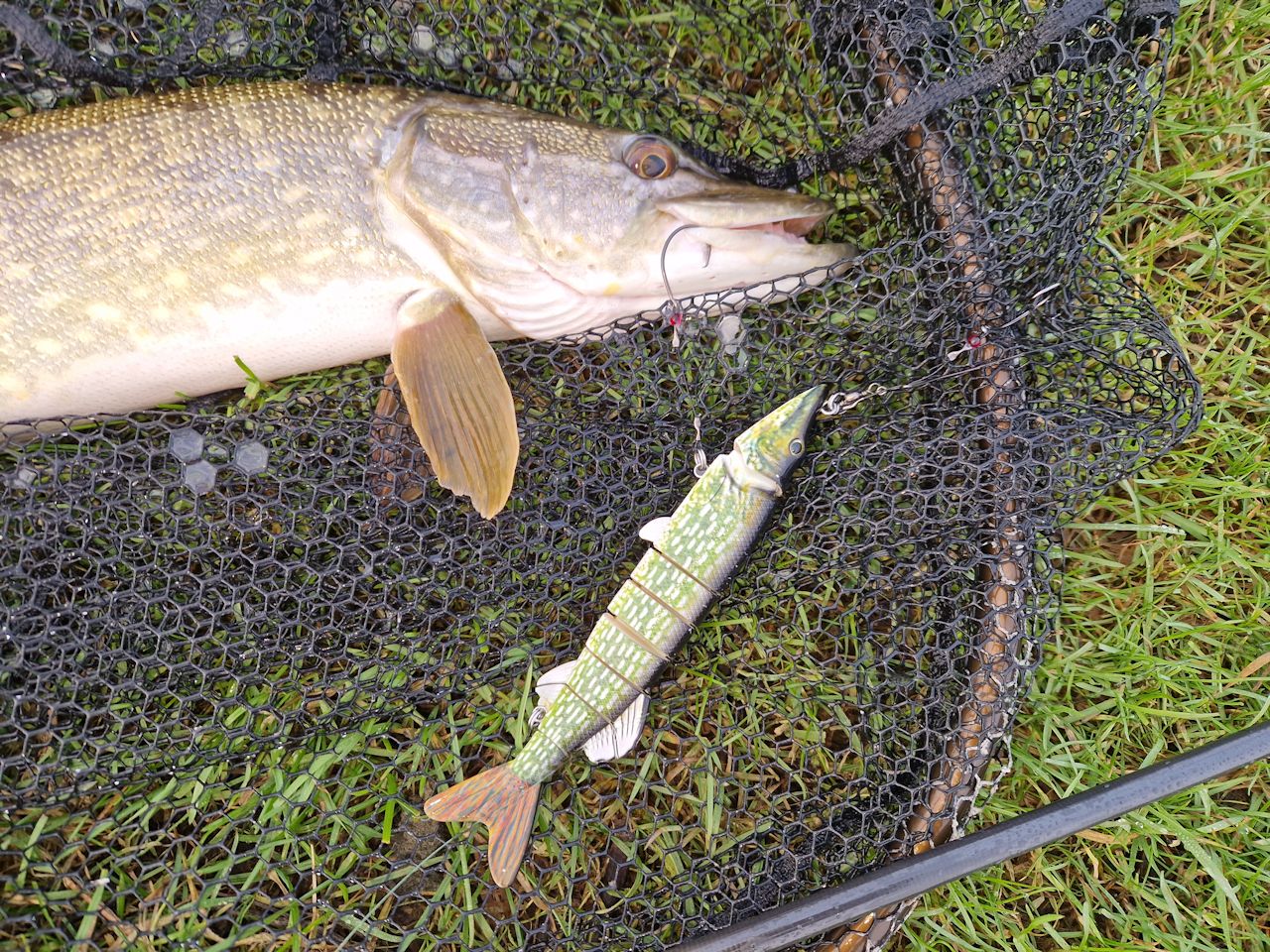
A New Year shot for my Welsh readers, our dafs in the front garden are putting on a brave show for the Year to come.
The second shot is almost an exact copy of the shot a year ago at the very start of the year. The reason I've added this again is to show the perfect hook hold in the scissors. Circles have been a revelation for almost all of my fishing and I can't recommend them strongly enough.
The rest of the setup is my favourite lure in the shape of a small jack that I have removed the trebles from and replaced them with size 4 barbless circles, fished on short assist droppers. The rod is a HTO, 9.4m, 20-50g lure rod, with a ABU Gacia pro bait caster, loaded with 30lb Whiplash to a 30 pound rubbing trace, to a final plastic coated 20 pound wire trace.
A second set of Ford car keys have been found. Give me a text or email and I'll reacquaint you.
30th December
I said at the beginning of the year I thought 2025 would be the year of the beaver on the Hampshire Avon. As it has turned out it has been the year of the beaver on a far wider area that the Avon Valley. There seem to be reports of wild beavers coming in the length and breadth of the country. They would seem to be well established on many rivers that their activities will certainly change for the better. Our own pair on the estate remain busy with lodge extensions and riverside trees being felled and extracted for food and housing. One habit they seem to have adopted is trimming the willow branches that have intruded out into the channel. This has saved me considerable work in keeping the salmon pools clear, lets hope they continue the good work.
Poplar on the menu.
Preparing dinner.
The final cuts.
Almost there.
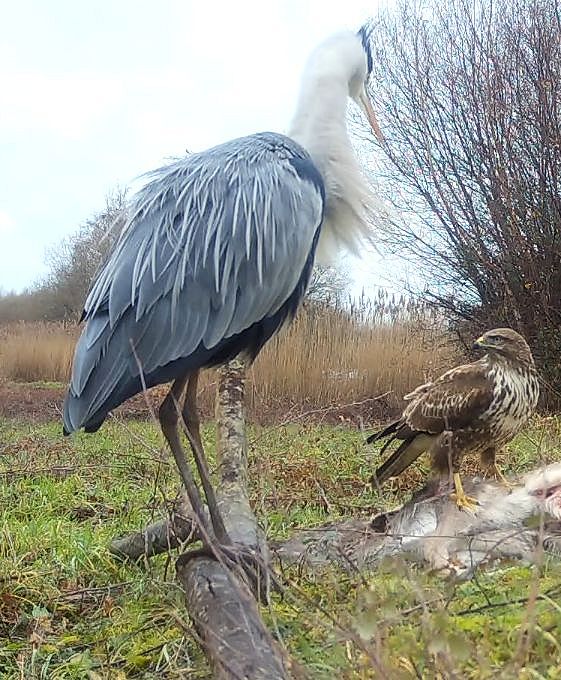
Its been an odd day or two over the holiday as the number of; bird watchers, fishermen and local shoots have made it a deceptively busy place. Many of the birds have been looking for quieter areas to avoid the disturbance. One of the lakes that is currently closed has offered one such sanctuary. With the added attraction of a recent road-kill the scavengers have been enjoying themselves. The Heron has probably been the most regular, jealously protecting the meaty territory from all his kin. Other bolder species have ignored his bill snapping and hissed threats, tucking into the carcasses offered bounty.
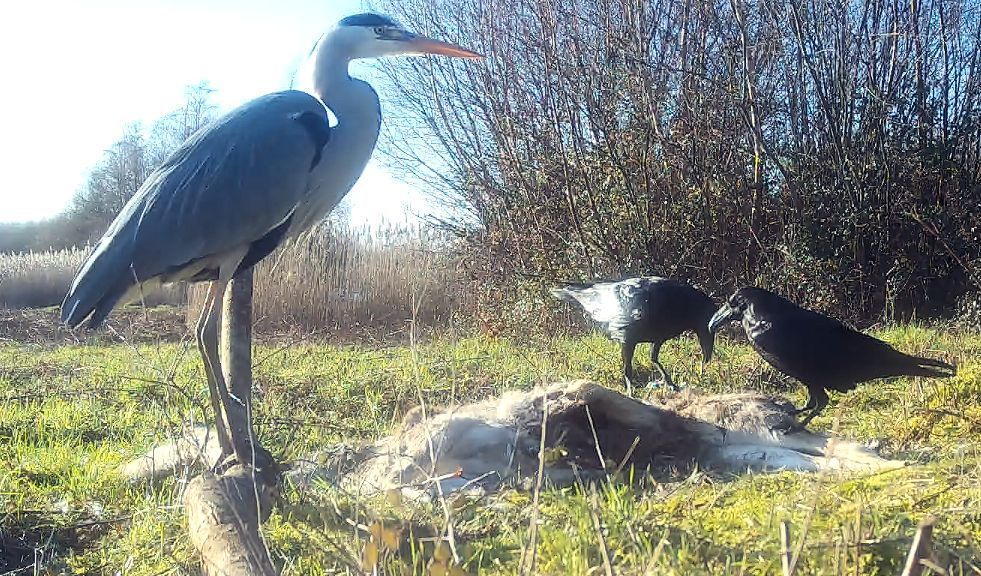
The resident Heron and a pair of Raven.
28th December
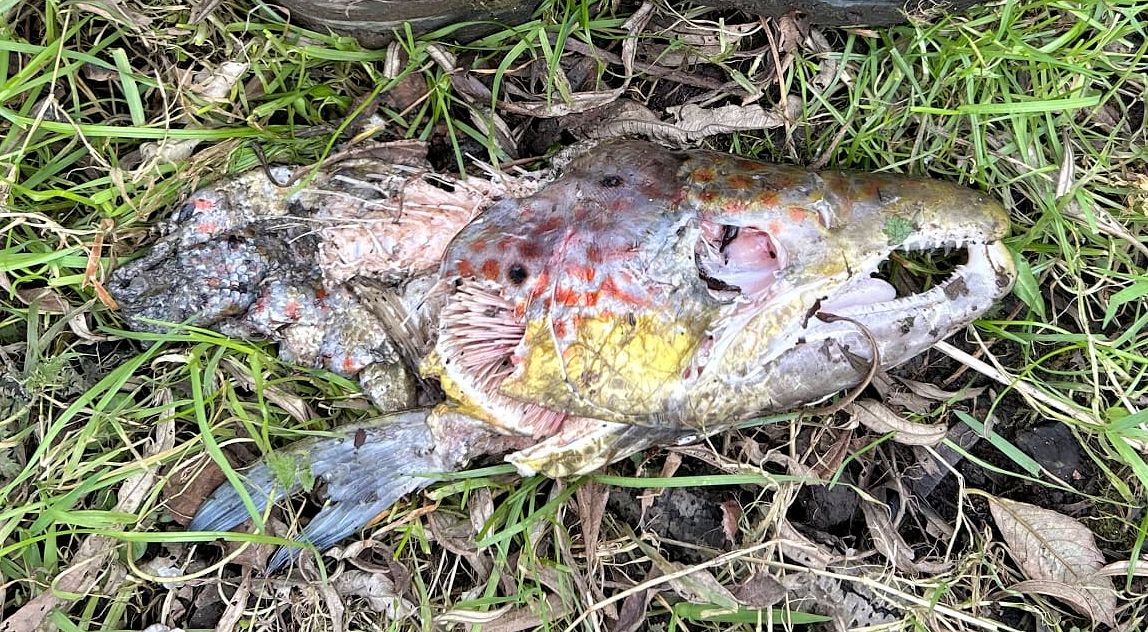
Thanks to Phillip Parkinson for a text telling me the whereabouts of the head of the first kelt of the season. Although its been well chewed by the otter and the birds, hopefully the vital information it contains can be used by the scientists who are studying them. The salmon having apparently spawned the kelts will be slowly dropping back and being washed ashore. The otters will drag out many of the slow and easy to catch specimens and should you come across any please text as we are still collecting them. To add a little balance over the otter activity in that all the cock fish and most of the hens will die. Its the lot of salmon to die on completion of its spawning ritual, making their removal by the otters no loss to the river. Quite the reverse in that otters enjoying the seasonal bounty are not predating any other of our fish.
26th December
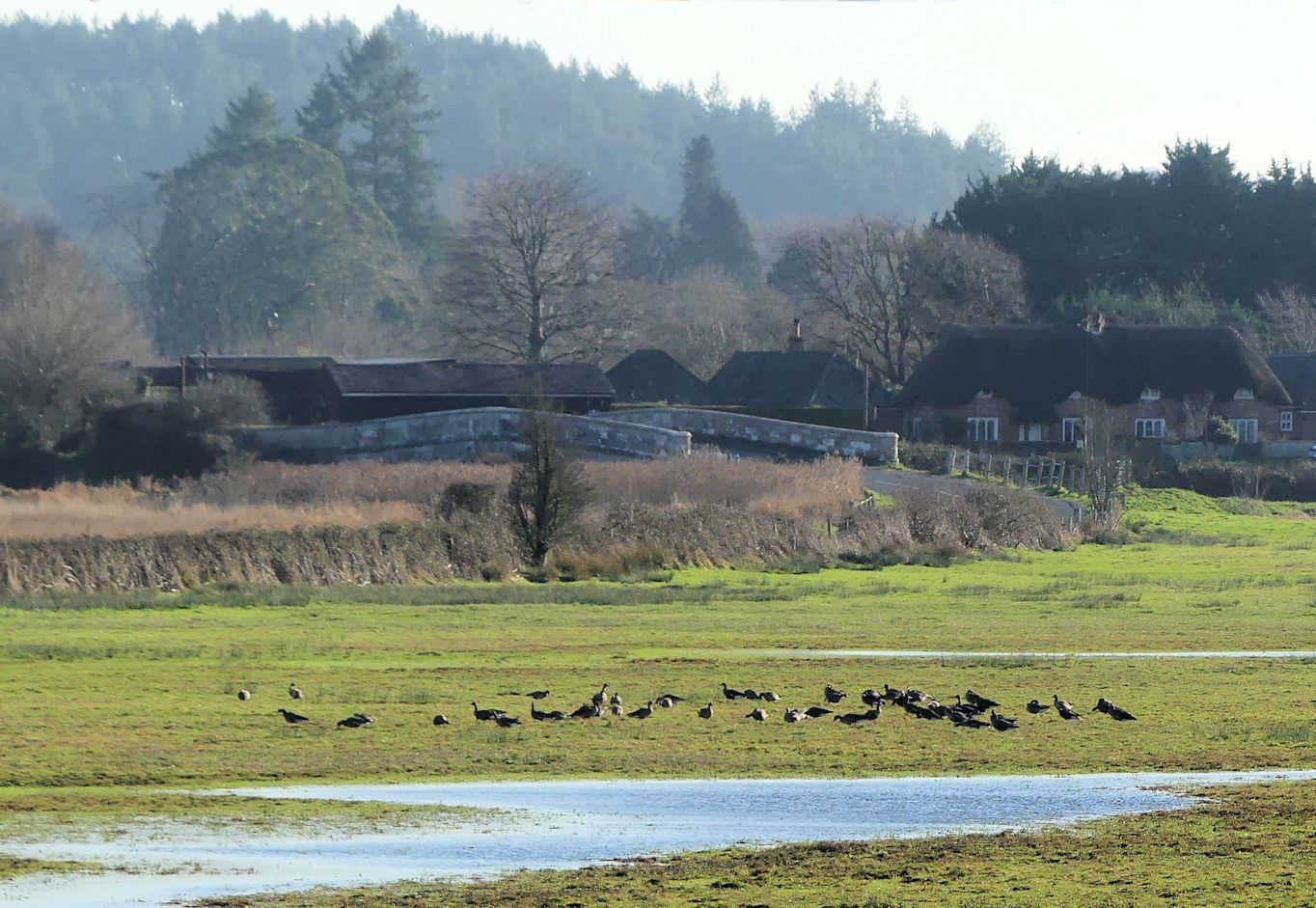
A photo of the White-fronted geese taken a day or two ago. Being close to the road they were at risk of disturbance from both traffic and pedestrians. I needn't have worried as one of the White-tailed eagles showed up and they departed post-haste.